2026 IIDA Student Design Competition
-
Closed
-
Winners Announced
Sponsored by


Winners
-
Project Title
Uplift Primary Care Clinic
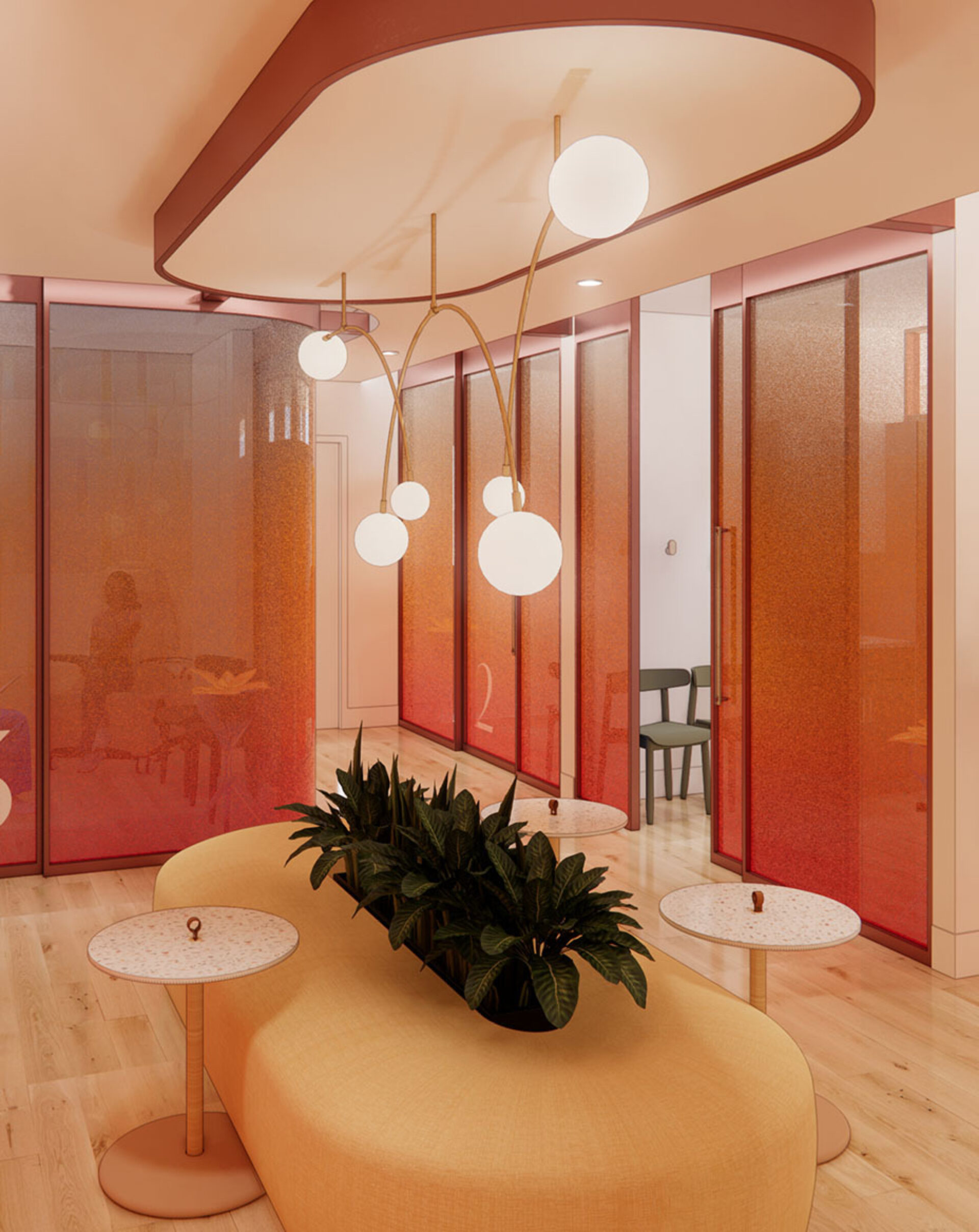
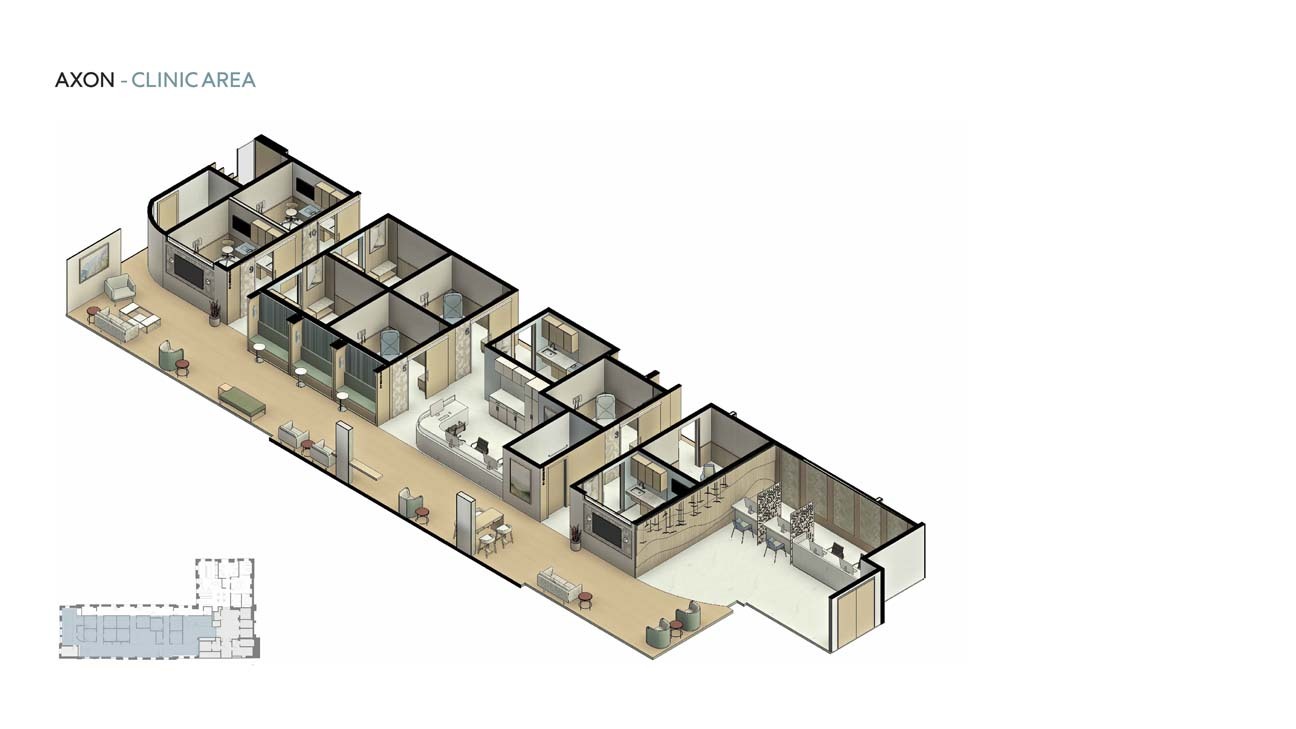
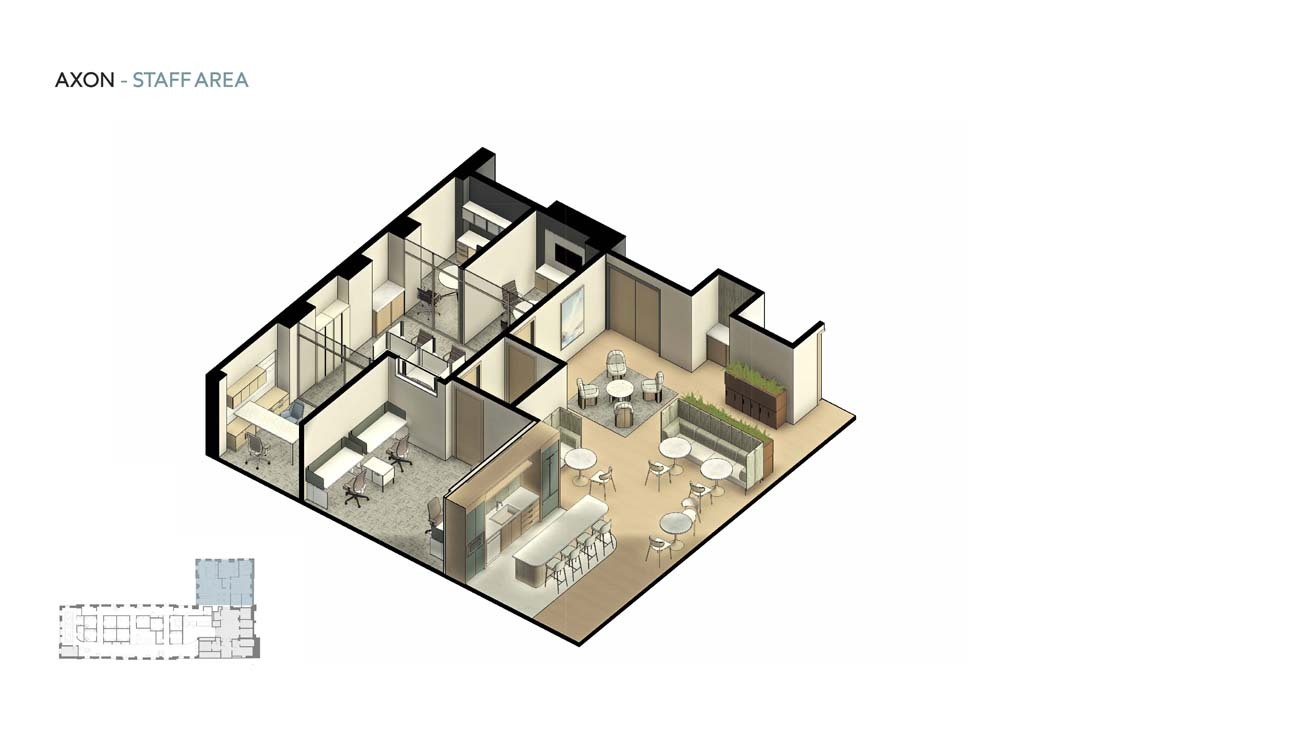
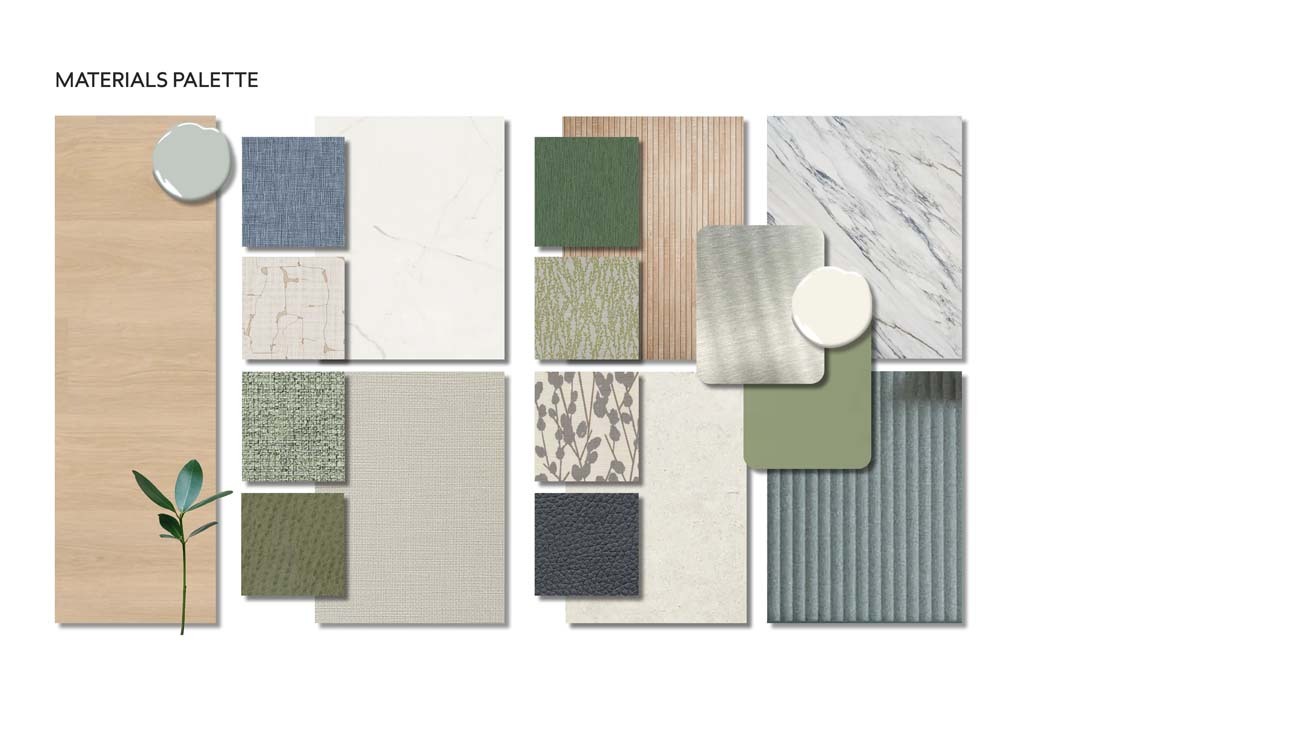
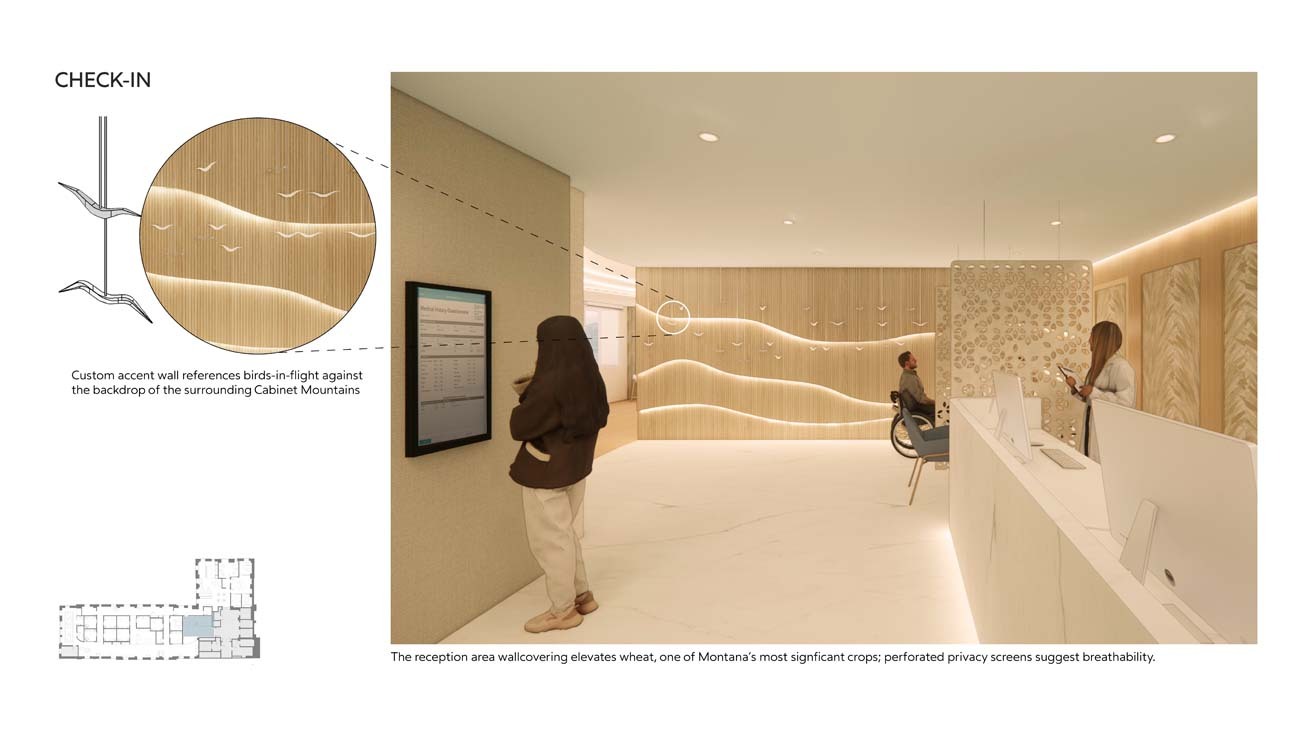
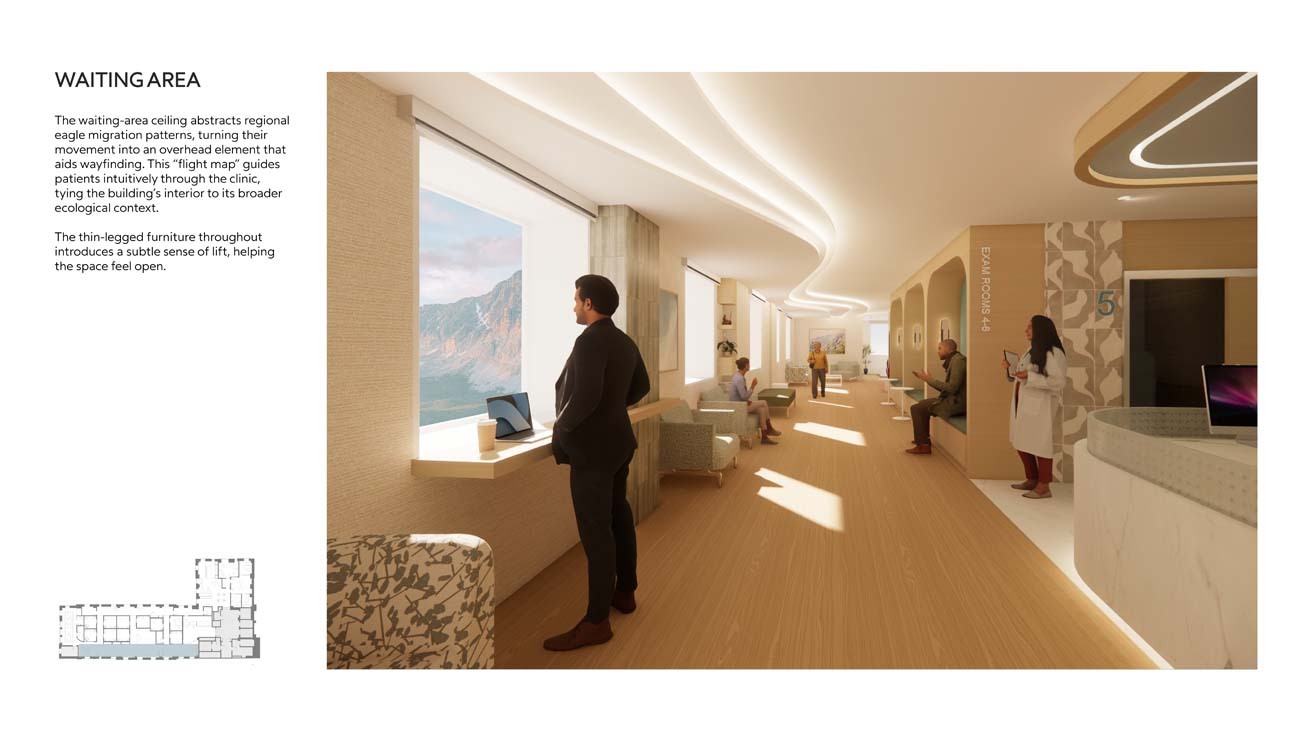
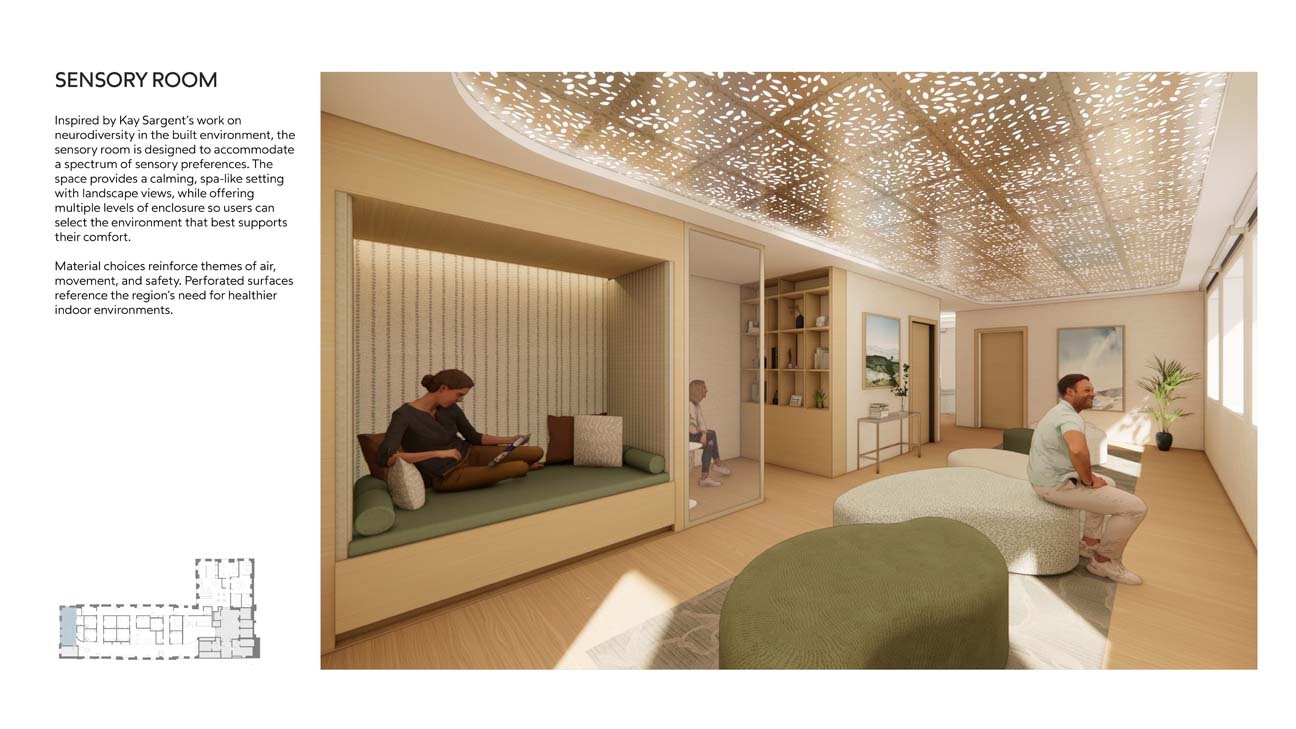
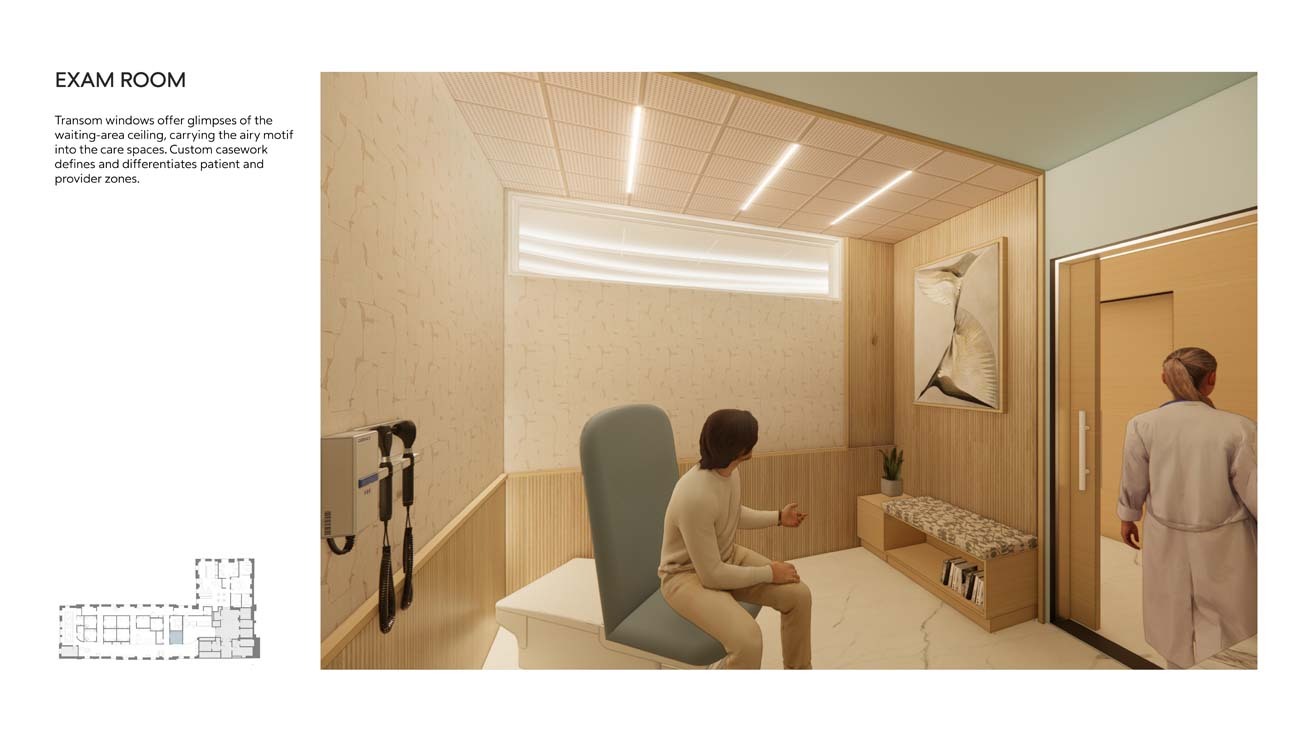
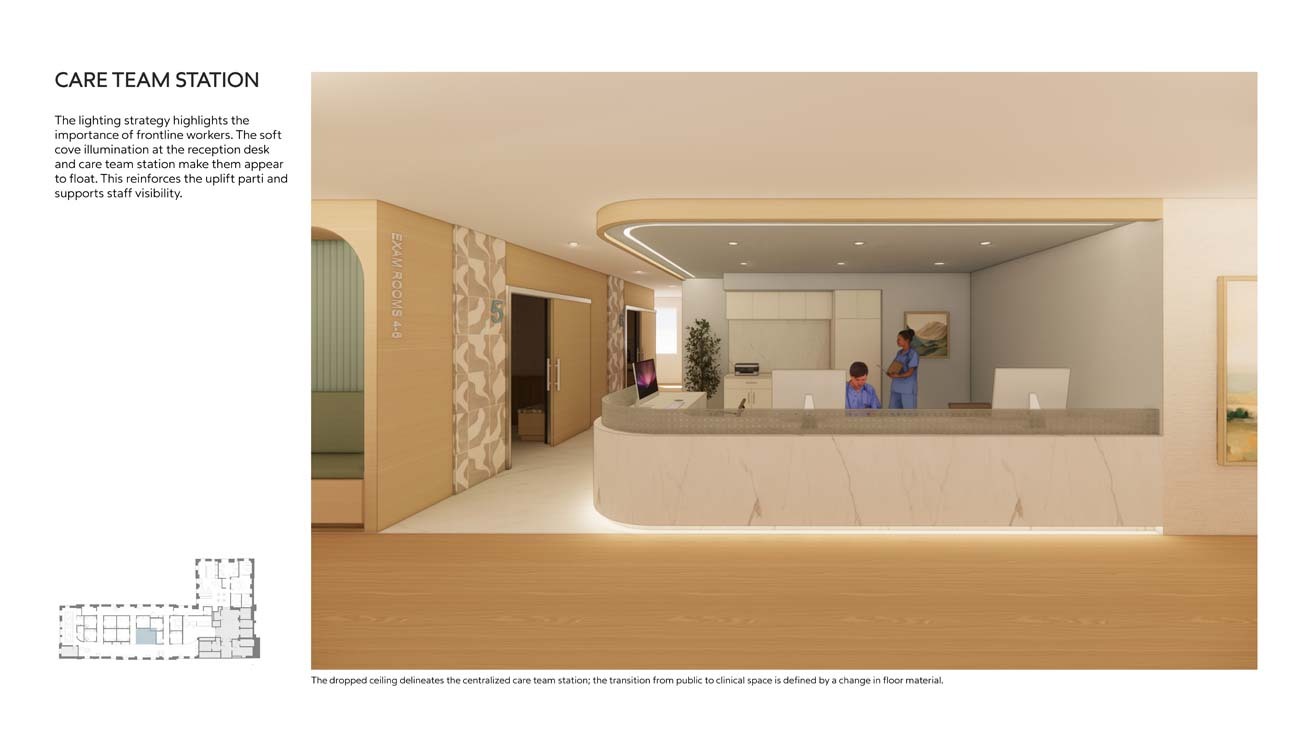
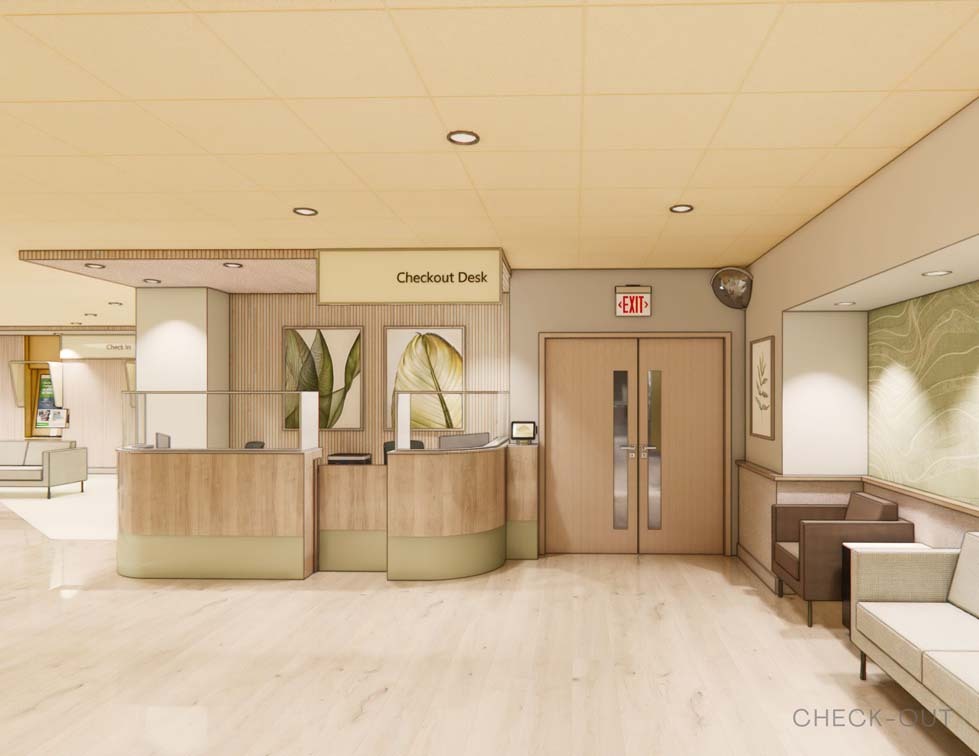
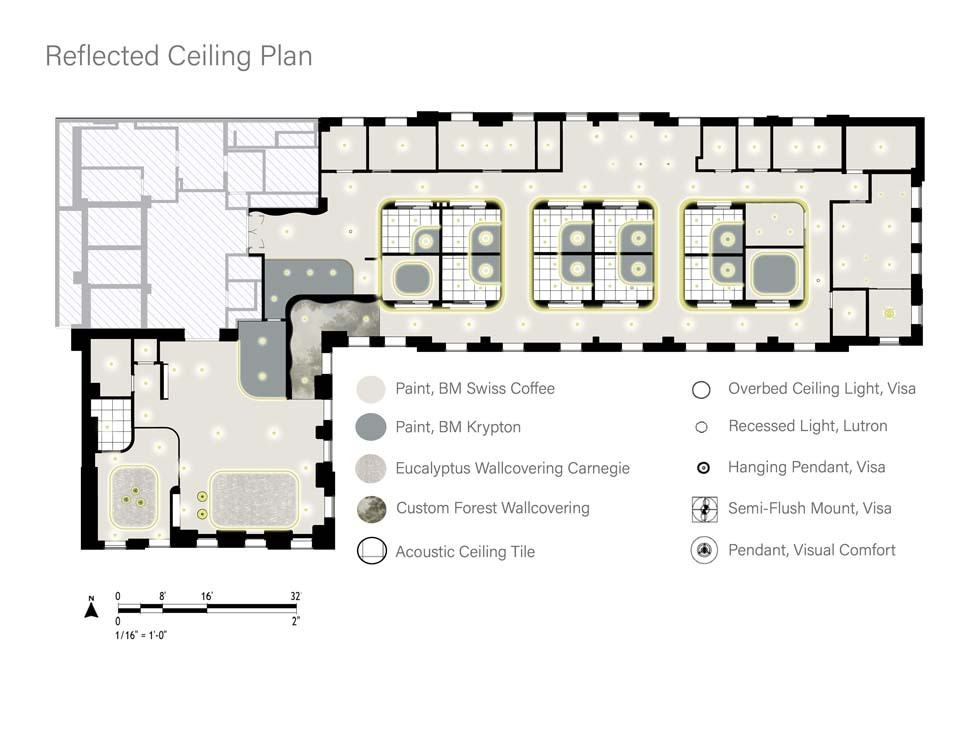
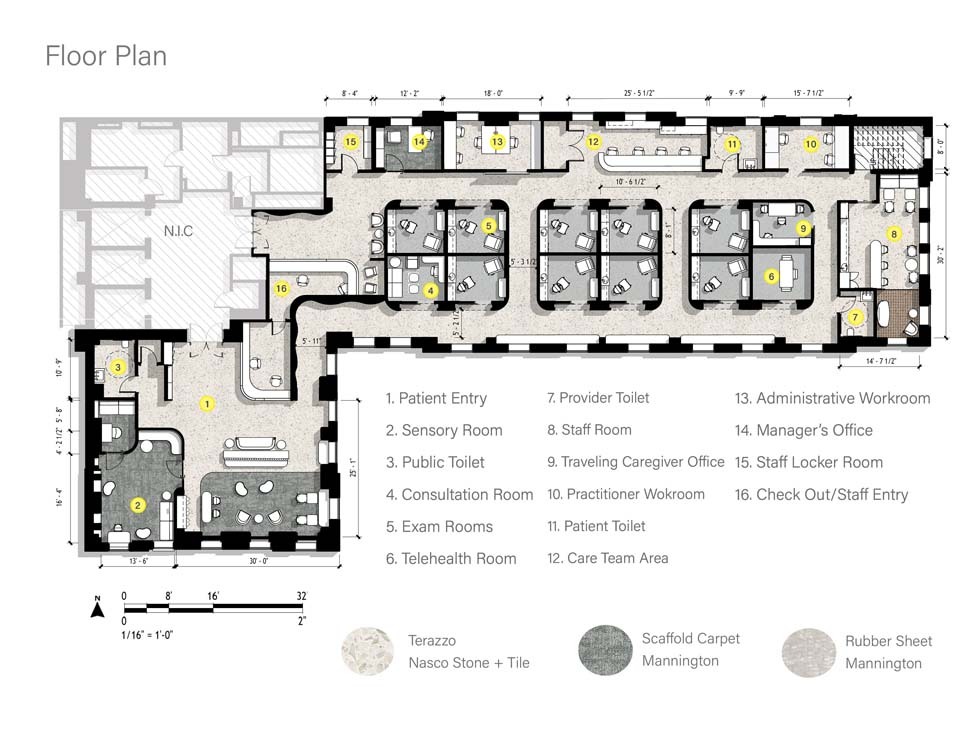
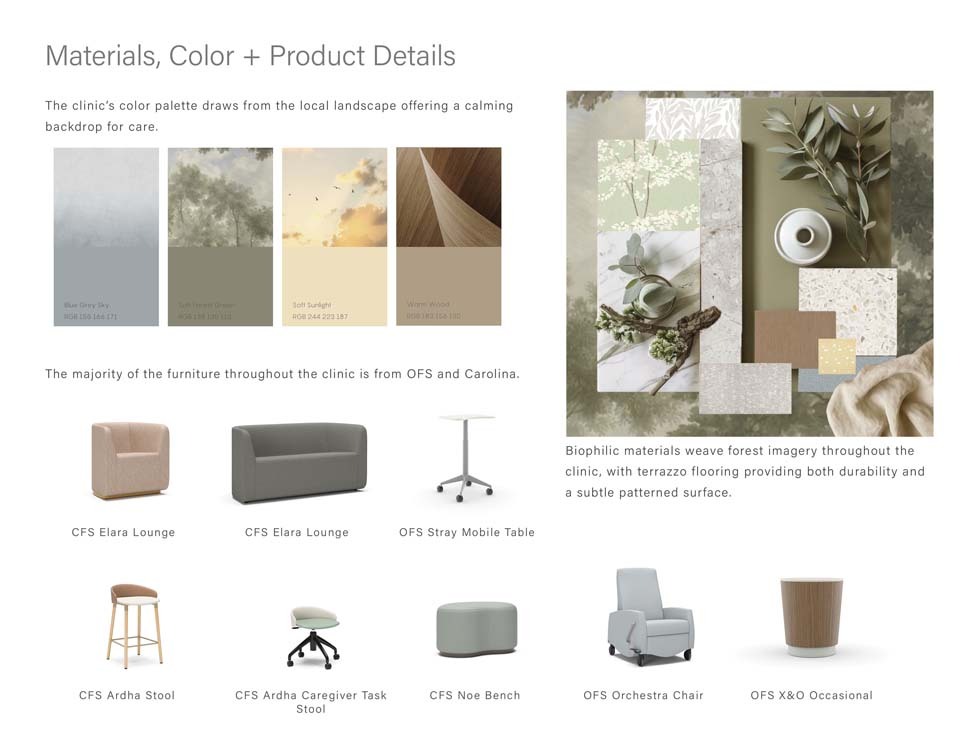
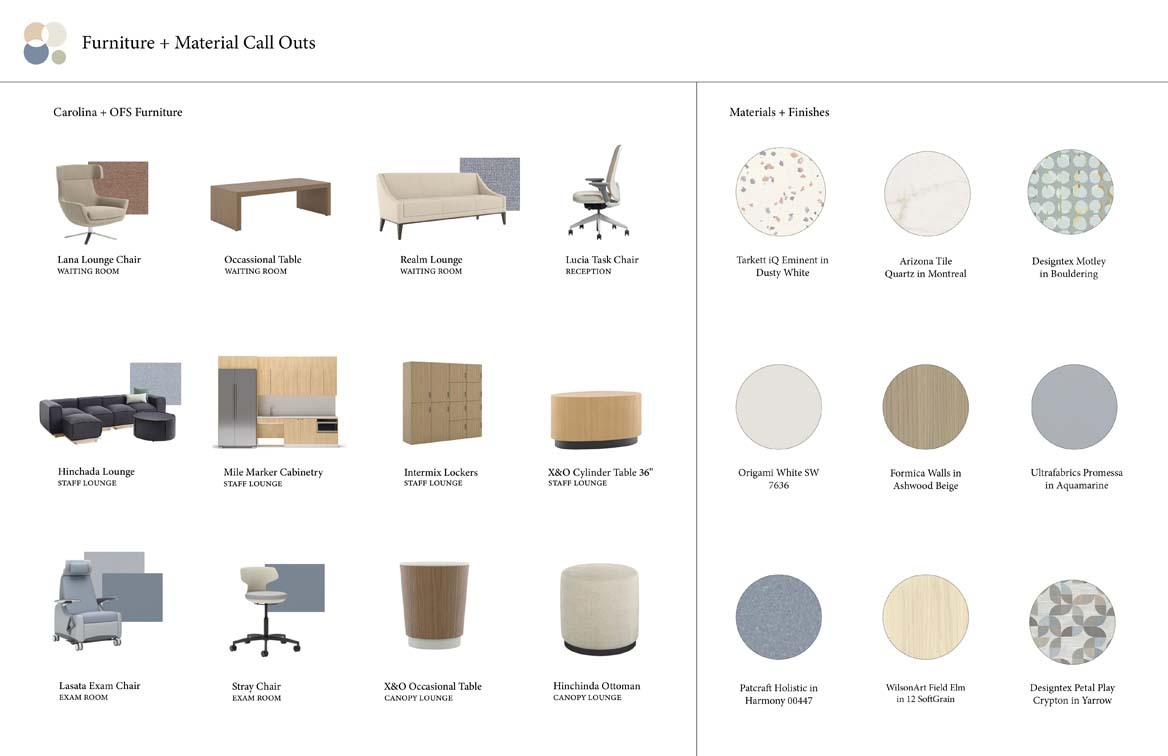
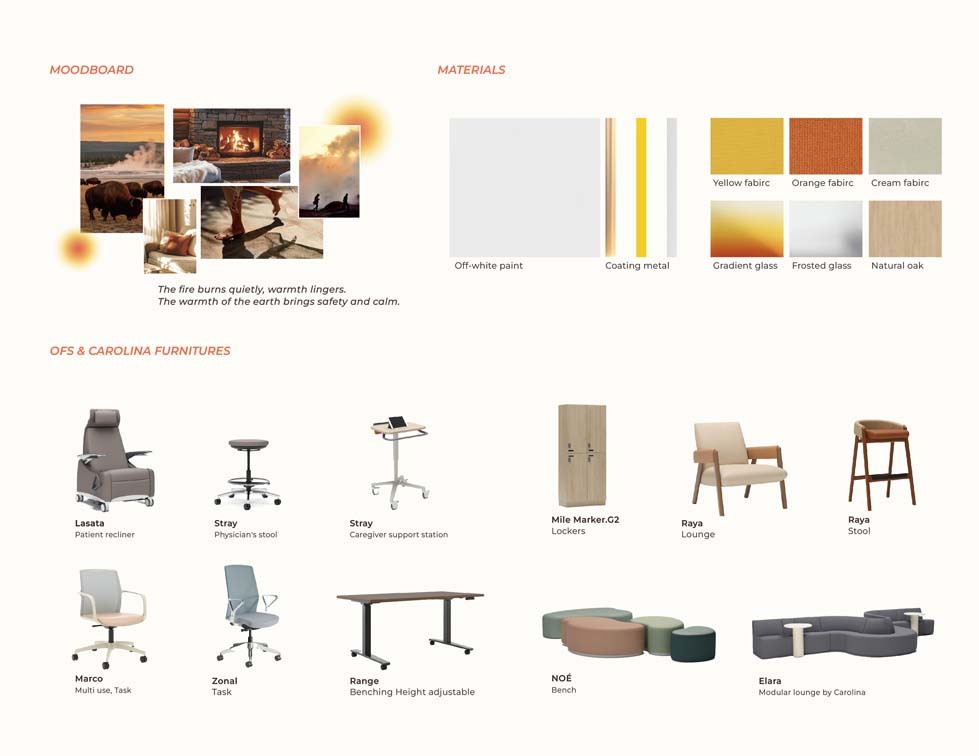
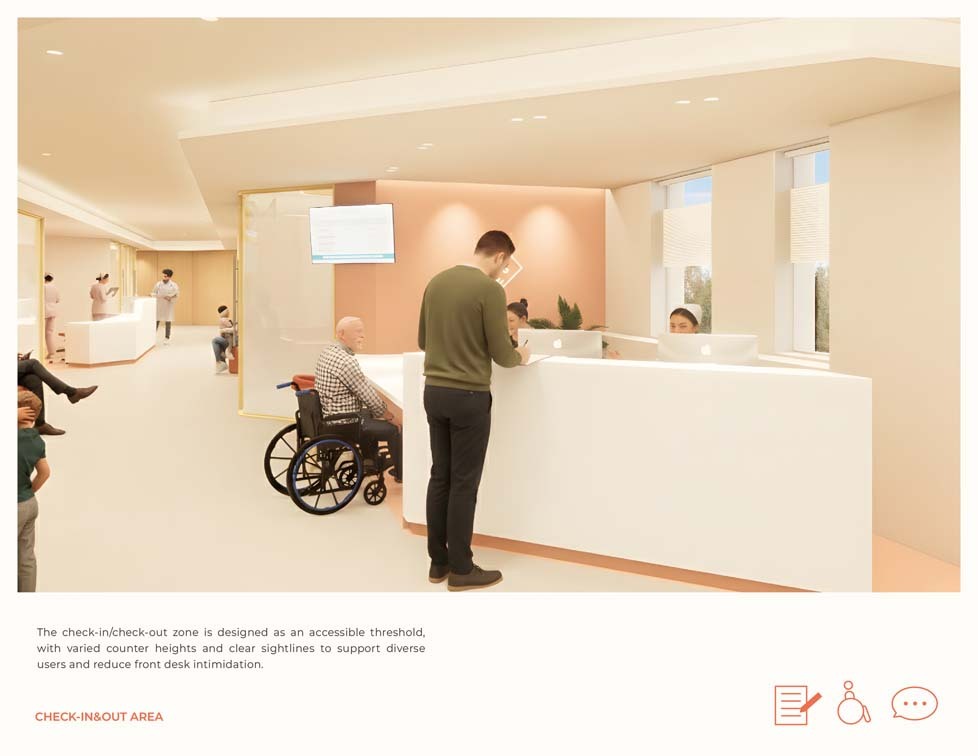
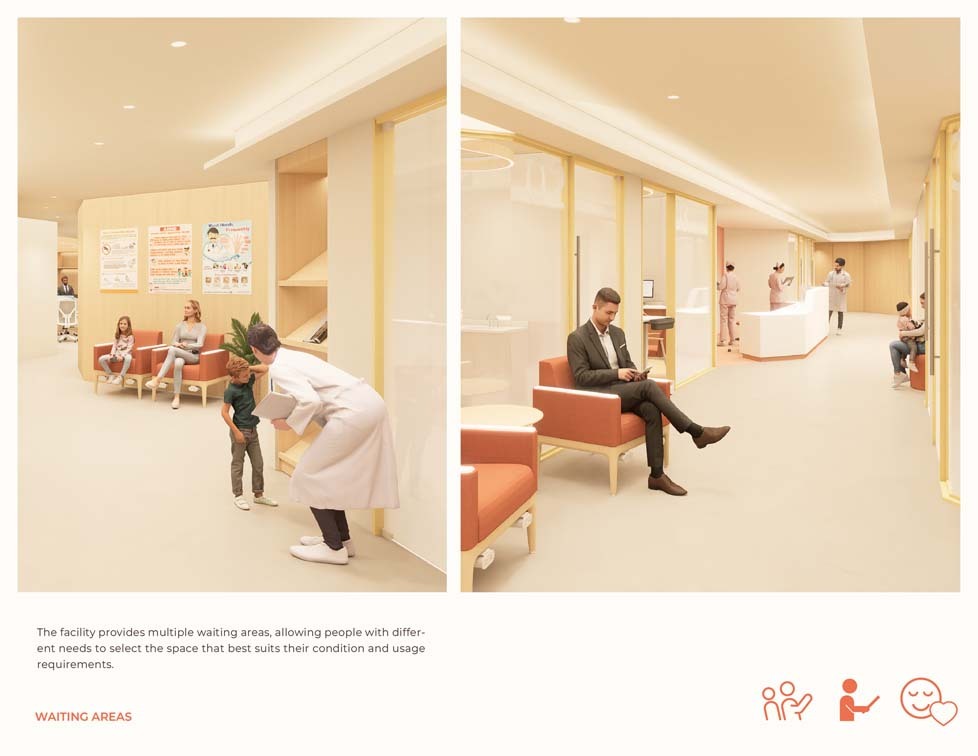
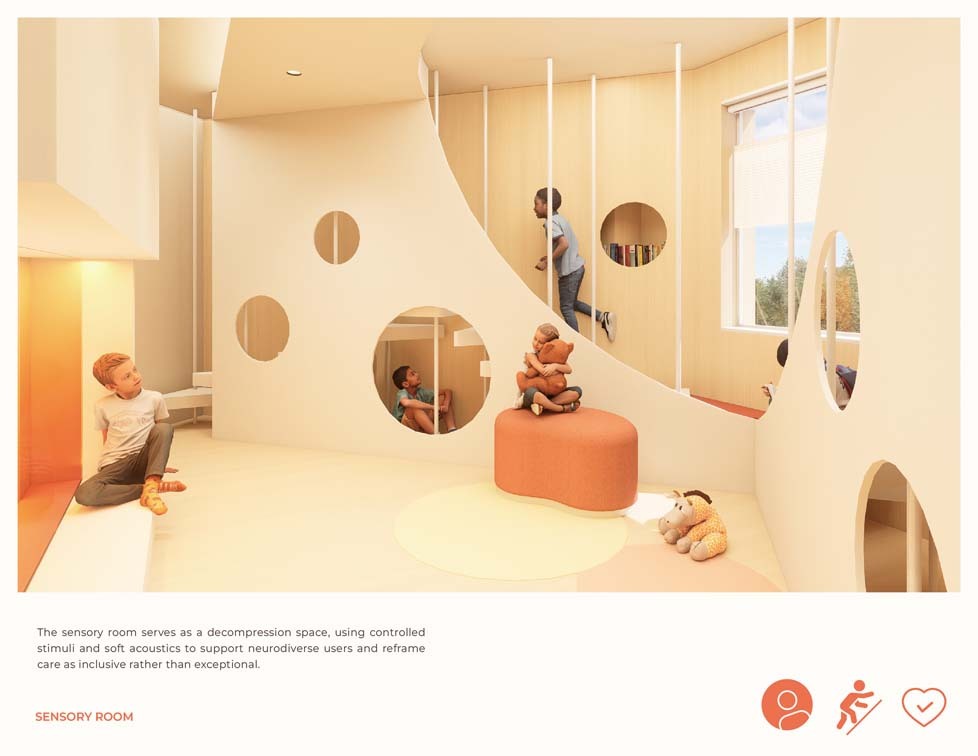
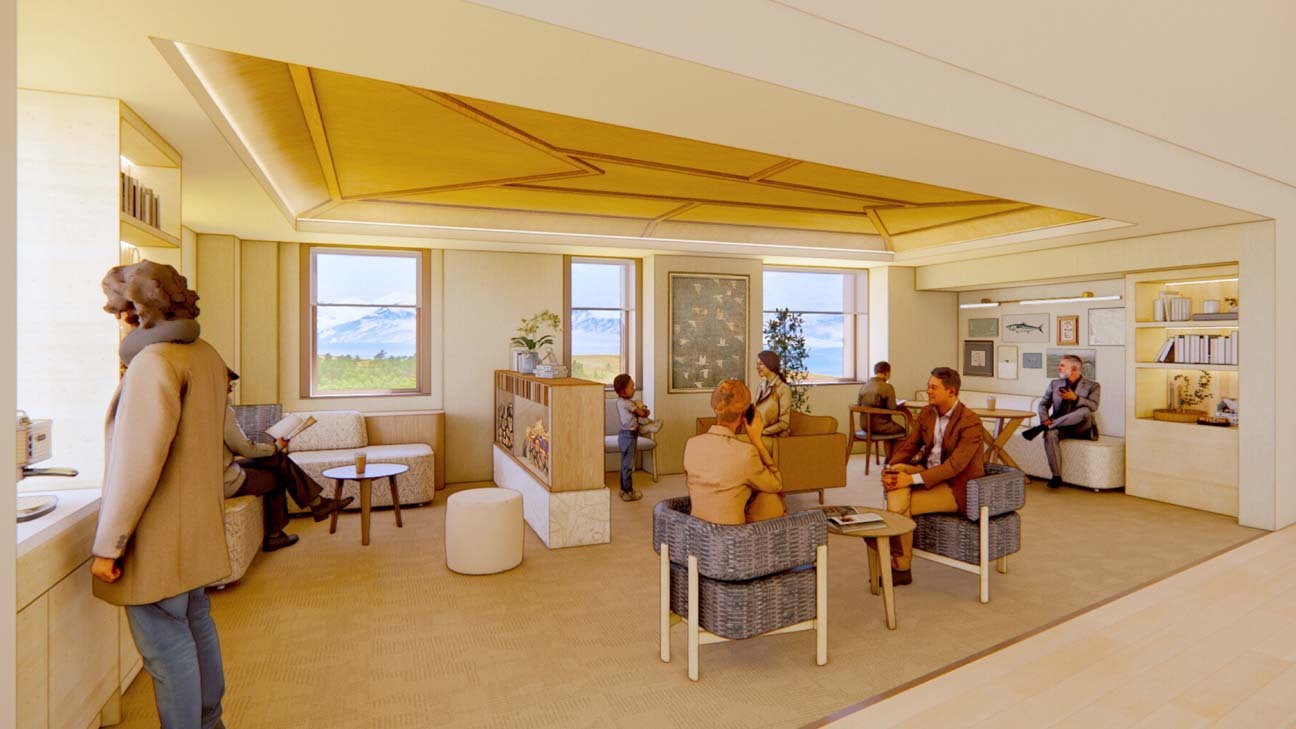
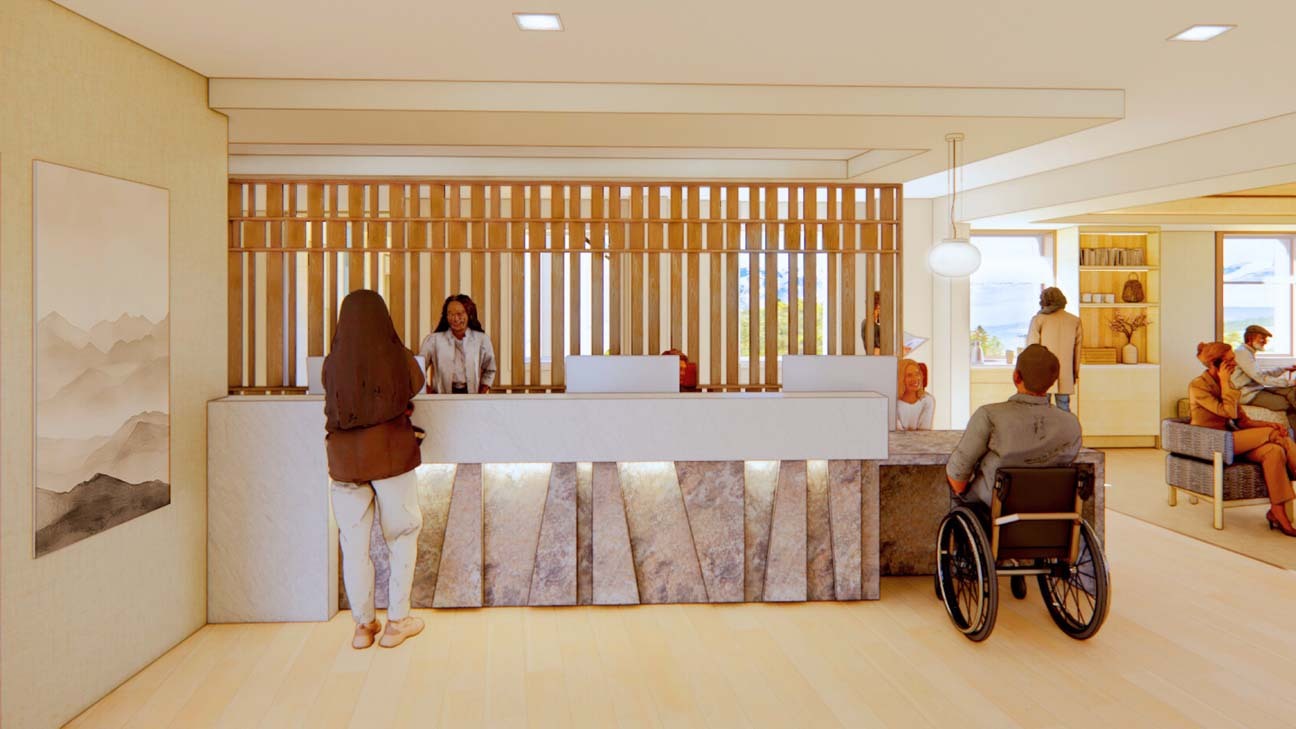
Deborah Wroblewski | Northwest Montanans face healthcare barriers related to geographic isolation, provider shortages, and limited access to specialty care. Uplift Primary Care Clinic is a community anchor and civic space, supporting integrated care delivery and addressing the realities of rural healthcare access. Reimagined as a vibrant community space, the waiting room has social and private zones accommodating a spectrum of needs like internet access, educational resources, social interaction, and privacy. Self-rooming and check-in kiosks improve efficiency and promote patient autonomy, while staffed reception zones preserve human connection. Integrated treatment models make treatment across multiple practices seamless, while balancing evolving technologies with personal interactions. The materials and layout draw inspiration from Montana’s expansive landscape, wildlife, and mining history, with air quality and breathable materials as architectural expressions of care for residents who have had their health impacted by the mining industry. Integrating community gathering spaces, coordinated care environments, and regionally responsive interior strategies, the clinic improves access to care, strengthens provider collaboration, and reinforces primary care as essential civic infrastructure across the region.-
Location
N/A
-
Firm
George Washington University
-
Category
Overall
-
Award
First Place
-
Location
-
Project Title
Care That Belongs
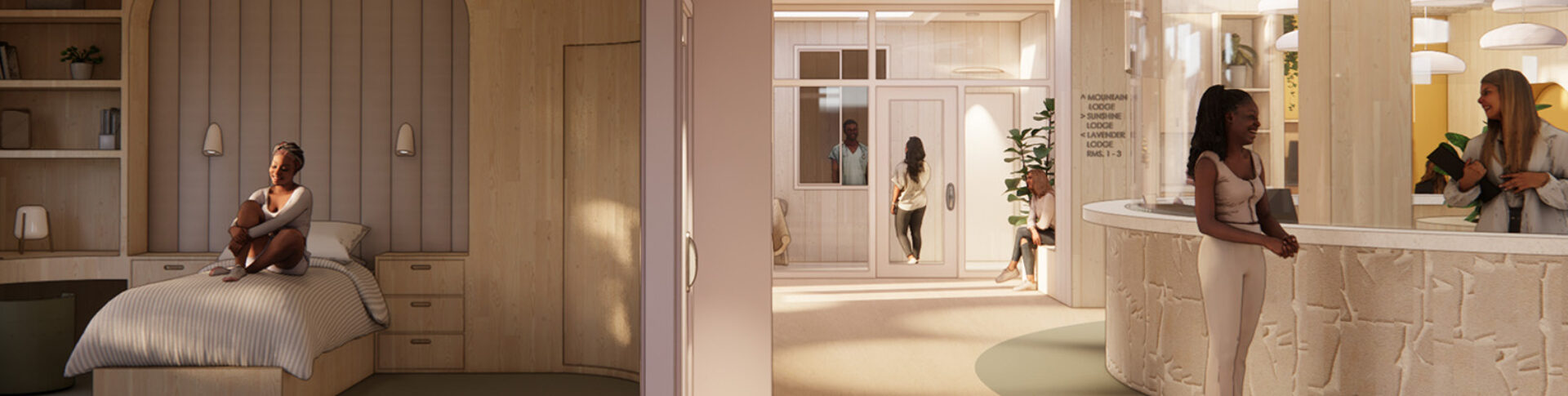
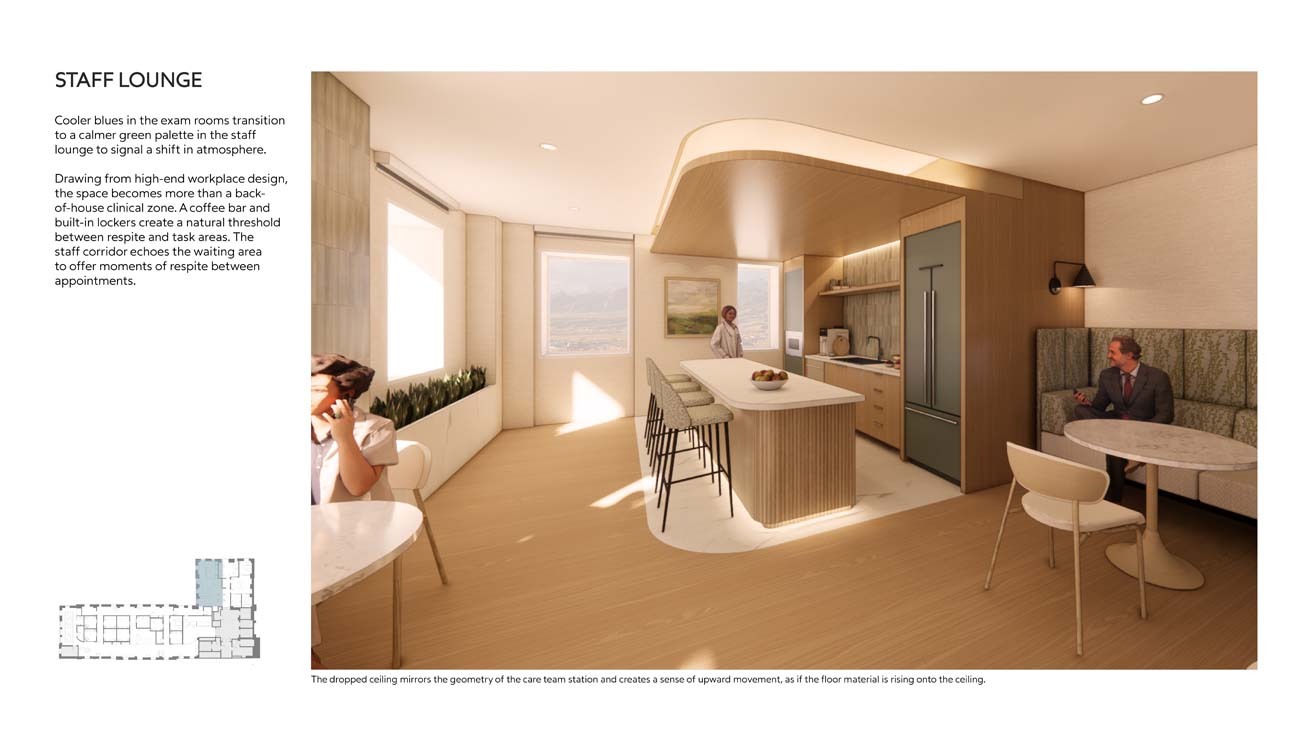
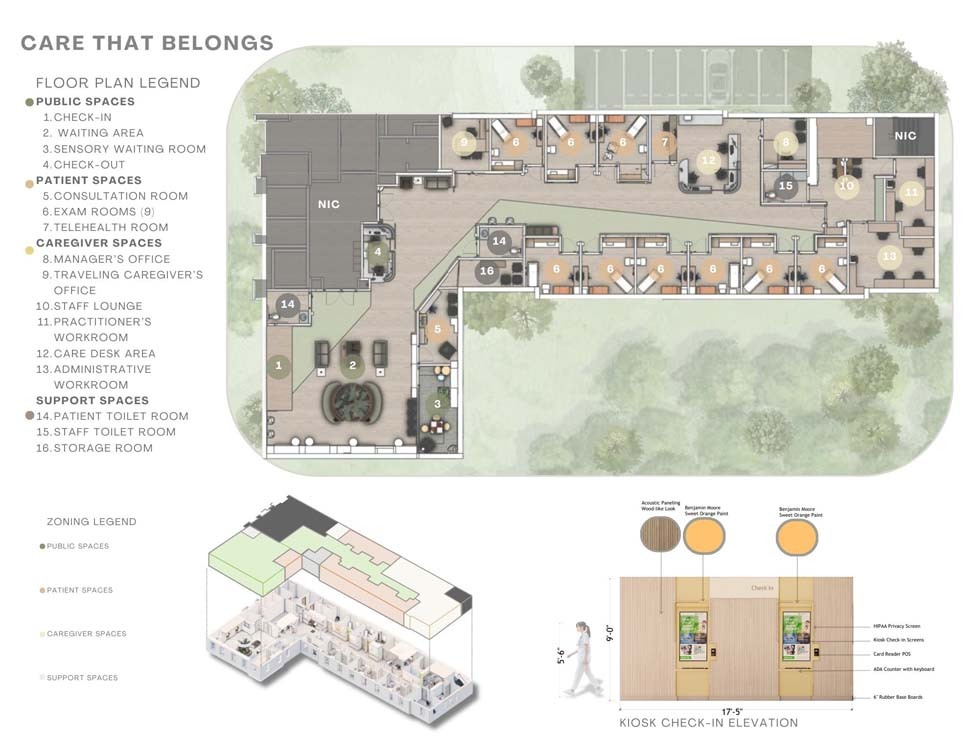
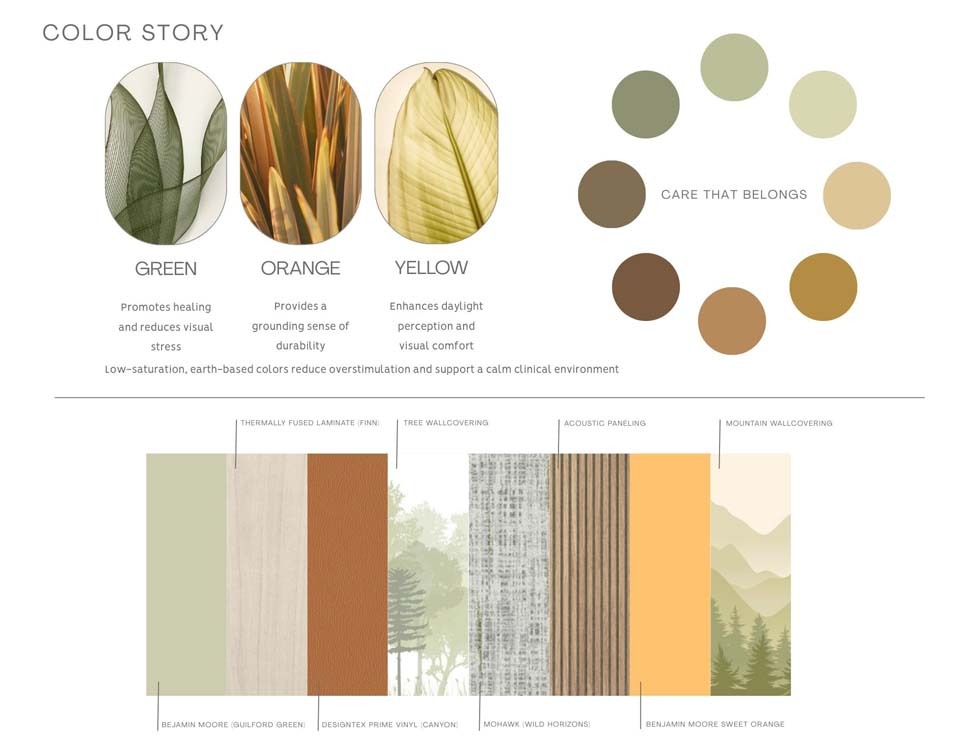
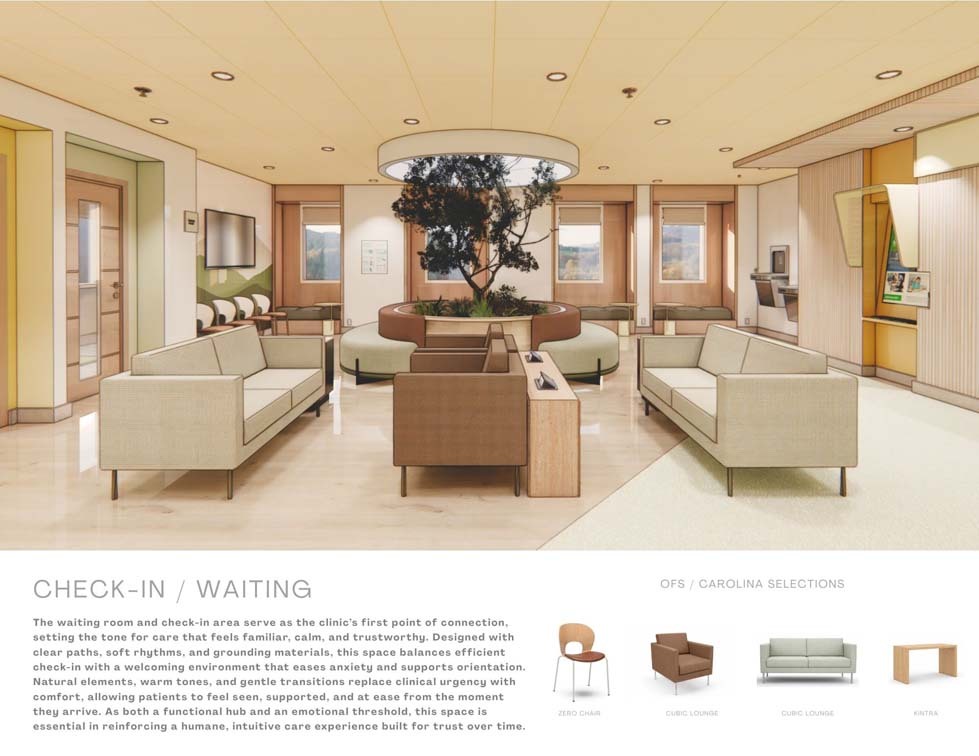
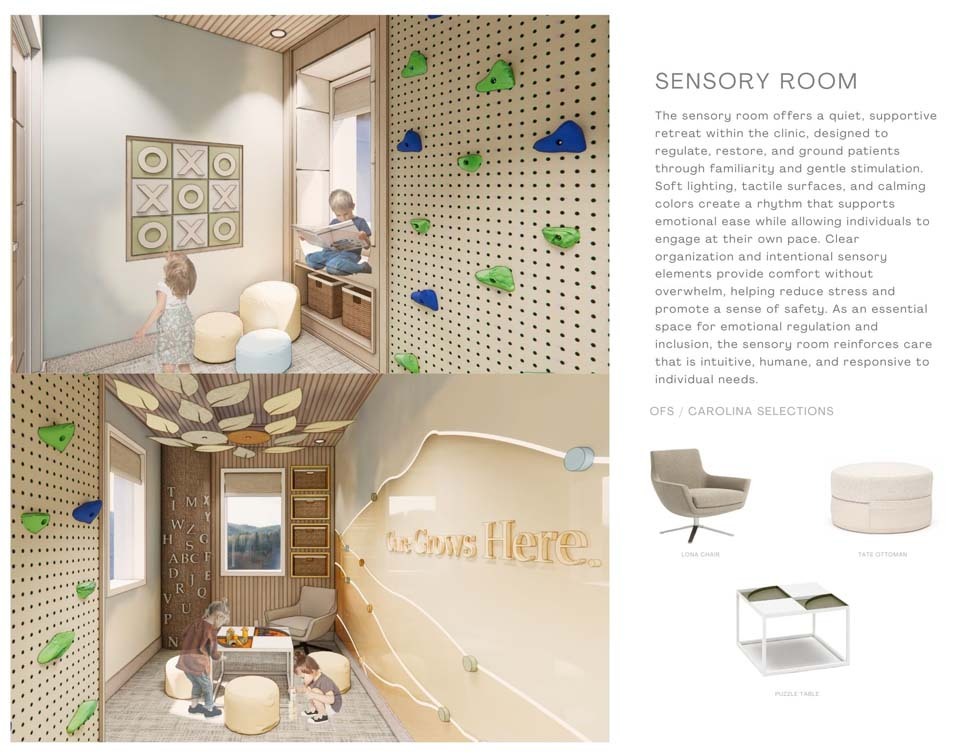
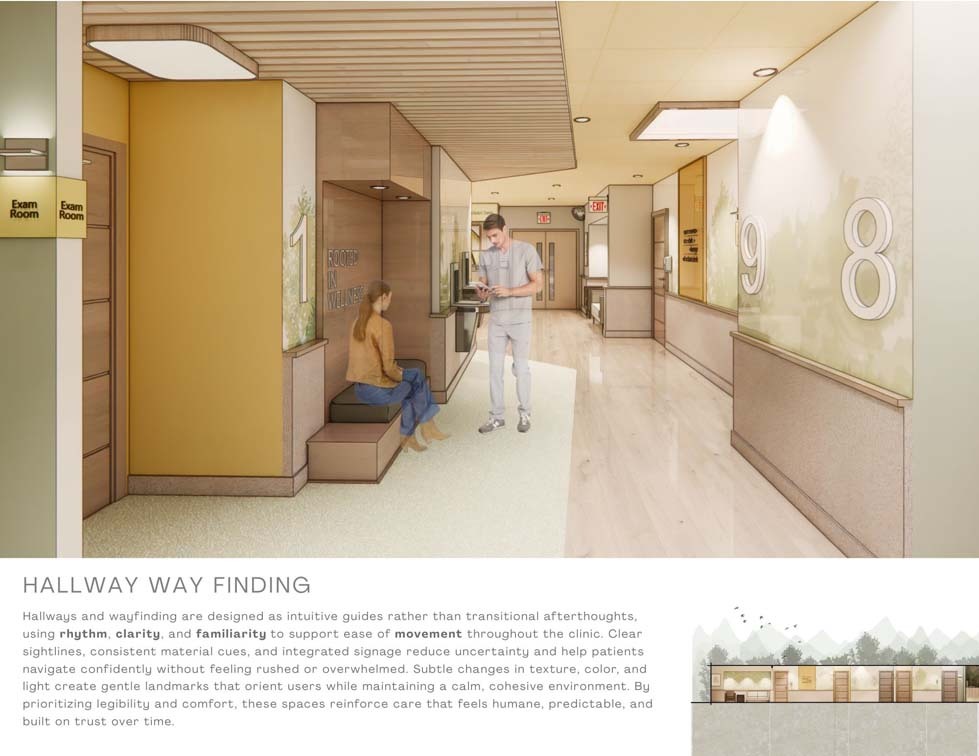
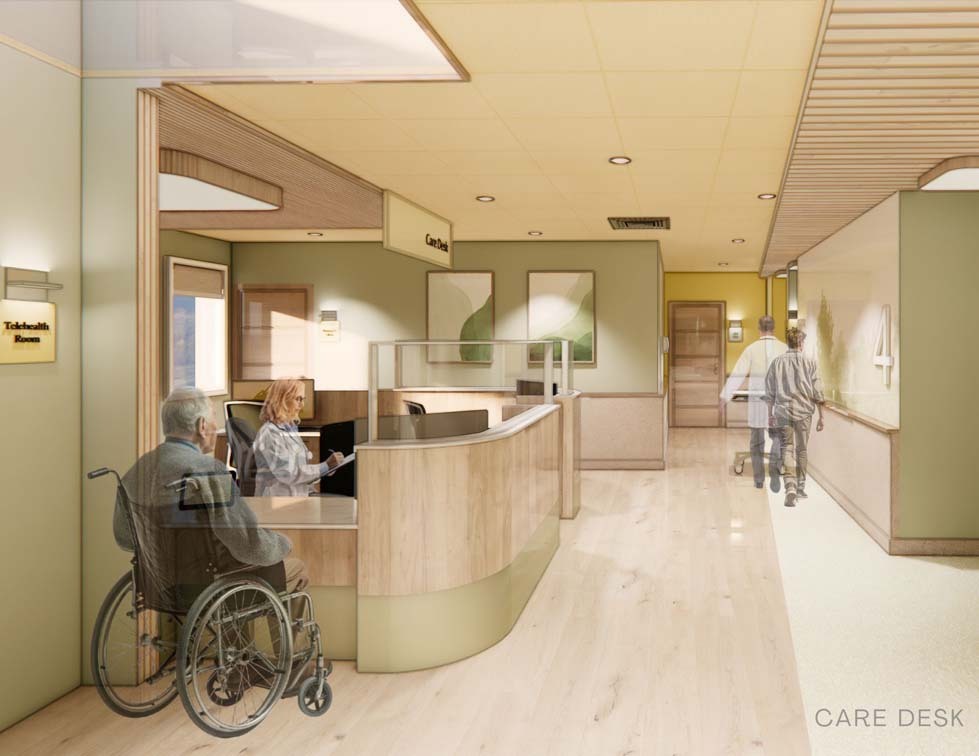
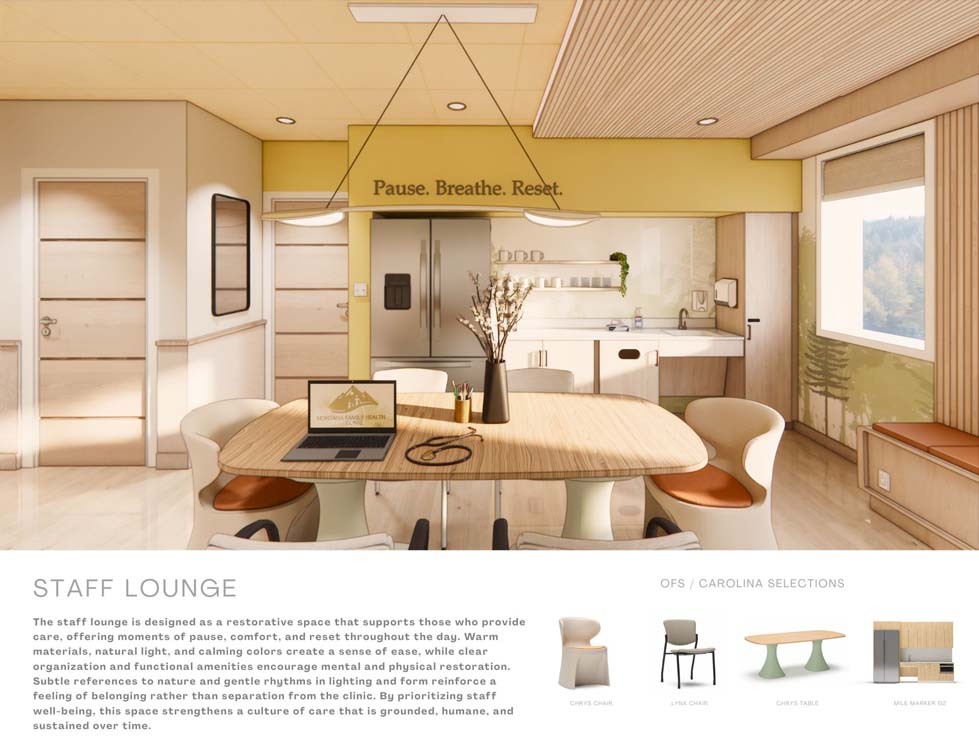
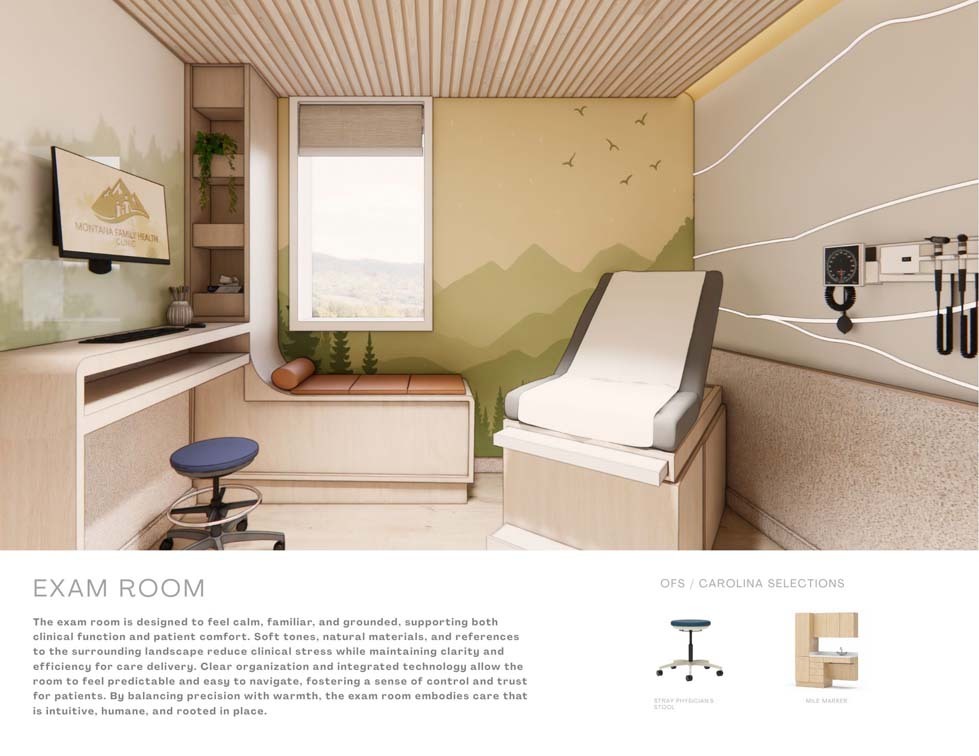
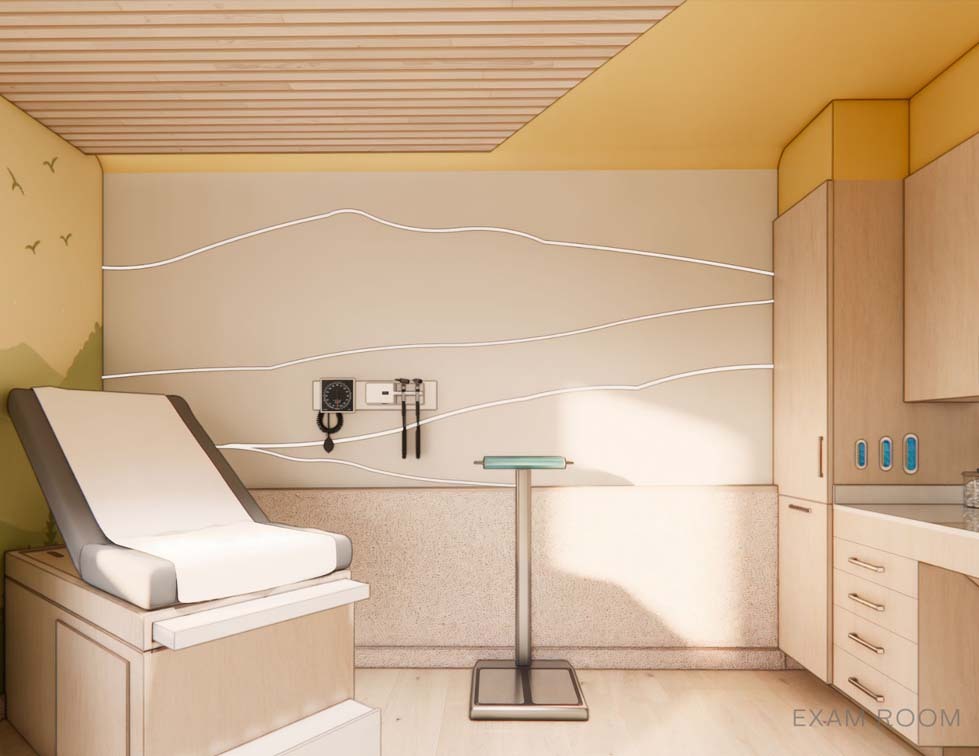
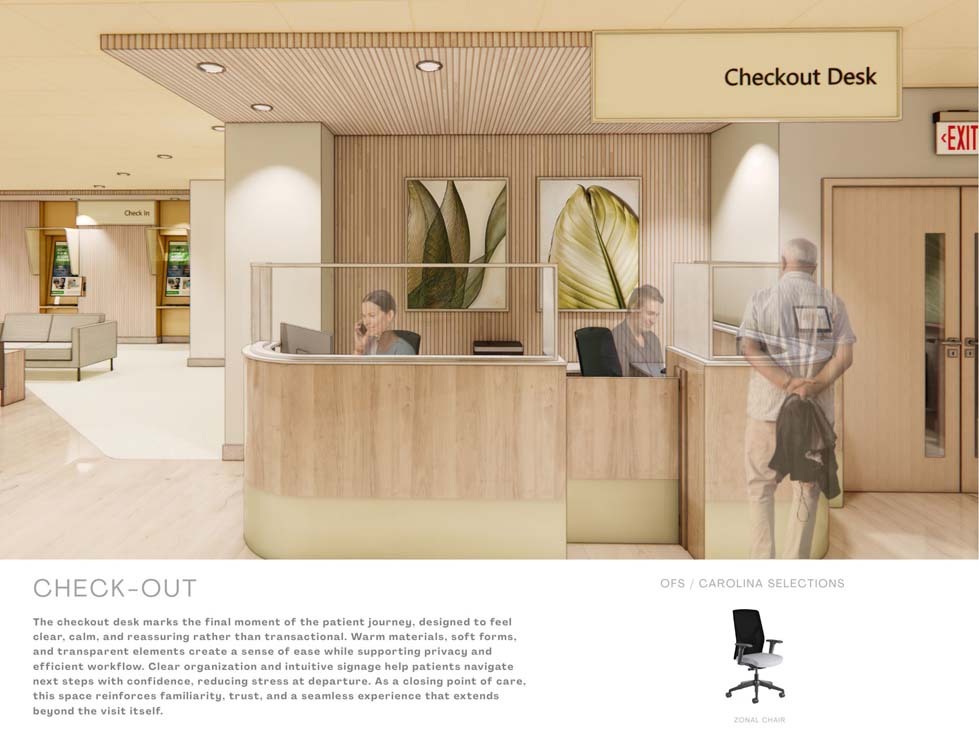
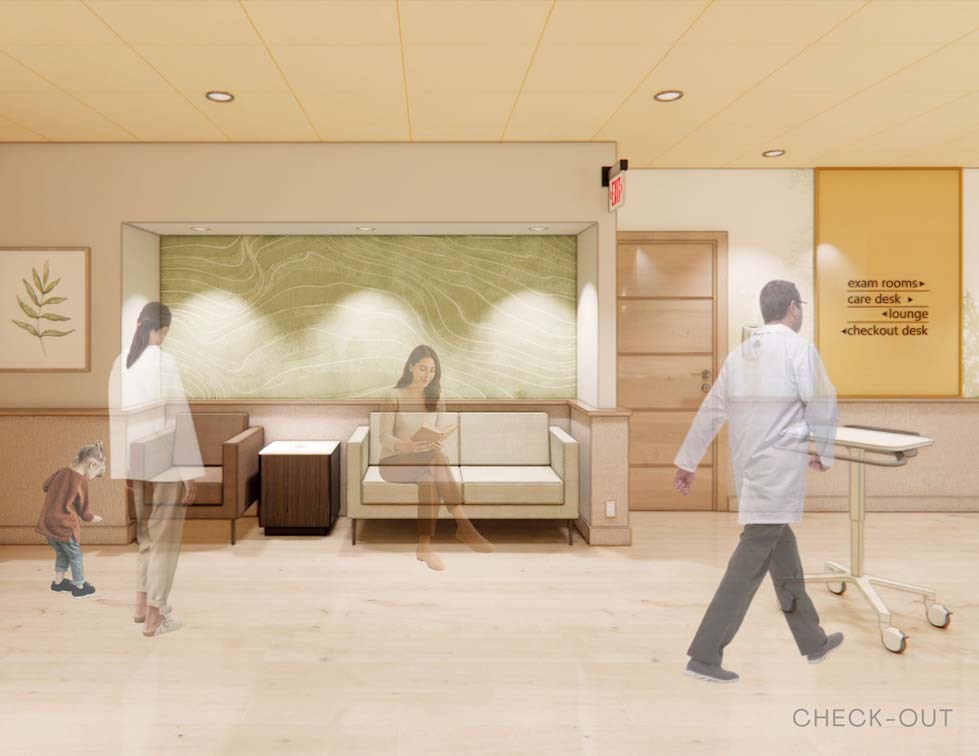
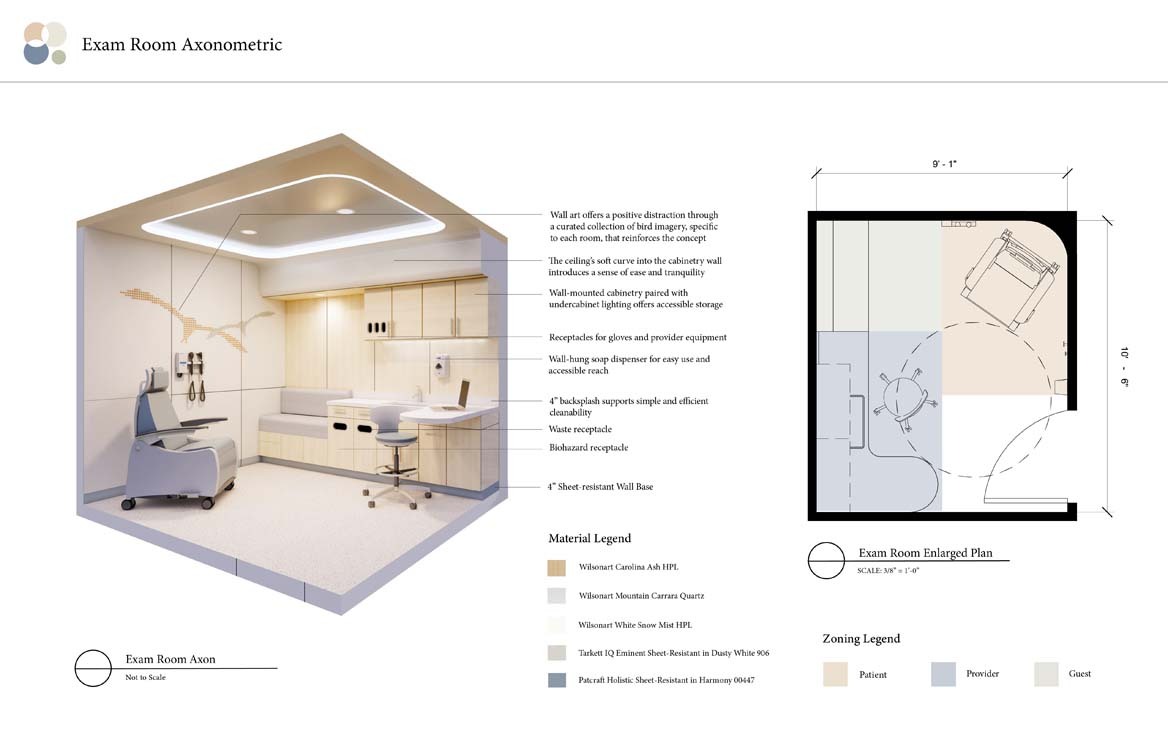
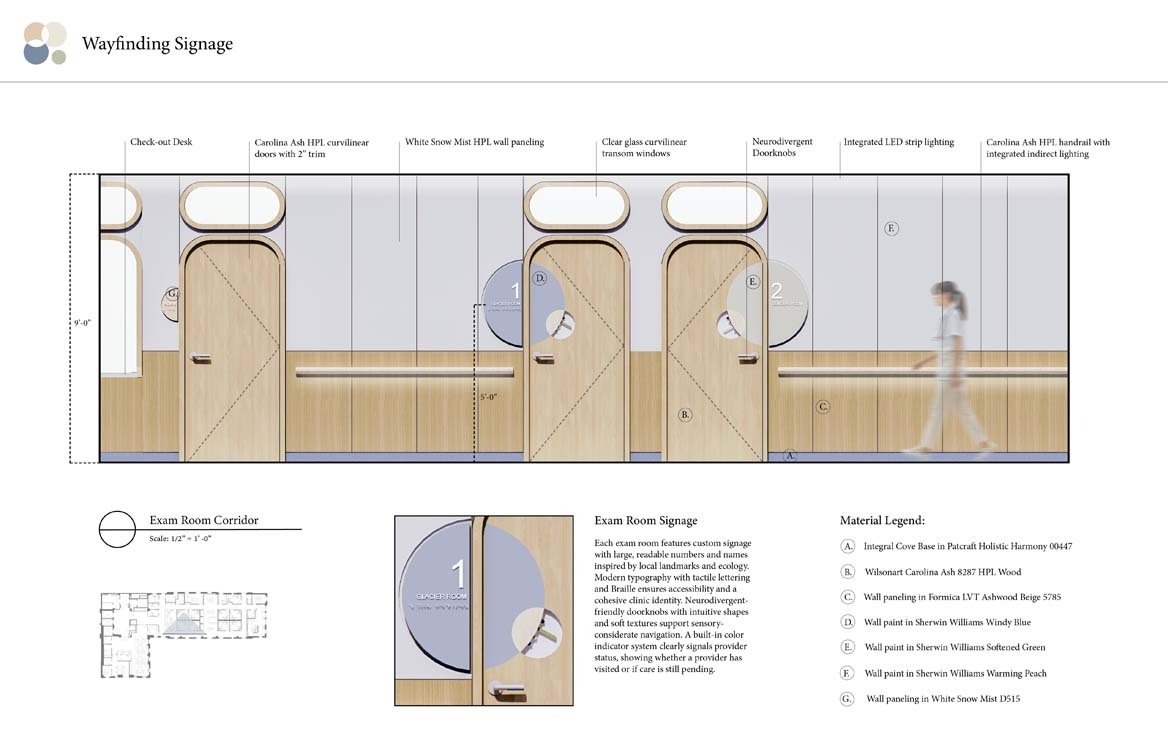
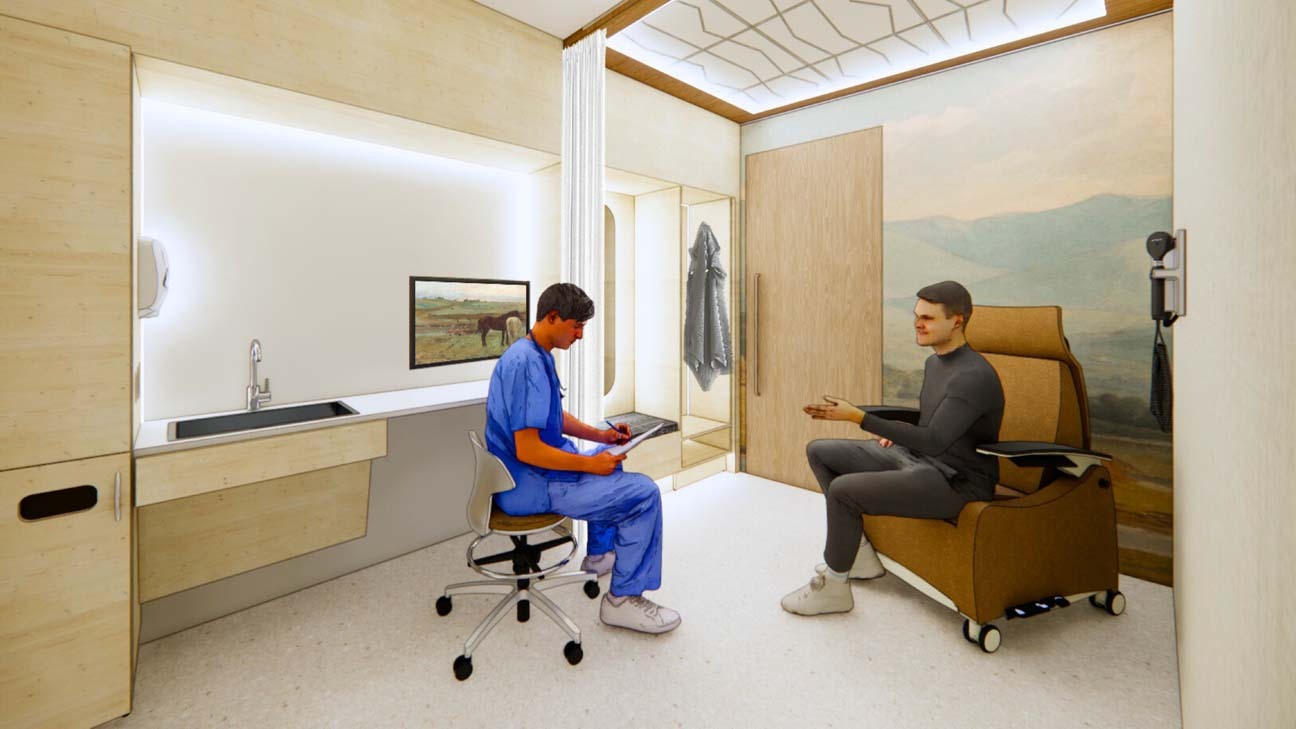
Kelsey Kamerling, Elise Hewitt | Care That Belongs explores how healthcare environments can create spaces rooted in familiarity, rhythm, and place. The project focuses on thoughtful design that fosters emotional comfort, intuitive movement, and long-term trust. Circulation paths are clear and intuitive, reducing stress and reinforcing predictability. Subtle transitions in lighting, materials, and scale help define public, transitional, and private zones without harsh separation. Inspired by the surrounding landscape, materials and finishes blend soft textures and muted tones to balance support, comfort and familiarity with the technical needs of a medical environment. Human-centered planning informs each area of the clinics with waiting spaces that support autonomy and personal comfort, and exam consultation rooms that prioritize clarity and adaptability for both patients and providers. Staff areas are designed as restorative spaces that support caregivers who are essential pillars in rural communities. Consistent visual cues, cohesive material palettes, and gentle spatial rhythms create an environment that becomes easier to navigate with each visit and reinforces a sense of belonging. The clinic is a space that reinforces trust and is shaped by comfort, clarity, and connection.-
Location
N/A
-
Firm
Kirkwood Community College
-
Category
Overall
-
Award
Second Place
-
Location
-
Project Title
The Grove Primary Care Clinic
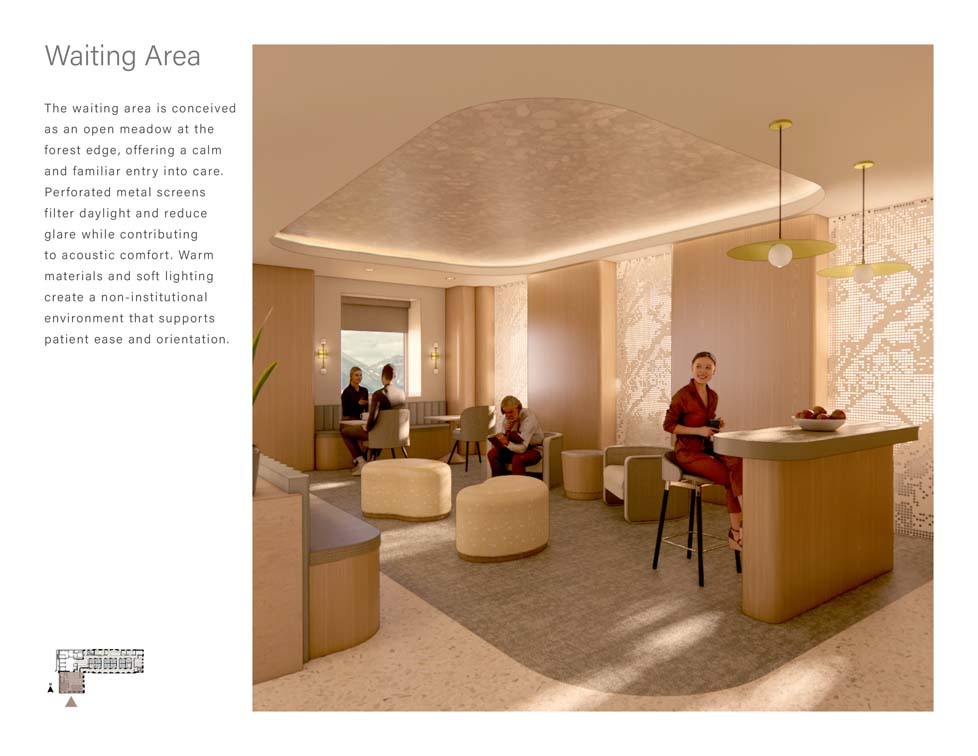
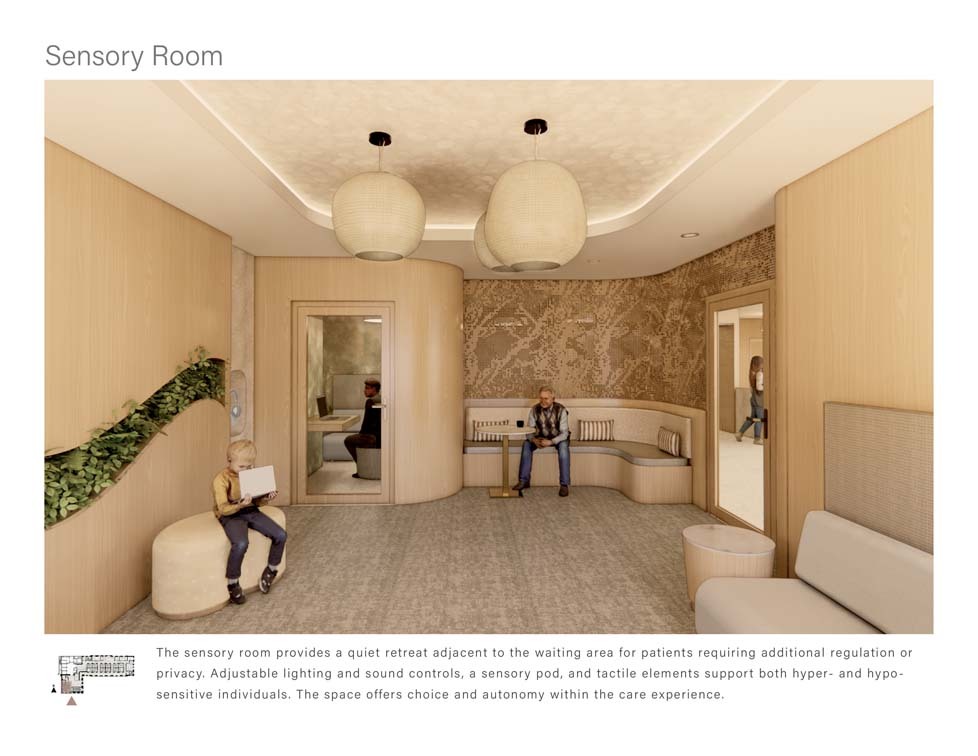
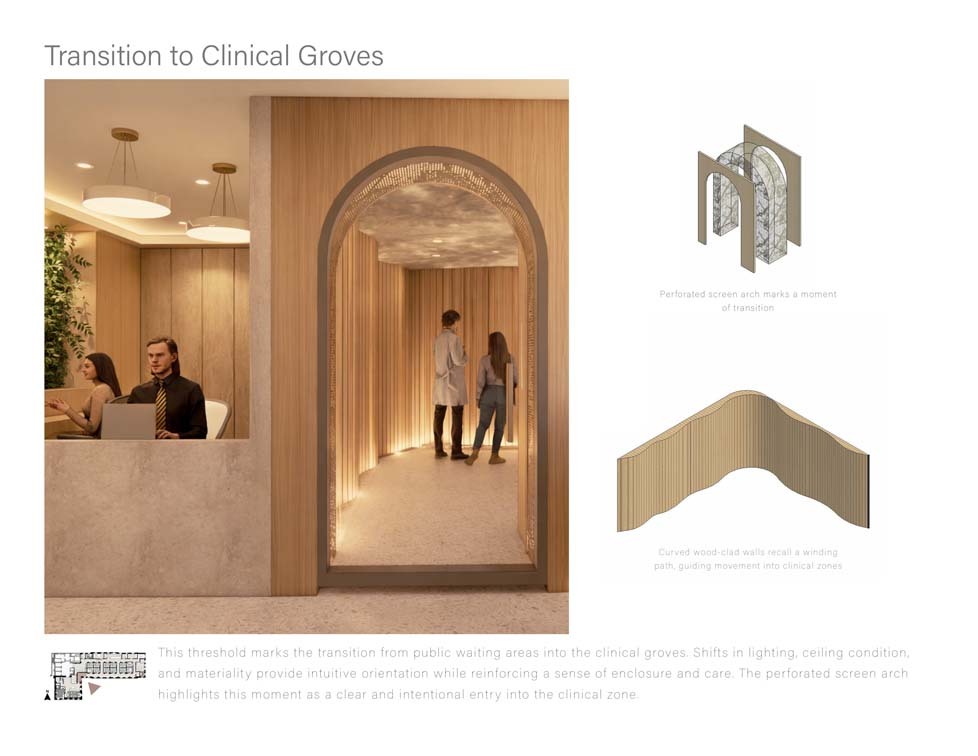
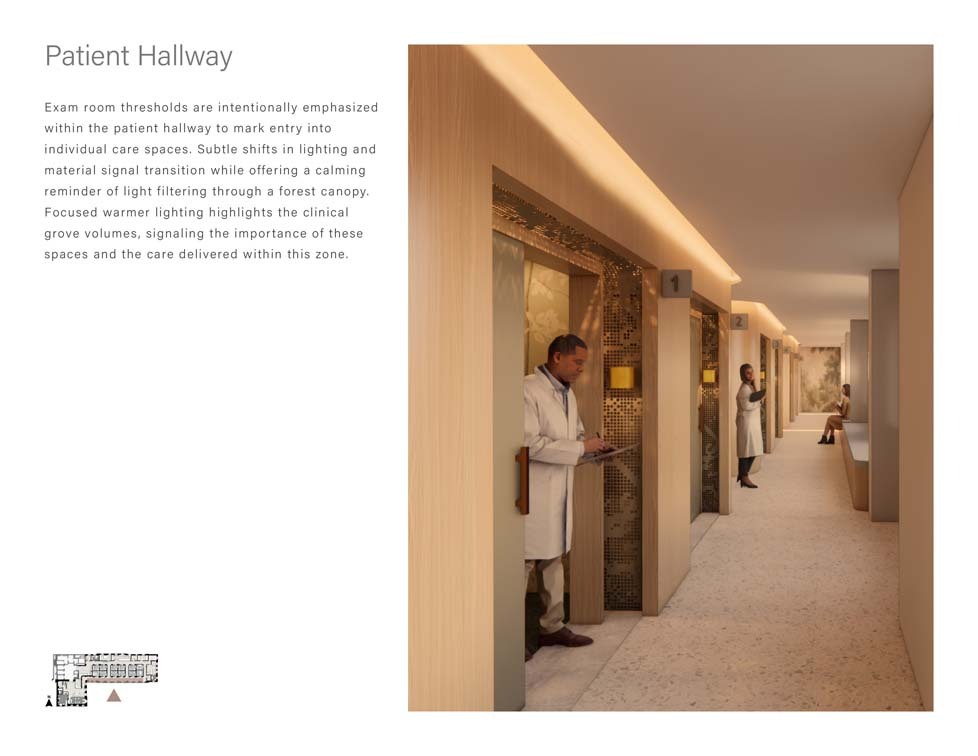
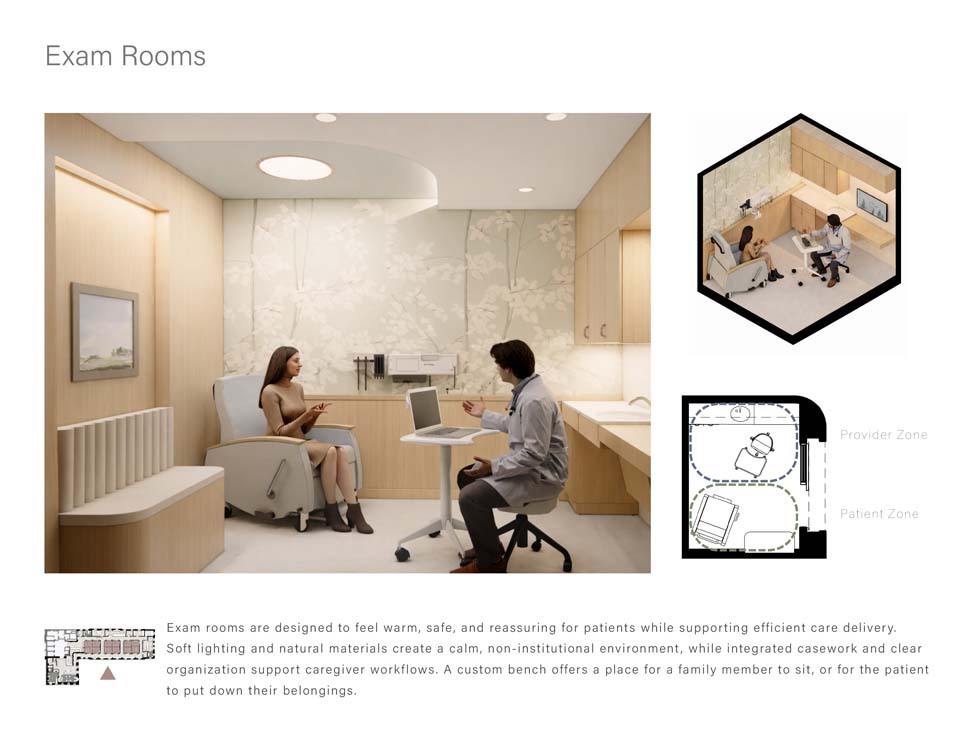
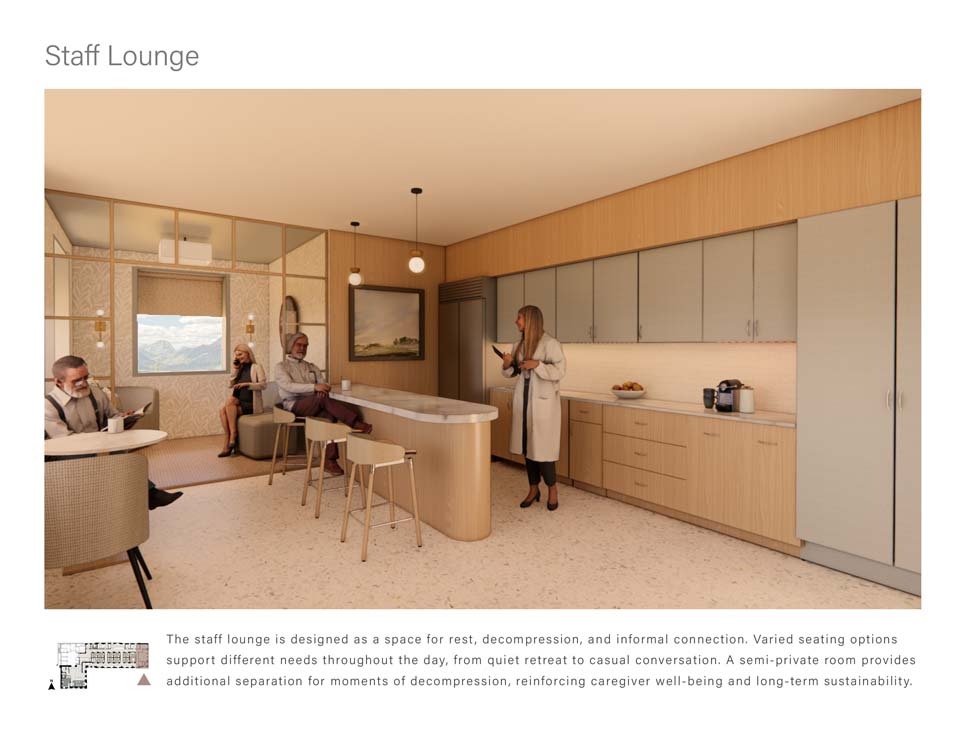
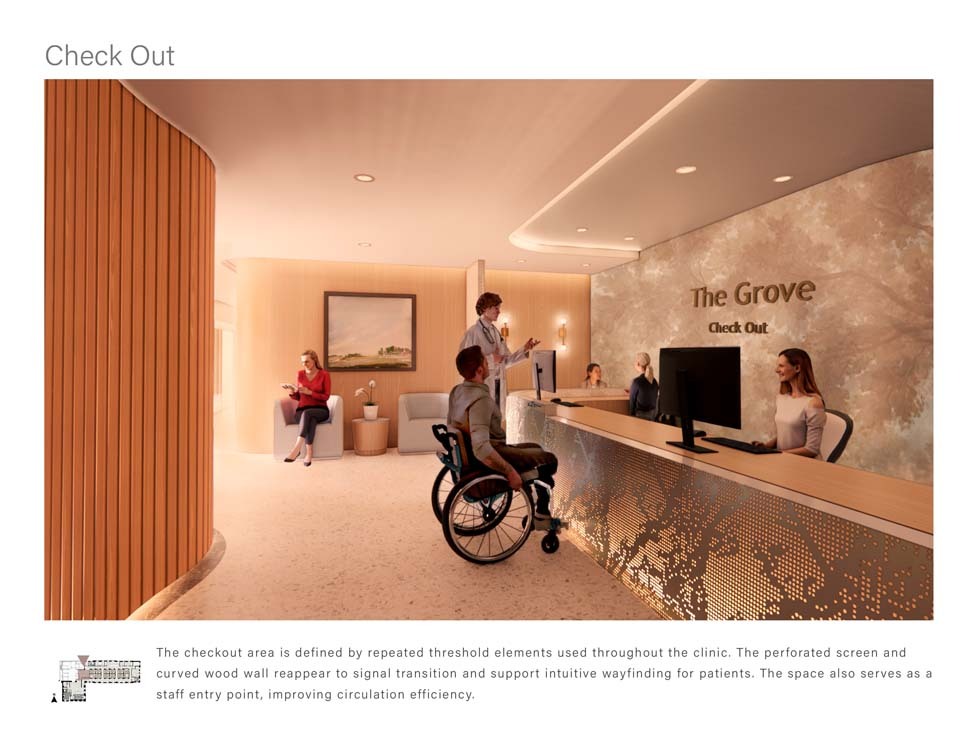
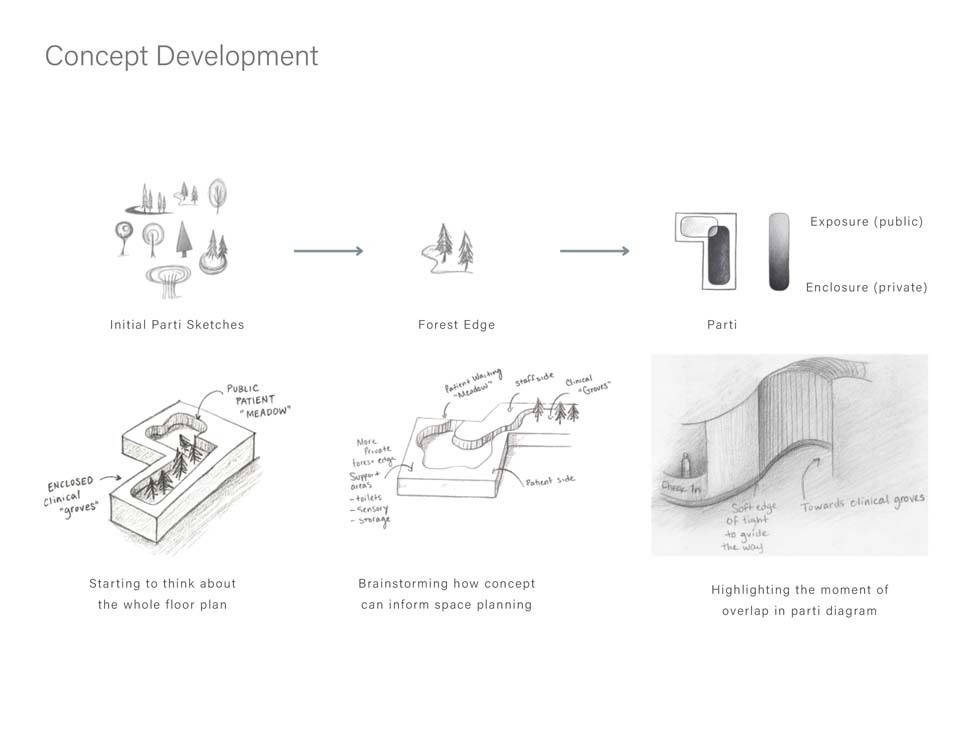
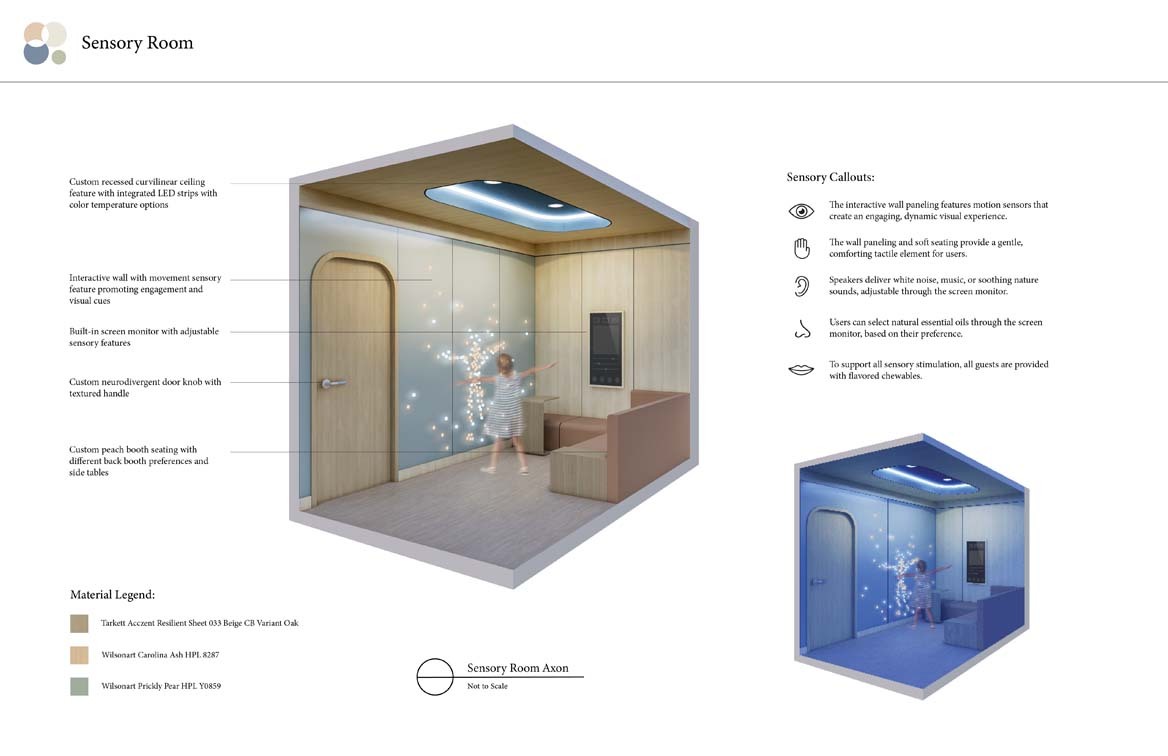
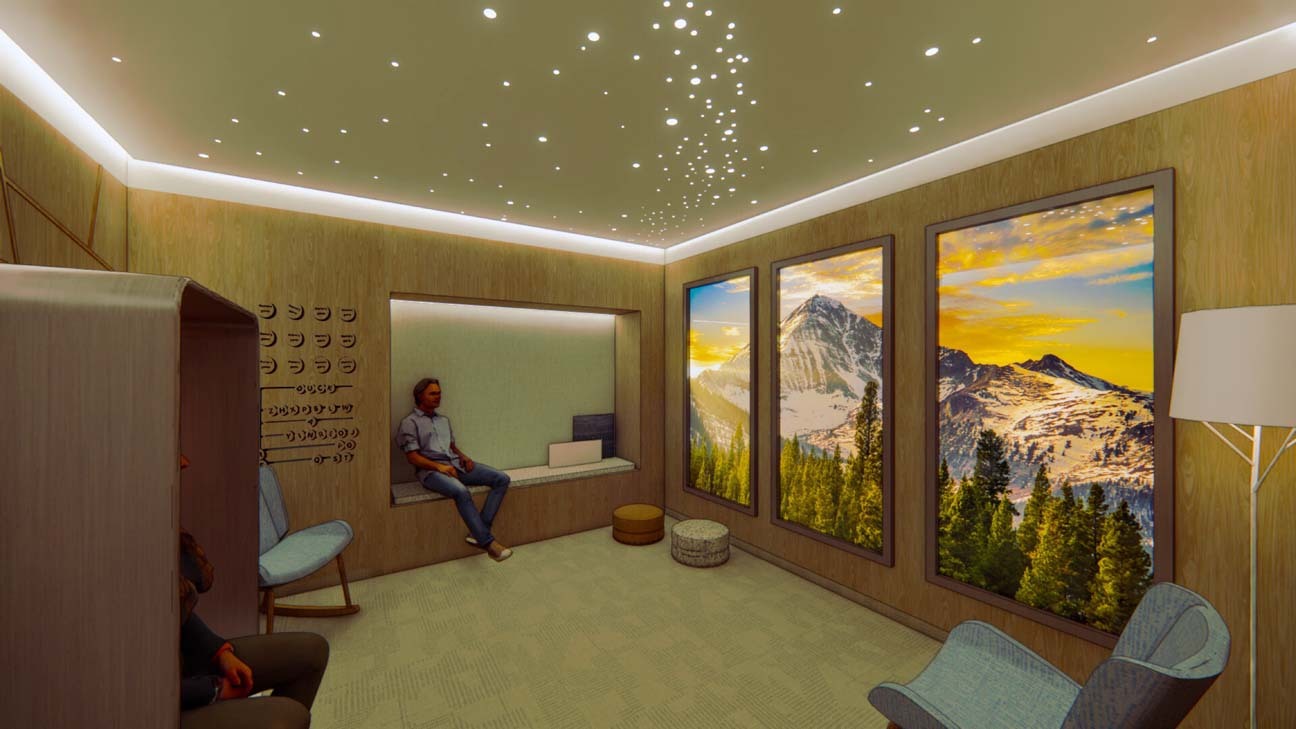
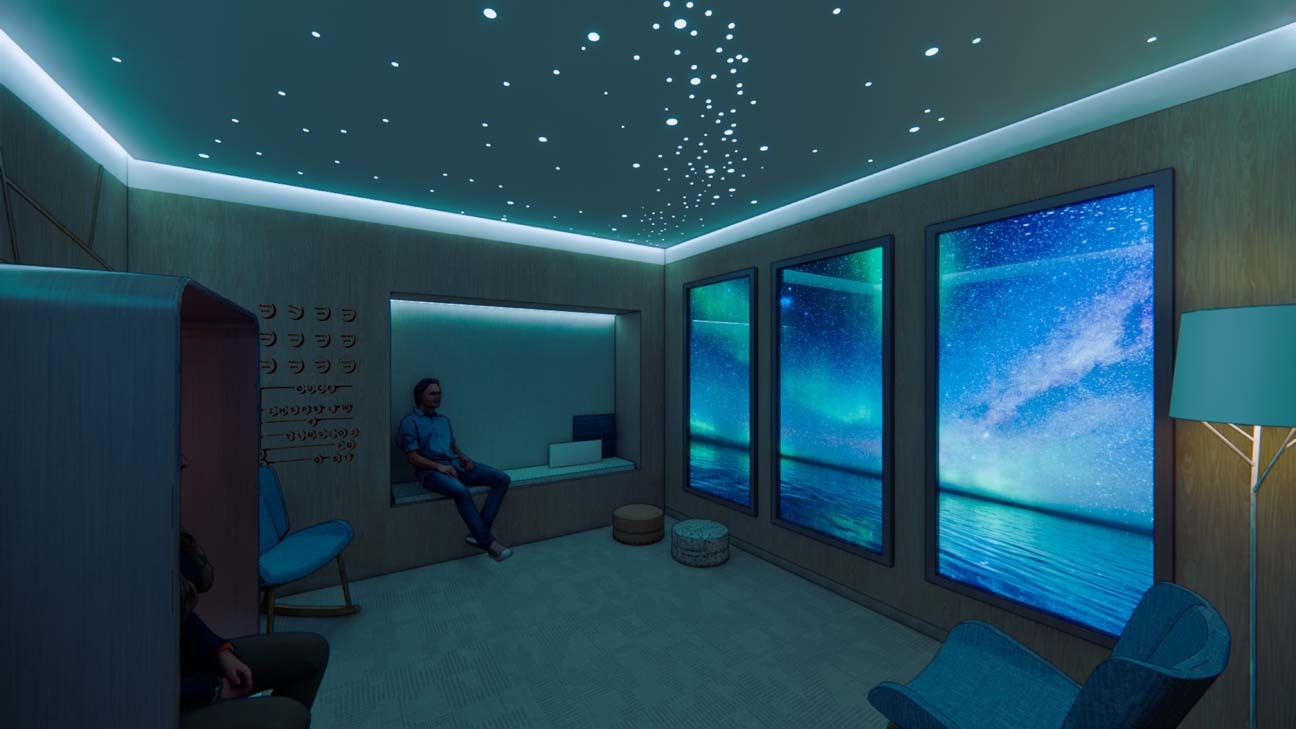
Grace Becton | The Grove mirrors Northwest Montana’s heavily forested landscape, transitioning from open, public waiting spaces to sheltered “groves” of care. The design uses natural elements to establish a sense of place with a peaceful backdrop. The patient journey begins in the waiting area, conceived as an “open meadow,” surrounded by “trees.” Wood-wrapped structural columns and perforated metal screens evoking light filtering through a forest canopy and support emotional regulation and anxiety reduction, while feeling familiar and non-institutional. A dedicated sensory room serves neurodiverse patients through adjustable lighting and sound, a sensory pod, and a green wall providing visual and tactile engagement. Zones are clearly articulated by shifts in lighting, ceiling condition, and materiality signaling entry into the core clinical zone. Exam rooms are organized to improve workflow efficiency, reduce travel distances, and support provider oversight, and the central care desk and staff lounge promote caregiver well-being and retention. Through evidence-based design strategies, and empathy for patient and provider experiences, The Grove delivers an inclusive, welcoming healthcare environment rooted in the local context.-
Location
N/A
-
Firm
George Washington University, Corcoran School of the Arts and Design
-
Category
Overall
-
Award
Third place
-
Location
-
Project Title
Pondera Health
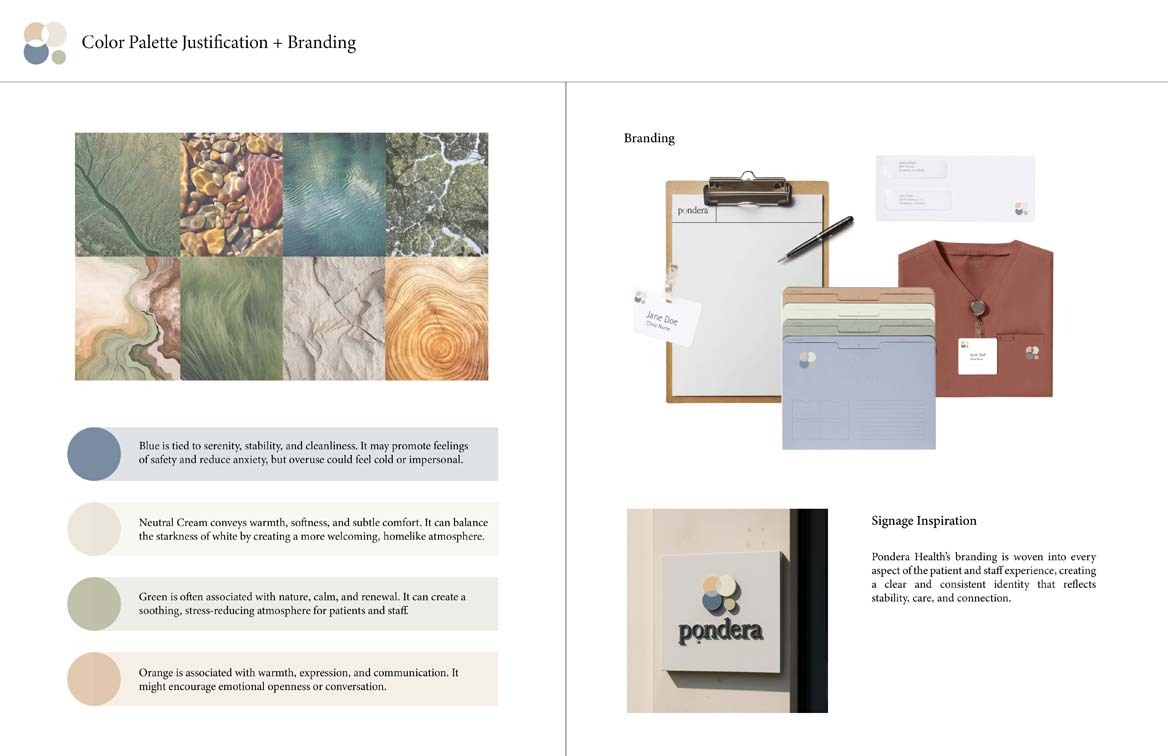
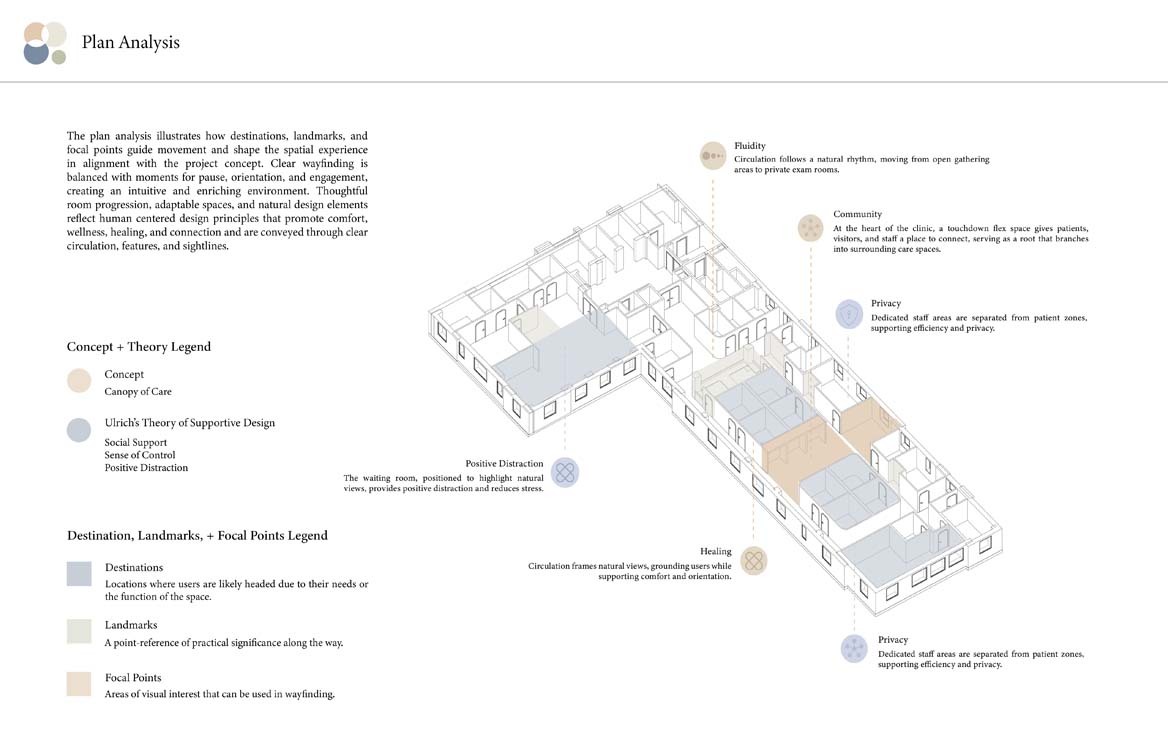
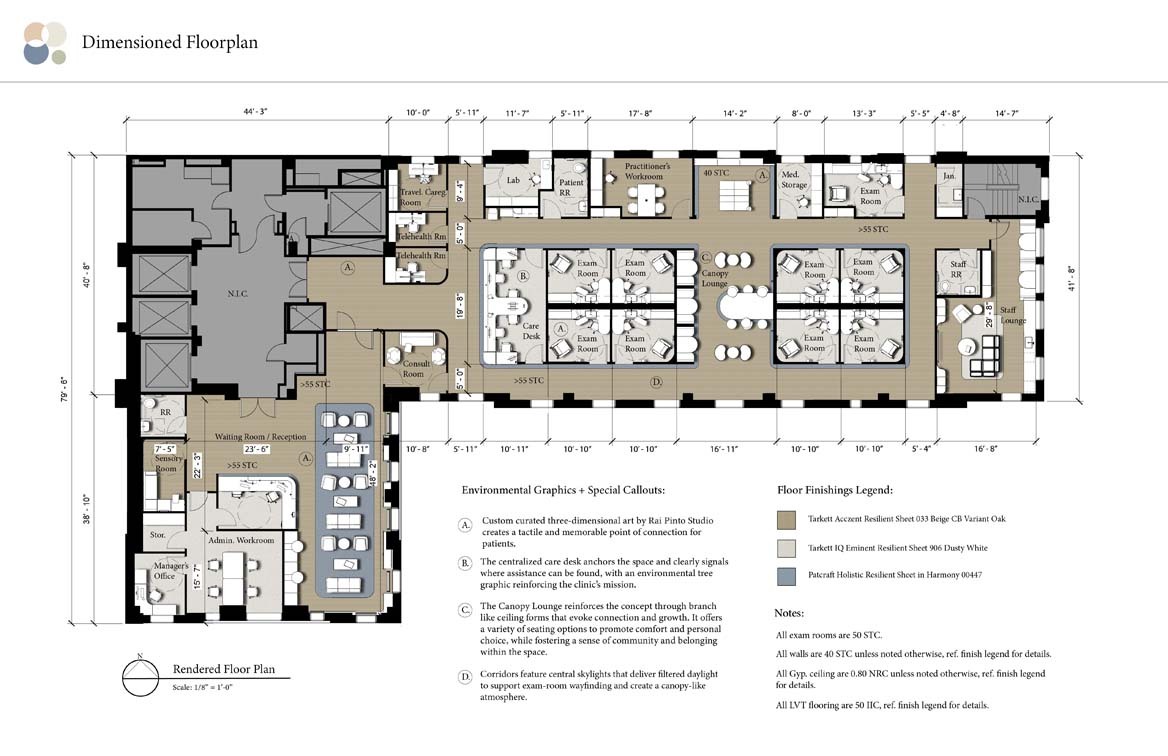
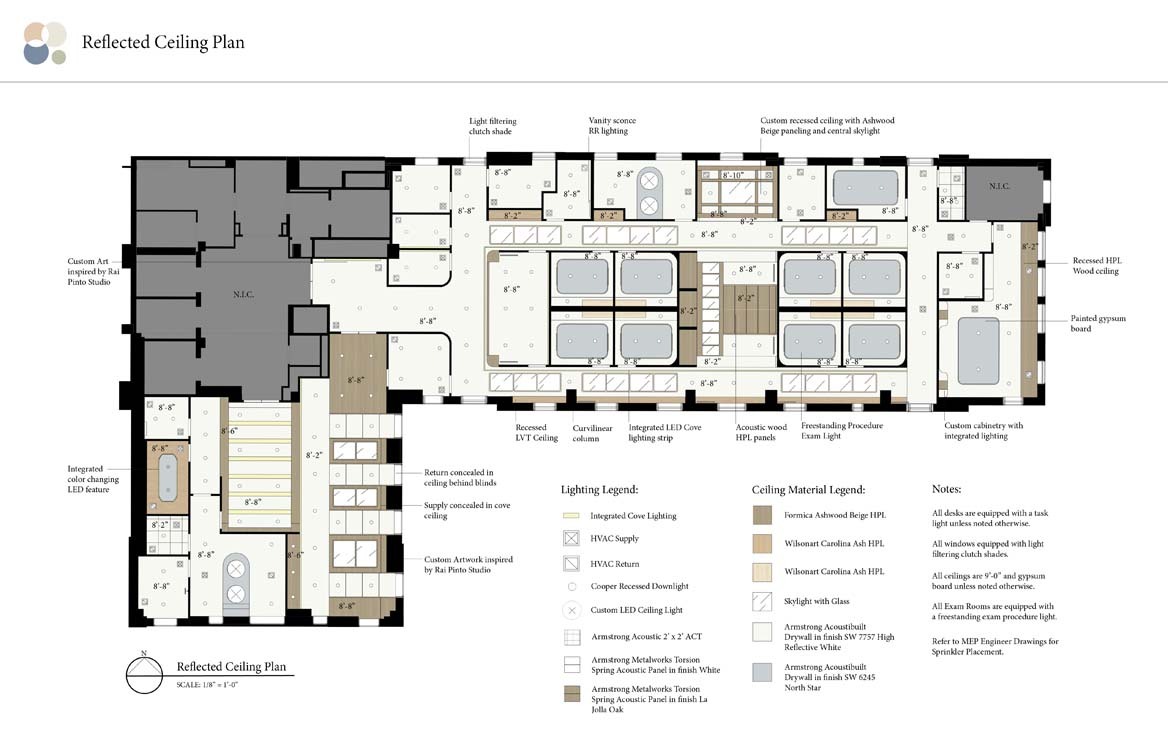
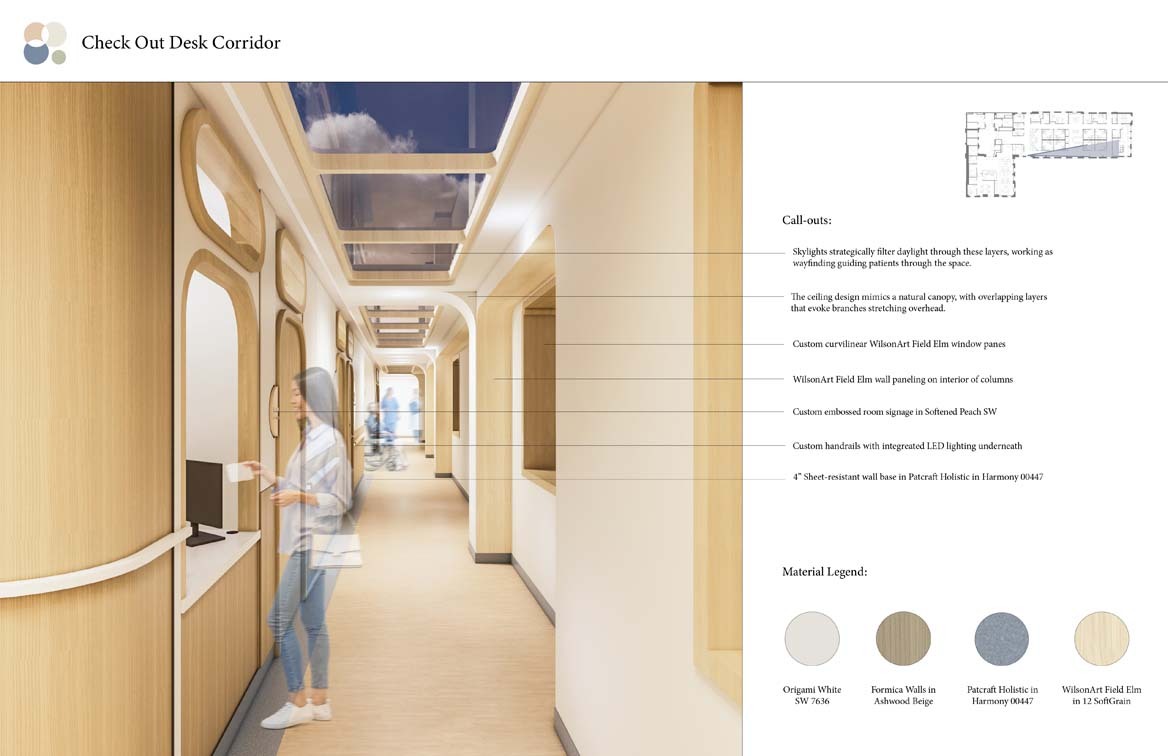
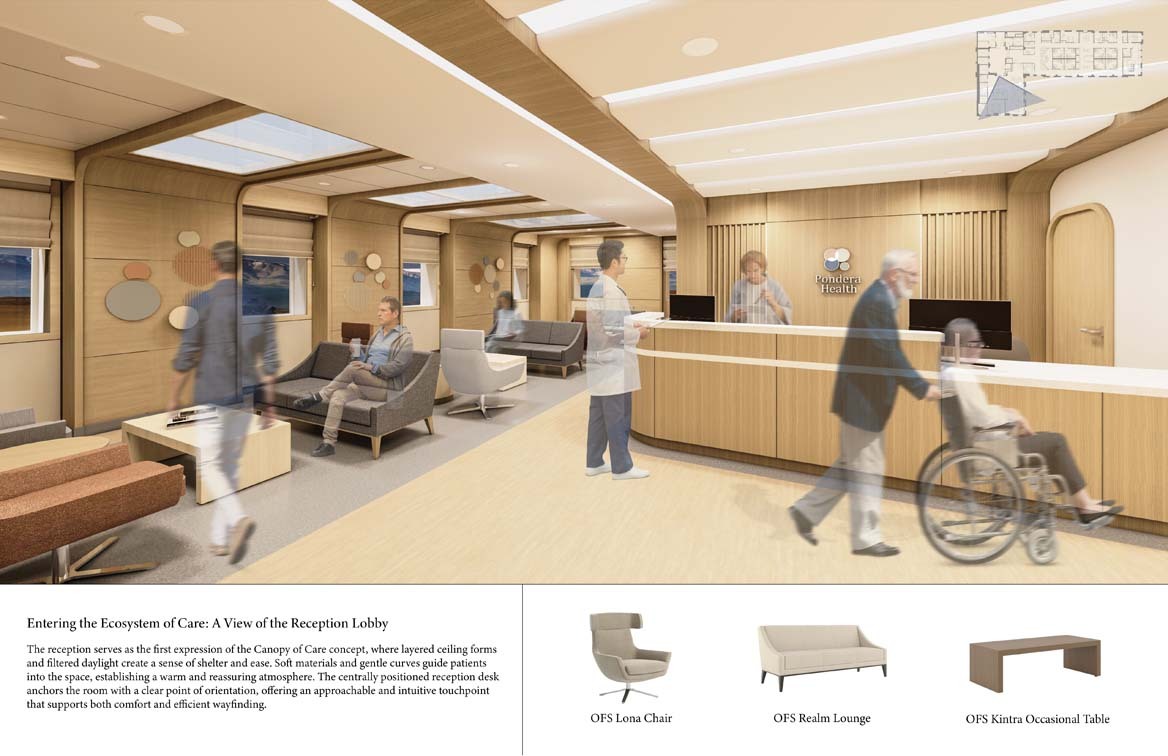
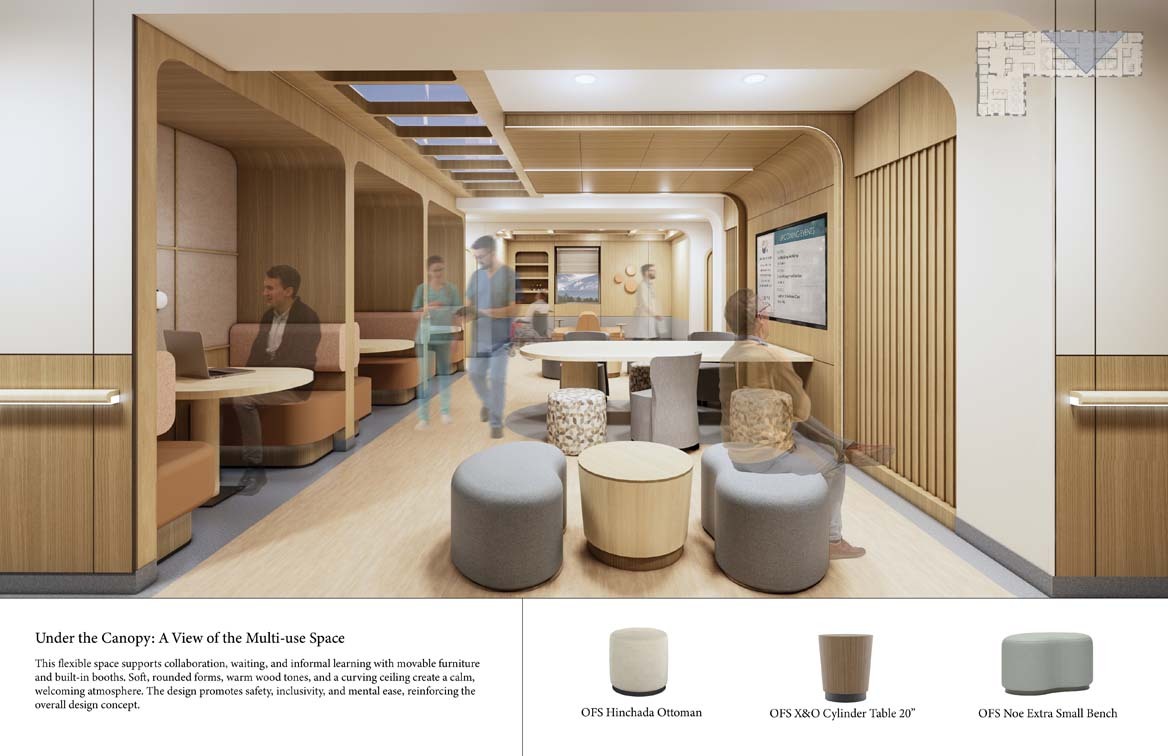
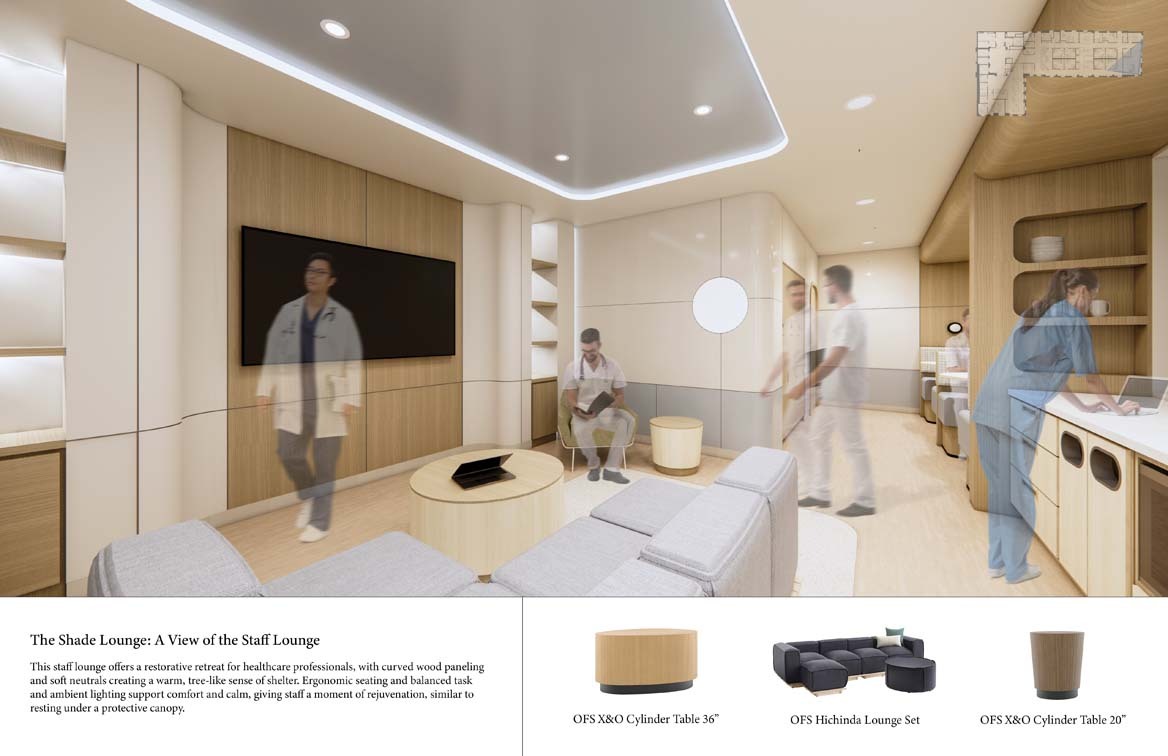
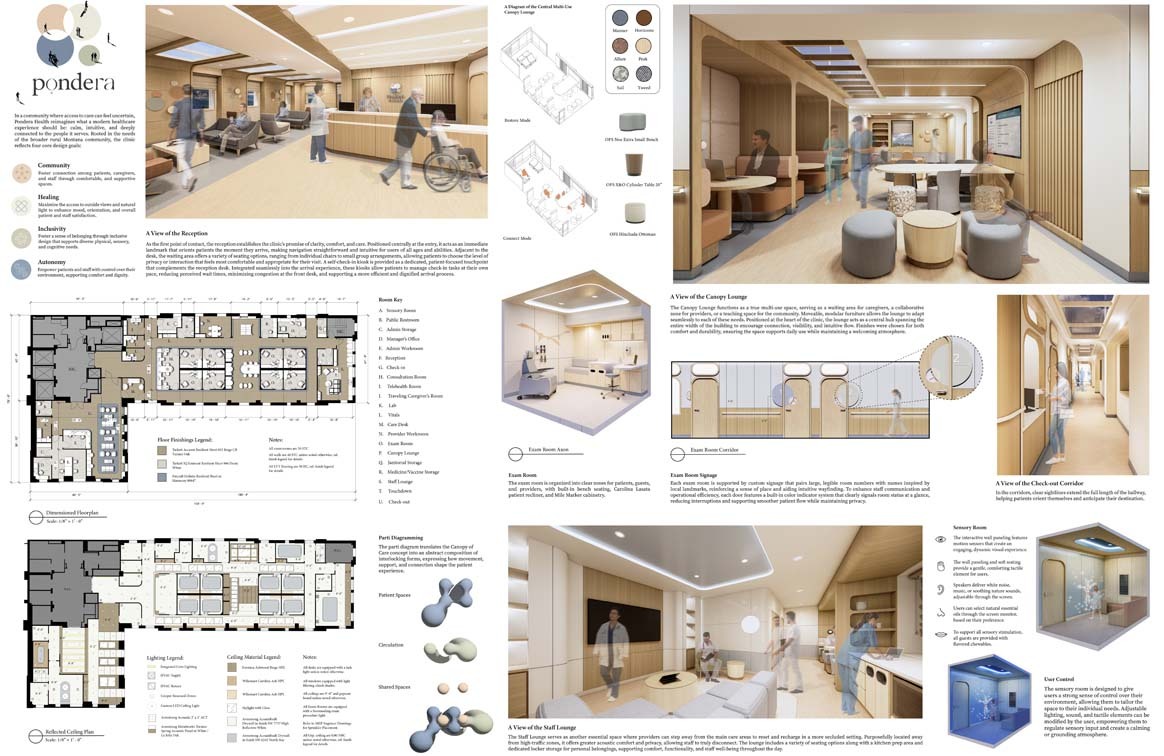
Alexa Condento, Lilly Gleaton | Pondera Health is an integrated ecosystem of care reflecting the values, identity, and realities of rural life in Northwest Montana and long-term health for the community and responds to critical gaps in regional healthcare access like provider shortages and clinic closures. Inspired by natural ecosystems and frameworks, the clinic has standardized exam rooms, support spaces, and an infrastructure that supports patient experience and provider workflow. Spatial organization, materiality, and form work together to support patient well-being by reducing stress, encouraging autonomy, and reinforcing an intuitive spatial understanding. Clear sightlines and a gently branching circulation guide patients from shared spaces into private spaces. Repeating forms, layered spatial moments, and subtle shifts in enclosure provide visual and tactile cues that minimize cognitive load for patients that are anxious, unwell, or unfamiliar with healthcare settings. Consistent material and color strengthens visual continuity, while seating options and self-directed wayfinding provide a sense of control for patients. Centralized waiting and lounge areas reinforce social connection among patients, families, and staff, while exam rooms and quiet zones support focused conversations, trust, and individualized care.-
Location
N/A
-
Firm
Florida State University
-
Category
Overall
-
Award
Honorable Mention
-
Location
-
Project Title
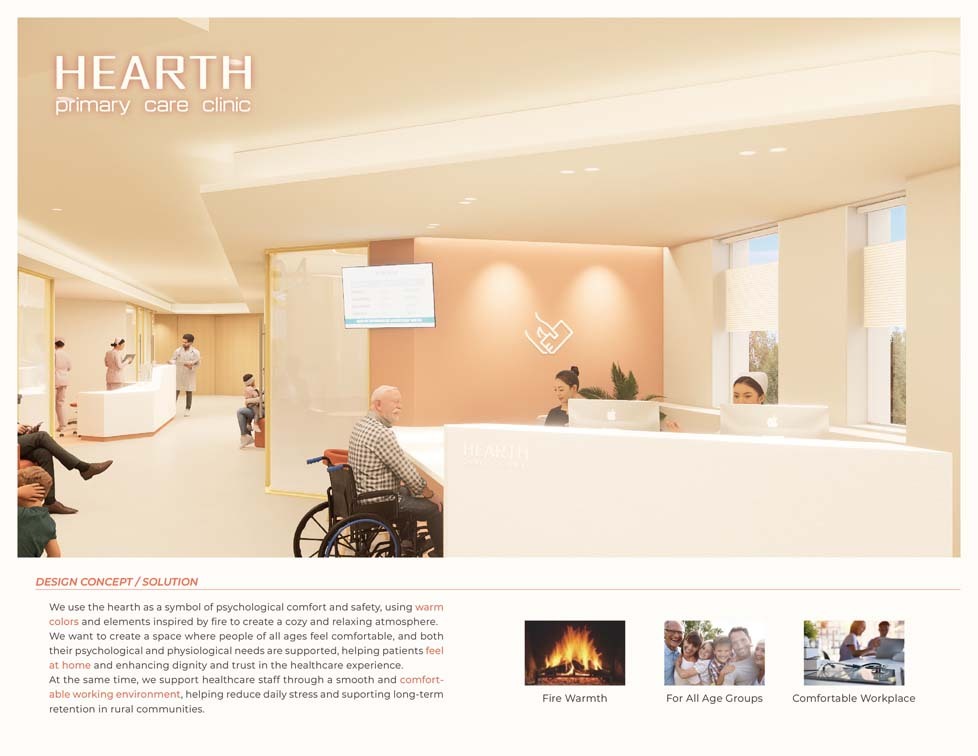
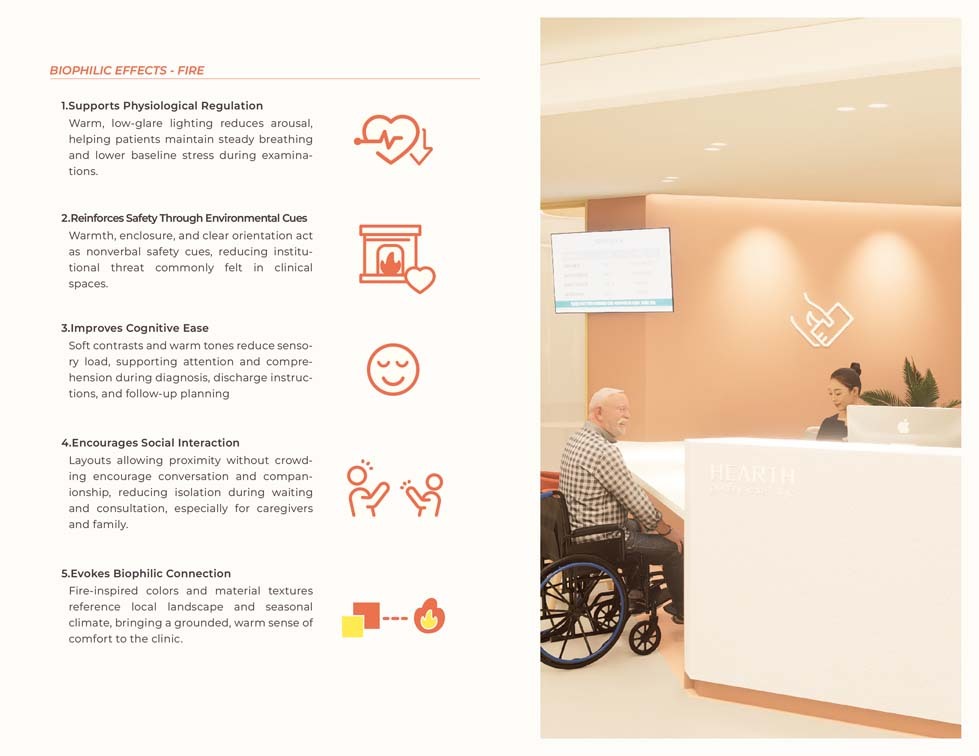
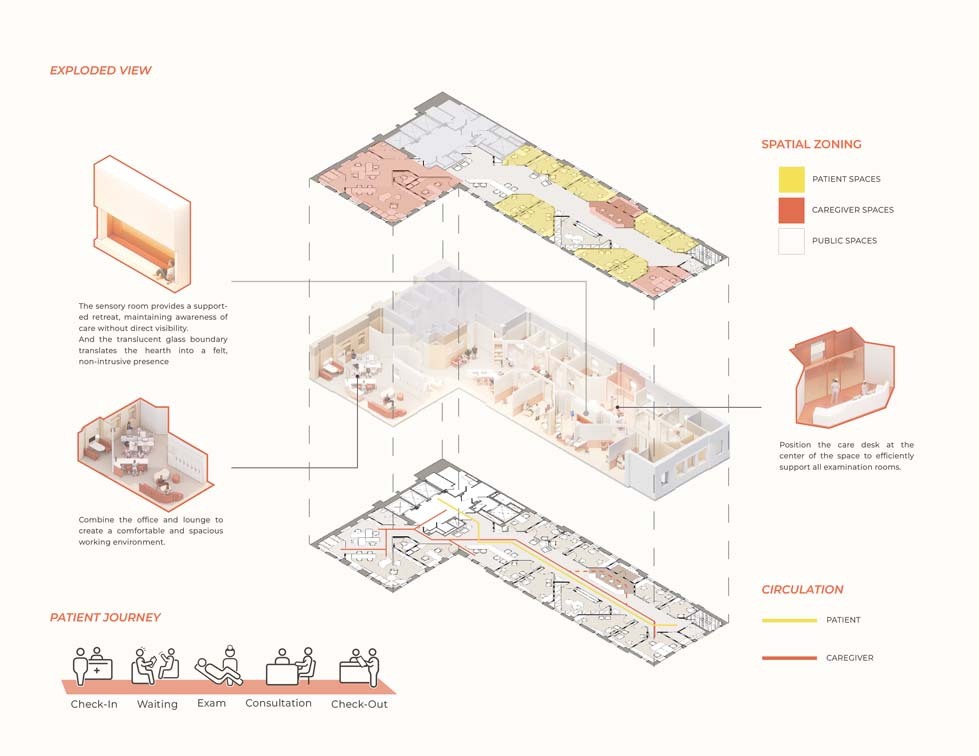
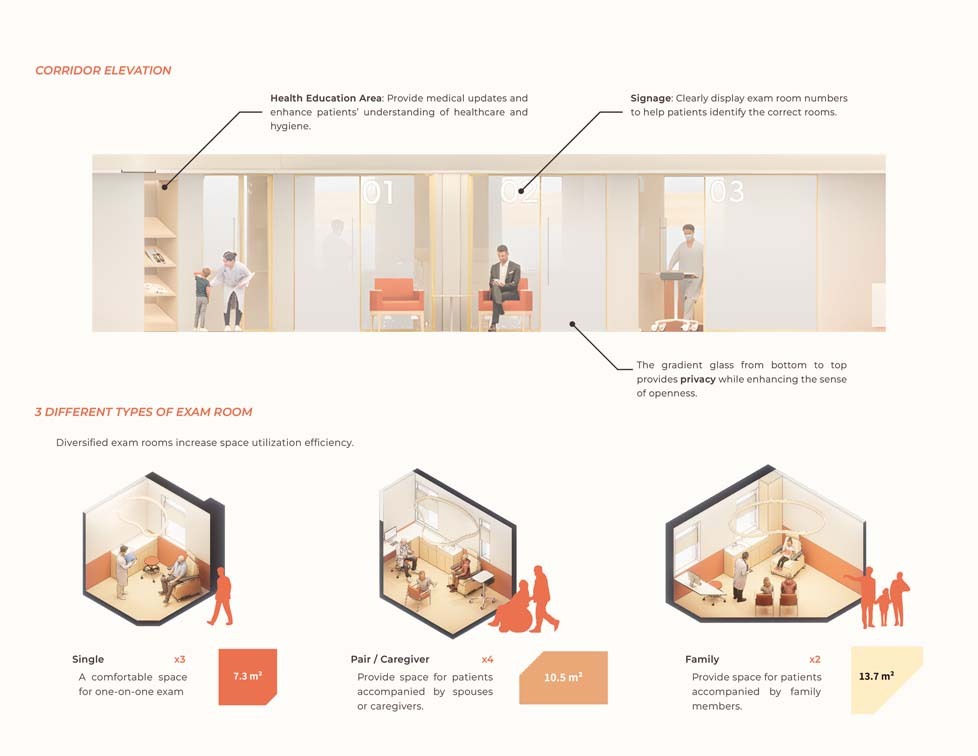
HEARTH Primary Care Clinic
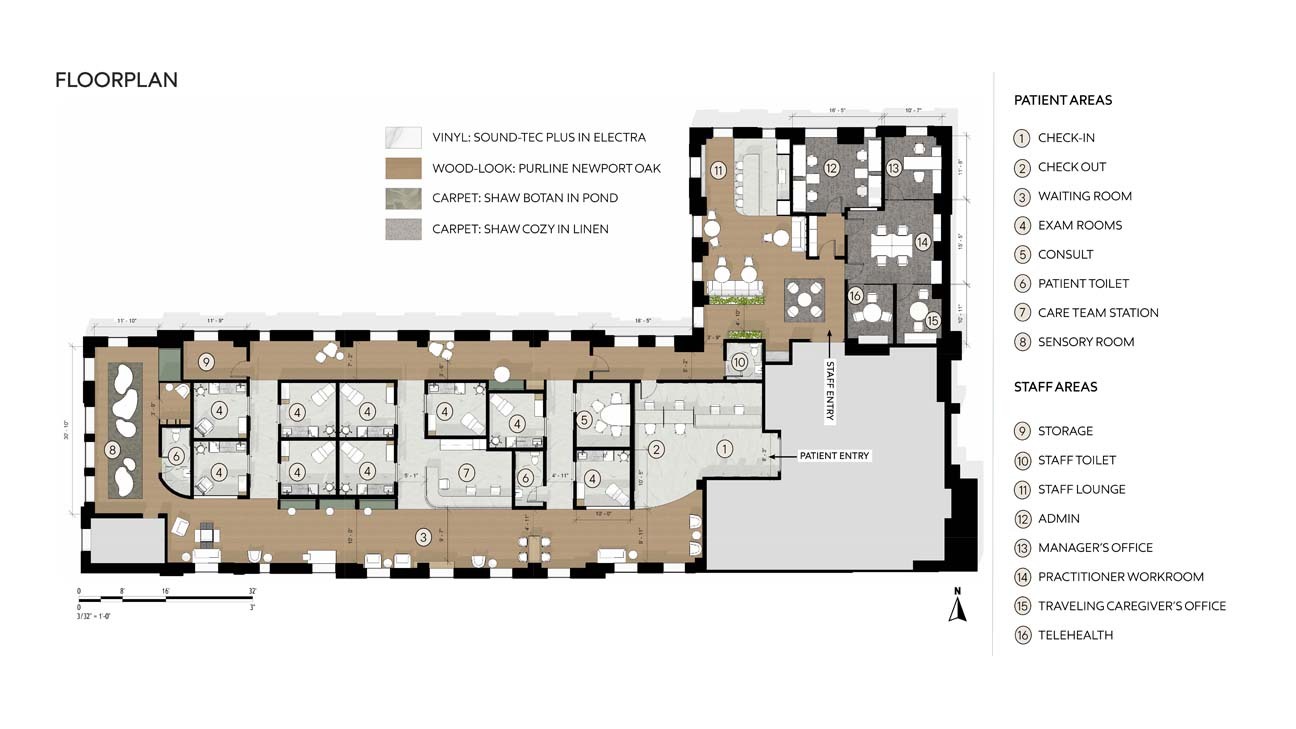
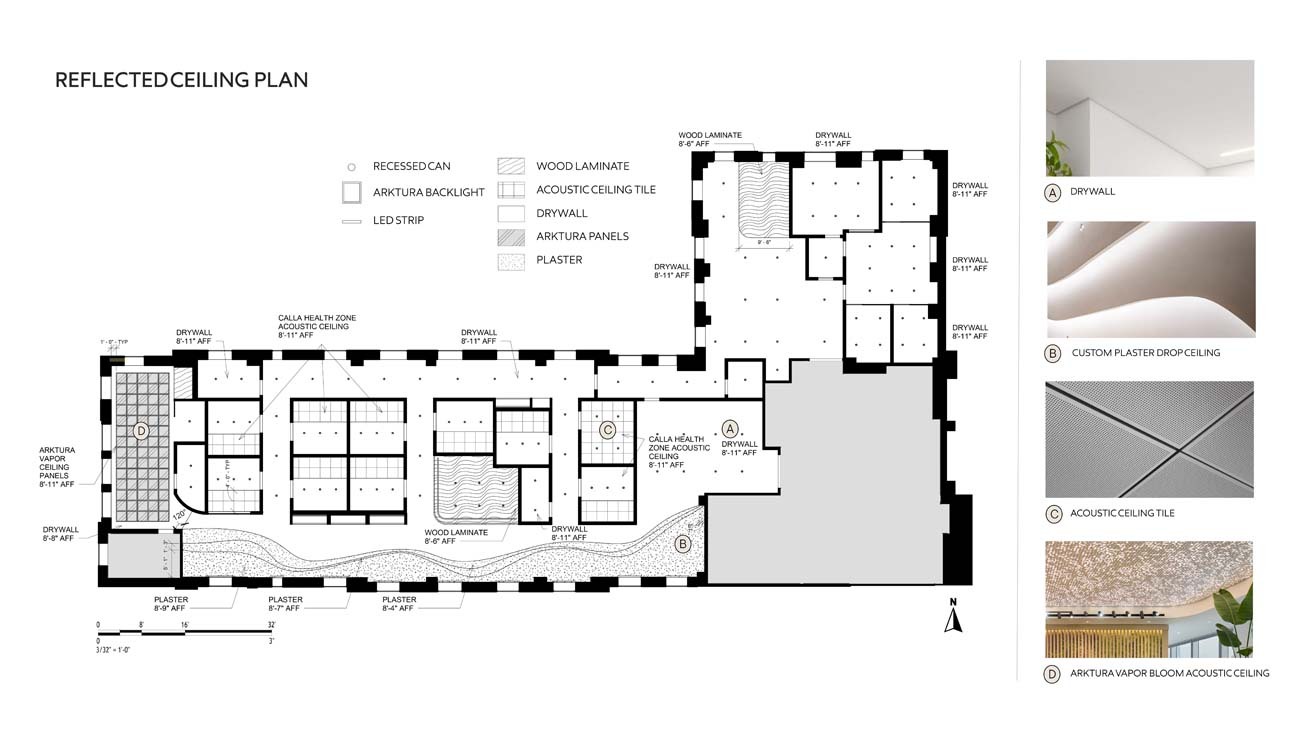
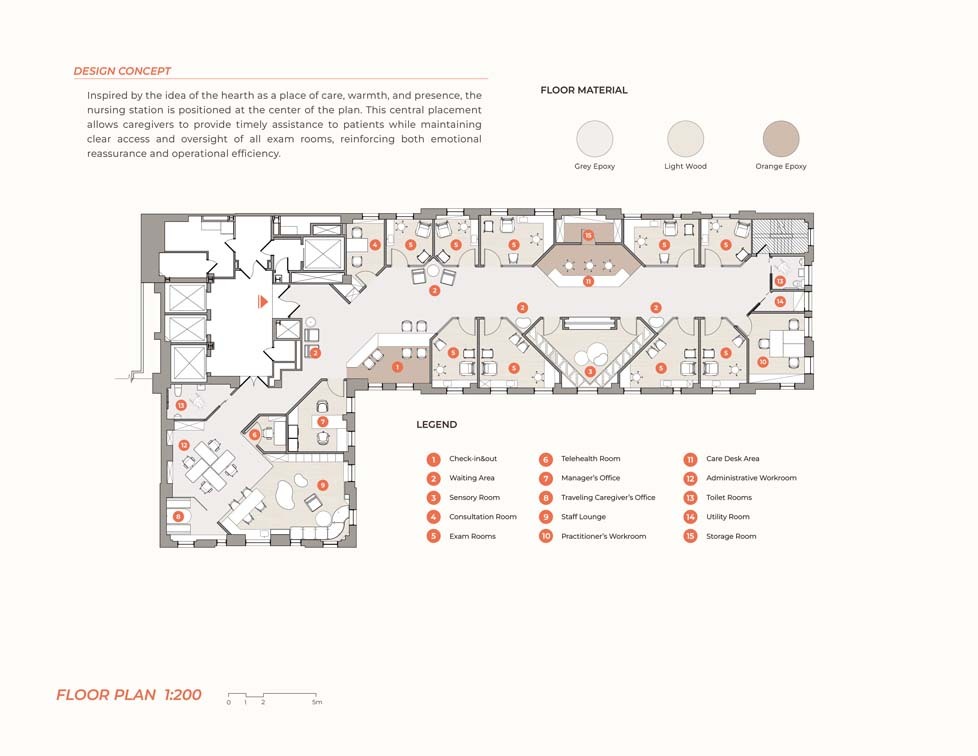
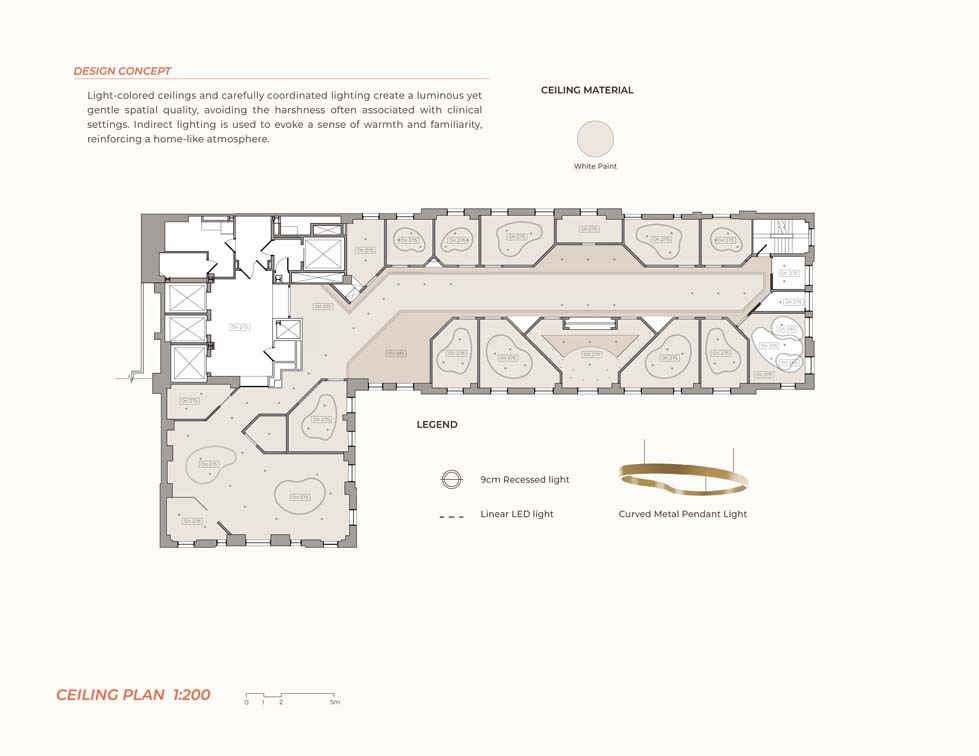
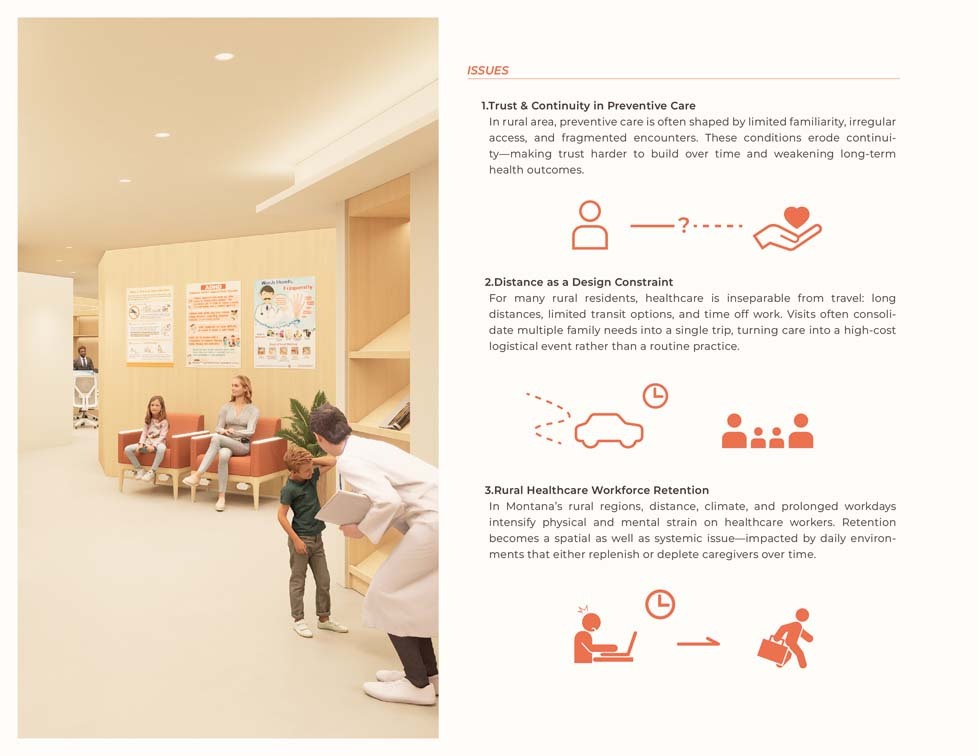
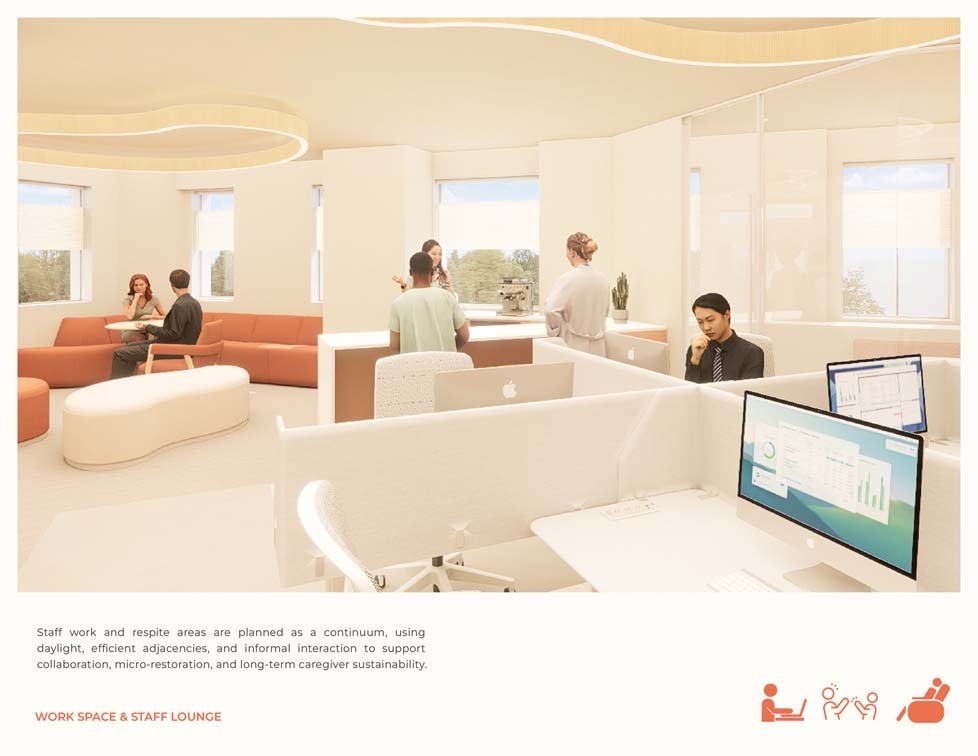
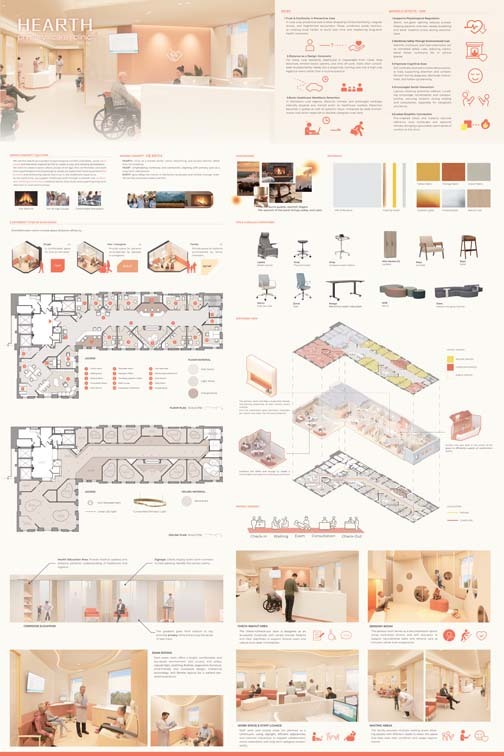
HAOEN CHEN, YU-HSIEN TSAO | HEARTH Primary Care Clinic focuses on three key priorities: supporting collective; organizing space through visibility over separation; and creating a supportive environment for patients and healthcare workers. Care is understood as a “shared and visible condition.” The design ensures care remains perceptible and visible with a centrally located care desk serving as a visual anchor for the entire clinic. Exam rooms become relational spaces rather than standardized, isolated boxes, responding to different conditions, and acknowledging that primary care is often experienced collectively. Single rooms support focused consultations, a sensory room aids patients who feel overwhelmed, and family exam rooms accommodate larger groups. We also place emphasis on staff well-being as a critical design priority rather than a secondary concern. Staff areas are organized to reduce unnecessary movement, support short moments of recovery, and improve retention. This design offers a balanced and sustainable solution for long-term healthcare environments by integrating shared care, relational exam spaces, and staff well-being into the structure of the clinic while balancing the realities of comprehensive primary care.-
Location
N/A
-
Firm
National Yunlin University of Science and Technology
-
Category
Overall
-
Award
Honorable Mention
-
Location
-
Project Title
Juniper Primary Care
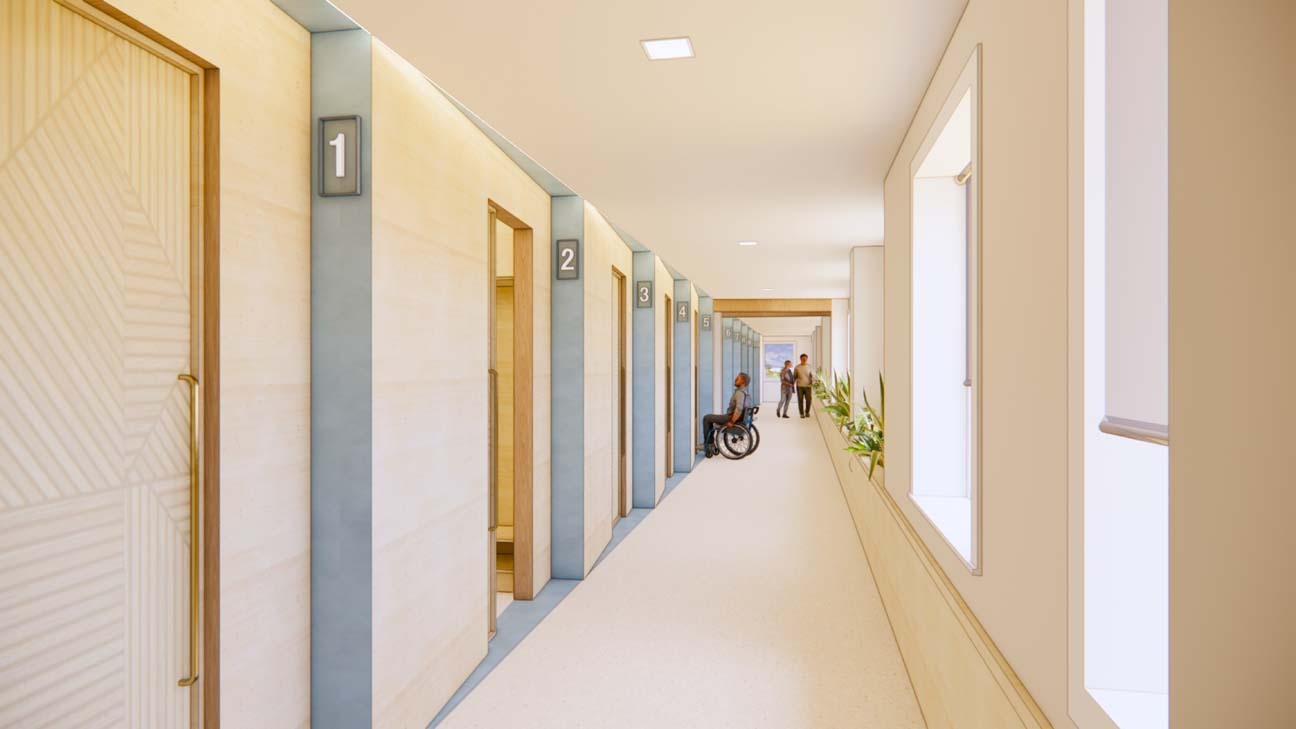
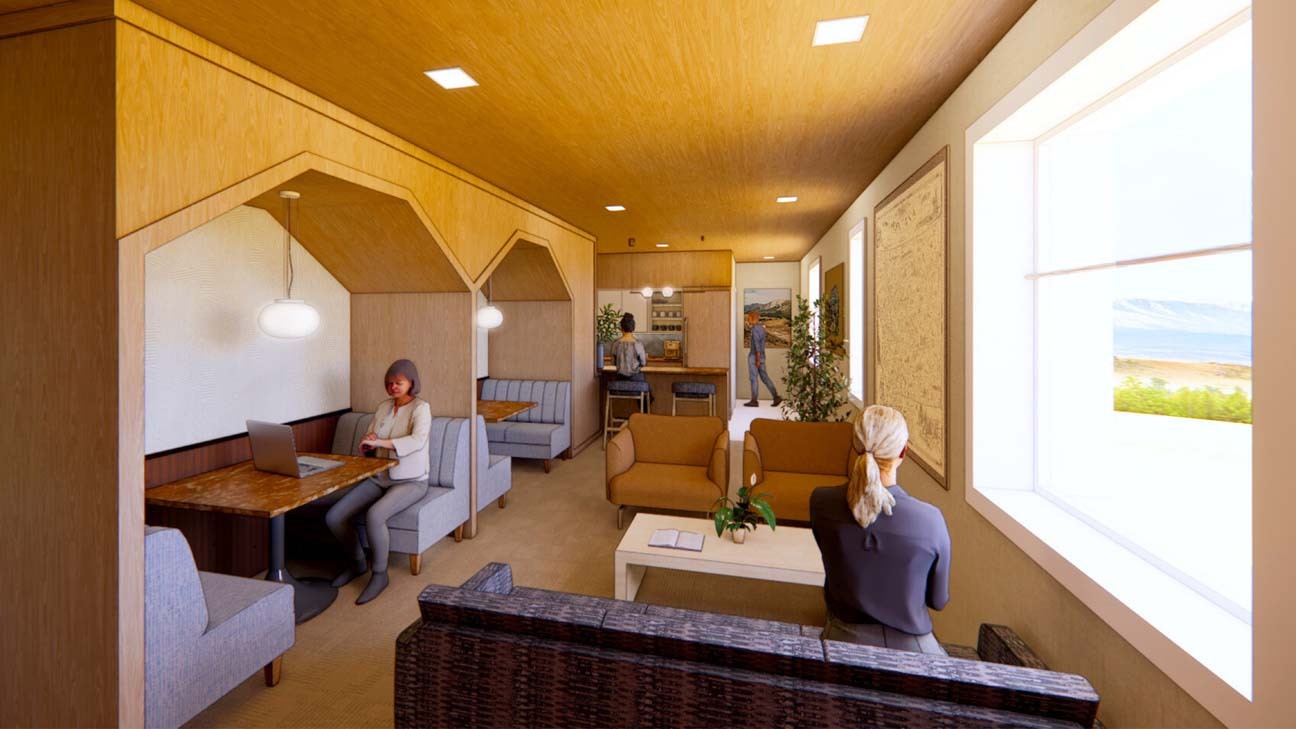
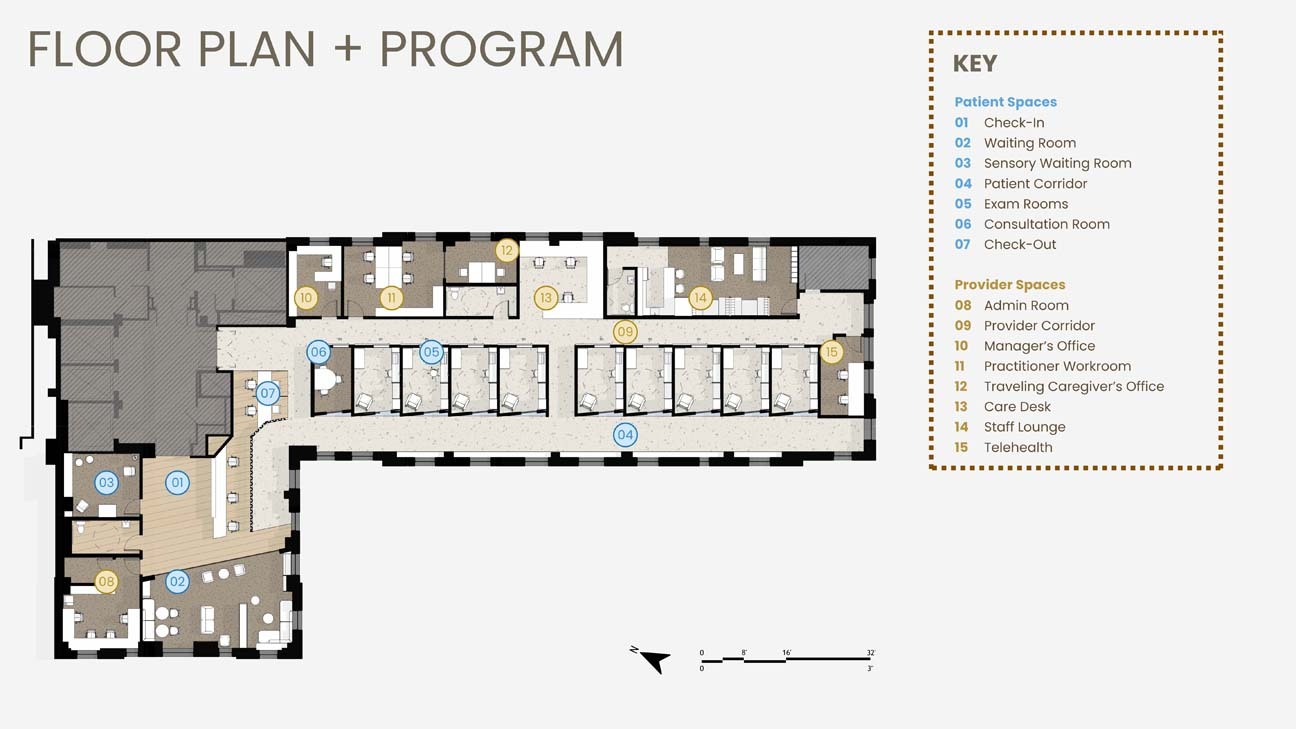
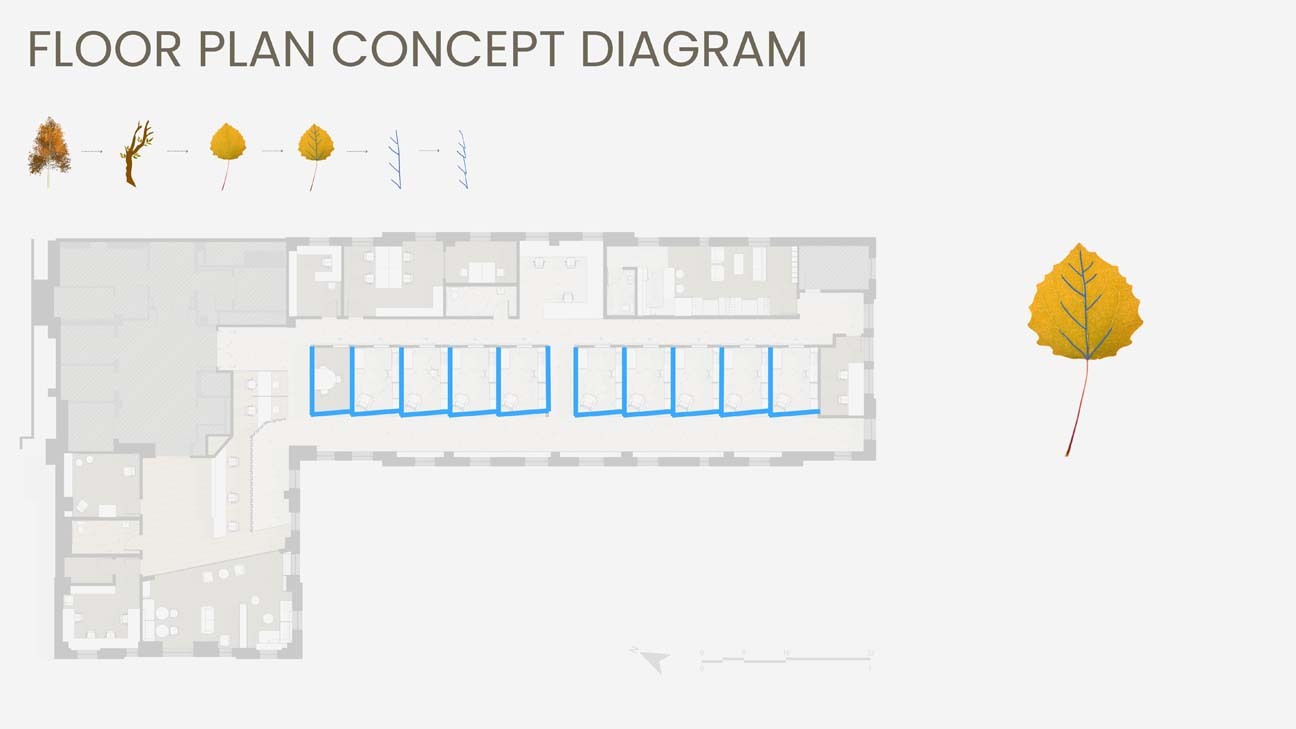
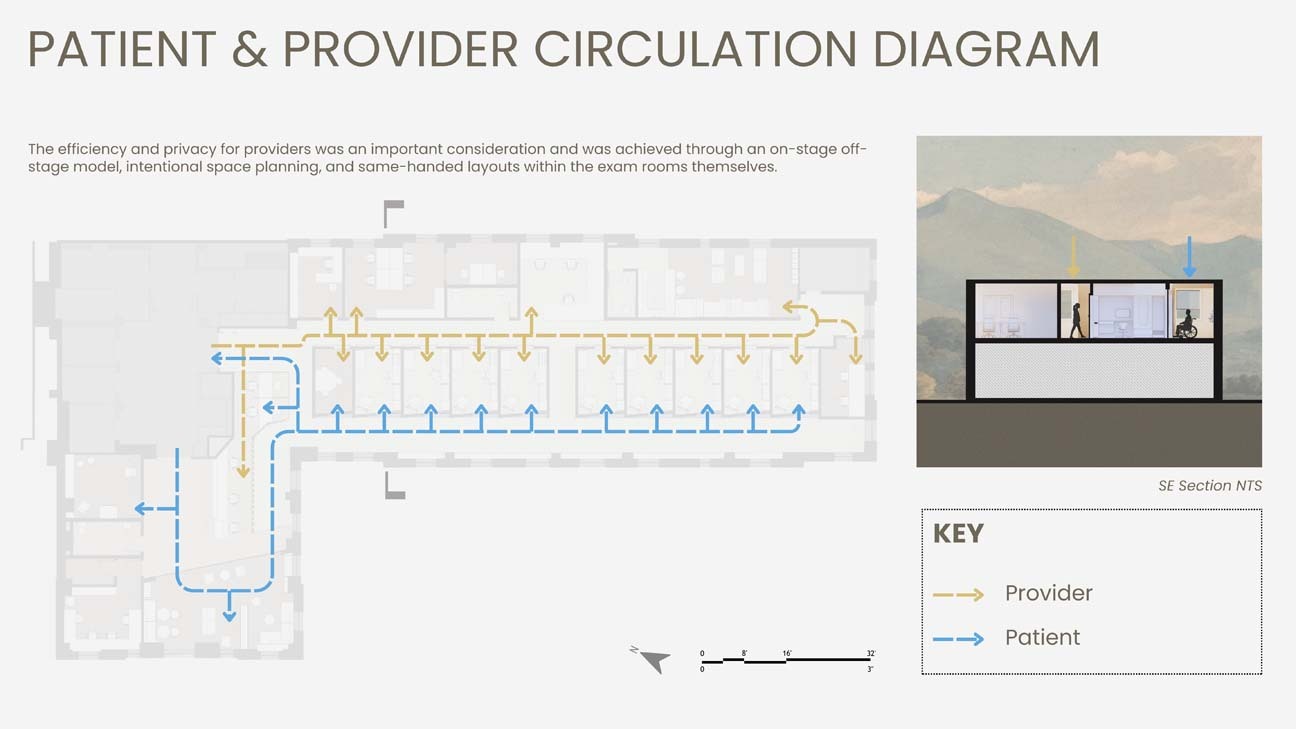
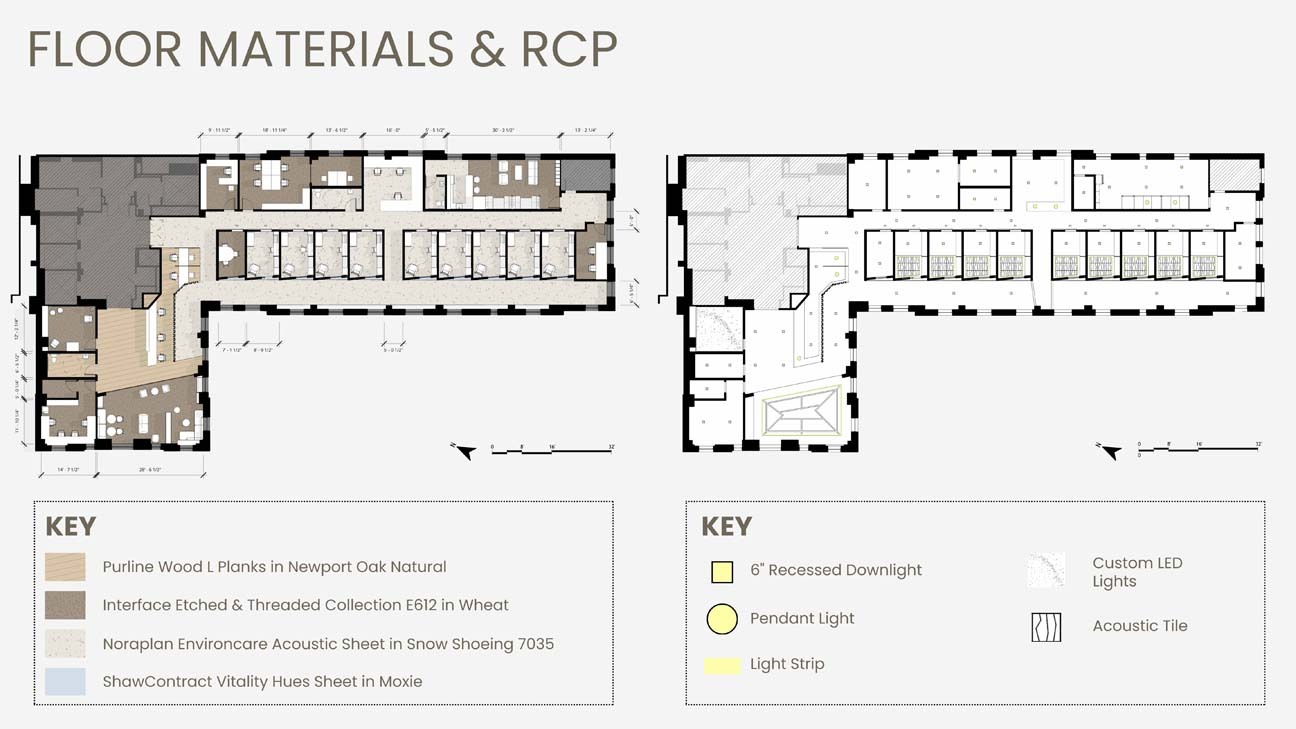
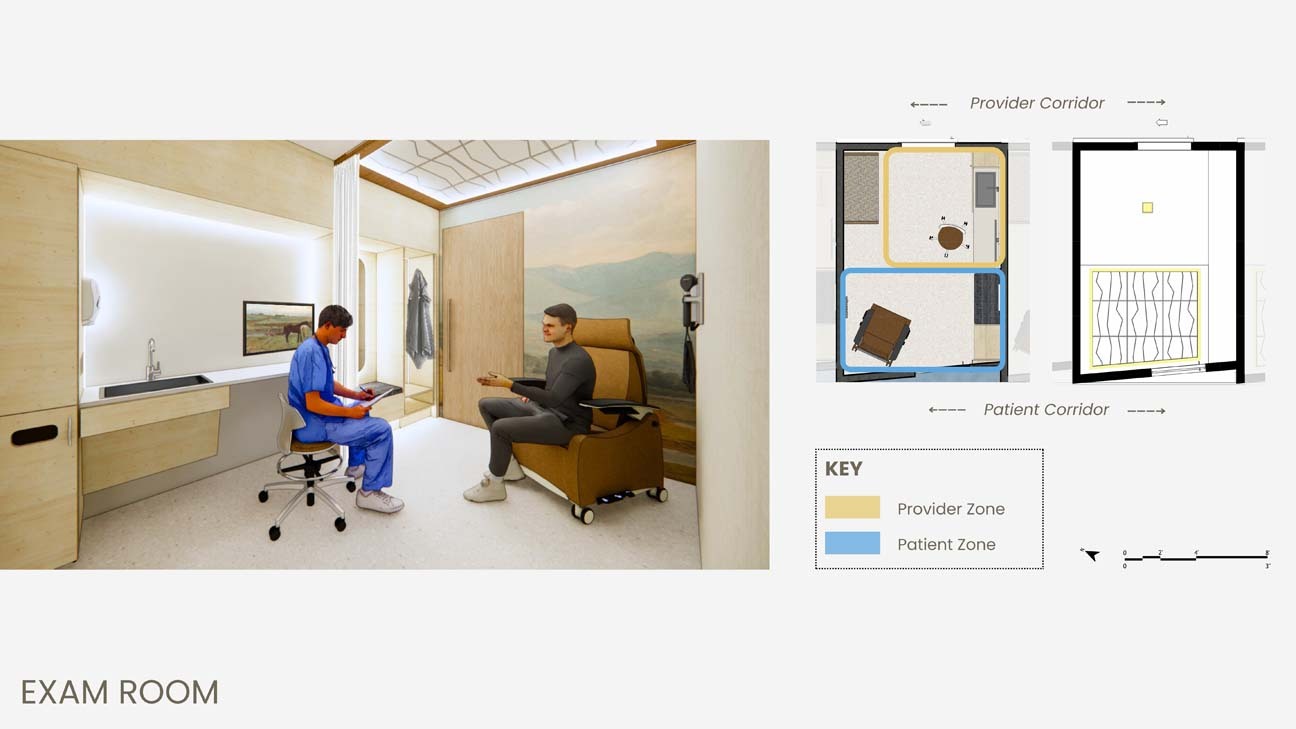
Gabby Gilden | Juniper Primary Care supports neurodiverse and rural patient populations through familiar and legible spaces. Drawing. While overly stylized design can feel unfamiliar and intimidating, when inspired by home it fosters trust, comfort, and a sense of well-being among patients and providers. Neurodiverse individuals with heightened sensitivity to sound, light, color, and movement need predictability, clear and intuitive wayfinding, and flexibility. Fractal patterns translate a natural, familiar pattern into an organizing framework providing and are seen subtly throughout the clinic. The patient corridor has a linear organization that minimizes patient confusion and offers a calming view of the mountains. Provider efficiency and privacy is achieved through an on-stage off-stage model with intentional space planning and same-handed layouts within exam rooms. Materials that aid in acoustic mitigation and cleanability, stimulating and adjustable features in the sensory waiting room, and resources for the providers were also considered. By incorporating principles of neurodiversity, domestic familiarity, and natural pattern into spatial organization, Juniper Primary Care supports patient well-being, clinical efficiency, and comfort for everyone involved.-
Location
N/A
-
Firm
George Washington University
-
Category
Overall
-
Award
Honorable Mention
-
Location

Jury
-

Viveca Bissonnette, FIIDA
CEO/Founder/Design Principal, Hollander Design Group
-

Kelley Dorsett, IIDA
Senior Designer, Interiors, HDR
-

Tara Headley, IIDA
Senior Designer, Hendrick
-

Lauren Morgan
Director of Marketing and Healthcare, Carolina (an OFS company)
-

Jim Thompson, IIDA
Design Partner, Little Diversified Architectural Consulting
Guidelines
Download PDF (Guidelines)Submission Requirements
Download the 2026 Student Design Brief here
Download the 2026 Student Competition FAQ/Clarifying Questions here
Watch the 2026 Student Design Competition Kickoff here
The competition will open Monday, January 5, 2026, it is advised that you begin the application and project before that date. Students must follow the design criteria and requirements outlined in the 2026 Student Design Brief provided (above).
All submissions must be submitted electronically, no hard copy submissions will be accepted. To enter a project into this competition, you will need to prepare and submit the following:
Written Component
-
Your contact information including participant name(s), member ID (if applicable), address, phone number, and email
- Your design project's information including project title
- Project description outlining why your concept demonstrates the best solutions possible for the design prompt (500 words)
Digital Presentation Board
Please submit one (1) 24” x 36” digital presentation board in PDF format with a file size between 3MB and 10MB and containing the following:
-
One (1) dimensioned floor plan drawn to scale
- One (1) furniture and materials plan (may be combined with dimensioned floor plan)
- One (1) reflected ceiling plan, created with the assumption that the ceiling is a blank slate
- Two to four (2-4) renderings of the completed space
- Two (2) additional drawings of the space, which can be elevation, perspective, isometric, axonometric, or orthographic.
- Additional elements to convey the overall concept including, but not limited to, furniture and fixture specifications, color palettes, wall sections, electrical plans, schedules, additional renderings, etc.
- Your board should NOT contain your name or any identifying information. Your file name should be: SDC + initials + year_board (SDCLHH2025_board.pdf)
Images
Please submit individual images of the 10-12 images outlined above. All images should be submitted in JPG or JPEG format with a file size between 2MB and 10MB. Take note of the following additional guidelines:
-
Images should be saved in RGB color mode with a minimum 150 dpi (300 dpi is preferred)
- Images should have a minimum dimension of 8.5” x 11”
- Your images should NOT contain your name or any identifying information. Your file names: SDC + initials + year_number (SDCLHH2026_1.jpg)
Judging
The winning design projects will be selected by a jury of design professionals. Submissions are judged on excellence in aesthetics, design, creativity, and function as well as the suitability of the design solution to the project challenge and the successful integration of the elements of design.
Prize
Winners will be announced Spring 2026, and will be featured on IIDA.org, in the Spring 2026 issue of QUAD, and in DesignMatters newsletters. OFS provides the 1st, 2nd, and 3rd Place winners with a financial prize of $2,500, $1,500, and $750, respectively. Winners will also receive official digital assets, including competition winner logos for self-promotion, coverage and mention on IIDA’s social media accounts, and in an official press release distributed to leading industry outlets and media partners.
For questions or more information, contact IIDA Design Competitions Manager at competitions@iida.org, and IIDA Student Relations Manager at students@iida.org