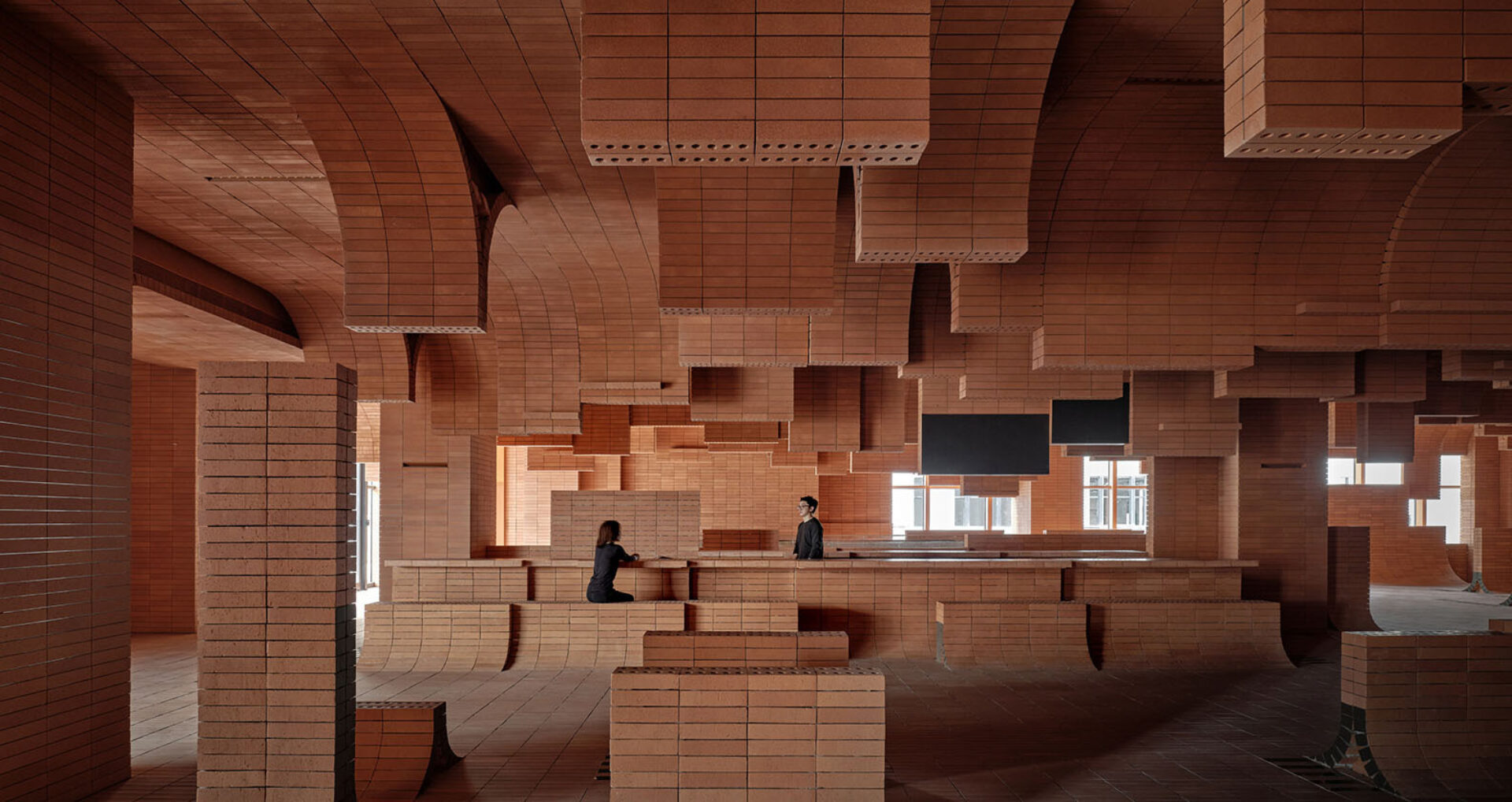
(Above image: IIDA 2024 Best of Asia Pacific category winner, Haikou Gaoxingli Insun Cinema designed by One Plus Partnership Limited. Photos by Jonathan Leijonhufvud)
This article originally appeared in February issue of iansdesign.
Cultural venues today offer so much more than entertainment — they function as everyday civic spaces defined by experience. A night at the movies, an evening at a bar, or a quiet hour in a library often doubles as a social encounter, a learning opportunity, or a moment of connection or discovery. In these settings, interior design plays a central role, shaping how people move, gather, and engage with one another. Set within three rapidly evolving Asian cities and recognized as winners of IIDA interior design competitions, the acclaimed projects below show how the best design reflects local identity, responds to urban rhythms, and creates spaces meant not to be visited just once, but returned to again and again.
Haikou Gaoxingli Insun Cinema
A moviegoing experience shaped by light, texture, and the rhythms of the sea
At the Haikou Gaoxingli Insun Cinema in Haikou, located in Hainan, an island off the southern coast of China, audiences are carried away well before the lights dim. Designed by One Plus Partnership Limited and rooted in the textures and tones of Hainan Island, the interior replaces familiar cinematic tropes with a spatial language drawn from sand, light, and movement. Brick—used throughout as both structure and surface—evokes the island’s shoreline, while subtle variations in pattern suggest the ebb and flow of ocean waves. Daylight filters in through custom openings, warming the space and creating a gentle transition from city to screen. Inside the auditoriums, layered color, tactile finishes, and immersive forms heighten the sense of escape without severing ties to place. The result is a cinema that feels less like a sealed box and more like a continuation of its environment—an experience shaped as much by local context as by the films it hosts.
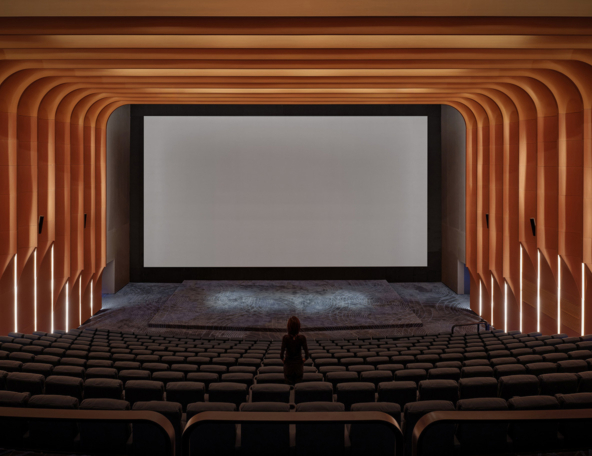
Photos by Jonathan Leijonhufvud
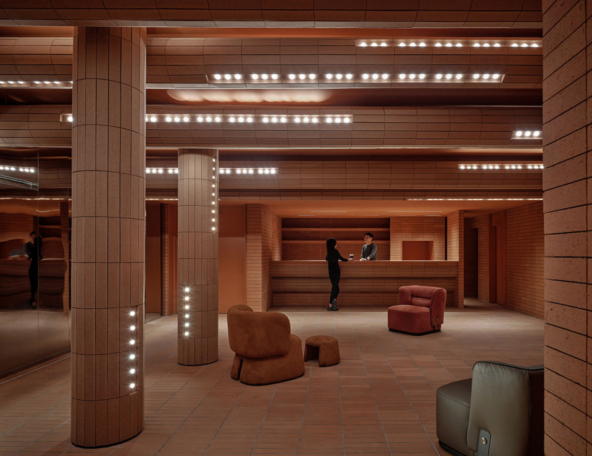
Photos by Jonathan Leijonhufvud
Night of City
An immersive nightlife environment built on motion, illusion, and transformation
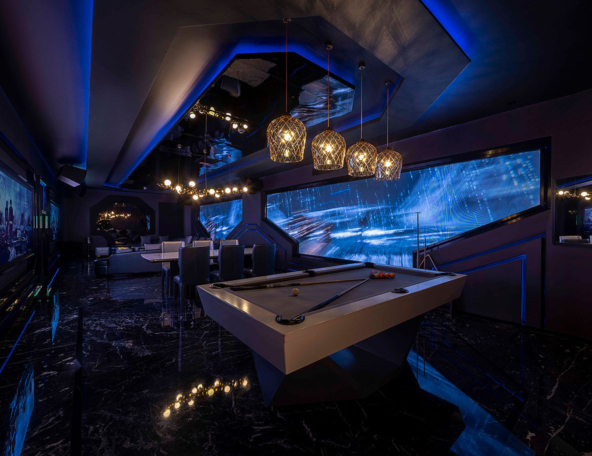
At Night of City in Hangzhou, China, entertainment unfolds as a continuous process of transformation. The multipurpose venue, designed by JFR Studio, draws on ideas of astral travel and alternate realities, creating an immersive environment where physical and virtual worlds intersect. Curving forms, reflective surfaces, and kinetic structures combine with choreographed lighting and high-resolution digital imagery to produce a heightened sensory experience that shifts as guests move through the space. A layered palette of concrete, metallic finishes, marble, and mirrored surfaces catches and refracts light, blurring boundaries and destabilizing perception. Rather than offering a single destination, Night of City functions as a sequence of atmospheres—an interior shaped by motion, spectacle, and the collective energy of nightlife culture.
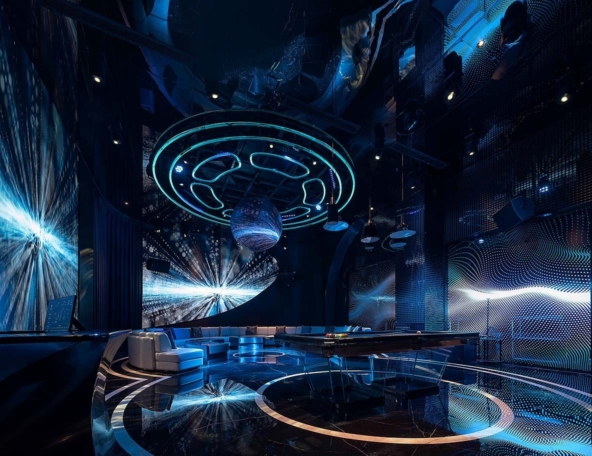
Photos by Li Xuefeng
Photos by Li Xuefeng
Toyota City Museum
A museum that blends industrial legacy, natural landscapes, and living memories
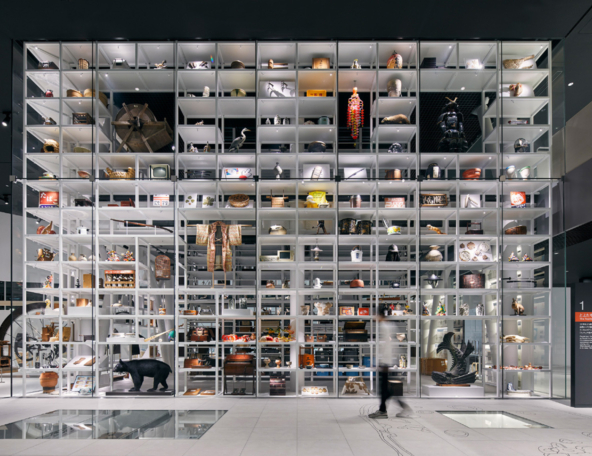
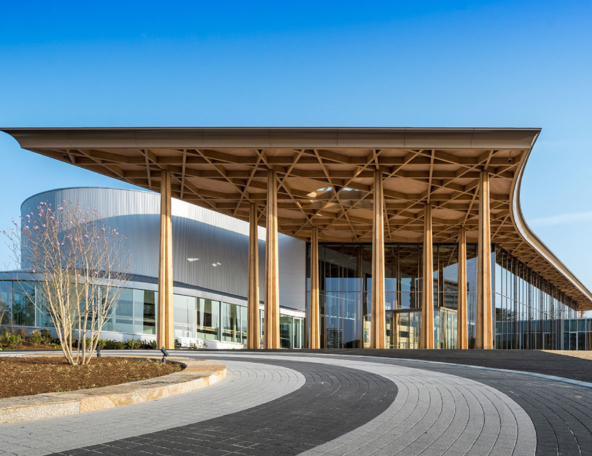
Toyota City is best known as the birthplace of Toyota Motor Corporation — what you might not know is that it’s brimming with natural beauty. The city is roughly 70% forests, threaded by the Yahagi River, and full of both farmland and mountainous areas. The Toyota City Museum, designed by Tanseisha Co., in collaboration with Kijuro Yahagi Inc. and Shigeru Ban, holds both versions of the city at once. The museum was conceived not as a repository but as a platform, building on an existing local history collection while expanding into natural history and, notably, the living memories of residents. A16-meter-wide diorama maps the city’s terrain in full and animates it with models that reflect local history, culture, industry, and “memories.” Surrounding the diorama, hands-on exhibits and background video engage visitors through all five senses, drawing connections between the land and the people who have shaped it.
At the heart of the permanent collection, a towering glass case displays objects related to nature, archaeology, folklore, and manufacturing. But the museum's most distinctive feature may be the en-nichi space: a 90-meter open hall where residents and local businesses mount their own exhibitions, shifting the museum’s role from institution to gathering place, and treating the community as an ongoing collaborator.
Photos by HIRAI Hiroyuki, PIPS inc
Photos by HIRAI Hiroyuki, PIPS inc
Explore IIDA’s design competitions and learn how to submit your projects
Related Articles
-
Great Design, Global Recognition, More Competitions
Introducing the new Global Excellence Design Awards, launching in 2027 -
5 Spiritual Spaces With Stunning Designs
Award-winning examples of beautiful design, all the more transcendent because they encourage people to connect with a higher power — or tap into the power within -
Spaces With a Story to Tell
5 award-winning projects show how design shapes the narrative -
How STUDIO THO Blends Culture and Hospitality
Vietnamese culture and American ideals come to life in STUDIO THO’s 2026 Will Ching Design Competition winning project -

2026 Student Design Competition Showcase
Presenting the winning student design competition projects for a primary care clinic in rural northwest Montana -
3 Award-Winning Libraries — and Why Jurors Loved Them
ALA/IIDA jurors share what made these library designs stand out