
The IIDA Student Design Competition (SDC), sponsored by OFS and Carolina, celebrates the talent and fresh design ideas of design students around the world who are currently enrolled in an interior design or interior architecture program. The competition provides emerging professionals the opportunity to showcase their work and gain exposure in the interior design industry.
For this year’s competition, students were challenged to space plan and design a primary care clinic in a rural community of Northwest Montana. The aim was for the students to create an efficient workspace for physicians while providing a dignified and seamless patient experience through innovative design, ensuring flexibility, reducing anxiety, enhancing focus, and supporting comfort and autonomy. Students were inspired to craft a welcoming atmosphere that feels like "home" and accommodates a variety of physical, sensory, and cognitive needs, promoting inclusivity for neurodiverse individuals. Explore the winning submissions from students who utilized design strategies to transform healthcare into a more compassionate experience.
Jurors

CEO/Founder/Design Principal, Hollander Design Group

Senior Designer, Interiors, HDR

Senior Designer, Hendrick

Design Partner, Little Diversified Architectural Consulting

Director of Marketing and Healthcare, Carolina (an OFS company)

WINNERS
FIRST PLACE:
Deborah Wroblewski, George Washington University
Uplift Primary Care Clinic
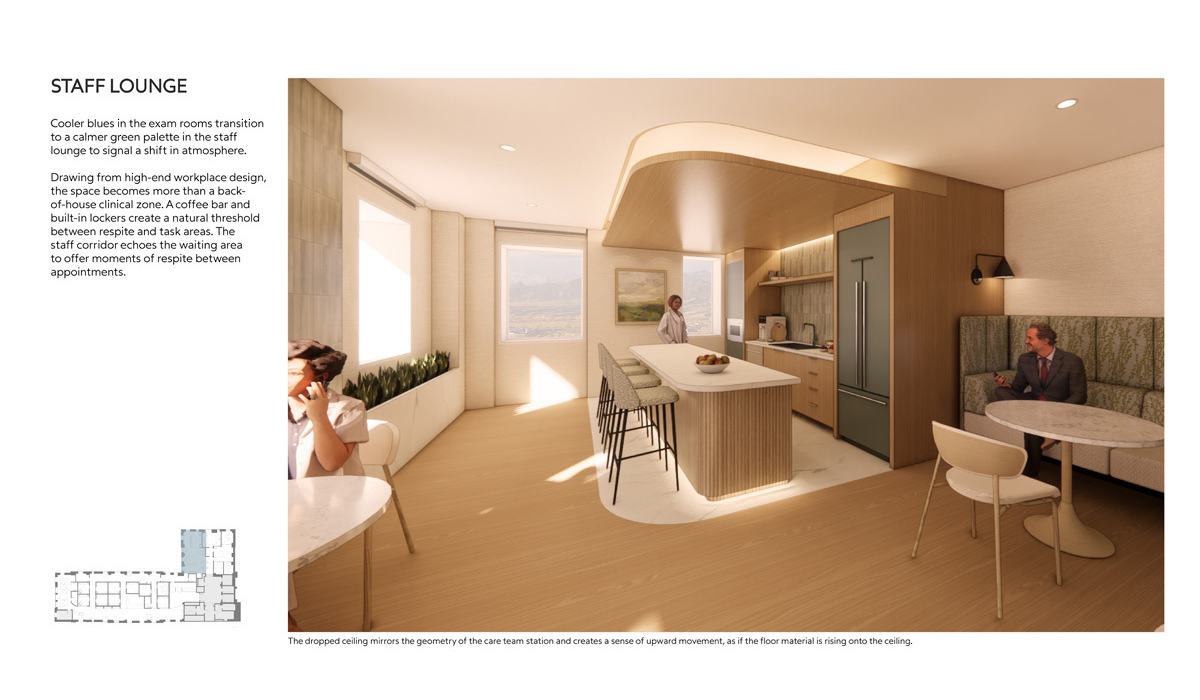
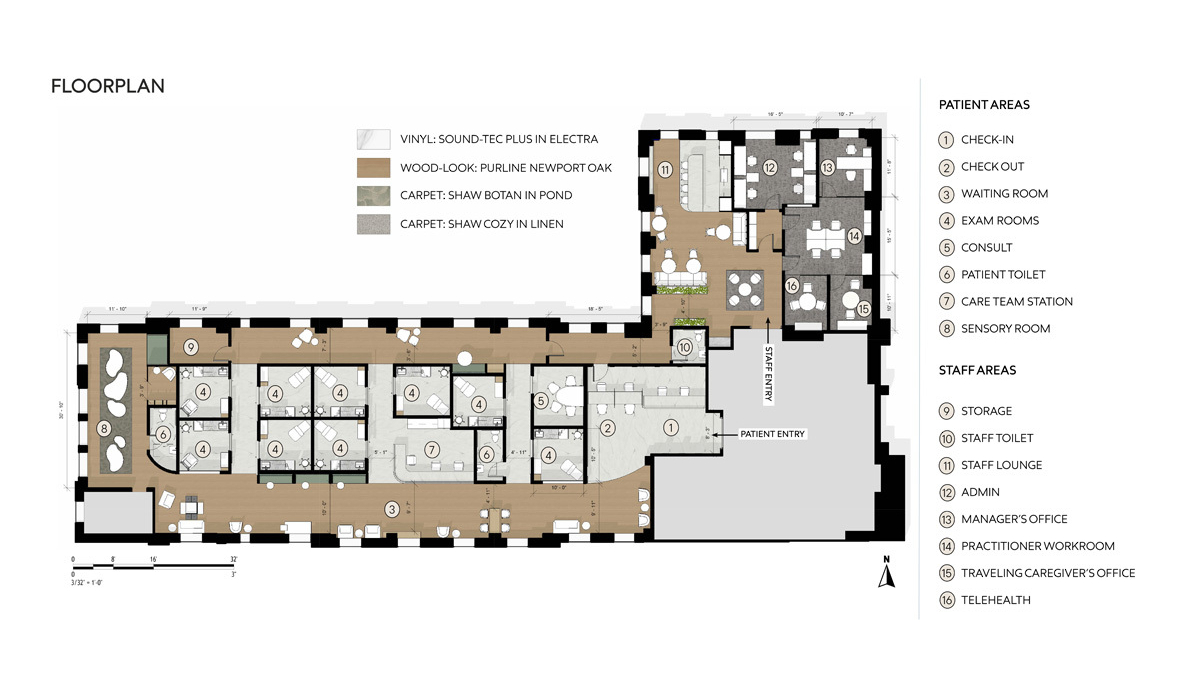
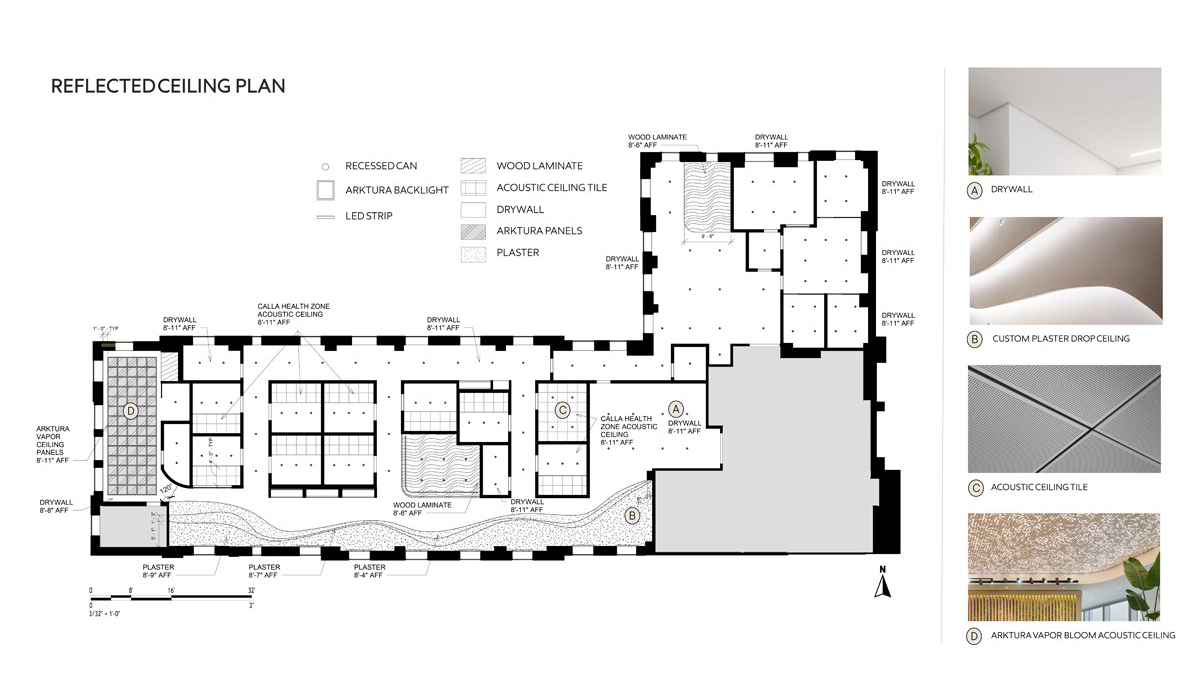
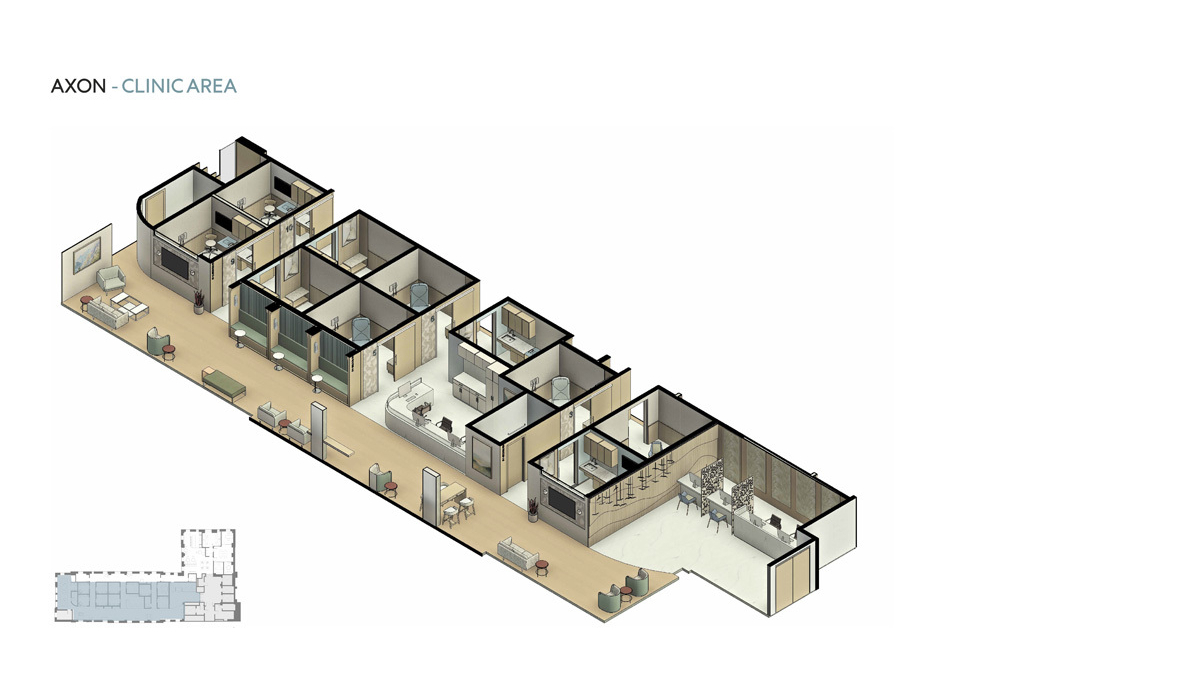
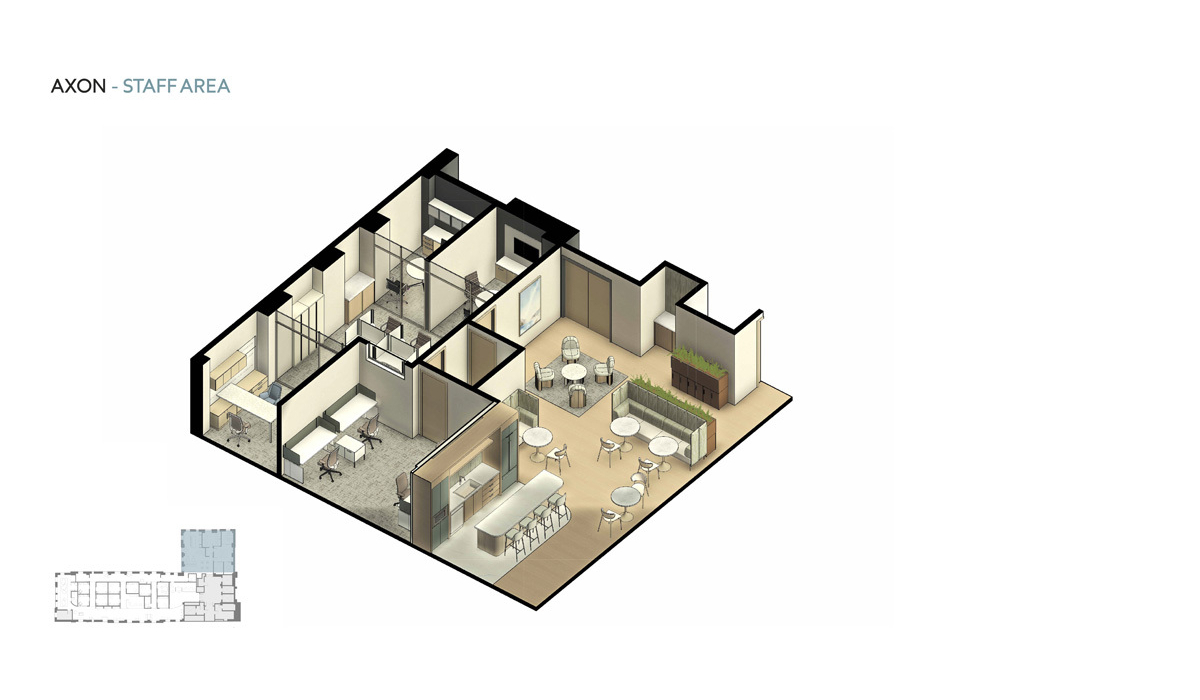
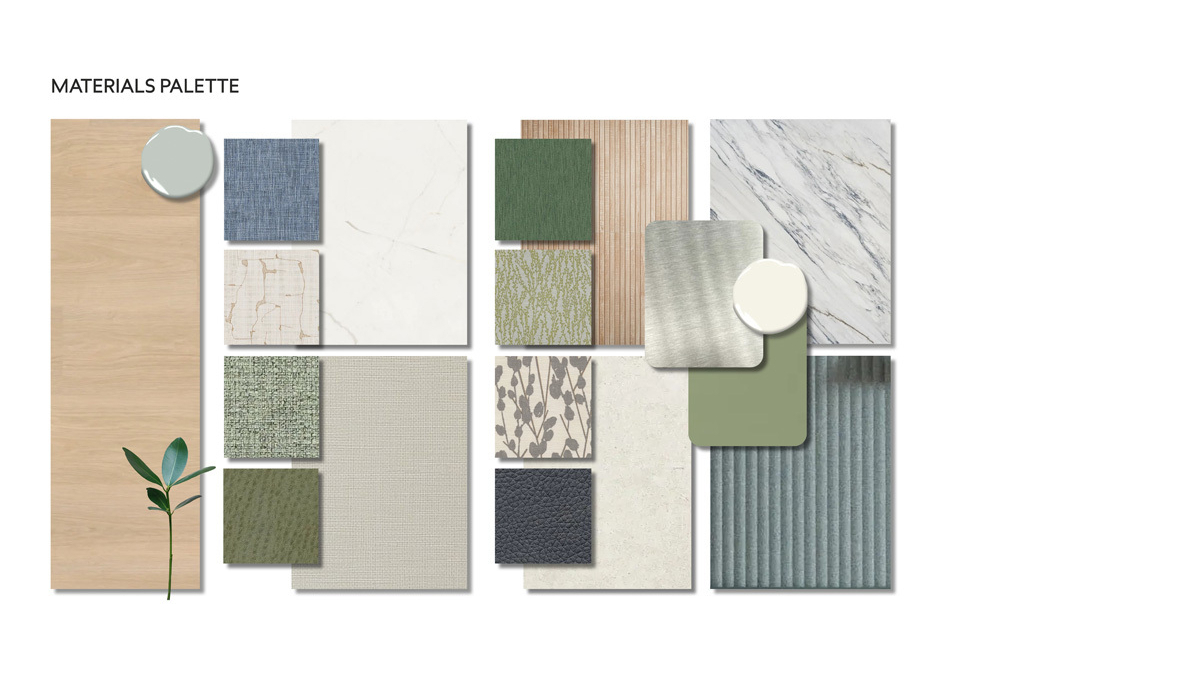
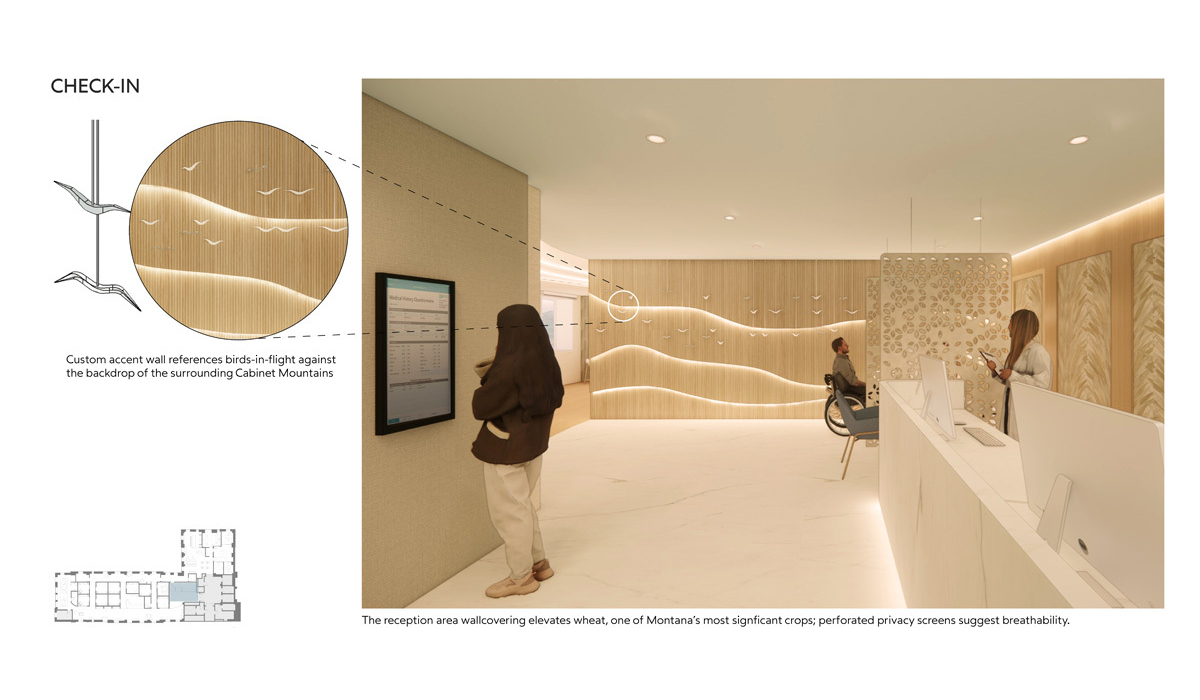
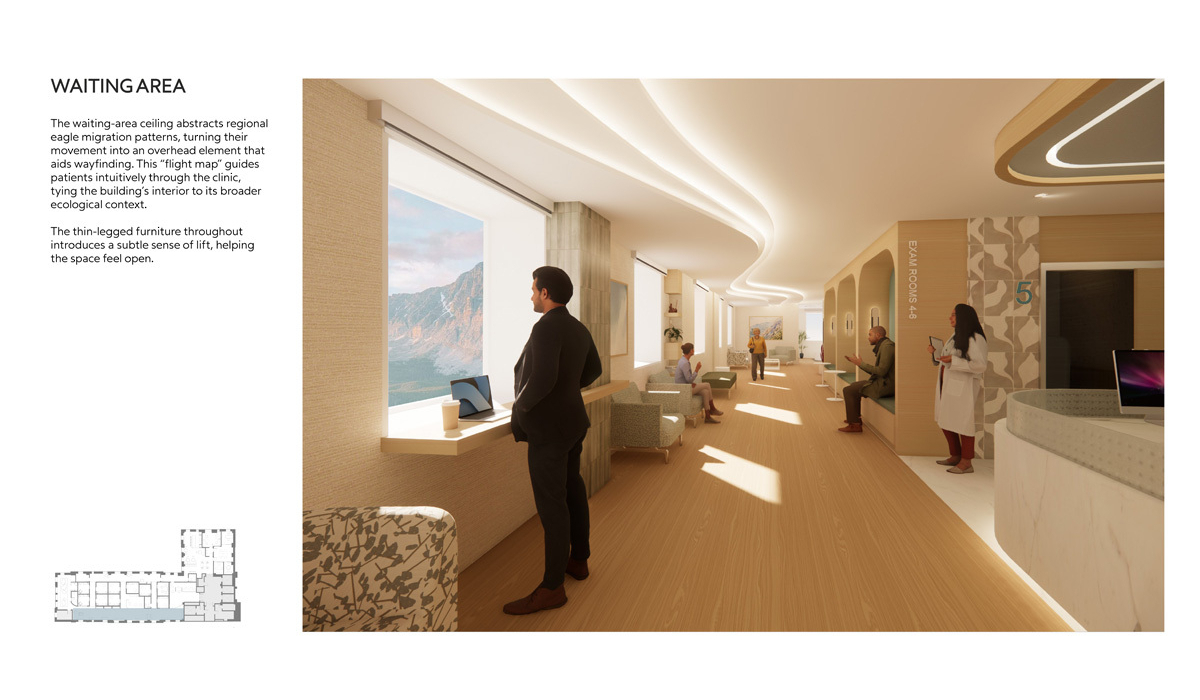
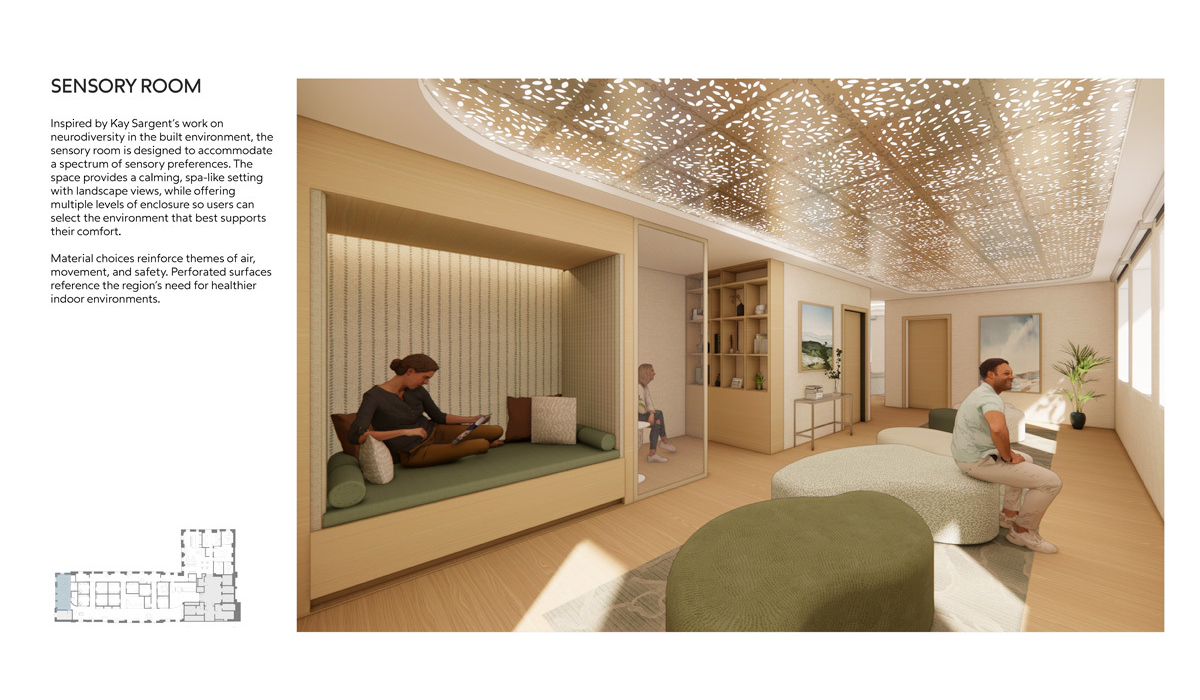
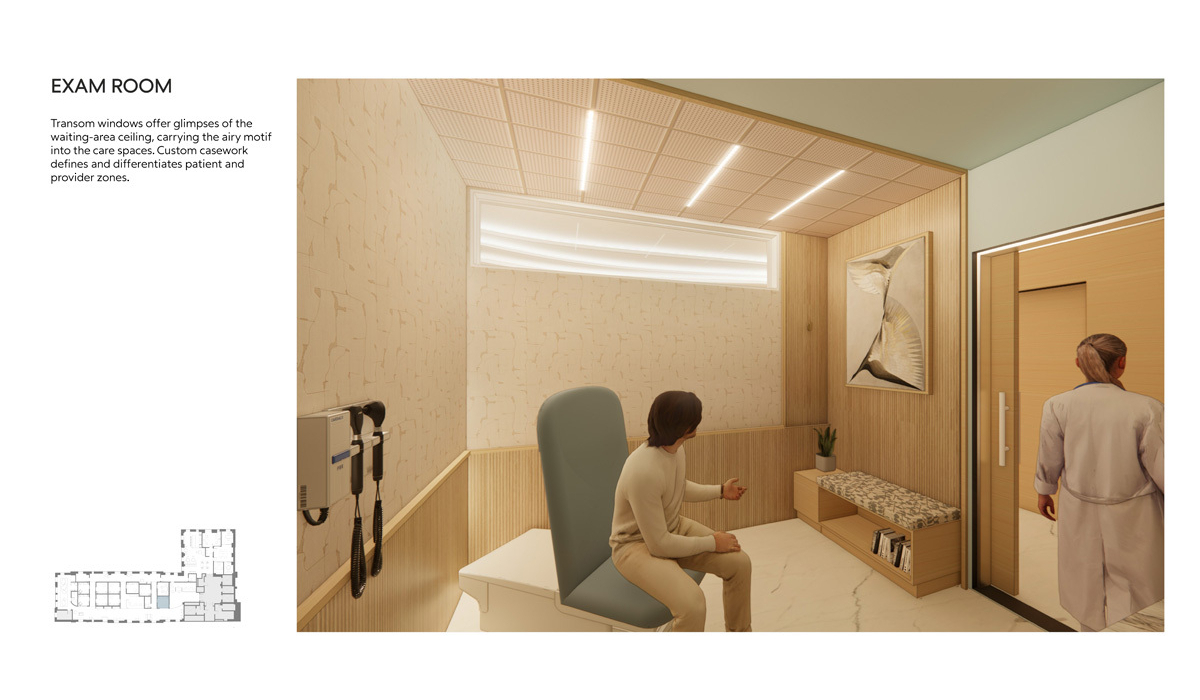
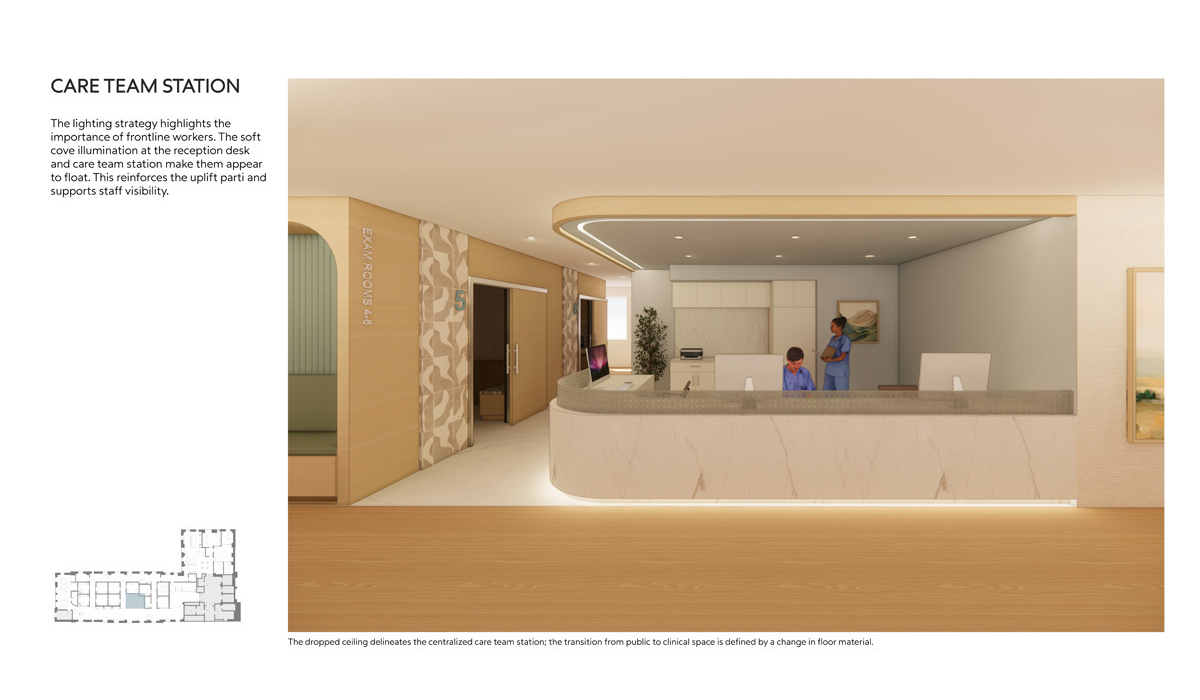
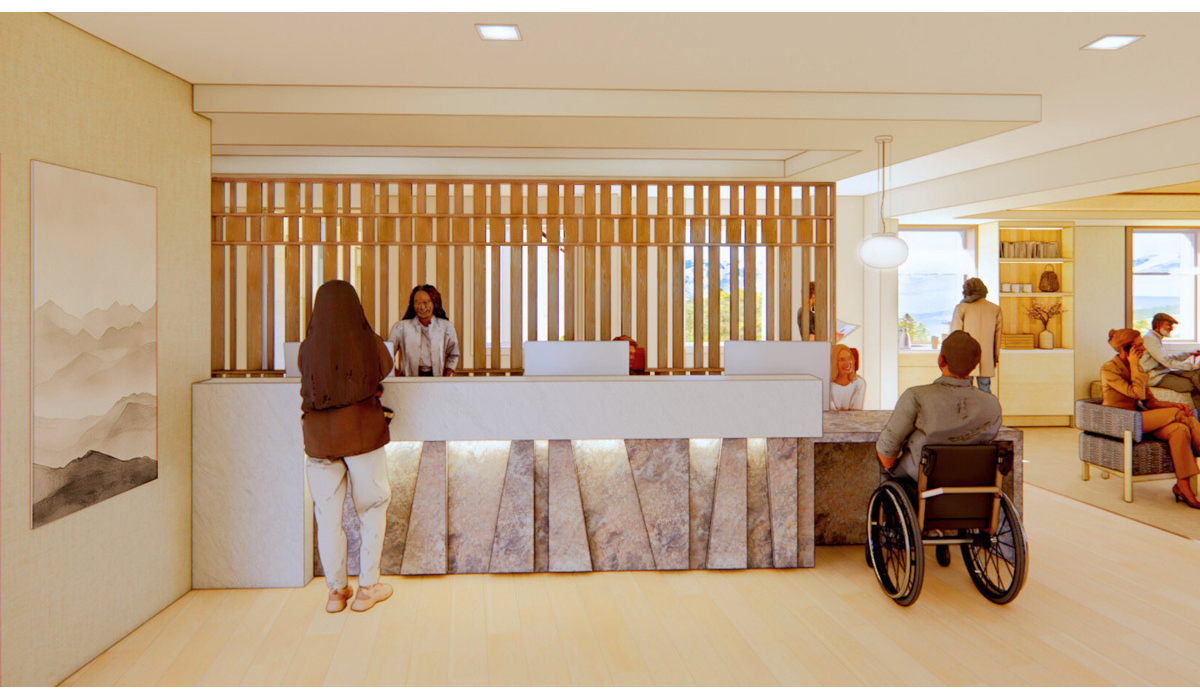
Northwest Montanans face healthcare barriers related to geographic isolation, provider shortages, and limited access to specialty care. Uplift Primary Care Clinic is a community anchor and civic space, supporting integrated care delivery and addressing the realities of rural healthcare access. Reimagined as a vibrant community space, the waiting room has social and private zones accommodating a spectrum of needs like internet access, educational resources, social interaction, and privacy. Self-rooming and check-in kiosks improve efficiency and promote patient autonomy, while staffed reception zones preserve human connection. Integrated treatment models make treatment across multiple practices seamless, while balancing evolving technologies with personal interactions. The materials and layout draw inspiration from Montana’s expansive landscape, wildlife, and mining history, with air quality and breathable materials as architectural expressions of care for residents who have had their health impacted by the mining industry. Integrating community gathering spaces, coordinated care environments, and regionally responsive interior strategies, the clinic improves access to care, strengthens provider collaboration, and reinforces primary care as essential civic infrastructure across the region.
What does winning this design award mean to you?
Winning this award is incredibly meaningful. I have many people in my life who are healthcare practitioners, and I’m continually inspired by how they show up for their patients, even as barriers to delivering high-quality care continue to grow. This project was designed with them in mind. I set out to envision a new kind of care environment—one that responds to the scale and complexity of primary care delivery in rural communities while also supporting healthcare workers with a space that recognizes their needs alongside those of their patients.
Like any design project, this work was not completed alone, and I hope this recognition also extends to the professors, peers, and industry professionals whose feedback helped bring the project to where it is today.
Having gone through the process, what would you say to others to inspire them to apply in the future?
Competitions like this offer a unique opportunity to showcase your perspective as a designer and position your work within a larger conversation. Through the project brief, you have the chance to give voice to a community, an issue, or a broader design philosophy. The constraints of the competition also push you to think more creatively as you design in response to a specific set of needs. Simply having the opportunity to share your work with a wider audience is so valuable, and I’m grateful to this competition for creating that platform

George Washington University

SECOND PLACE:
Elise Hewitt and Kelsey Kamerling, Kirkwood Community College
Care That Belongs
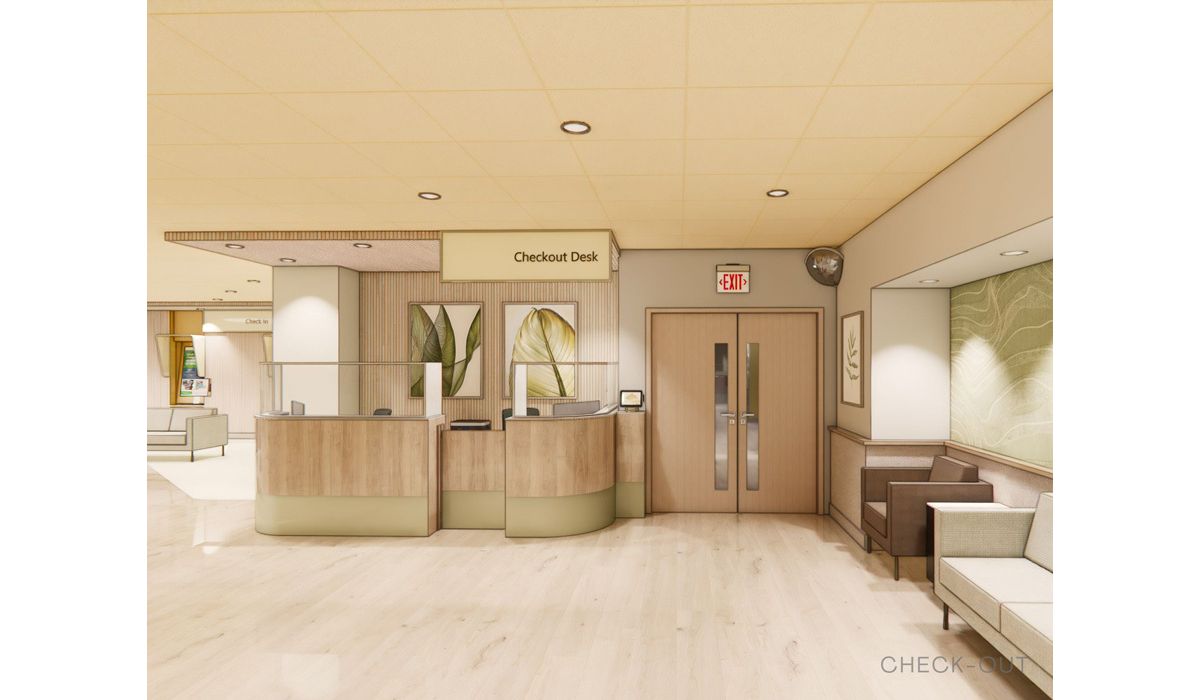
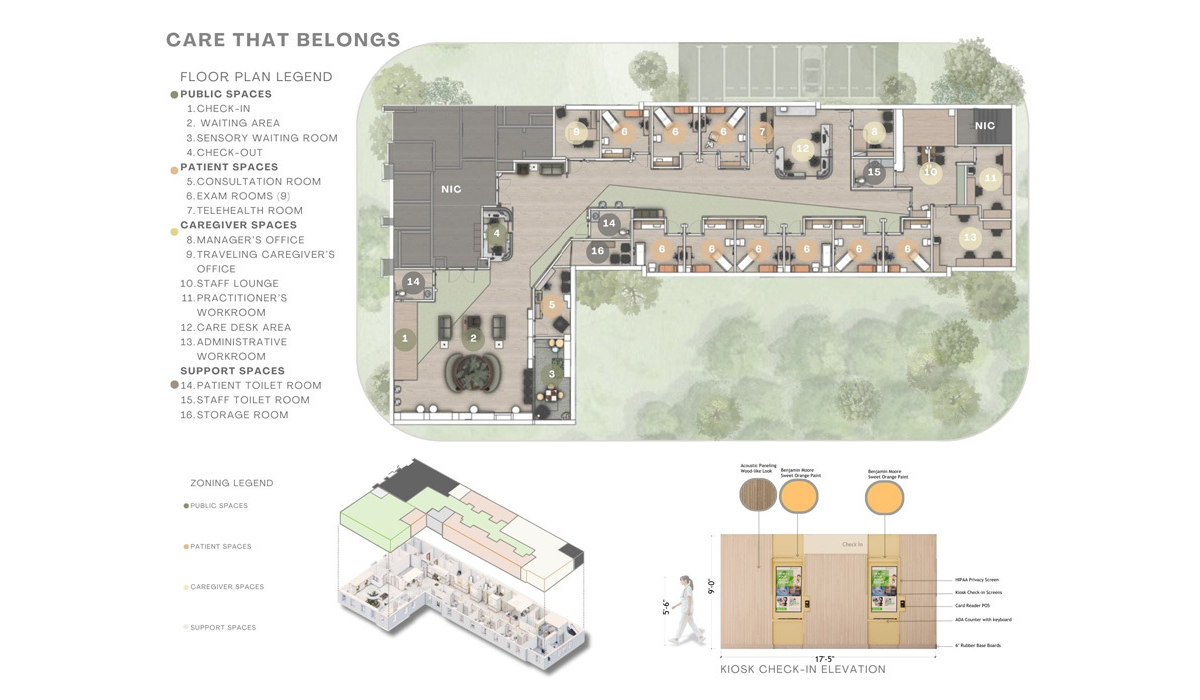
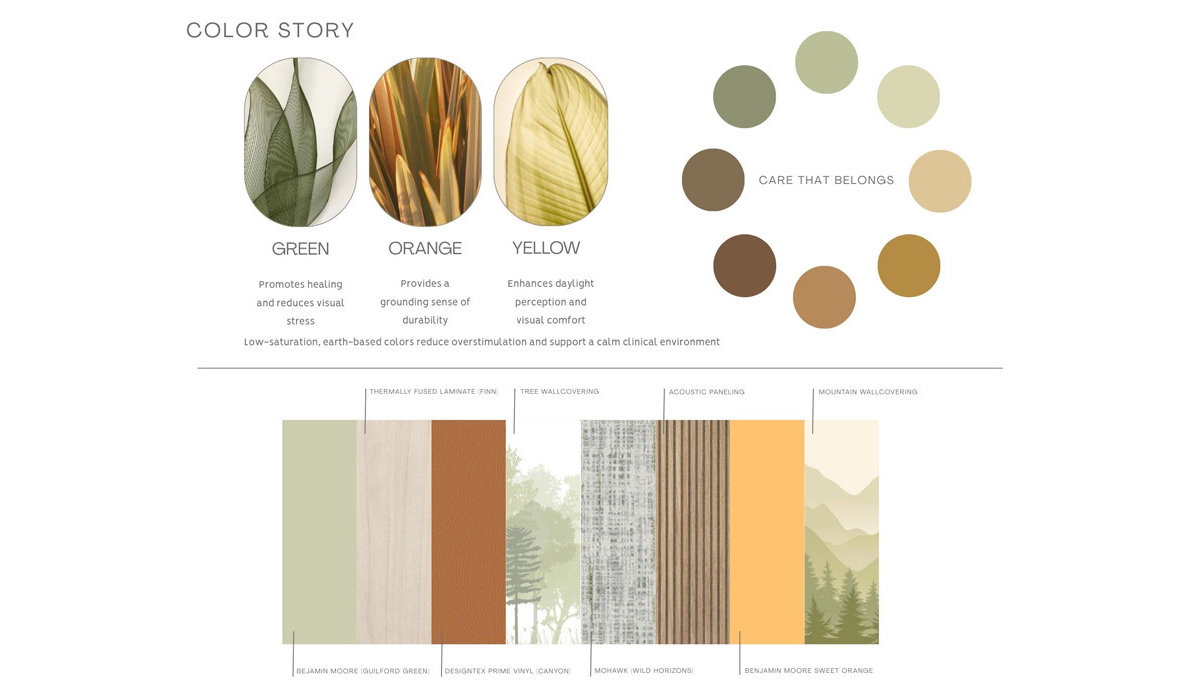
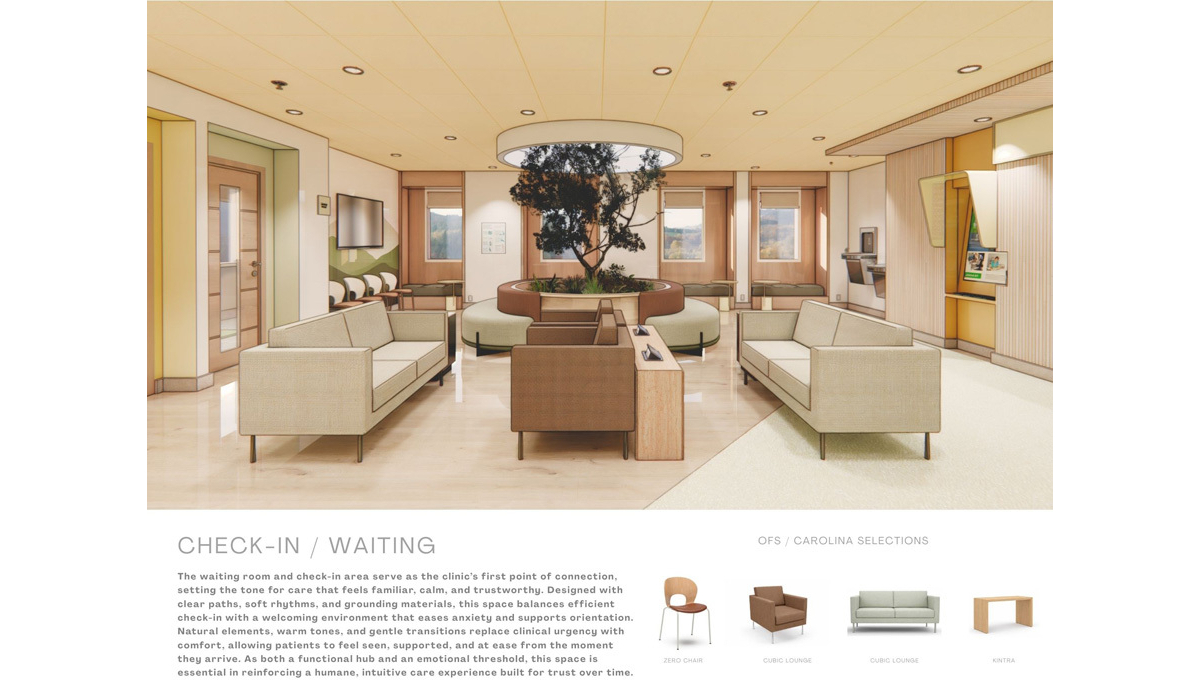
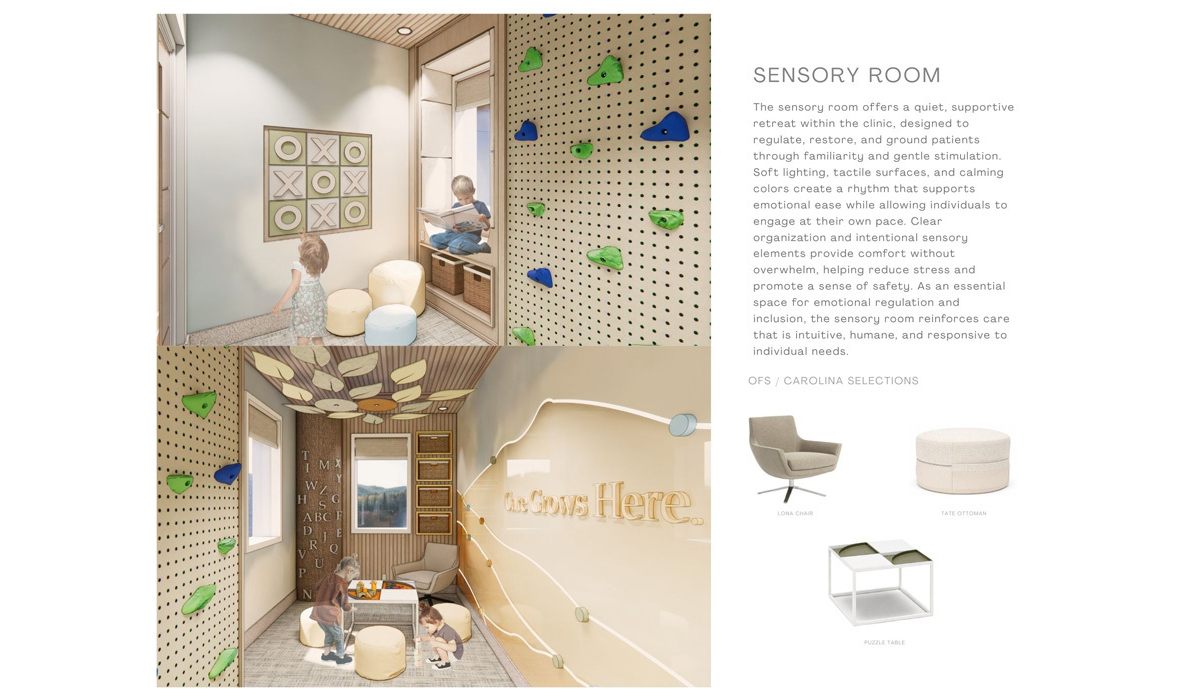
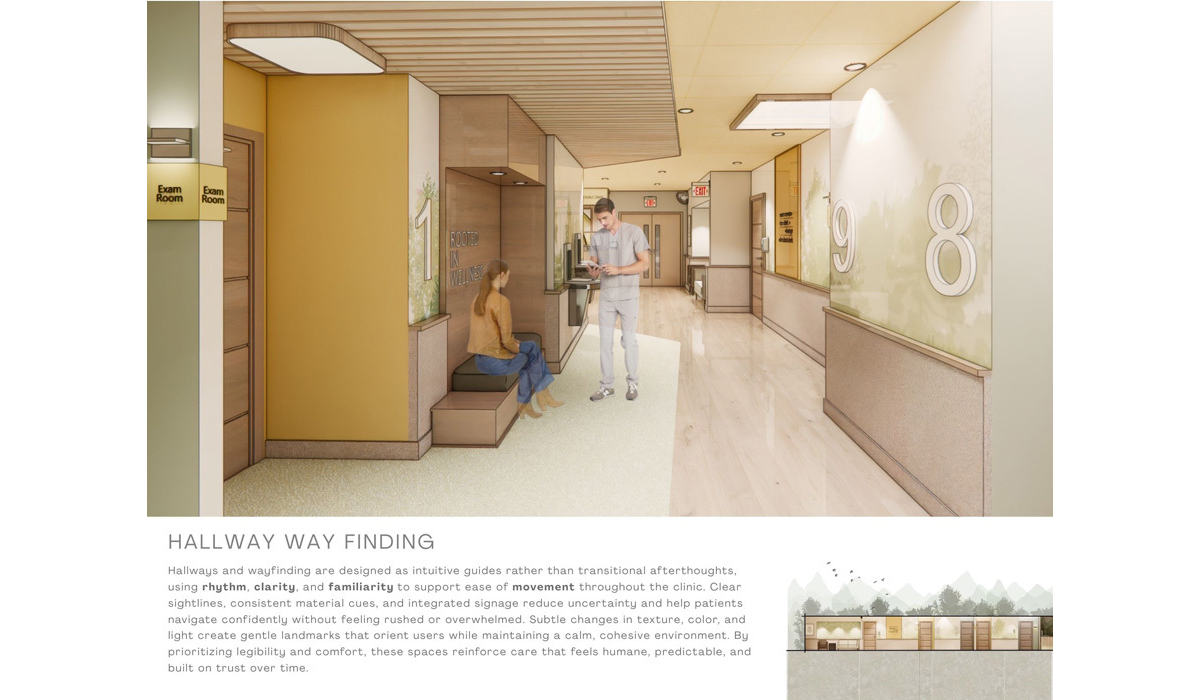
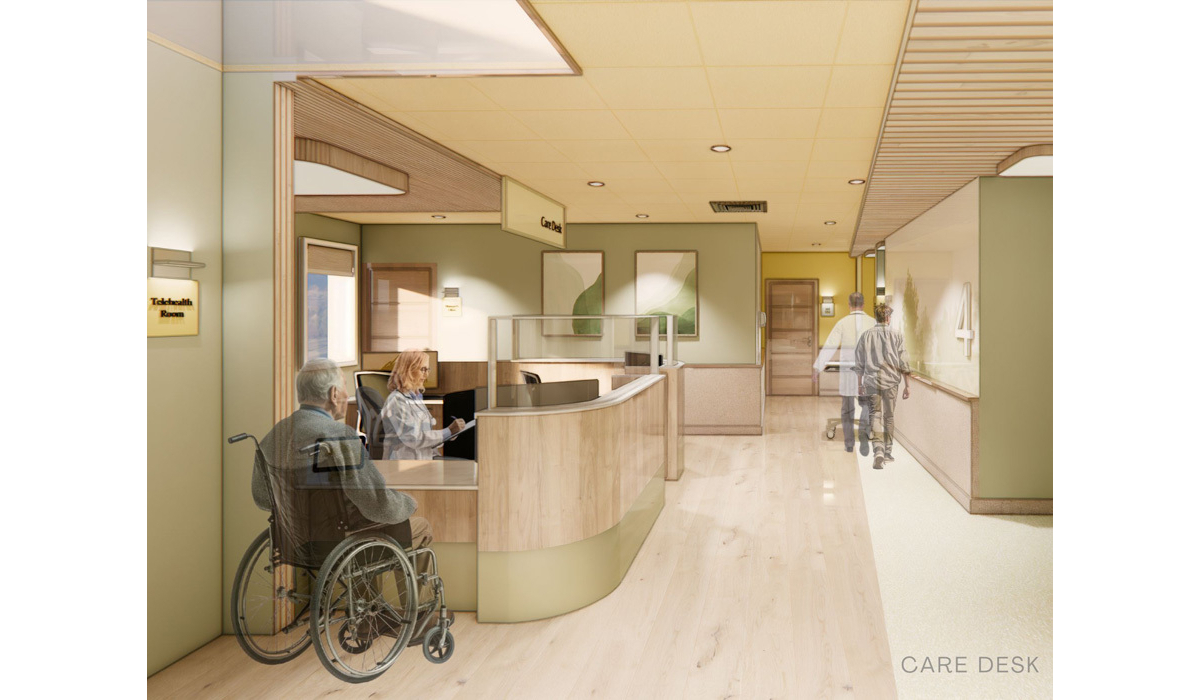
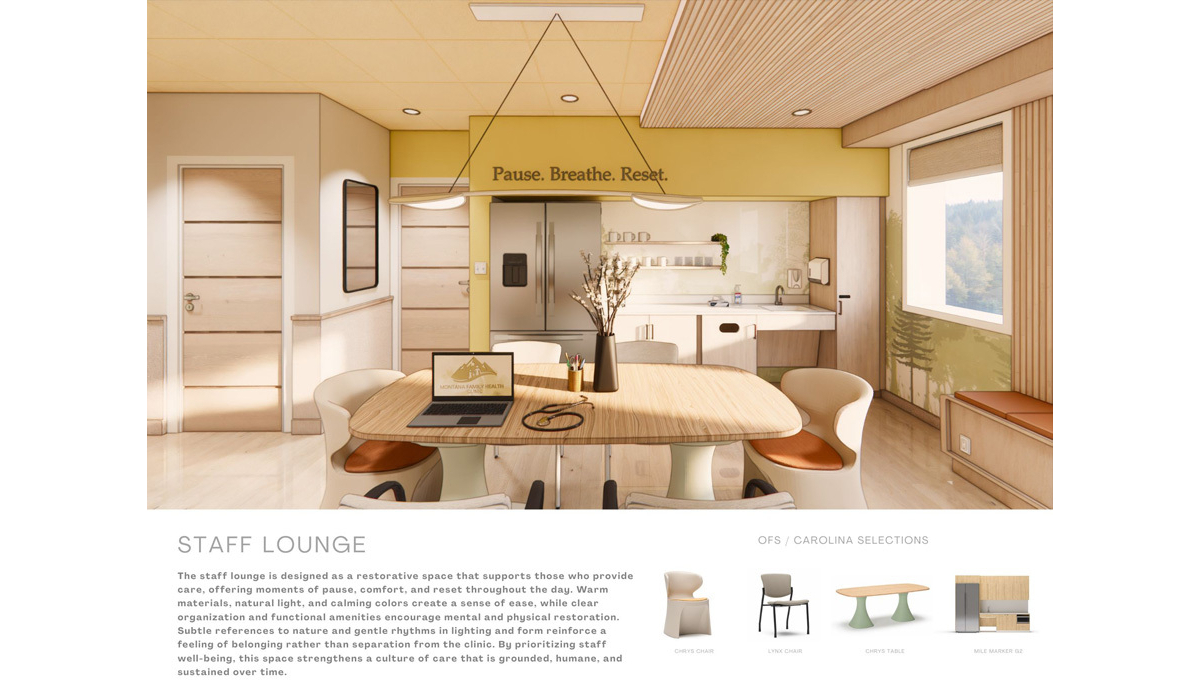
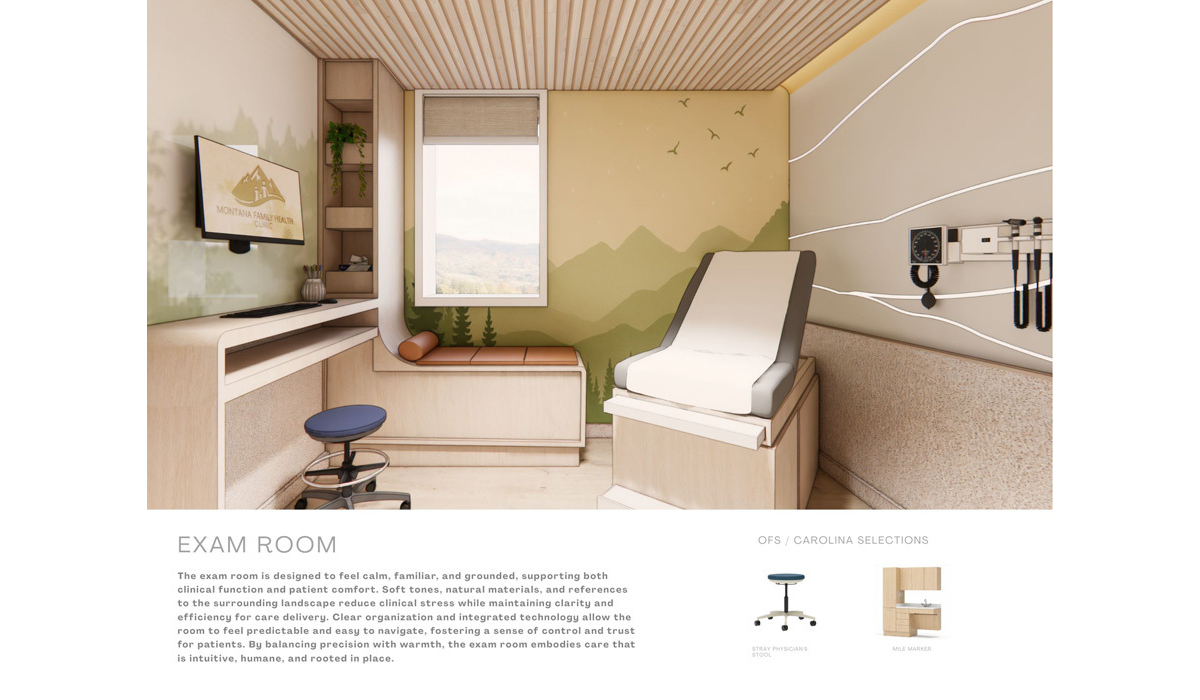
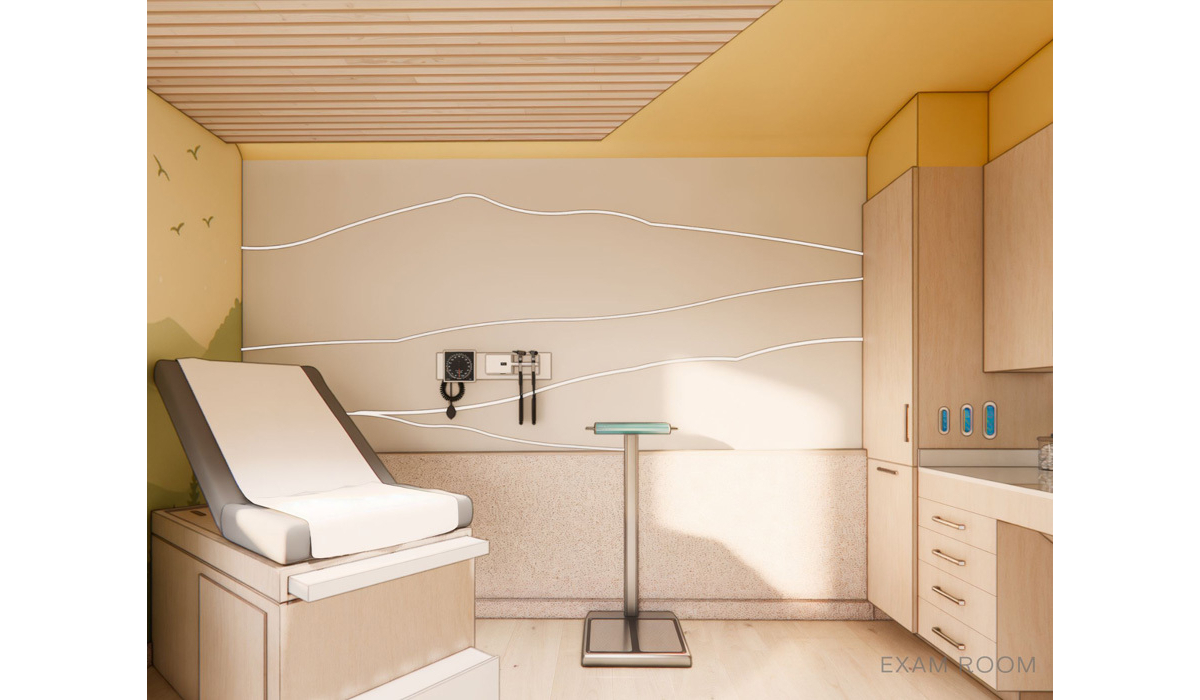
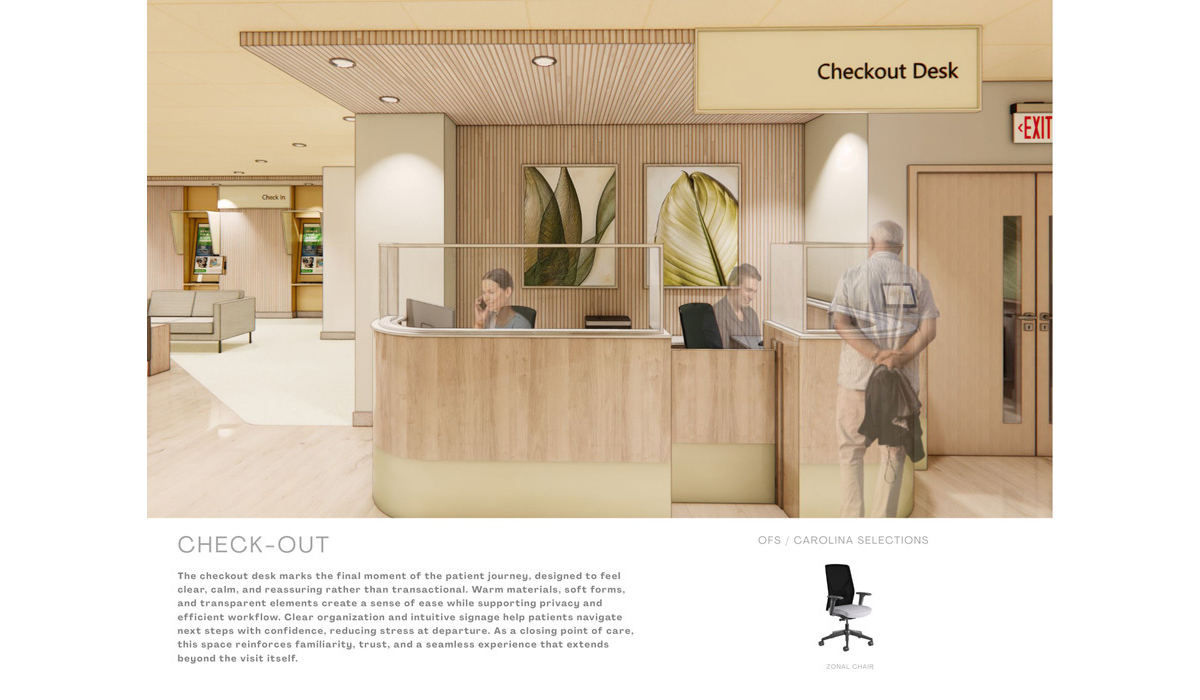
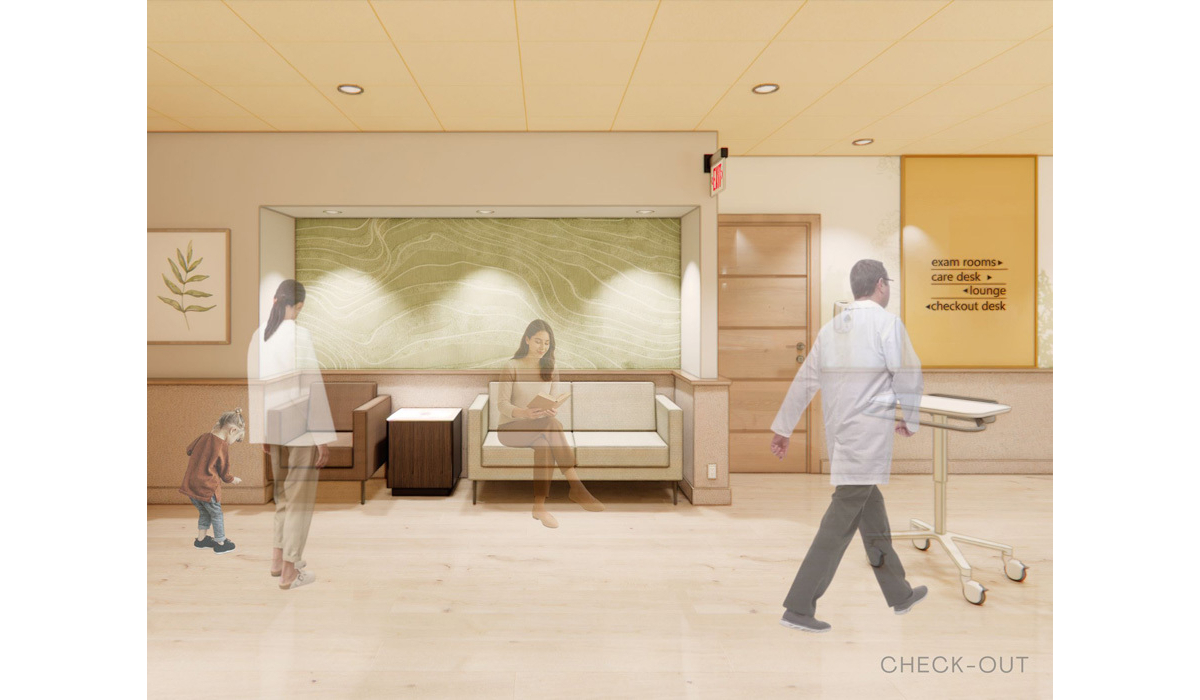
Care That Belongs explores how healthcare environments can create spaces rooted in familiarity, rhythm, and place. The project focuses on thoughtful design that fosters emotional comfort, intuitive movement, and long-term trust. Circulation paths are clear and intuitive, reducing stress and reinforcing predictability. Subtle transitions in lighting, materials, and scale help define public, transitional, and private zones without harsh separation. Inspired by the surrounding landscape, materials and finishes blend soft textures and muted tones to balance support, comfort and familiarity with the technical needs of a medical environment. Human-centered planning informs each area of the clinics with waiting spaces that support autonomy and personal comfort, and exam consultation rooms that prioritize clarity and adaptability for both patients and providers. Staff areas are designed as restorative spaces that support caregivers who are essential pillars in rural communities. Consistent visual cues, cohesive material palettes, and gentle spatial rhythms create an environment that becomes easier to navigate with each visit and reinforces a sense of belonging. The clinic is a space that reinforces trust and is shaped by comfort, clarity, and connection.Care That Belongs explores how healthcare environments can create spaces rooted in familiarity, rhythm, and place. The project focuses on thoughtful design that fosters emotional comfort, intuitive movement, and long-term trust. Circulation paths are clear and intuitive, reducing stress and reinforcing predictability. Subtle transitions in lighting, materials, and scale help define public, transitional, and private zones without harsh separation. Inspired by the surrounding landscape, materials and finishes blend soft textures and muted tones to balance support, comfort and familiarity with the technical needs of a medical environment. Human-centered planning informs each area of the clinics with waiting spaces that support autonomy and personal comfort, and exam consultation rooms that prioritize clarity and adaptability for both patients and providers. Staff areas are designed as restorative spaces that support caregivers who are essential pillars in rural communities. Consistent visual cues, cohesive material palettes, and gentle spatial rhythms create an environment that becomes easier to navigate with each visit and reinforces a sense of belonging. The clinic is a space that reinforces trust and is shaped by comfort, clarity, and connection.
What does winning this design award mean to you?
Honestly, it’s both exciting and a little surreal. This recognition feels like a turning point as I get ready to step into the professional world. It reminds me that the ideas I care about, designing with purpose and focusing on how people experience a space actually matter. Care that Belongs was a project that was very personal to me, so seeing it acknowledged like this makes the moment even more meaningful and encourages me to keep pushing myself creatively.
What would you say to others to inspire them to apply in the future?
If you’re even considering applying, that’s already a sign you should do it. It’s easy to overthink or compare yourself to others, but those doubts shouldn’t hold you back. Putting your work out there is part of the process, and it’s where real growth happens. No matter the outcome, you gain experience, confidence, and a better understanding of your own voice as a designer, which is something you can’t get any other way.

Kirkwood Community College
What does winning this design award mean to you?
Winning this award is incredibly meaningful to me as I prepare to graduate in May and step into the design industry. It feels like a validation of the passion, creativity, and dedication I’ve put into my work throughout my education. Care That Belongs was a project that truly reflected my values as a designer, creating spaces that are thoughtful, human-centered, and impactful, so being recognized for it by IIDA is both an honor and a huge motivation for what’s ahead.
What would you say to others to inspire them to apply in the future?
I would absolutely encourage others to apply. It can feel intimidating to put your work out there, especially if you’re not expecting to win anything, but that’s exactly why you should do it. Competitions like this are such a great opportunity to grow, build confidence, and push your work to a higher level. Coming from a close-knit community, this experience feels especially meaningful and rewarding. You really never know what can come from it, and it’s so worth taking that chance.

Kirkwood Community College
THIRD PLACE:
Grace Becton, George Washington University
The Grove
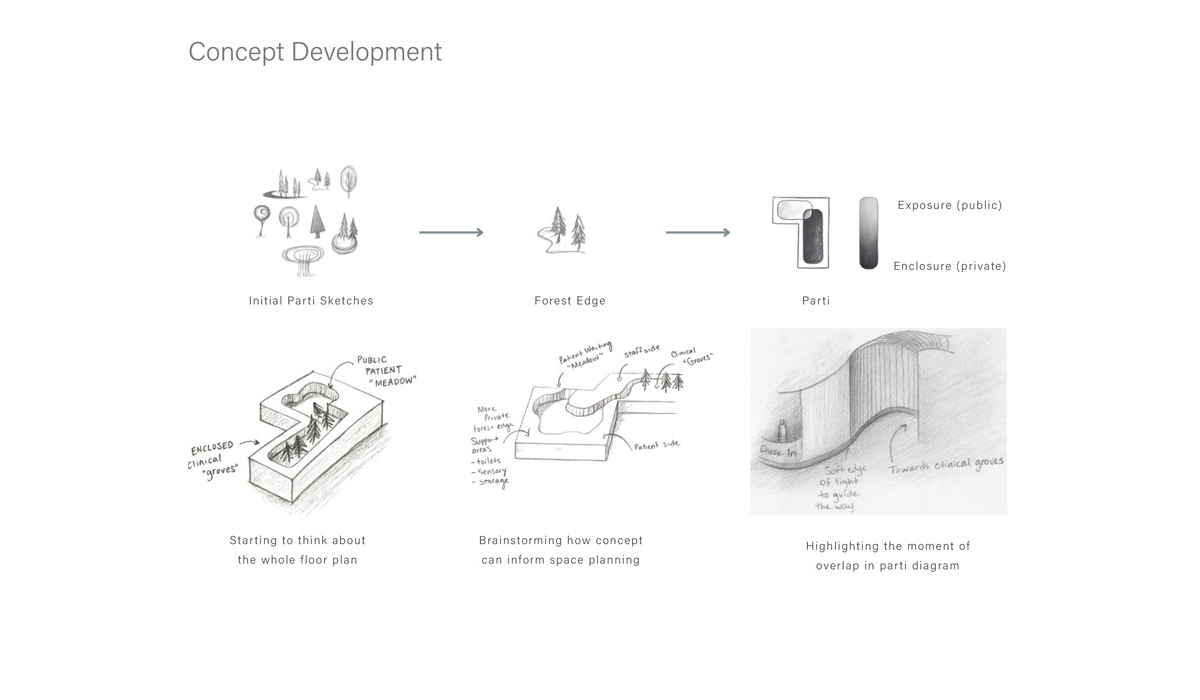
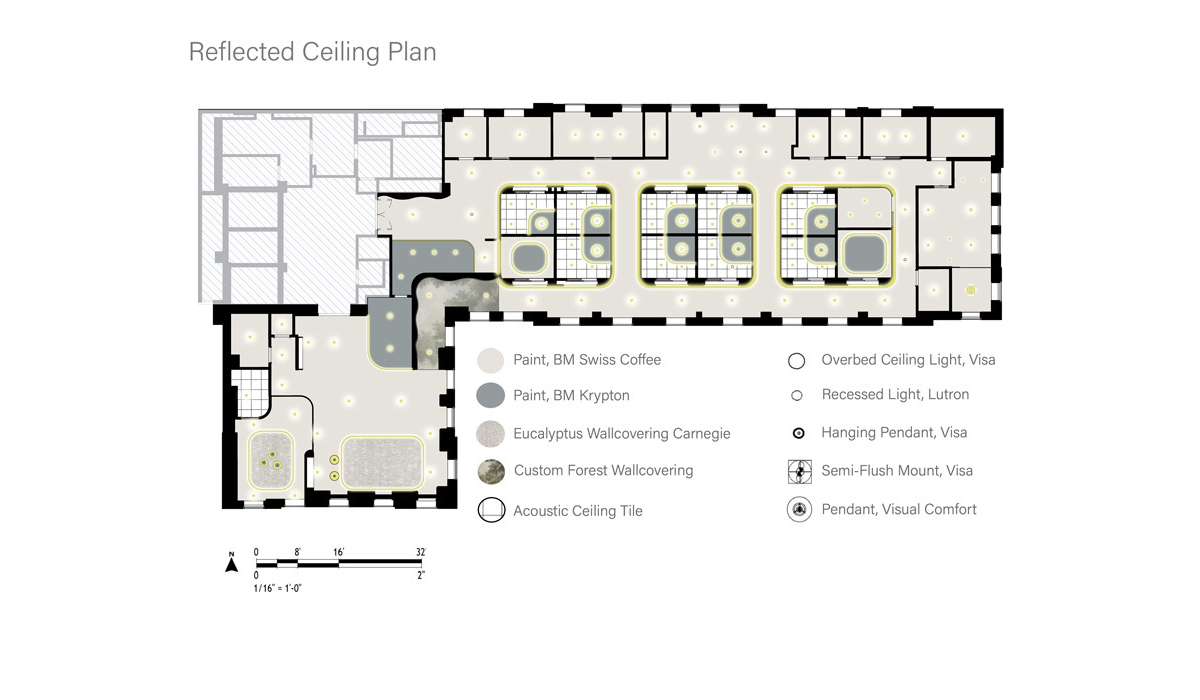
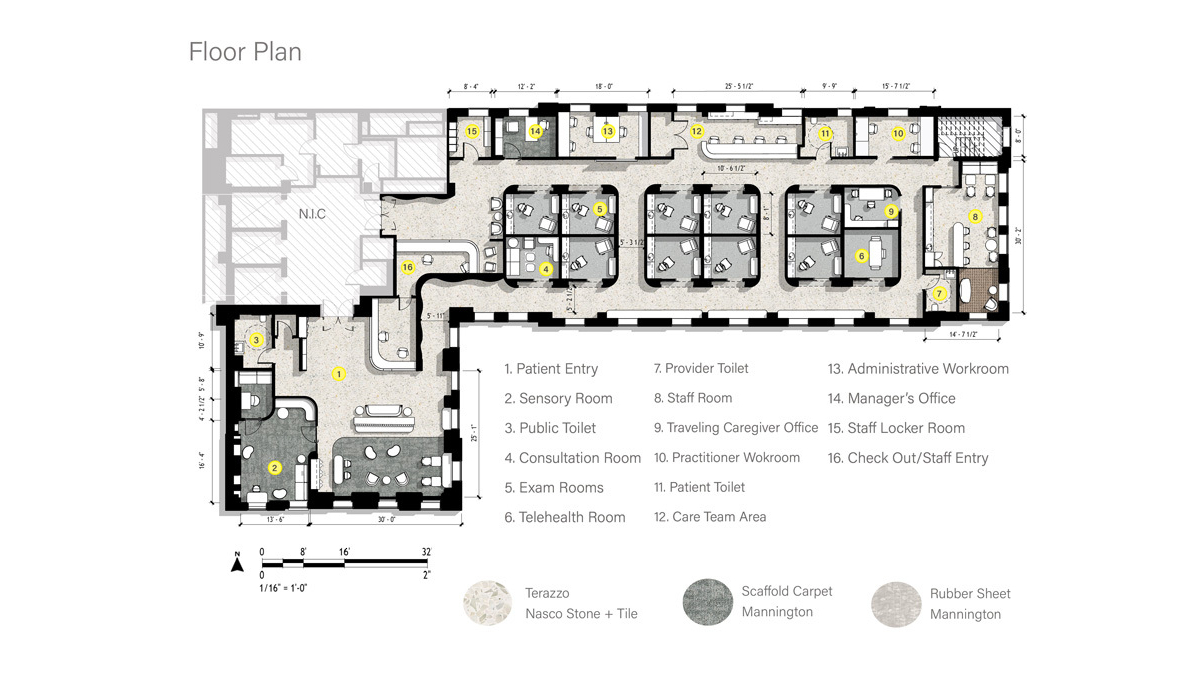
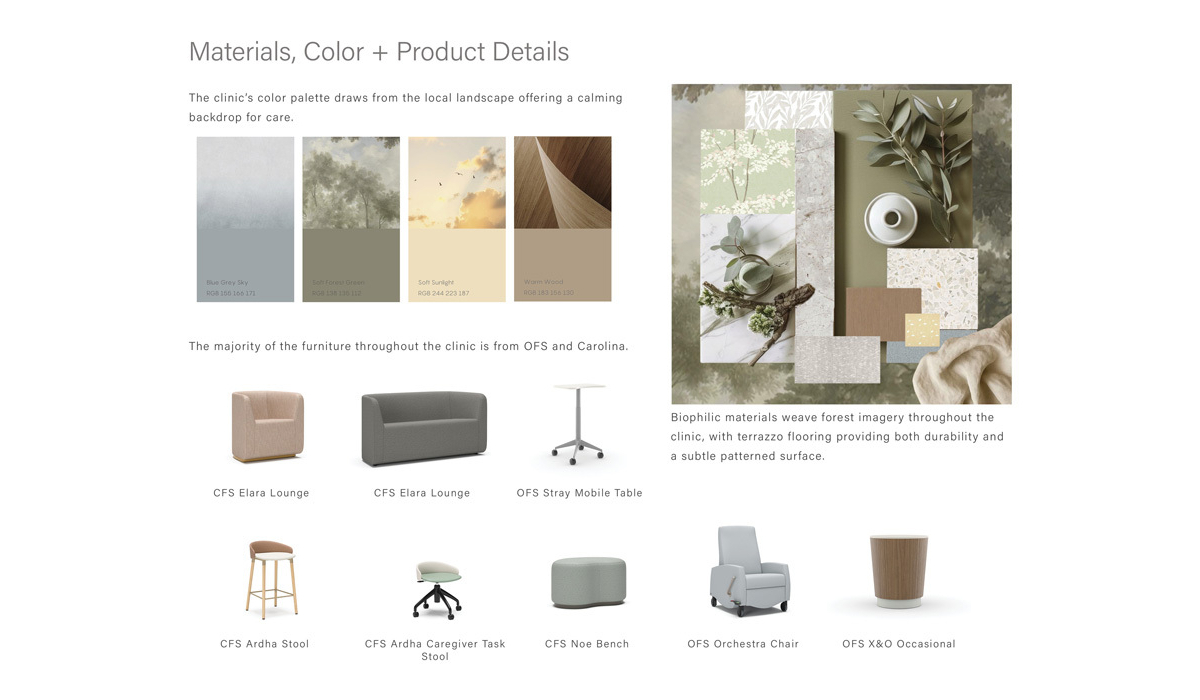
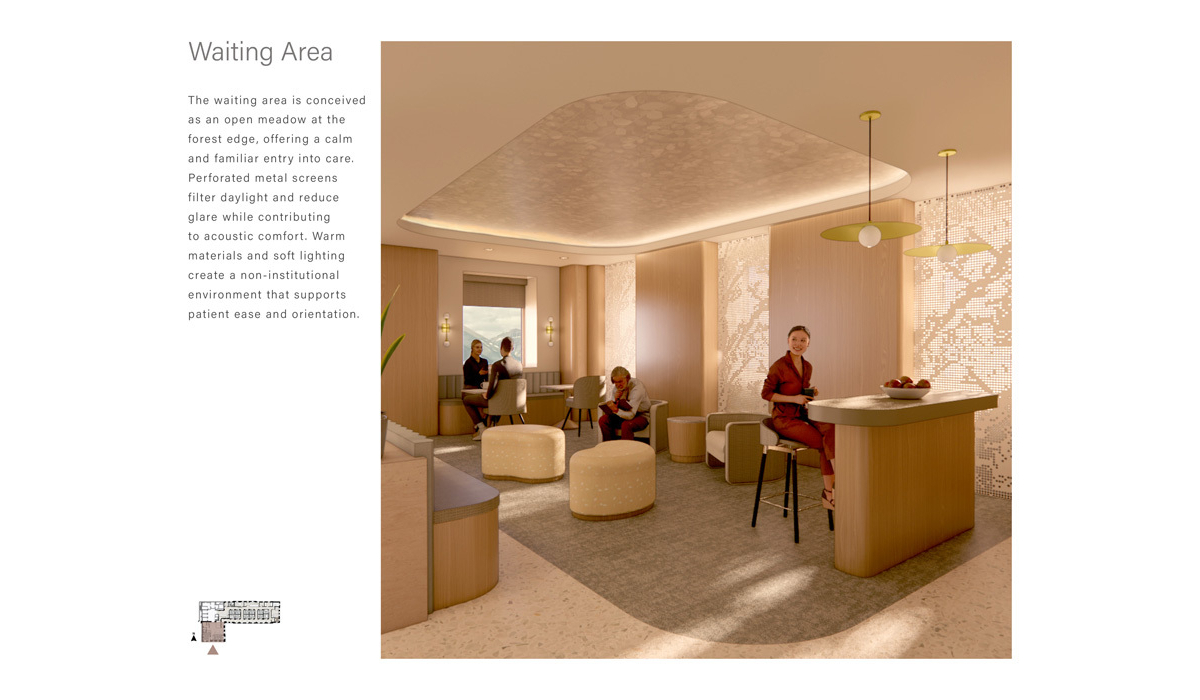
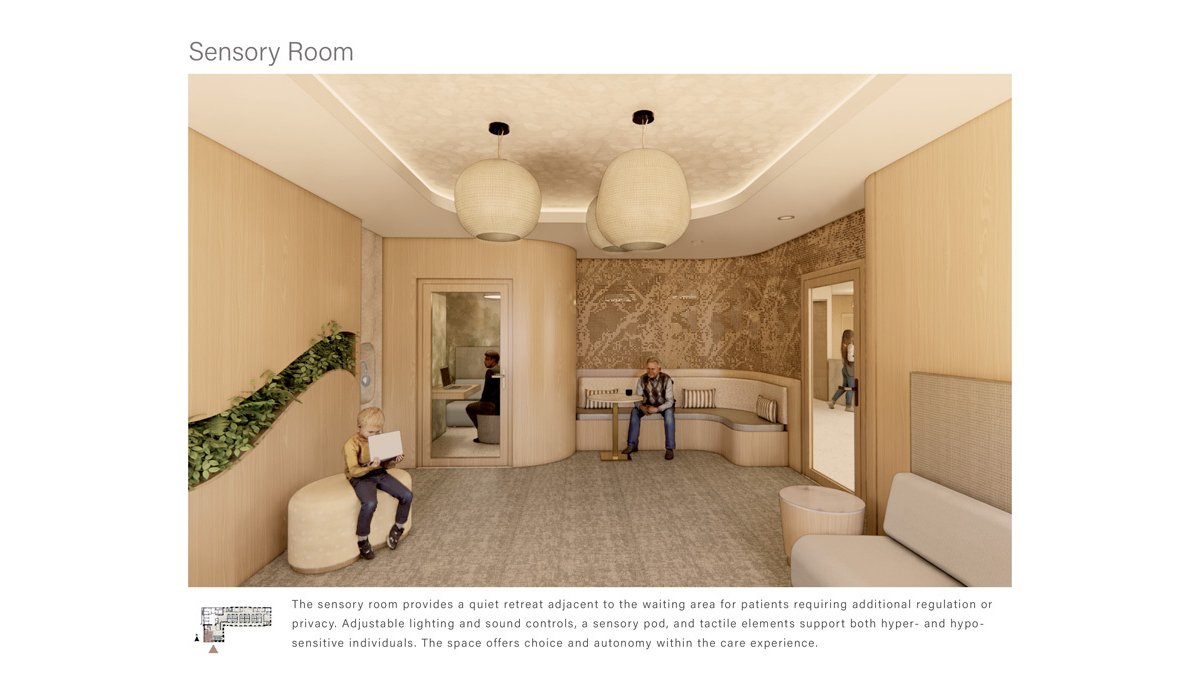
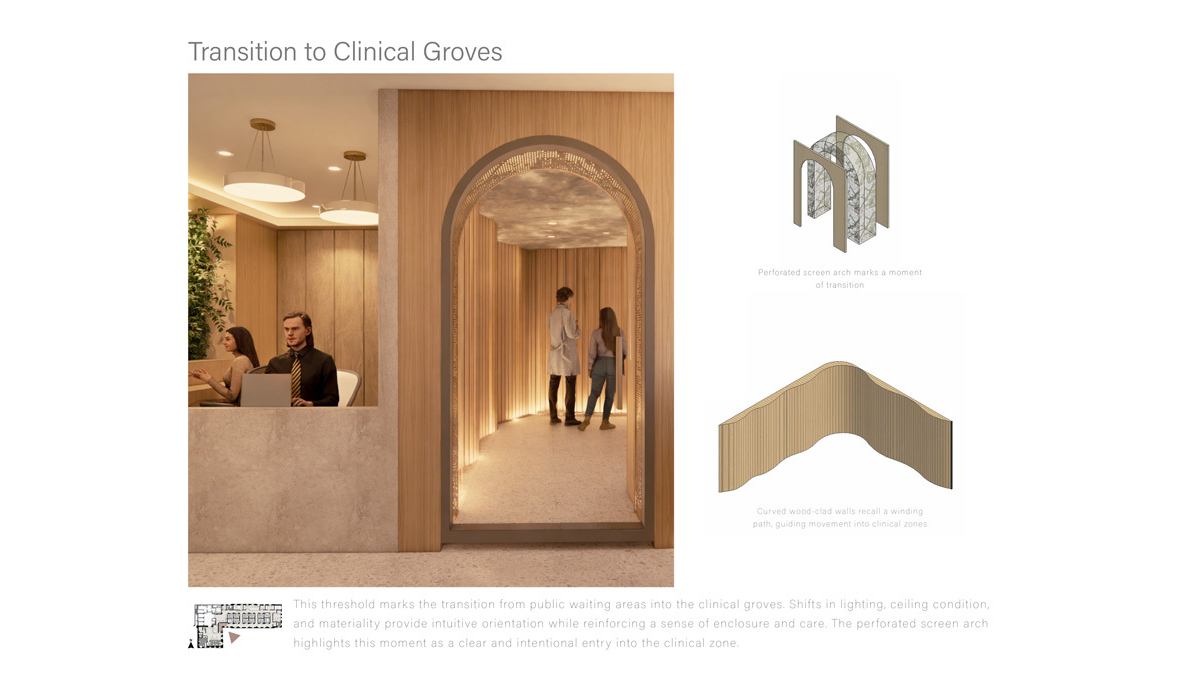
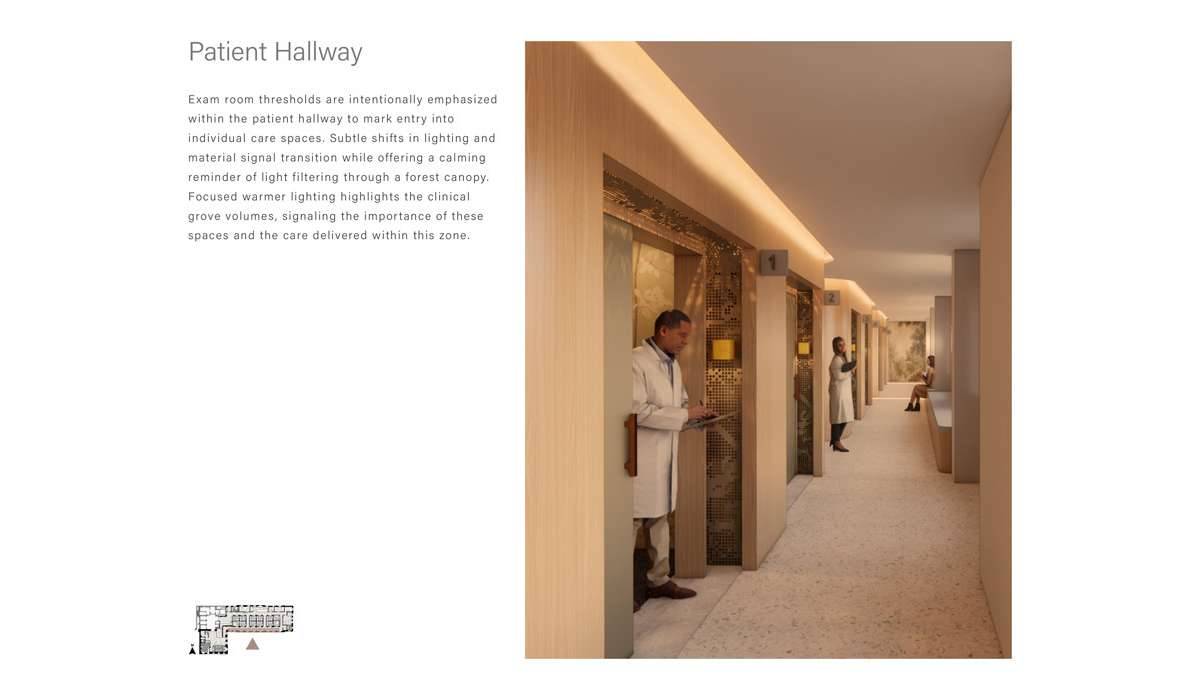
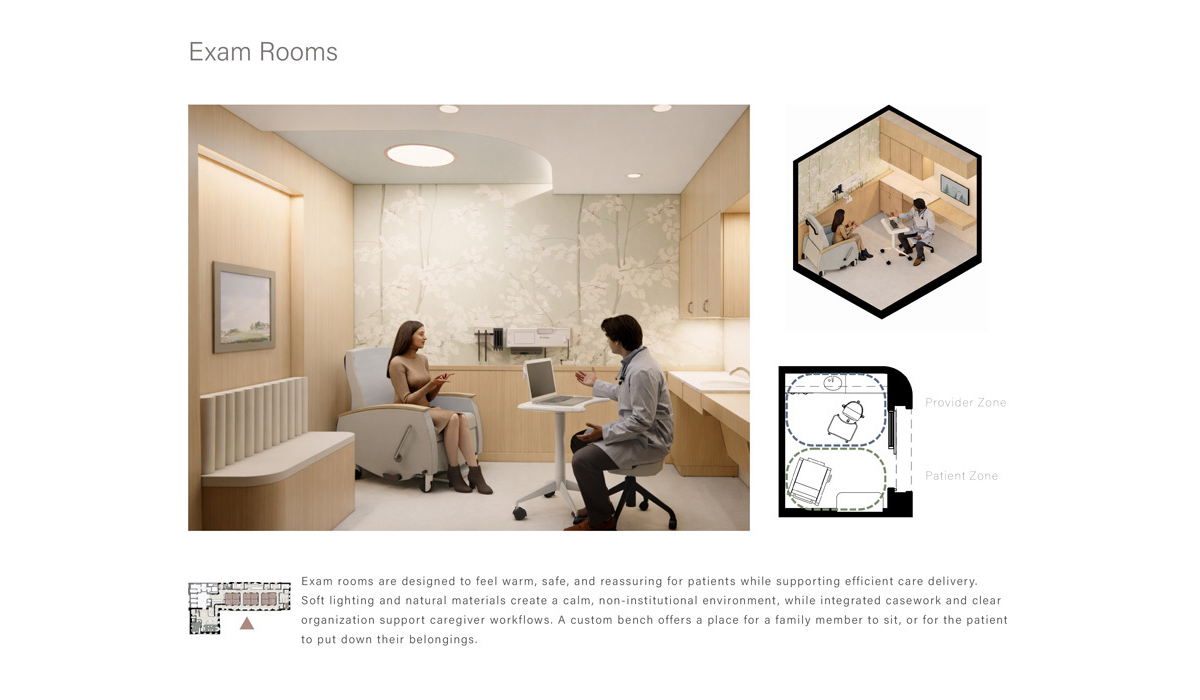
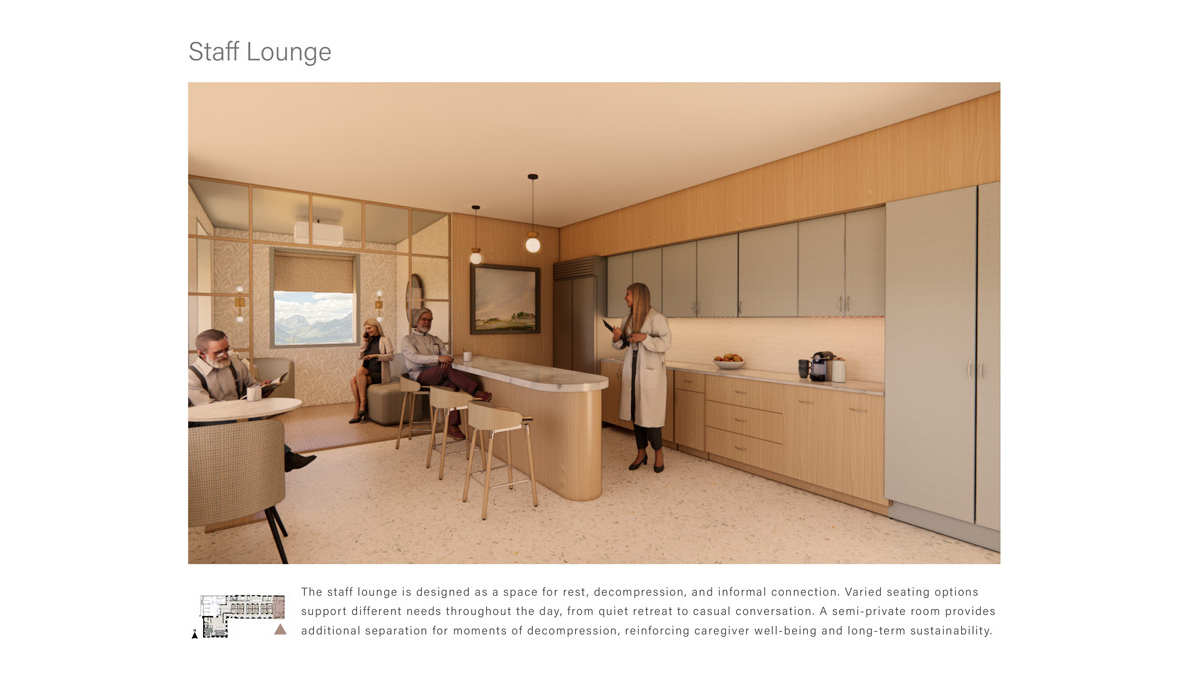
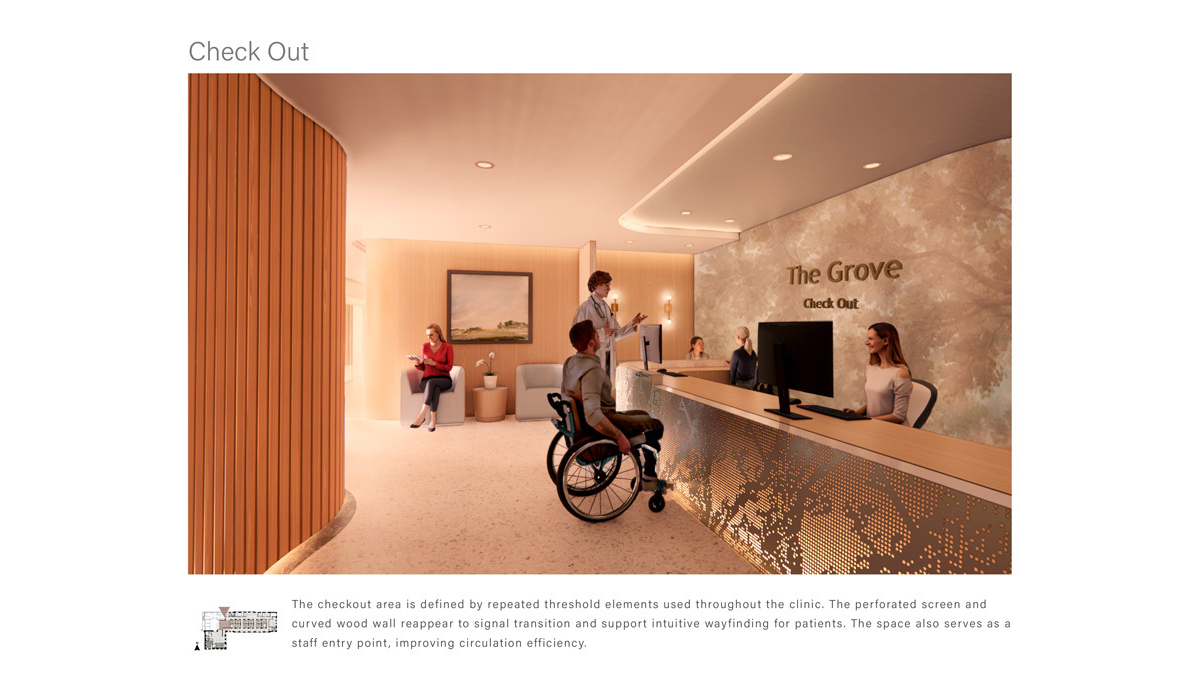
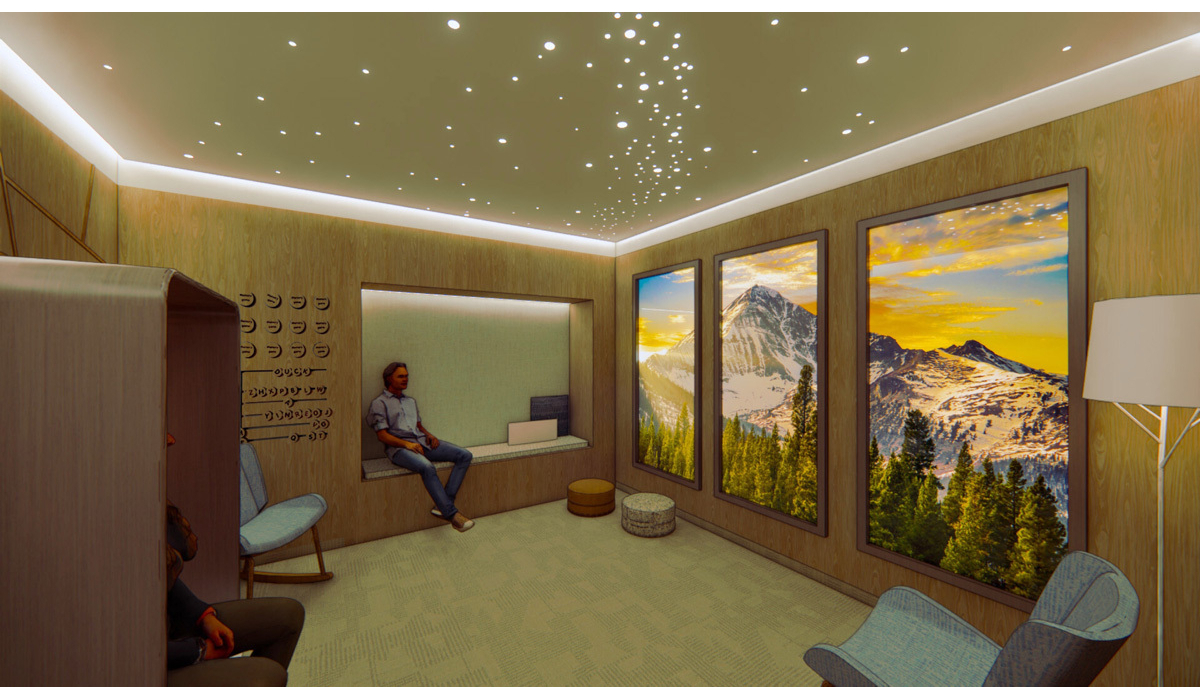
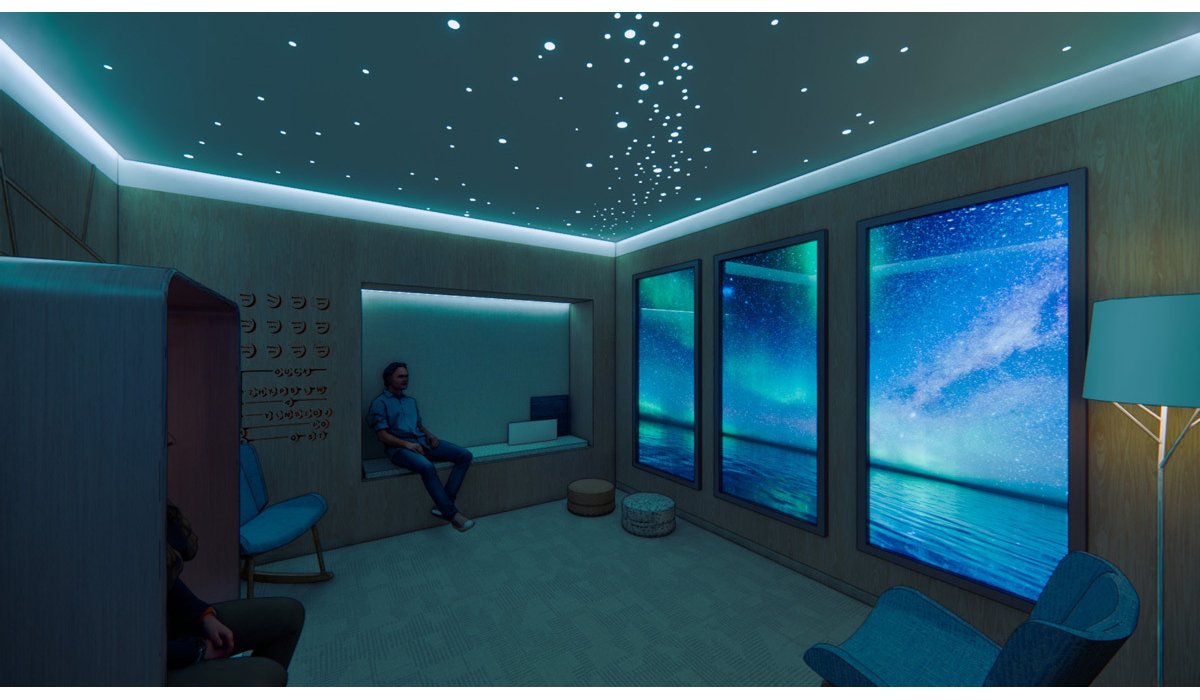
The Grove mirrors Northwest Montana’s heavily forested landscape, transitioning from open, public waiting spaces to sheltered “groves” of care. The design uses natural elements to establish a sense of place with a peaceful backdrop. The patient journey begins in the waiting area, conceived as an “open meadow,” surrounded by “trees.” Wood-wrapped structural columns and perforated metal screens evoking light filtering through a forest canopy and support emotional regulation and anxiety reduction, while feeling familiar and non-institutional. A dedicated sensory room serves neurodiverse patients through adjustable lighting and sound, a sensory pod, and a green wall providing visual and tactile engagement. Zones are clearly articulated by shifts in lighting, ceiling condition, and materiality signaling entry into the core clinical zone. Exam rooms are organized to improve workflow efficiency, reduce travel distances, and support provider oversight, and the central care desk and staff lounge promote caregiver well-being and retention. Through evidence-based design strategies, and empathy for patient and provider experiences, The Grove delivers an inclusive, welcoming healthcare environment rooted in the local context.
What does winning this design award mean to you?
Having grown up in a rural community where access to care often meant long drives and limited options, I felt a deep personal connection to the competition brief. This recognition is especially meaningful, as it affirms that design grounded in lived experience can resonate and offer thoughtful, human-centered solutions. I’m honored and encouraged that this perspective was recognized.
Having gone through the process, what would you say to others to inspire them to apply in the future?
The process pushed me to think more deeply about my ideas and refine how I communicated them. It’s a meaningful way to grow as a designer, regardless of the outcome.

Honorable Mentions
HONORABLE MENTION
Alexa Condenton and Lilly Gleaton, Florida State University
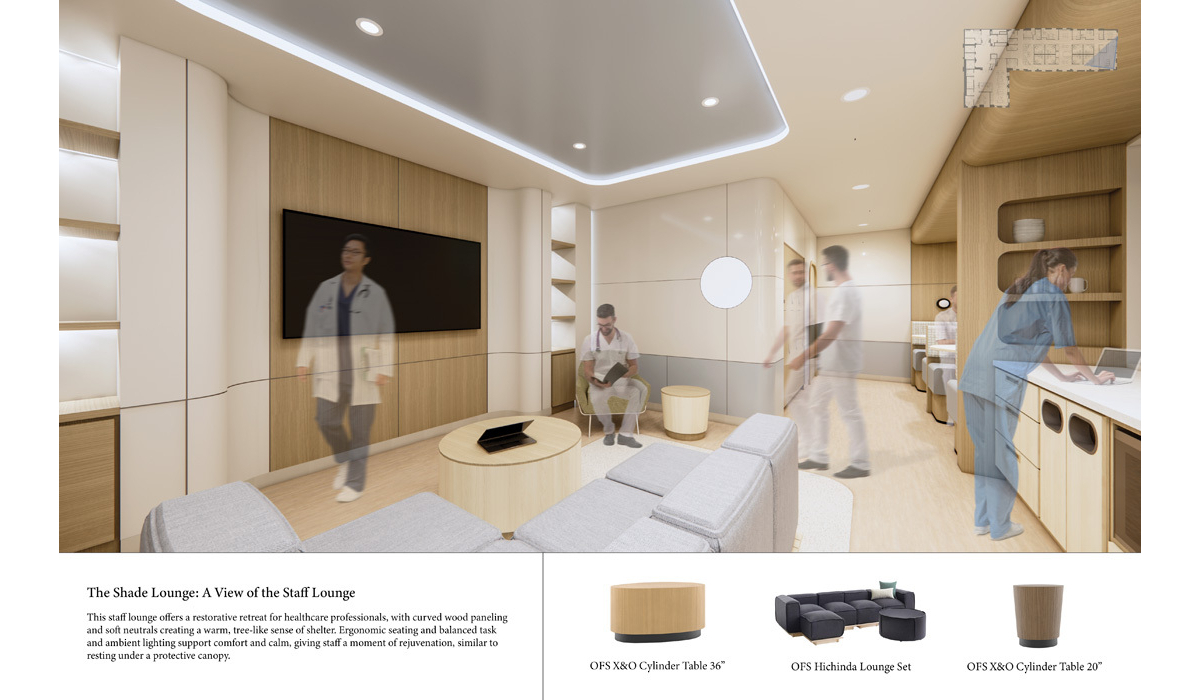
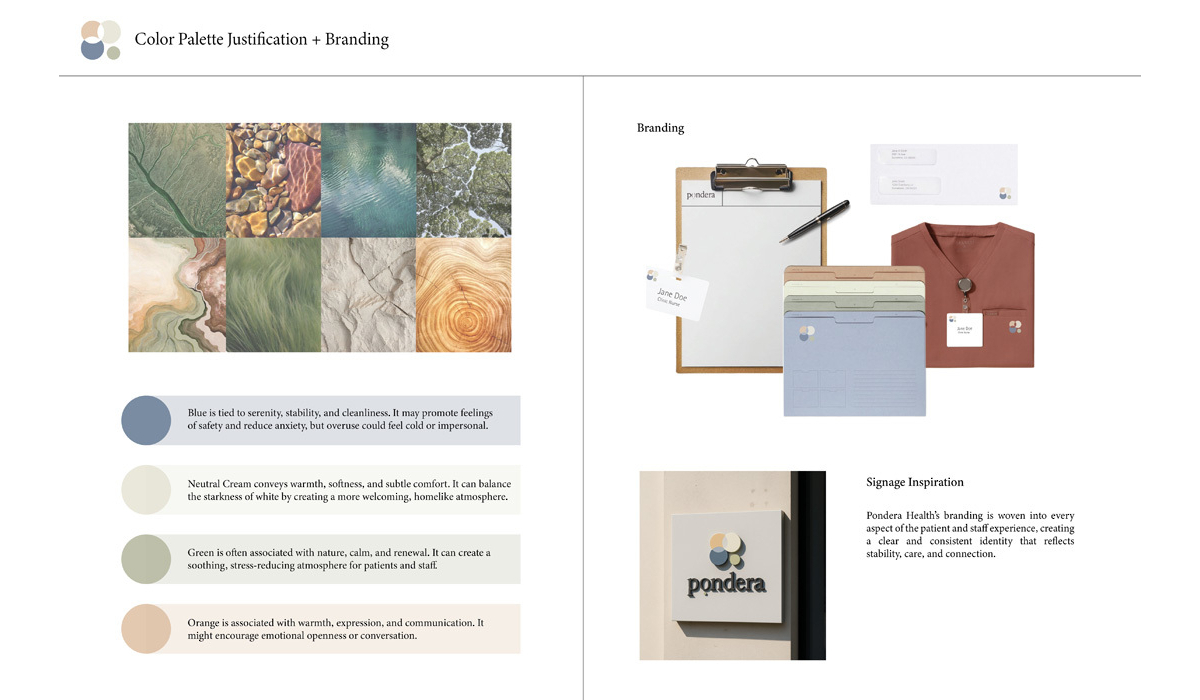
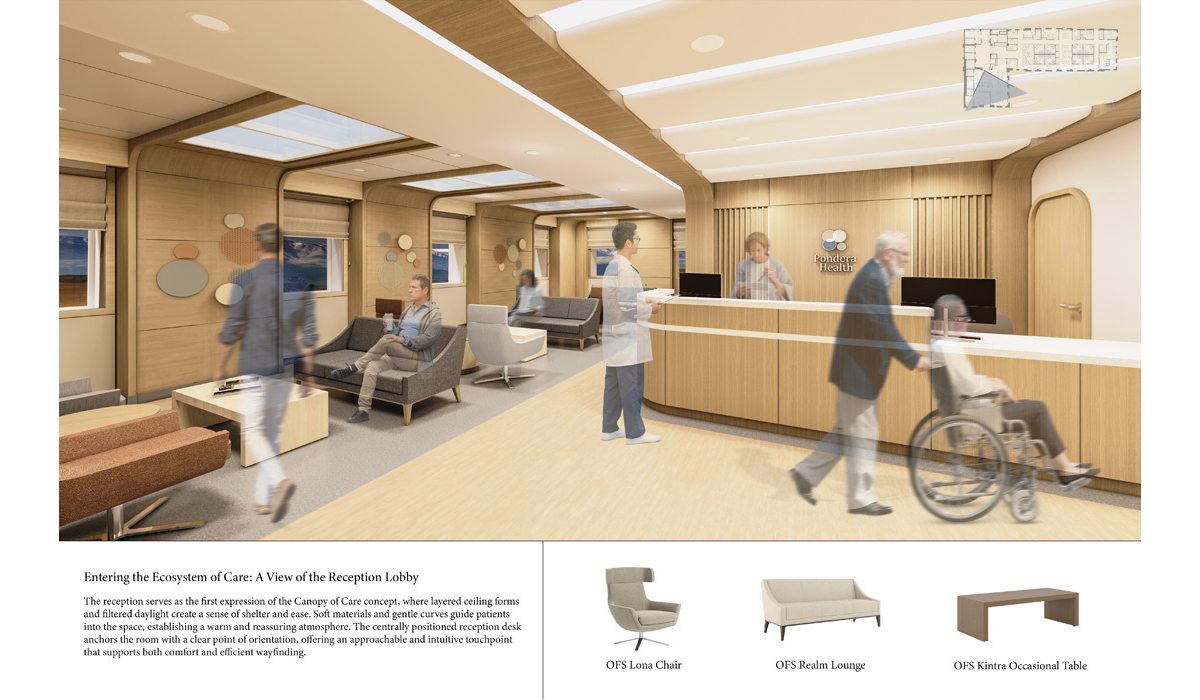
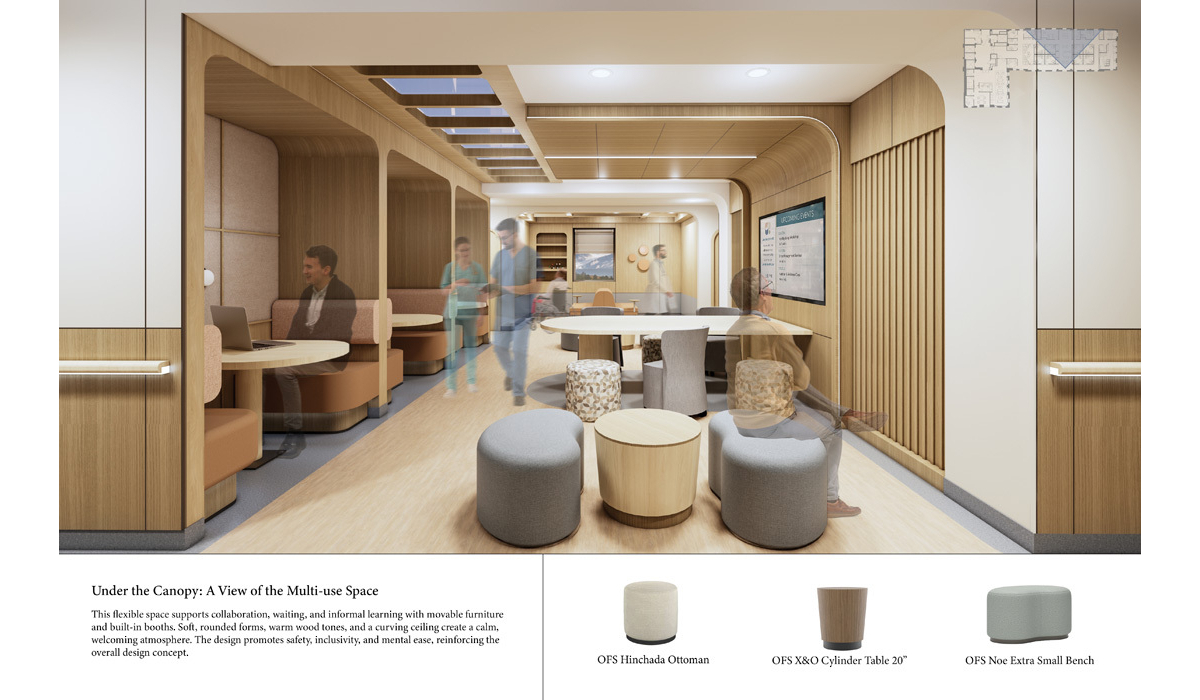
Pondera Health
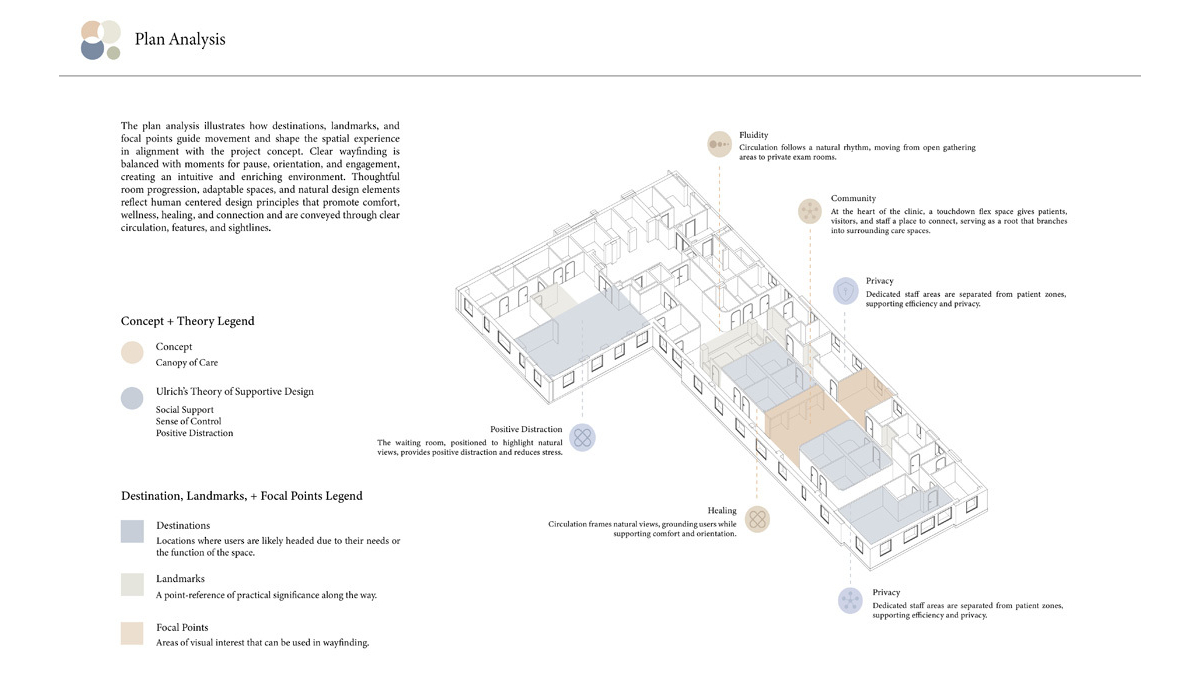
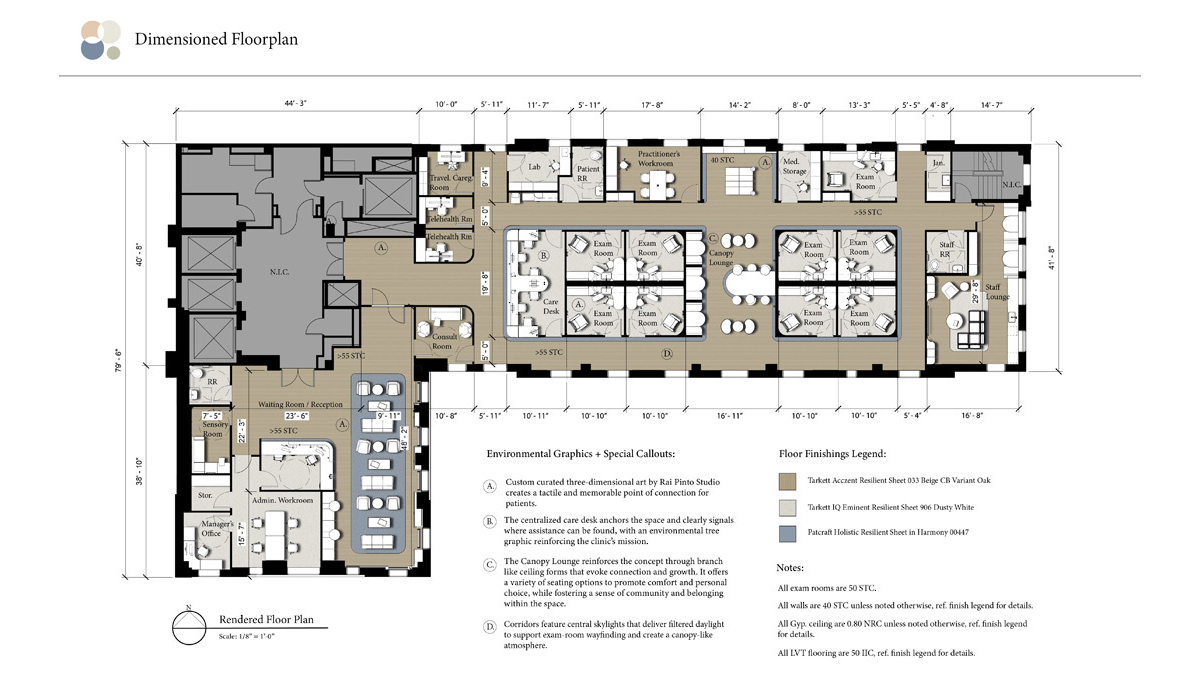
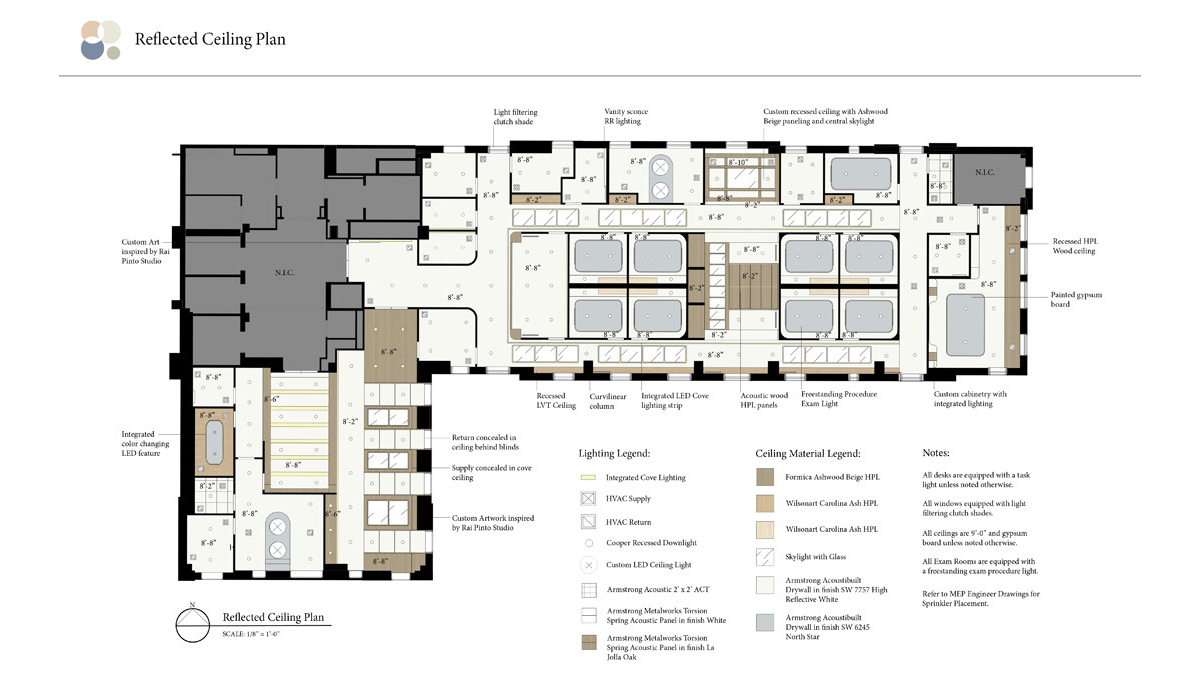
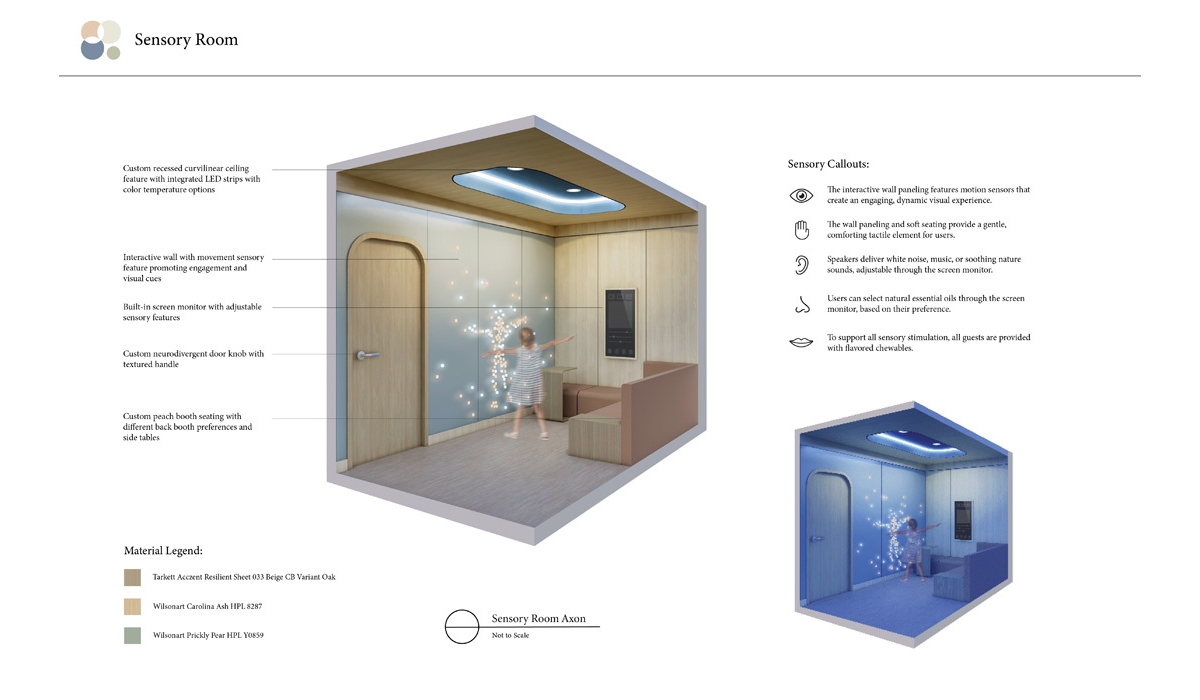
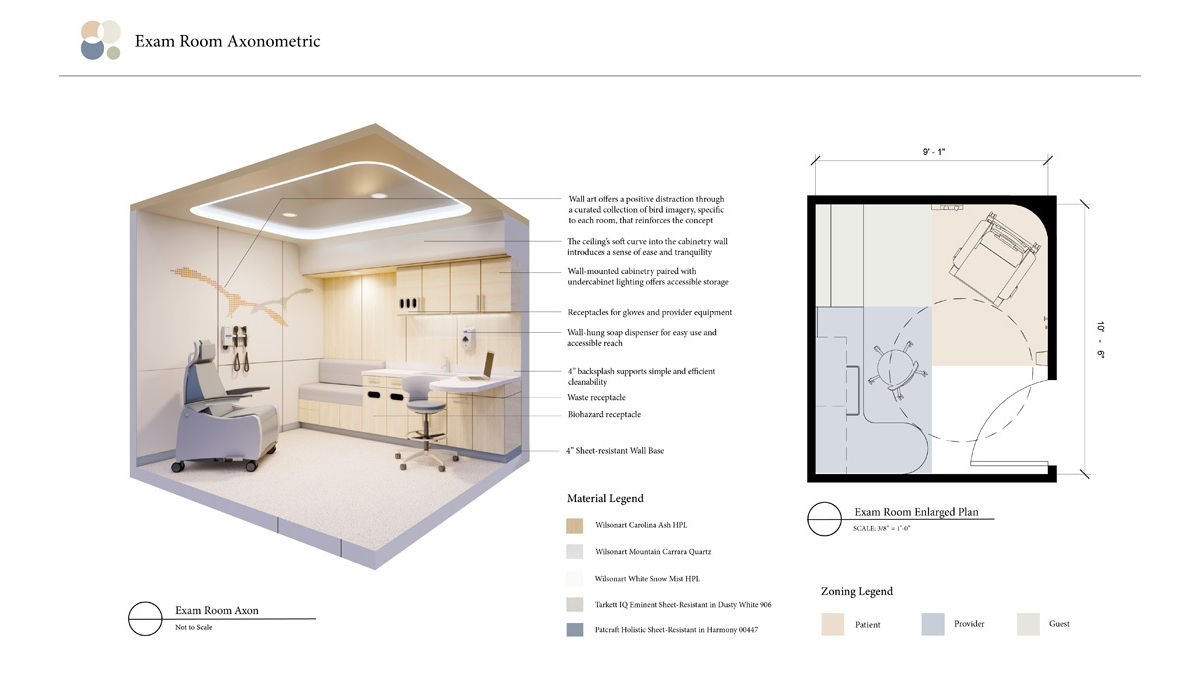
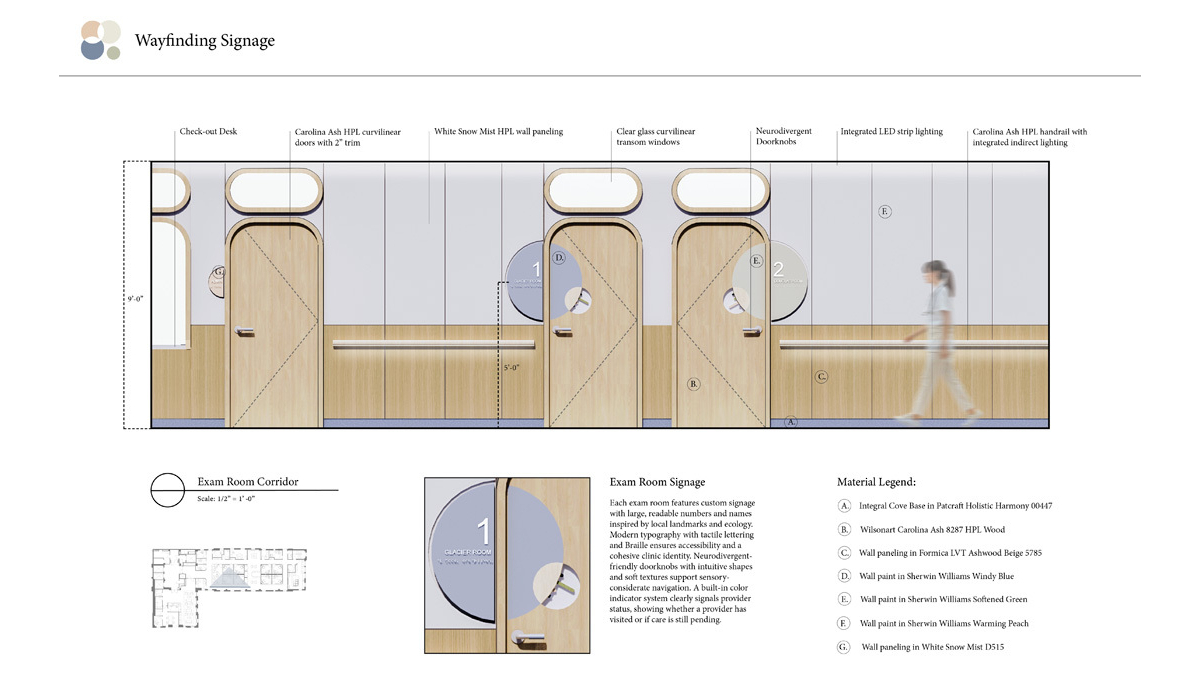
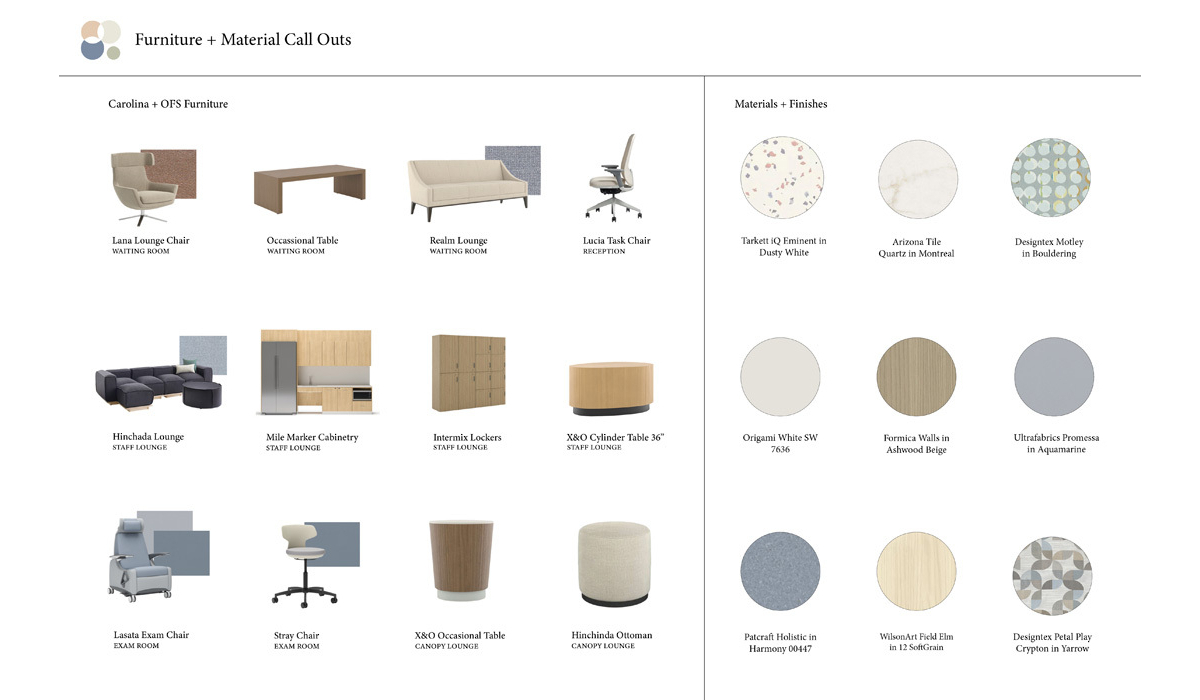
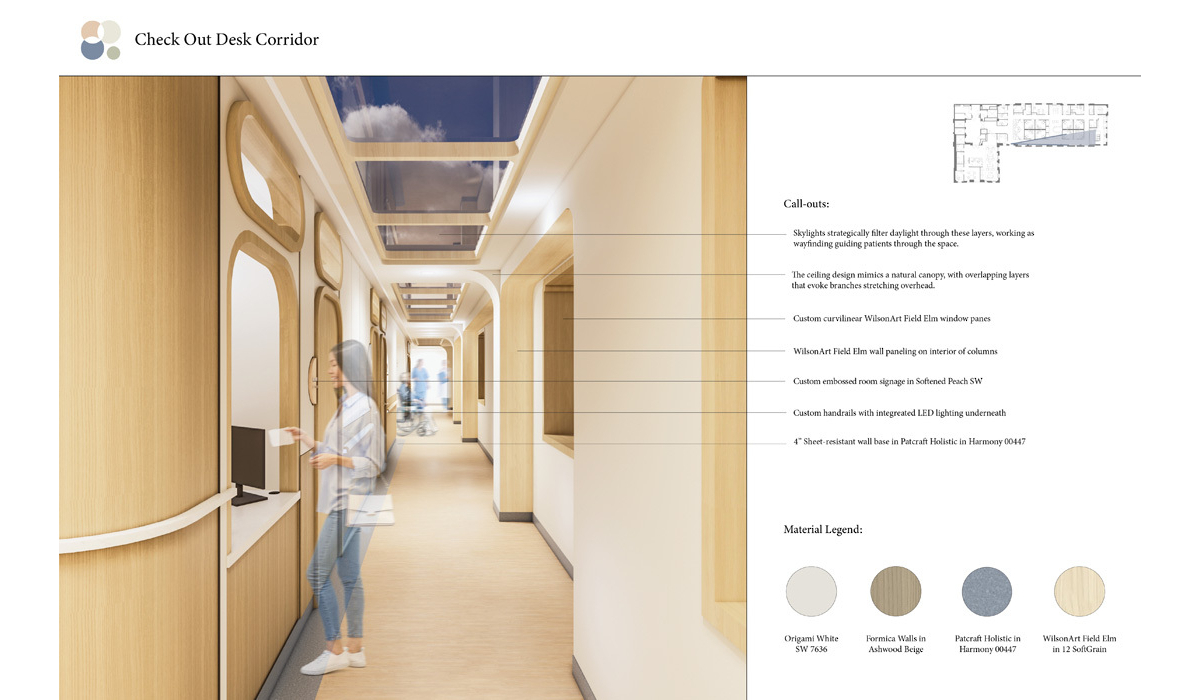
HONORABLE MENTION:
Haoen Chen and Yu-Sien Tsao, National Yunlin University of Science and Technology
HEARTH Primary Care Clinic
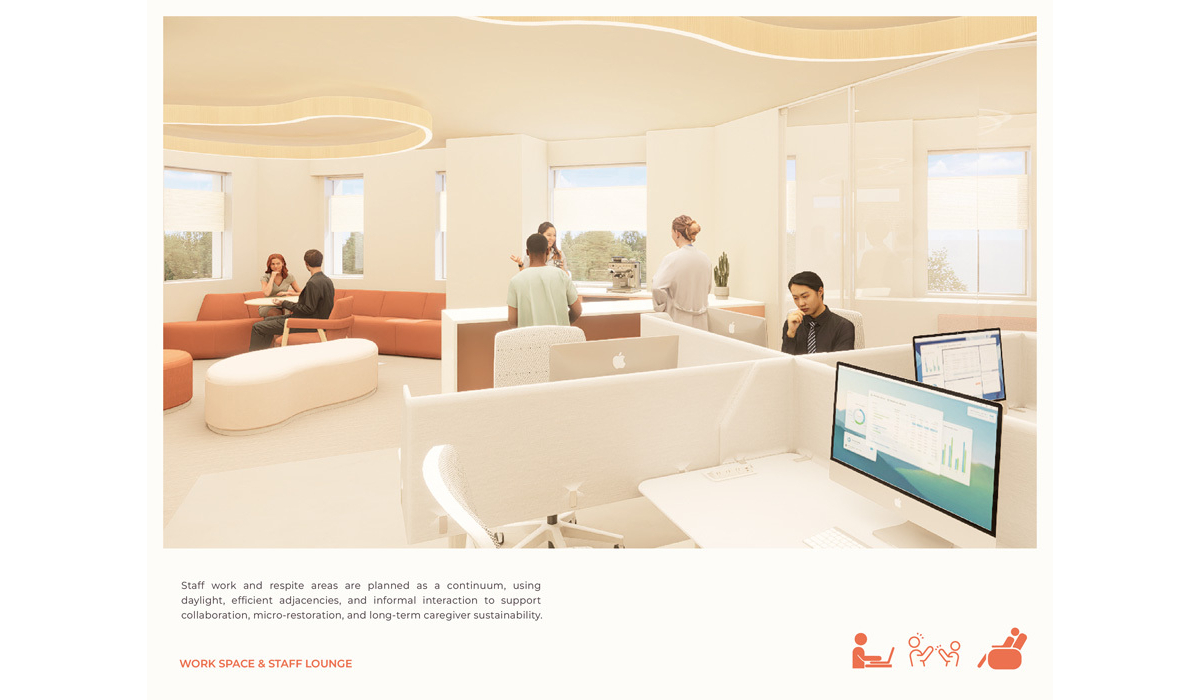
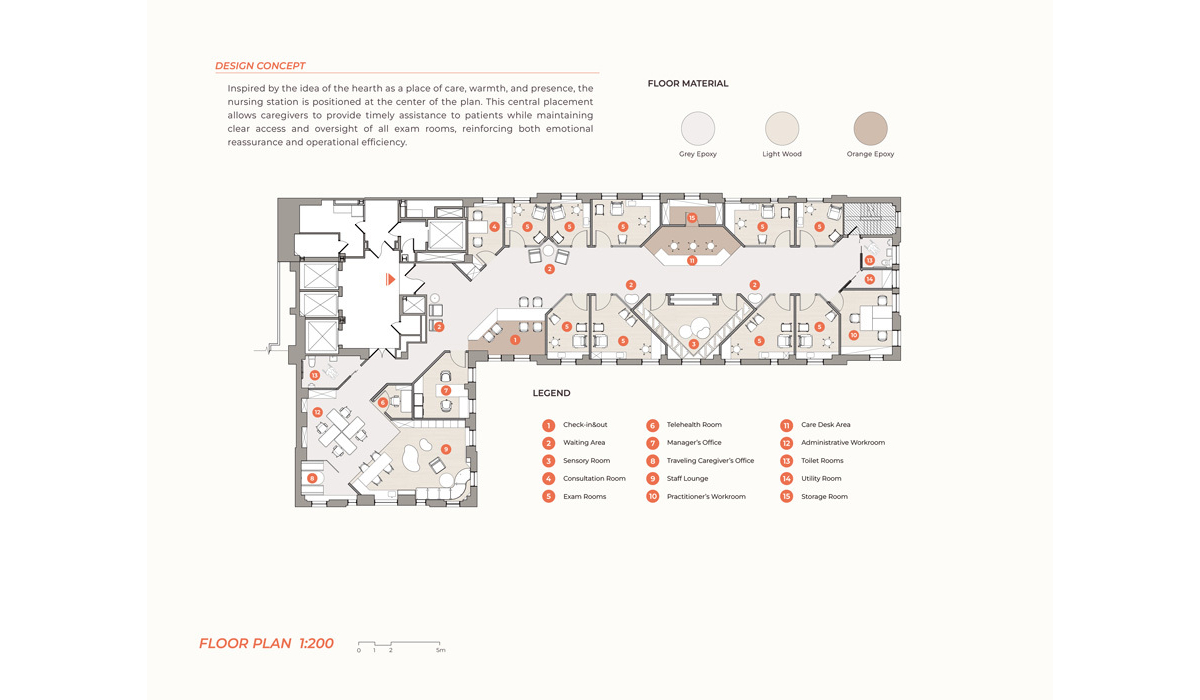
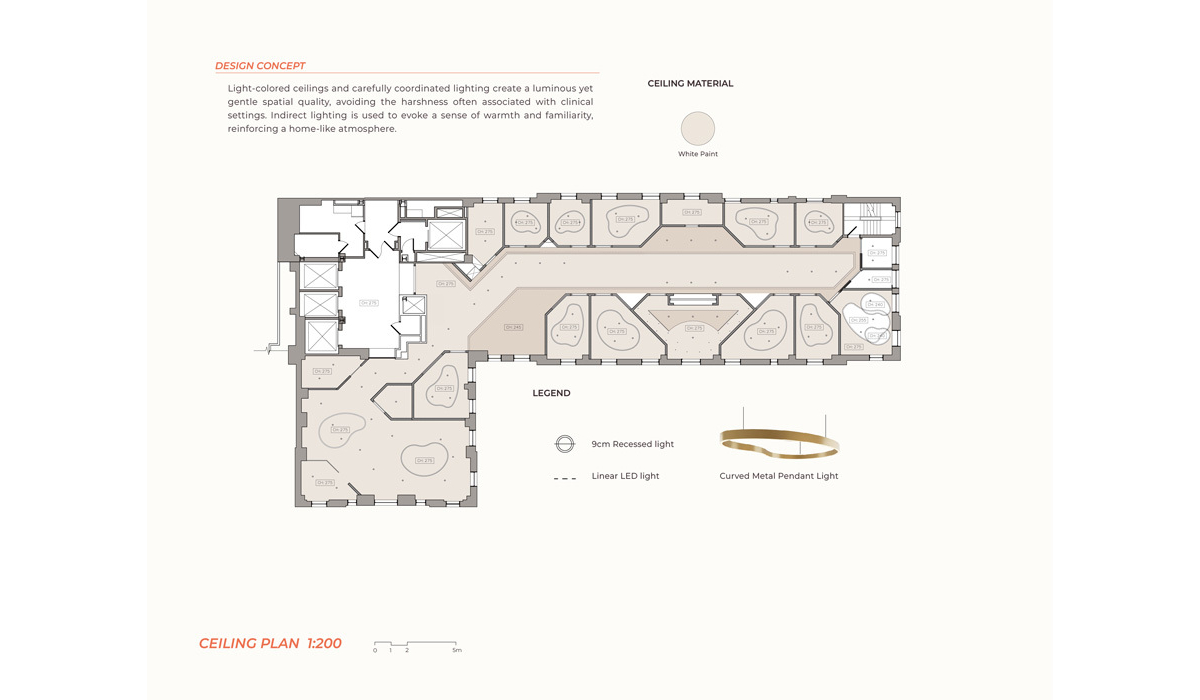
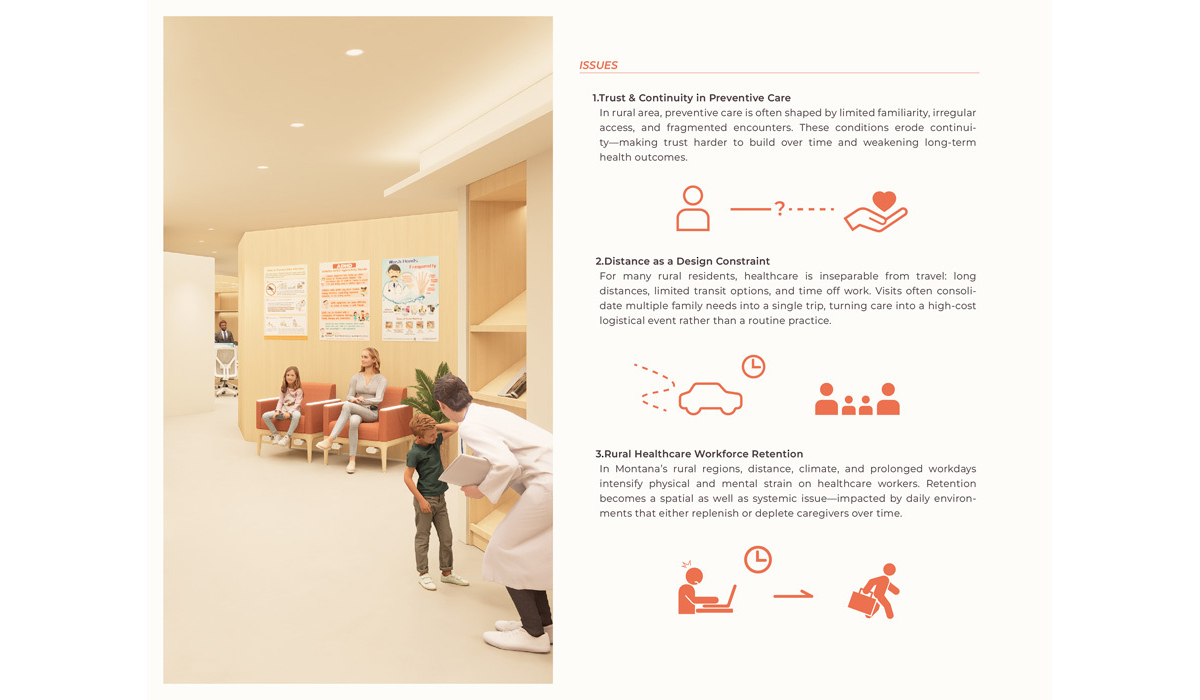
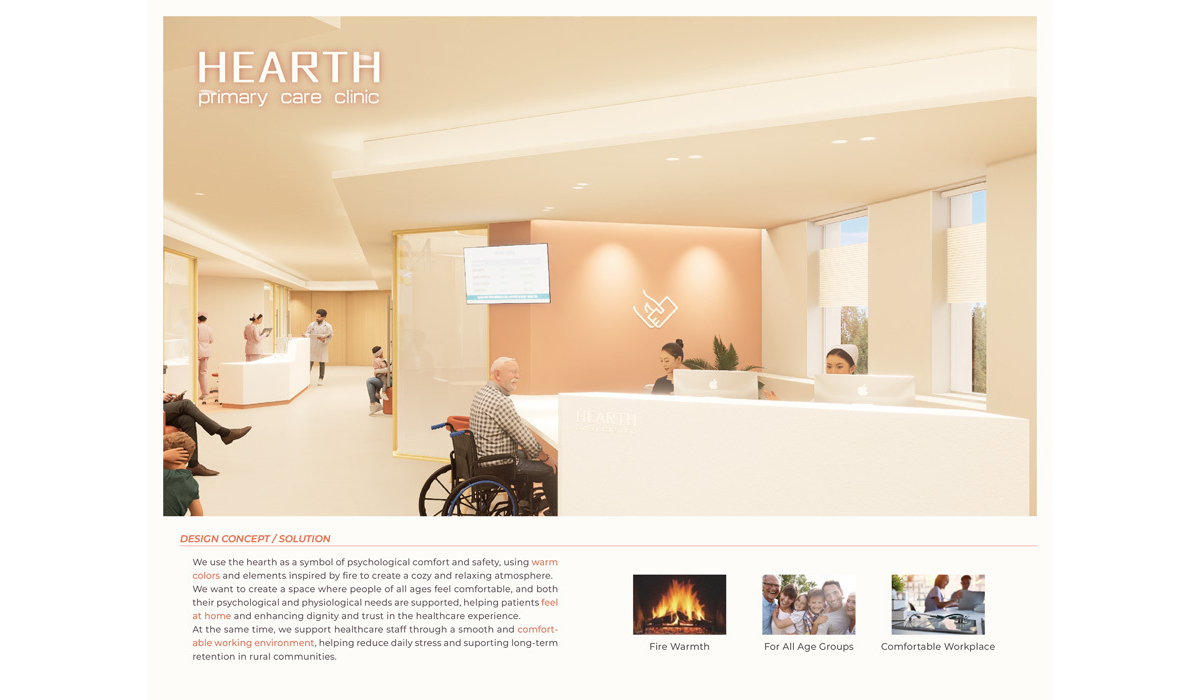
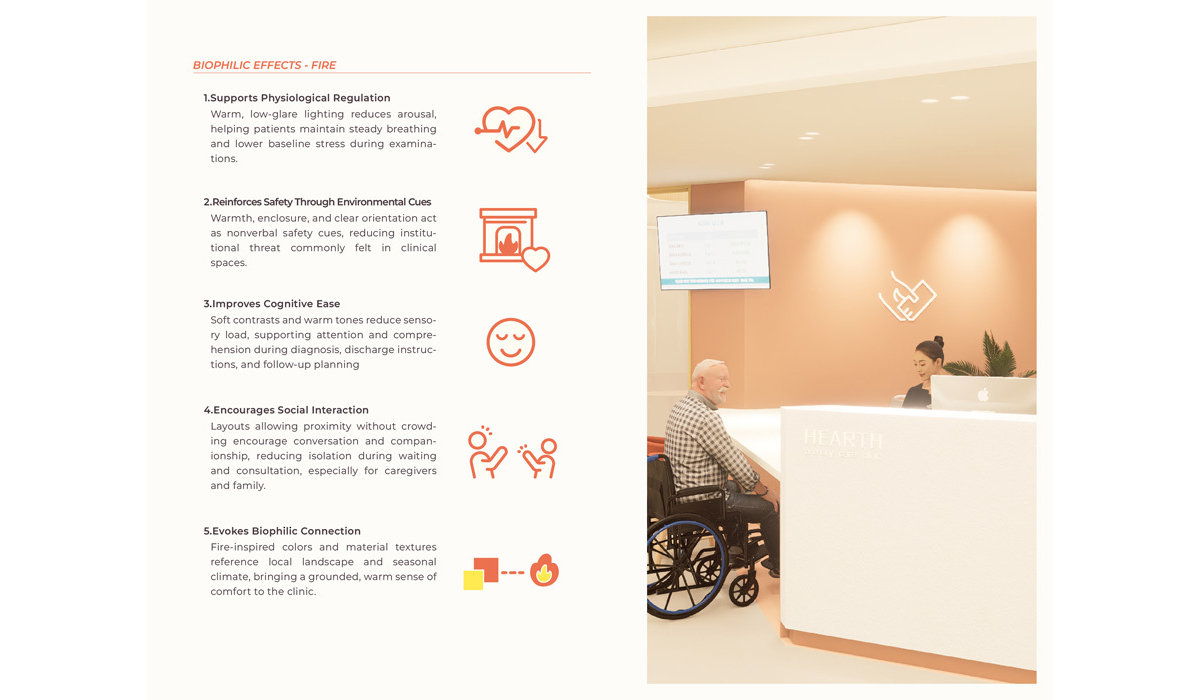
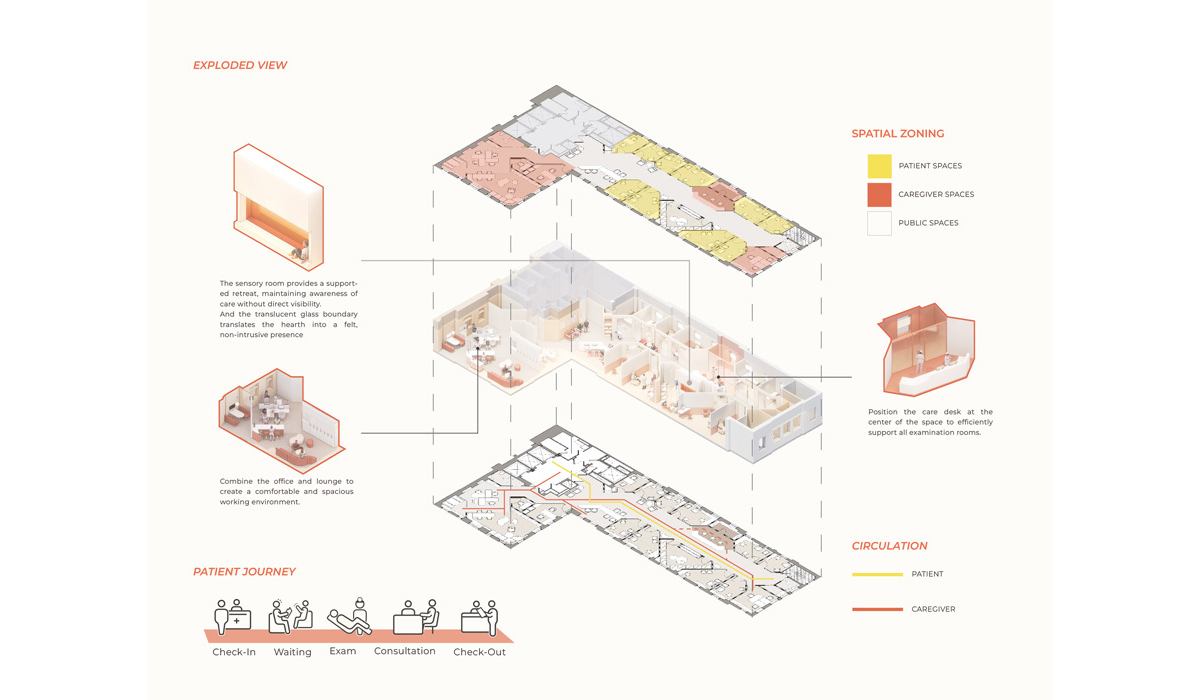
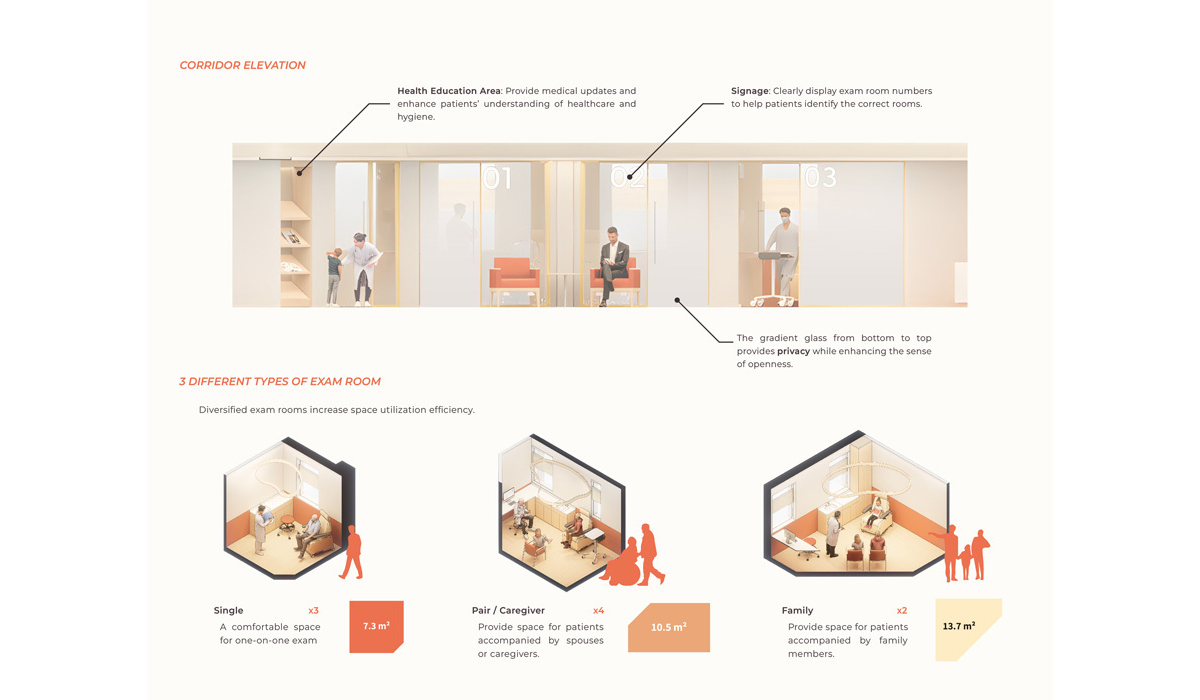
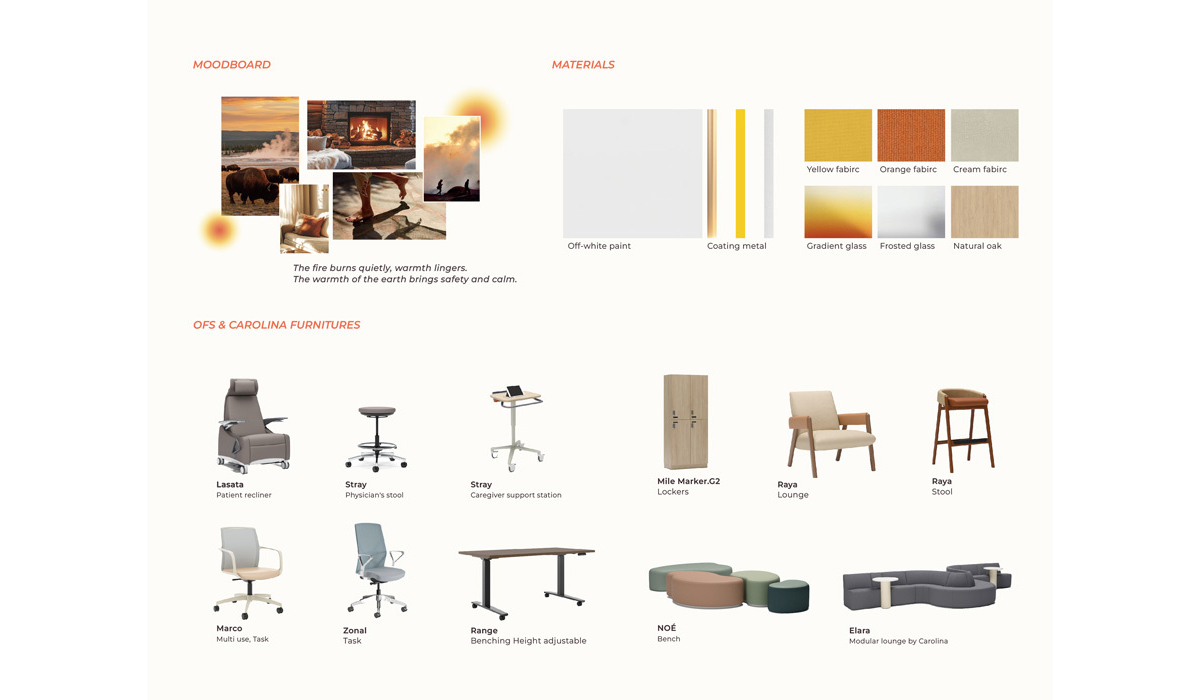
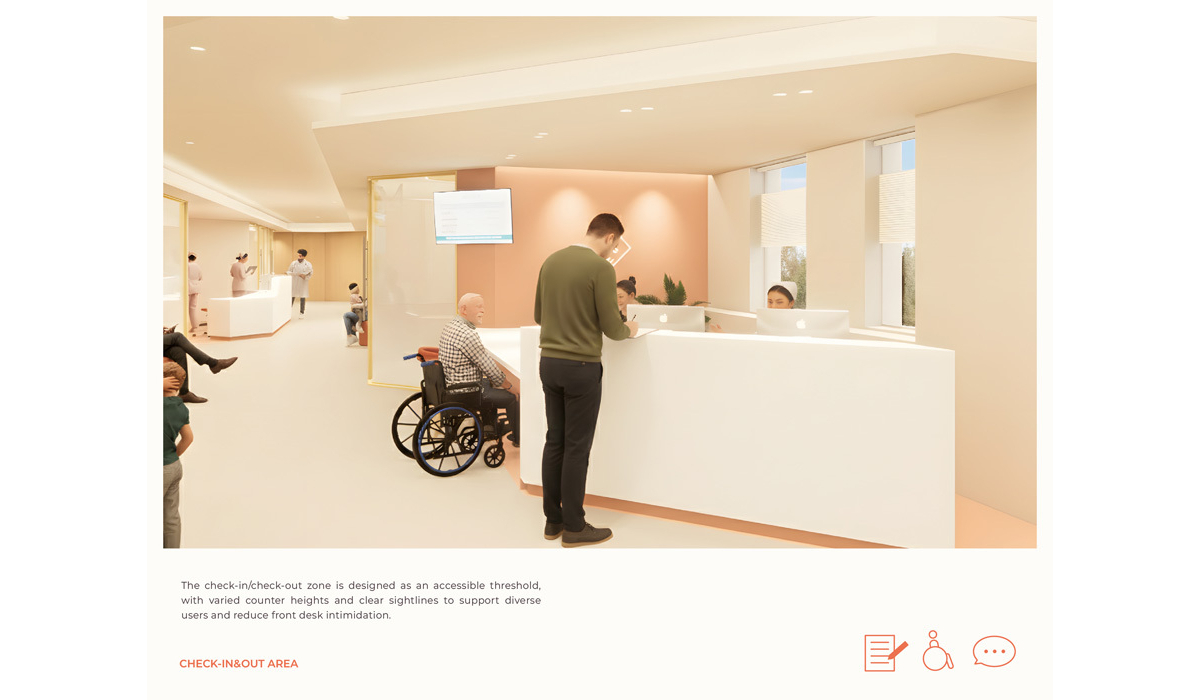
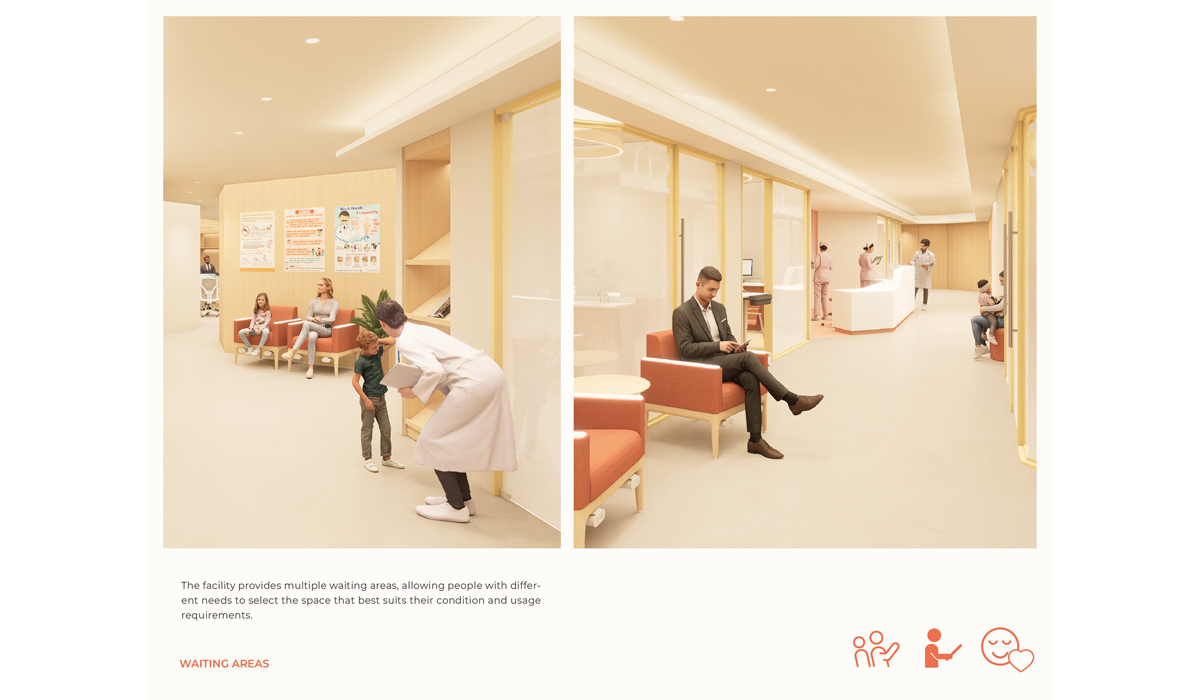
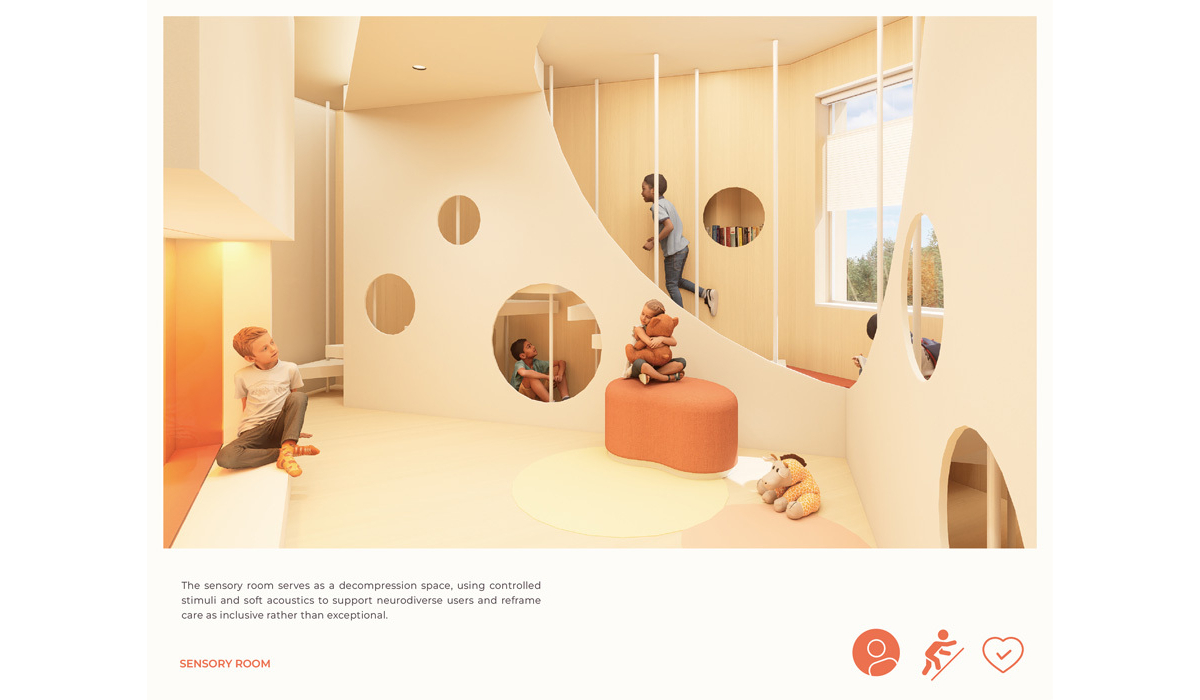
HEARTH Primary Care Clinic focuses on three key priorities: supporting collective; organizing space through visibility over separation; and creating a supportive environment for patients and healthcare workers. Care is understood as a “shared and visible condition.” The design ensures care remains perceptible and visible with a centrally located care desk serving as a visual anchor for the entire clinic. Exam rooms become relational spaces rather than standardized, isolated boxes, responding to different conditions, and acknowledging that primary care is often experienced collectively. Single rooms support focused consultations, a sensory room aids patients who feel overwhelmed, and family exam rooms accommodate larger groups. We also place emphasis on staff well-being as a critical design priority rather than a secondary concern. Staff areas are organized to reduce unnecessary movement, support short moments of recovery, and improve retention. This design offers a balanced and sustainable solution for long-term healthcare environments by integrating shared care, relational exam spaces, and staff well-being into the structure of the clinic while balancing the realities of comprehensive primary care.
HONORABLE MENTION:
Gabby Gilden, George Washington University
Juniper Primary Care
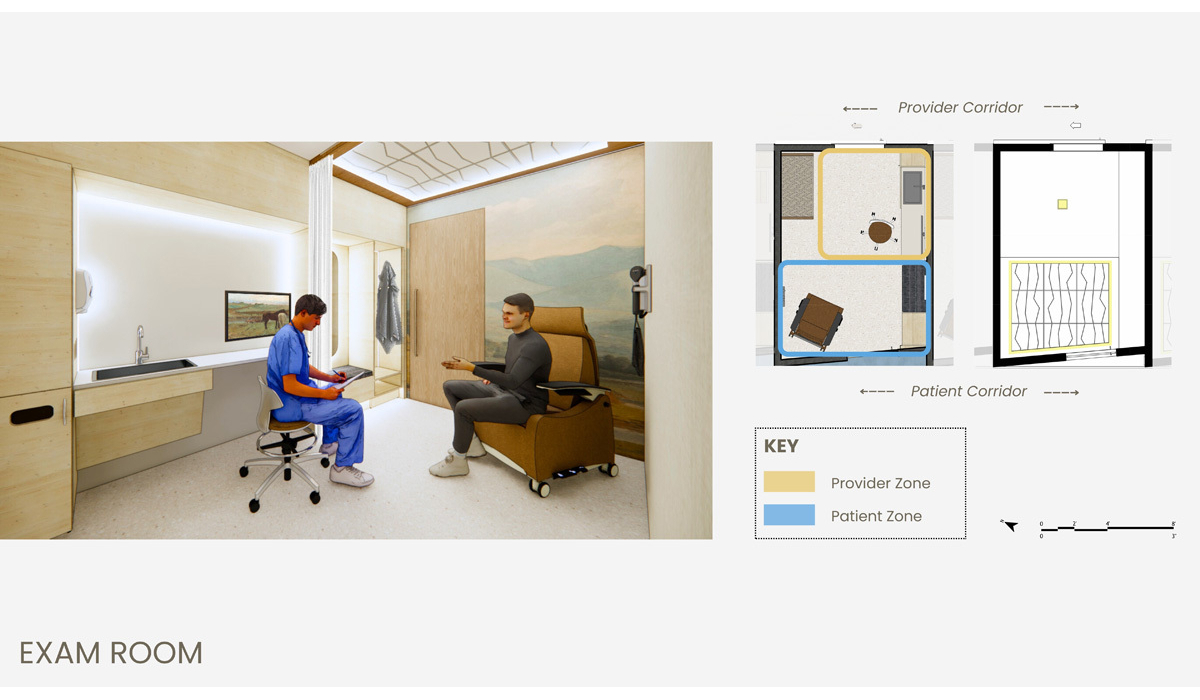
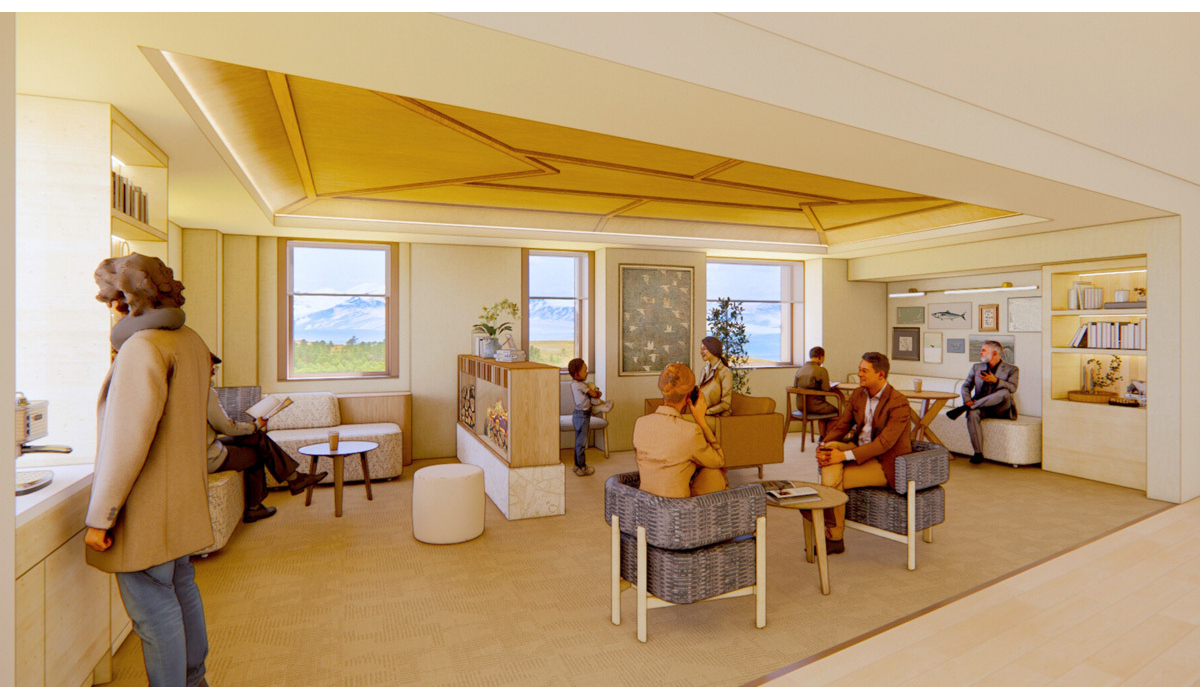
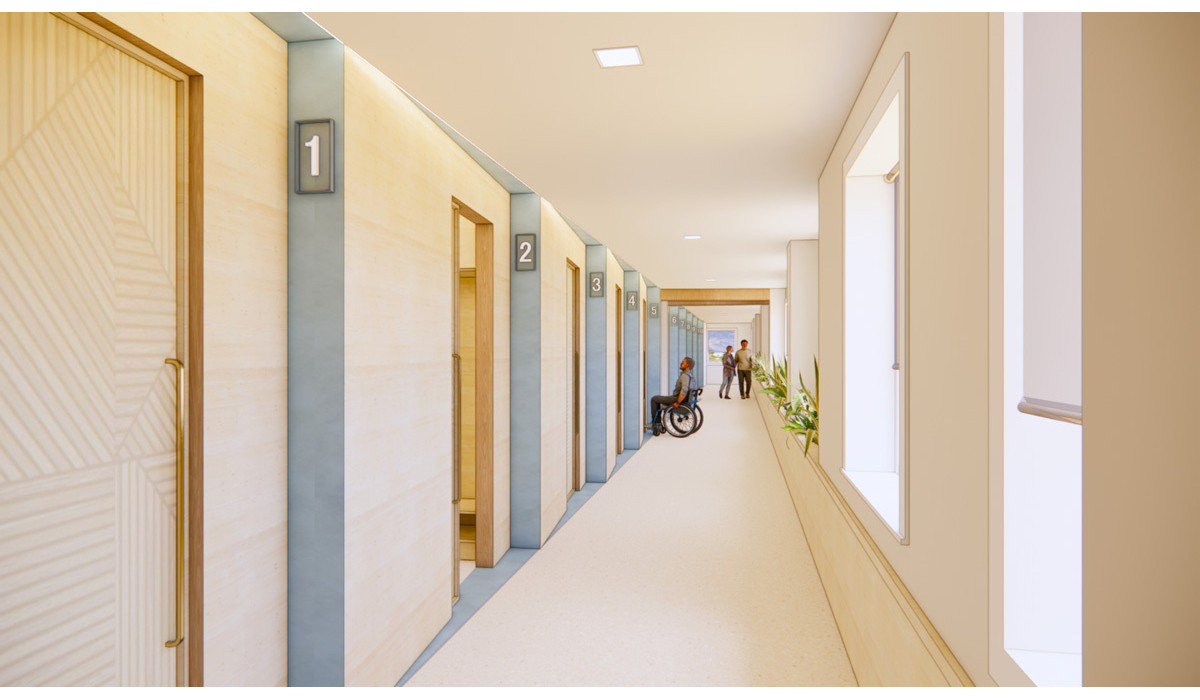
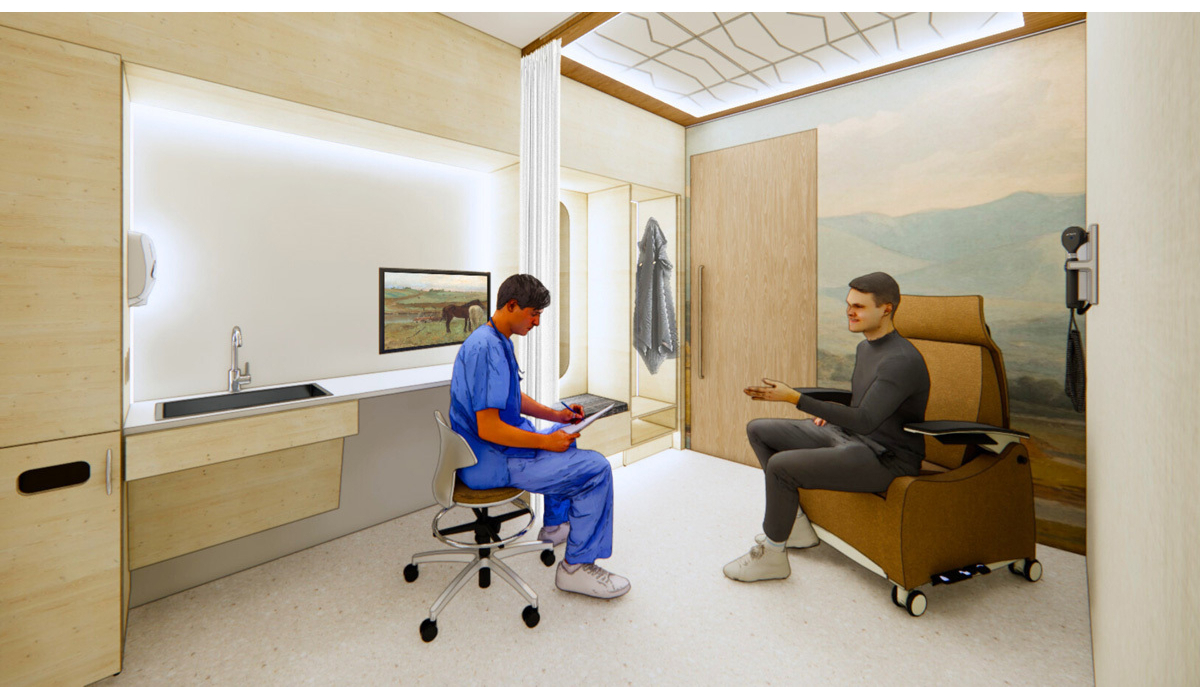
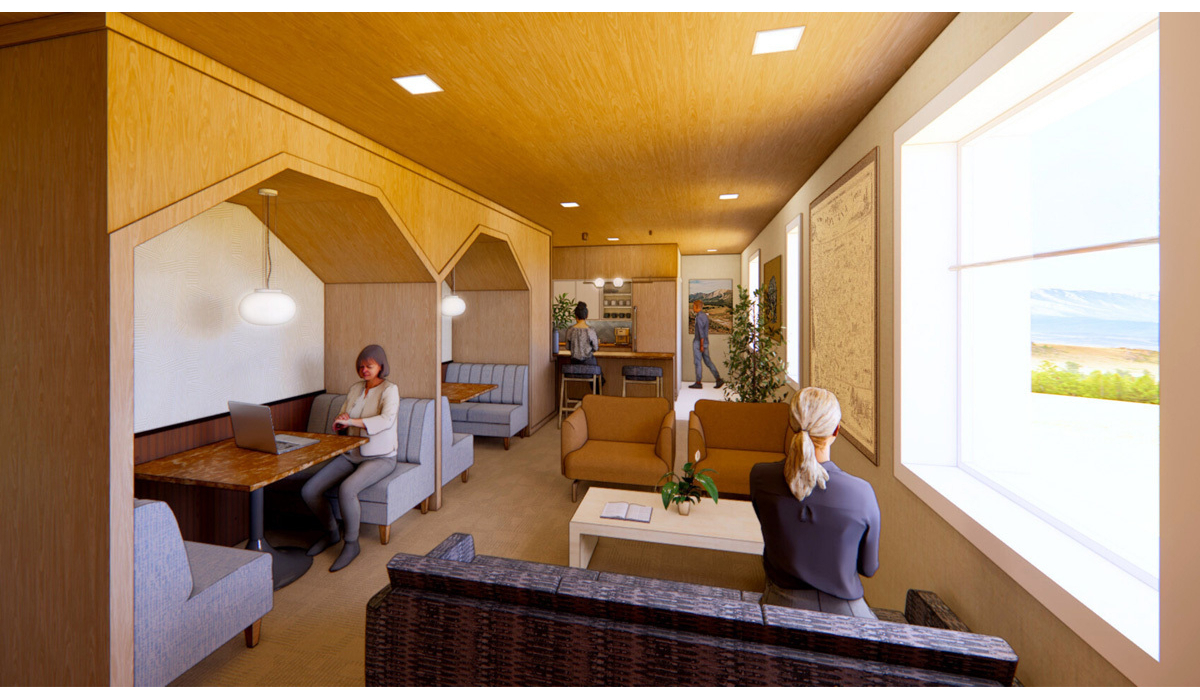
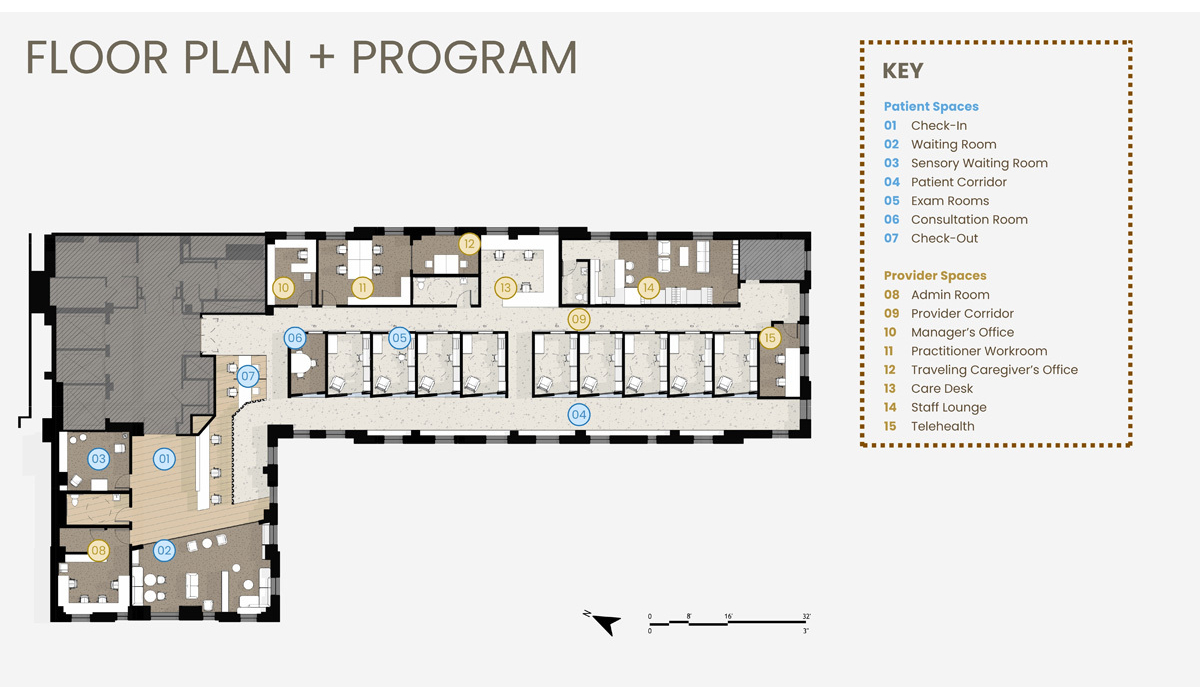
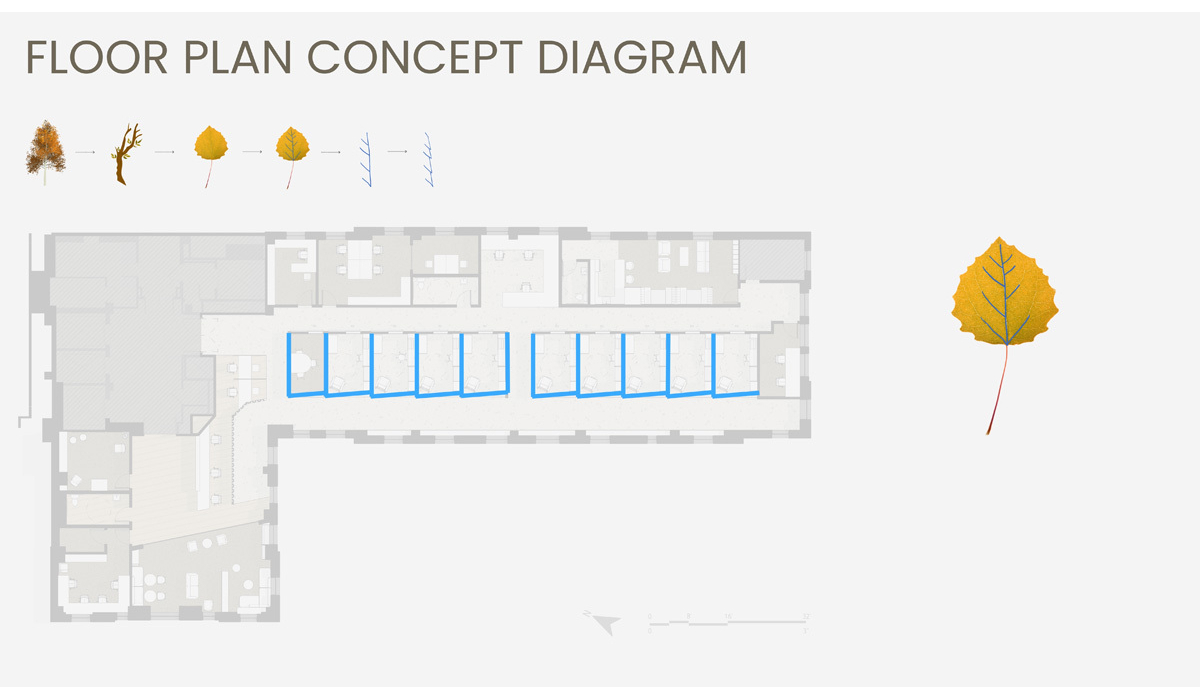
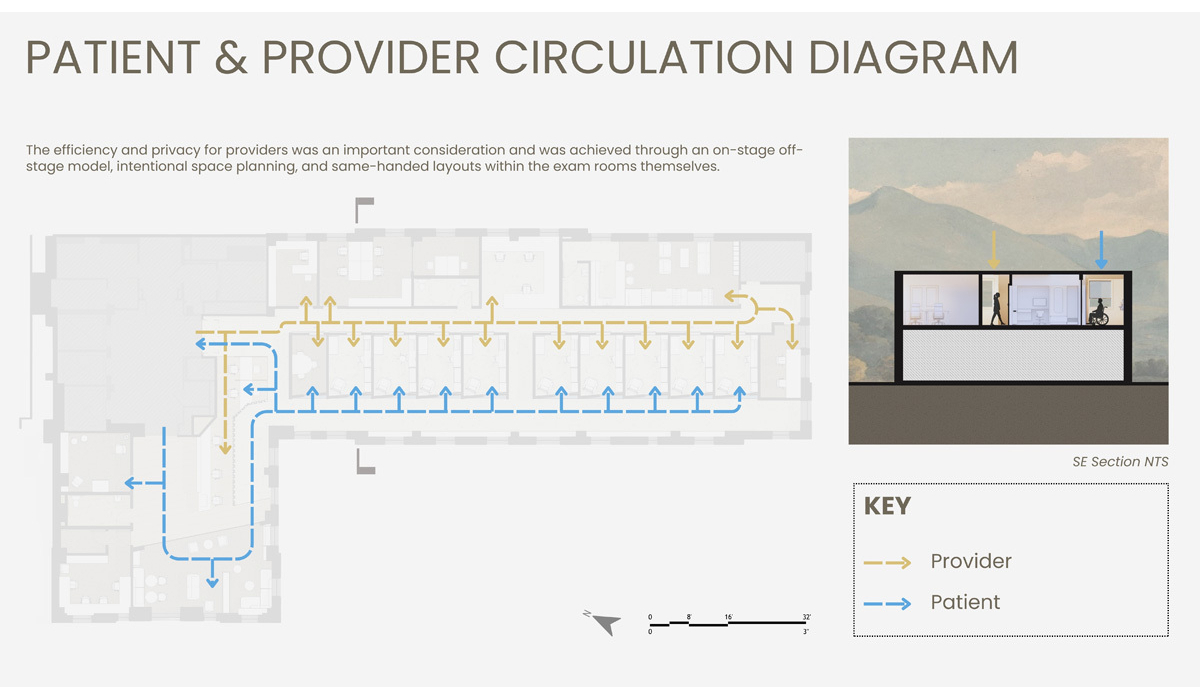
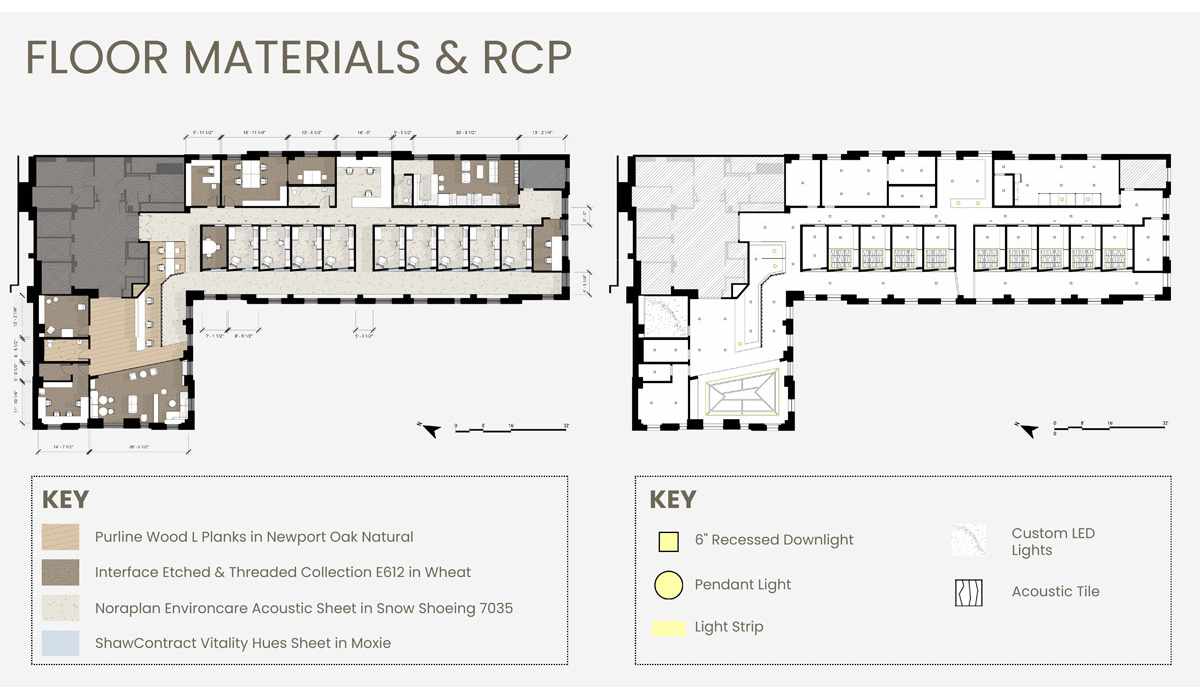
Juniper Primary Care supports neurodiverse and rural patient populations through familiar and legible spaces. Drawing. While overly stylized design can feel unfamiliar and intimidating, when inspired by home it fosters trust, comfort, and a sense of well-being among patients and providers. Neurodiverse individuals with heightened sensitivity to sound, light, color, and movement need predictability, clear and intuitive wayfinding, and flexibility. Fractal patterns translate a natural, familiar pattern into an organizing framework providing and are seen subtly throughout the clinic. The patient corridor has a linear organization that minimizes patient confusion and offers a calming view of the mountains. Provider efficiency and privacy is achieved through an on-stage off-stage model with intentional space planning and same-handed layouts within exam rooms. Materials that aid in acoustic mitigation and cleanability, stimulating and adjustable features in the sensory waiting room, and resources for the providers were also considered. By incorporating principles of neurodiversity, domestic familiarity, and natural pattern into spatial organization, Juniper Primary Care supports patient well-being, clinical efficiency, and comfort for everyone involved.
Related Articles
-
Great Design, Global Recognition, More Competitions
Introducing the new Global Excellence Design Awards, launching in 2027 -

How Students Are Rebuilding Altadena
George Fox University students discover how design can help communities heal, rebuild, and move forward -

The Design Career Starter Kit
Check out this three-episode webinar series built to empower students and provide them with the tools needed to move forward in their job search and early career -
5 Spiritual Spaces With Stunning Designs
Award-winning examples of beautiful design, all the more transcendent because they encourage people to connect with a higher power — or tap into the power within -
Spaces With a Story to Tell
5 award-winning projects show how design shapes the narrative -

2026 IA Diversity in Design Scholarship Winners
These students use their voices and ideas to create a more inclusive design industry