(Above: Photo by Jr Korpa)
Some days, you might experience a flash of inspiration, or a sustained flow of fruitful ideas. Other days, creativity can feel more elusive. During a recent episode of Collective Design, hosted by IIDA’s Executive Vice President and CEO, Cheryl Durst, Hon. FIIDA, we spoke with experienced designers about their strategies for tapping into — and replenishing — their creative reserves, the brain science behind creativity, and how designers can summon innovative ideas amid budgetary and time constraints.
See below for four ways to be more creative, and watch the full episode of Collective Design to discover more.
Think in terms of solving a problem.
John Kounios, Ph.D., a psychology professor at Drexel University, has a distinct definition of creativity, one that resonates with Yong In, IIDA, CDF, an assistant professor of practice at Purdue University. “His definition of creativity is, something that allows you to come up with an idea, or a perspective, or a solution that is non-obvious,” In said. She reiterated two key points — the solution, and the lack of obviousness. “If you think of it that way, creativity is less about aesthetics, style, beauty, or being artistic. It is more of a problem-solving tool.”
Especially for designers, that element of strategy is crucial. Amid client objectives, budgets, timelines, and other constraints, designers must find elegant solutions to complex problems. “If we align with our client’s goal,” she adds, “and also have a human-centered mindset, at the end, that brings a more creative solution. And we have to sell that idea.”
Remember that story is everything.
Some creative pursuits are purely for private, personal expression. But any creative output you share is consumed by an audience — for designers, that’s typically the client — and audiences love a good story. (This one is a bit of a cheat; sharpening your presentation skills won’t necessarily make you more creative, but it can help you effectively communicate creative ideas.)
Designers guide clients through a process, and the best way to do that is through a story that’s relatable, personal, and inviting. “They may not remember everything that you share,” noted Suzanne Lefebvre, IIDA, vice president and design leader at CannonDesign. “You could knock it out of the park, and it could be the best design concept, but they’re really going to remember how you made them feel.”
“Storytelling is bringing somebody on a journey,” she said. It’s about authenticity. Relationship-building. Trust.
Let yourself daydream.
Do less. That’s one way to set yourself up for creative success. Research shows that creativity stems from our brain’s default mode network, says Valerie Jardon, IIDA, CDF, managing director of strategy and principal at IA Interior Architects. She pointed to a study from academic medical center University of Utah Health.
“If you’re not familiar with the default mode network, it’s the network in our brain that lights up when you’re calm, when you’re daydreaming and looking out a window, when you’re at peace and just floating along.” Other parts of our brains also light up during creative tasks, such as the cognitive control network, which is analytical and assists with high-level thinking and decision-making, allowing you to cycle through ideas and figure out which ones are the best.
The brain science is fascinating. And for the record, “you use your whole brain when you’re being creative,” Jardon said. Forget the whole left-brain, right-brain thing. “That’s the one big myth that I would love to debunk.”
Collect dots to connect dots.
Yong In dubs herself a “dot collector.” She talks to her students a lot about dots.
“Not that I'm a lover of polka dots,” she said, “but I think of a dot as an inspiration.” It could be an experience, something you read or heard, an insight you learned from someone whose perspective is totally different from yours, or a fascinating bit of research that intrigued you.
“It’s really important to collect dots, because I think curiosity is a prerequisite for creativity. Curiosity is collecting dots, and creativity is connecting dots.” Put that on a bumper sticker.
Ultimately, creativity is essential to design — and to humanity. “Creativity is tied to survival,” says Cheryl Durst. “It lives in the most ancient part of our brain. In order to survive, we need to be creative. Whether that was a millennia ago or yesterday, creativity has always been about surviving and thriving.”
Discover more details about the science behind creativity by watching Collective Design (bonus, you’ll earn one CEU)
Related Articles
-
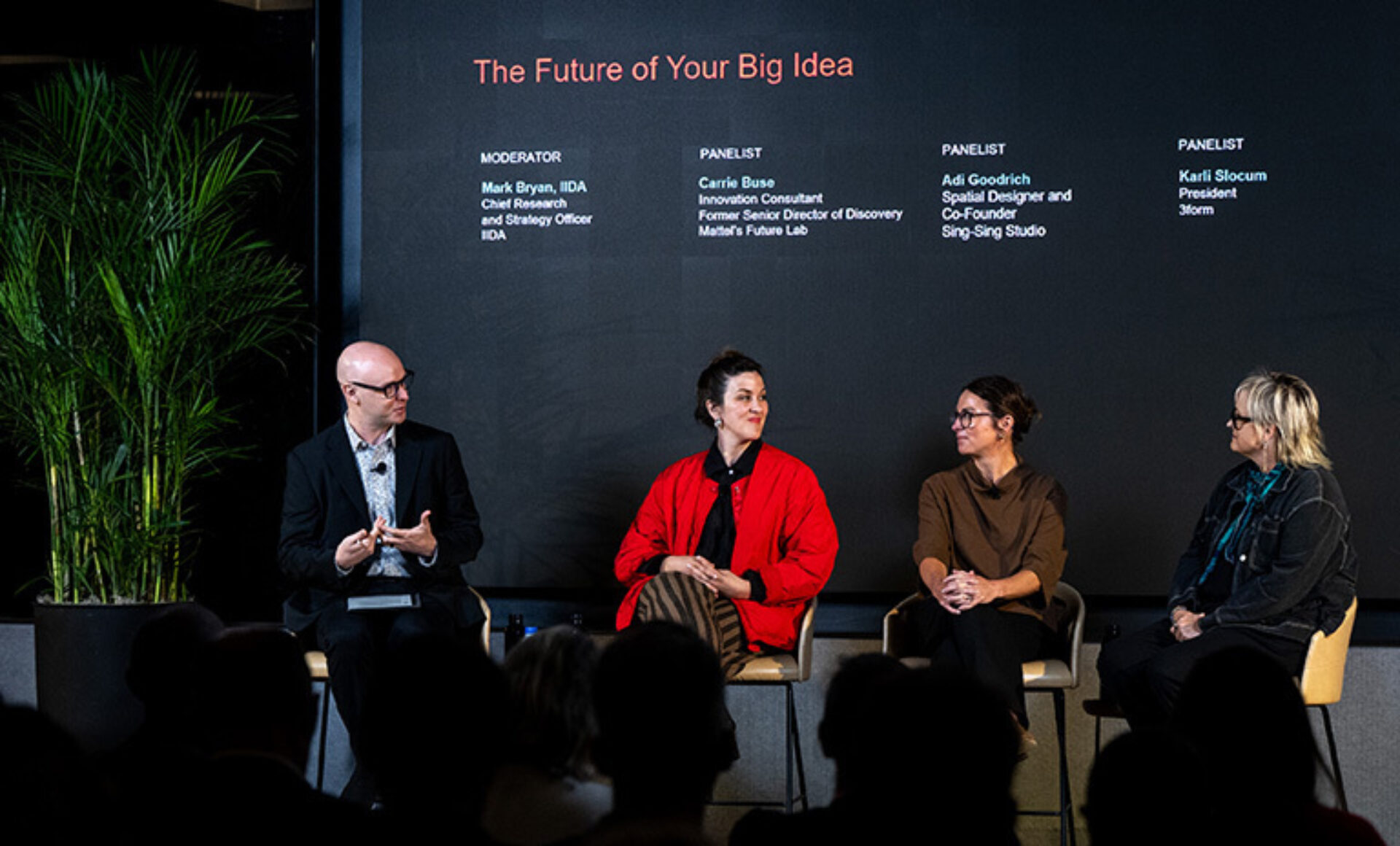
The Future of Your Big Idea
Inside IIDA’s Collective Design LIVE during Chicago Design Week -

What Inclusive Design Really Looks Like
IIDA Collective Design Live at NeoCon brought leading voices together to explore what inclusion really means in the built environment -

The Best of IIDA at Chicago Design Week
From illuminating conversations to award celebrations and furry friends, here are the key moments you might’ve missed -

Millennial Designers on the Future of the Industry
Hear the perspectives of 30-year-old design professionals about the state of design, and where the industry is headed next -

Collective Design: Equipping Designers for the Future
The fifth season of our popular webinar series gives design professionals key insights and tools to navigate the changing landscape of the profession — and to create positive change -

Collective Design Special Series: The State of EDI
We convene industry leaders for a three-part miniseries exploring equity, diversity, and inclusion across the design industry