
Like many architects before him, Eric Corey Freed, AIA, was really into drawing buildings as a kid. Growing up in Philadelphia’s historic rowhomes, or Trinity Houses, where each unit consisted of three stacked rooms, he yearned for a more exciting architectural environment, one that didn’t feel like, as he put it, “dumb long boxes facing other dumb long boxes.” So Freed would draw what he described as “cooler” buildings, expanding his world beyond the street he lived on. In essence, he was designing a more dynamic built environment for himself and his neighbors. “It’s instinctual,” he says, “Being a designer means that you have a drive to design experiences for people.”
At the age of 10, he found himself at Frank Lloyd Wright’s Beth Sholom Synagogue, which resembles a spectacular glowing pyramid. “For the first time ever, I realized that not only could buildings be more than dumb boxes, but they could … become a whole ceremony in and of themselves,” Freed says. “They could lift you up to something higher.” Wright practiced organic architecture — the belief that buildings should live in harmony with their natural surroundings and feel integrated into the environment rather than imposed on it. It’s a philosophy that Freed still lives by today, and one he credits with shaping his own design ideology.
“And talk about getting the right push at the right time in your life,” Freed says of encountering Wright’s work as a kid. “At that age, you’re still hopeful and idealistic — and dare I say even visionary.” (That’s one reason he likes teaching and mentoring young designers; they’re “just so pure of heart and spirit,” i.e., not jaded. But more on that later.)
Fast-forward to today, and Freed is an award-winning architect, author, global keynote speaker, and expert on sustainable design and corporate strategy. He’s a LEED Fellow and currently serves as a principal and director of sustainability at CannonDesign. He’s built his career around championing sustainable innovation, biophilia, and regenerative design — all while doing exactly what he was inspired to do at the age of 10. “I wanted to design buildings that transform people … that push the art of design forward, not just produce construction,” he says.
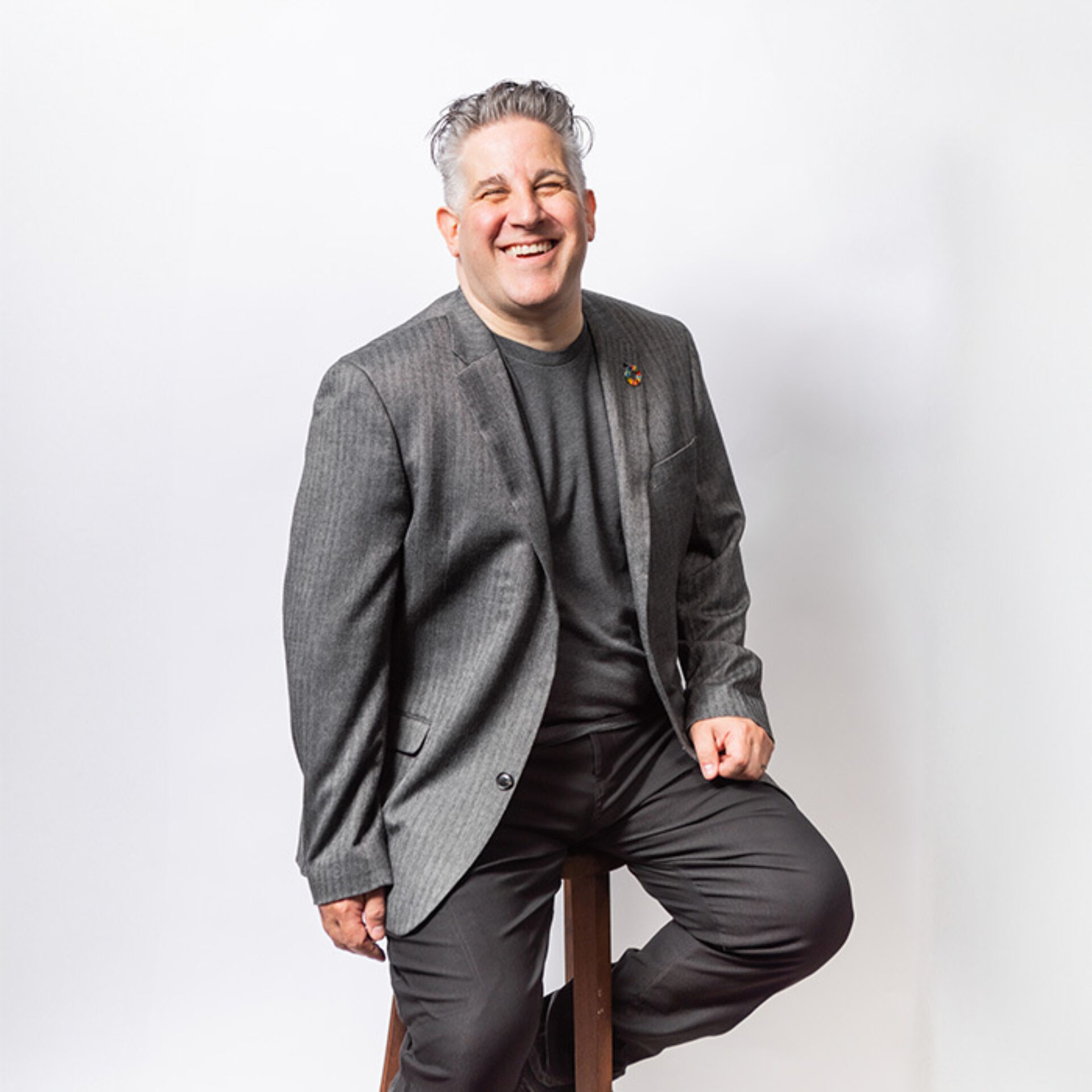
Eric Corey Freed, AIA, principal and director of sustainability at CannonDesign. Image courtesy of Freed.
Defining Sustainable Design
The sustainability piece came when he was in school at Temple University (Philadelphia). “To me, sustainability and organic architecture are the same. That is, the constraints around designing for energy, designing for carbon, designing for materiality — these are not separate things you add on top, these are things that are integrated into the design from the outset,” Freed explains.
After leading his own firm for more than two decades, Freed now works in CannonDesign’s Portland office; across the company, he sees a constant push towards integrating sustainability into design from the outset. “We don’t do sustainability because it’s cool, because it’s not. And we certainly don’t do sustainability because it’s easy, because it’s not,” he says. “We do sustainability because it’s illogical to build any other way.”
For instance, he says, “It is illogical to knowingly put cancer-causing chemicals into a building. It is illogical to build a building that ignores the climatic conditions of the site. It is illogical to build a building that wastes energy and other precious resources.” For Freed, sustainability isn’t a fun add-on because it’s trendy, it’s a cornerstone of good design.
“To me,” Freed adds, “Sustainability is synonymous with good design. And we’re starting to see that mindset take over, especially with the younger generation of designers who really don’t see the distinction between one or the other.”
While the design industry has made great strides in studying and demanding more from manufacturers, such as materials transparency and environmental product declarations (EPDs), there are still roadblocks and pockets of resistance. To Freed, that’s nonsensical, because the consequences of not making healthier choices are apparent. “If you fill the building with cancer causing chemicals, you're probably harming the people that work, live, and play within your buildings.”
“What has been persistent, not just through my 35-year career, but I think throughout the centuries, is that people want healthy places to raise their kids,” Freed says emphatically. “People want fresh air and fresh water … They want to be able to eat healthy food and trust that it won’t make them sick.”
But one thing that has changed, he adds, is that the negative impacts of unhealthy materials on human health and the environment are undeniable. Americans spend about 90 percent of their time indoors, according to the EPA, and many common building products, including paints and finishes, release chemicals that can contribute to cancer and asthma. The toll extends to the planet: Constructing and operating buildings accounts for roughly one-third of global greenhouse gas emissions, according to the U.N. Environment Programme.
“Now no one has an excuse to feign ignorance. No one can pretend that they didn't know,” he says of material health and environmental impact — we have the tools and resources to know otherwise. “We have now raised an entire generation of designers who are painfully aware of all this stuff, which I just think is remarkable. So now we can really let the magic and the healing happen.”
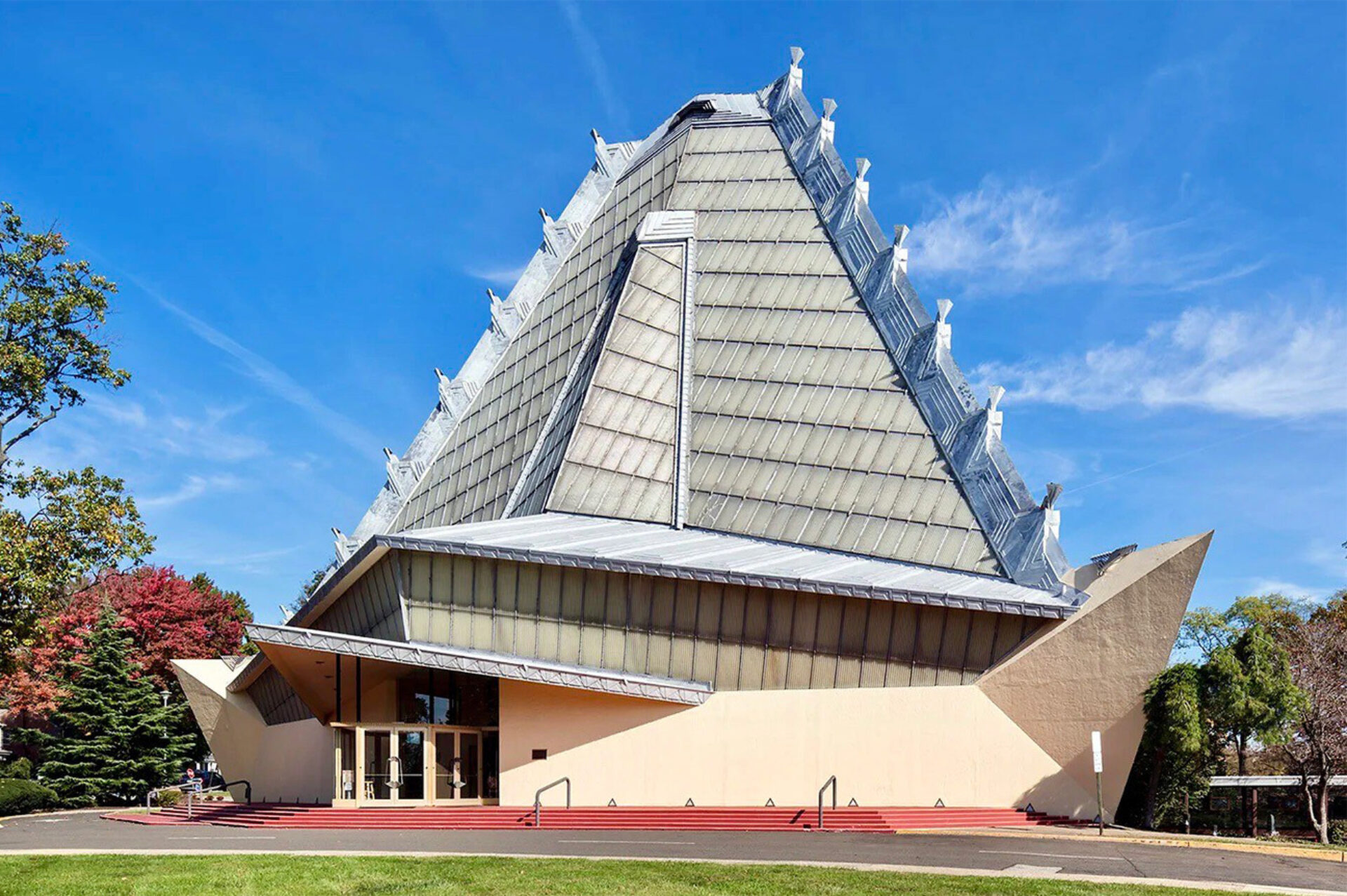
Frank Lloyd Wright’s Beth Shalom Synagogue, the building that started it all for Freed. Photo by Ali Eminov.
Where We Are Today
Freed points out that,whether people name it as such or not, we’re all living through the collective trauma of a climate crisis. August 2026 was the hottest August ever recorded, and the 11 years from 2015 through 2025 were the warmest on record, according to the World Meteorological Organization. In 2025 alone, there were 23 weather and climate disasters, resulting in about $115 billion in damage and 276 deaths, according to Climate Central.
However, Freed says, we’re also “having the most advanced, interesting, thought-provoking, and innovative conversations today around energy, carbon, material health, zero waste, water, and resiliency that we’ve ever had.” “Frankly,” he adds, “it gives me hope.”
Architects and designers are leaning into a more holistic, integrative, and proactive approach to green building, where healthy materials and sustainable choices are often the baseline of materials and options that they present to clients. Plus, in the last 20 years, LEED and WELL have emerged and gained prominence, as well as the Living Building Challenge through the International Living Future Institute, giving developers tangible certifications, and dare we say marketing tools, for embracing and promoting healthy and regenerative designs.
One of Freed’s more recent projects that really exemplifies what he wants to achieve is the Resnick Sustainability Center at the California Institute of Technology. “It’s the greenest building on an already green campus,” says Freed. “I’m very proud of it; it’s a really beautiful building that is a favorite of the students.” The campus hub for multidisciplinary climate and sustainability research, the Resnick Sustainability Center is an excellent example of the holistic integration that Freed and the team at CannonDesign strive for — a design that responds to the bio-climatic constraints of the site. It’s LEED-Platinum, utilizes materials like mass timber, and has interventions like passive ventilation, rooftop solar panels, and underground dry wells that channel rainwater back into the ground instead of storm drains. And to break up the glare of the West-facing building, the firm gave the Center its iconic parabolic façade with “fins” that act to filter the sun. Overall, he adds, “it’s a good example of the integration that we’re striving for.”
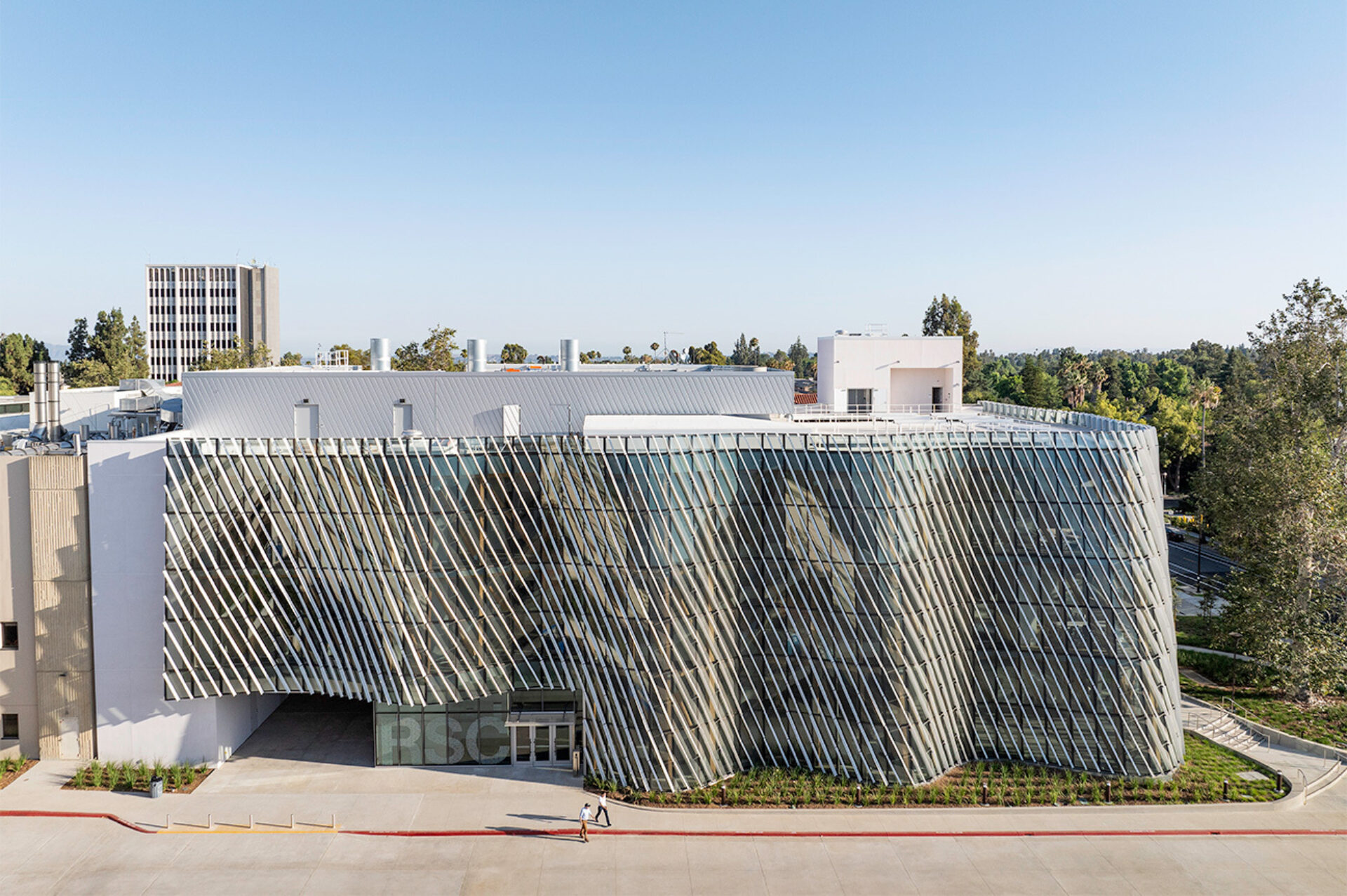
The Resnick Center for Sustainability at Caltech is a project by Cannon Design that Freed is really proud of, and hopes to use as a model for other projects. Image courtesy of Cannon Design.
Overcoming Pushback
While the need for sustainable design seems like an intuitive and obvious conclusion, change is hard! People get stuck in their ways and want to choose materials and strategies that they already know will do the job, even if those aren’t the healthiest or most resilient choices. One easy way to get hesitant firm leaders and clients onboard? Only offer choices that meet sustainable benchmarks.
“There’s a reluctance,” says Freed. “There are legitimate concerns like, ‘hey we really want to do solar, but we don’t have enough roof space,” he explains, “but there are other kinds of made-up excuses.” Things that most designers are used to hearing from clients, like, “That’s too expensive,” or “I heard xyz about it.” Freed kept encountering vague excuses that seemed to just shut down discussion. So, he says, “I started calling these things ‘frictions,’ because they create drag on moving big ideas forward.”
“Clients are resisting the ideas that they’ve never tried, never researched, never implemented or tested — but we have,” he explains. “and the big reveal is that I’m not here to sell them on sustainability. I’m here to sell them on the outcomes and benefits that sustainability provides. It’s a huge mindset shift.” He compares it to a brownie: “Sustainability people love the recipe,” they nerd out of the type and amount of chocolate, flour, sugar, but the client? “The client just wants the brownie,” he says, “so let’s sell them the brownie. It’s an outcomes-based approach.”
“Innovation is scary,” he admits. “It turns out that it triggers a limbic fear response … the brain perceives innovation as a potential threat and comes up with irrational excuses to protect us.” He’s trained himself and his team to look for the common shutdown phrases, and guide them into an abundance mindset.
He’s refined and perfected this approach so much that he’s got a forthcoming book about it, Frictionless: Overcoming the Drags that Shut Down Innovation. In the book, coming out this month, he identifies the four types of frictions that clients use to say no (Fake, Real, Imagined, and Created) as well as four strategies to overcome them (Tell a story, Increase value, Overcome each, and Needs met), or FRICTIONs.
The best way to overcome these frictions, or shutdown phrases is to use empathy as a secret weapon. Really get curious about a client’s (or project manager’s, or firm leader’s) concerns so that you’re able to address and overcome them. He says that designers can ask, “Tell me what scares you about this. Let's hear all of your fears and worries. Let’s get them all out on the table and then let’s address them and then move forward.”
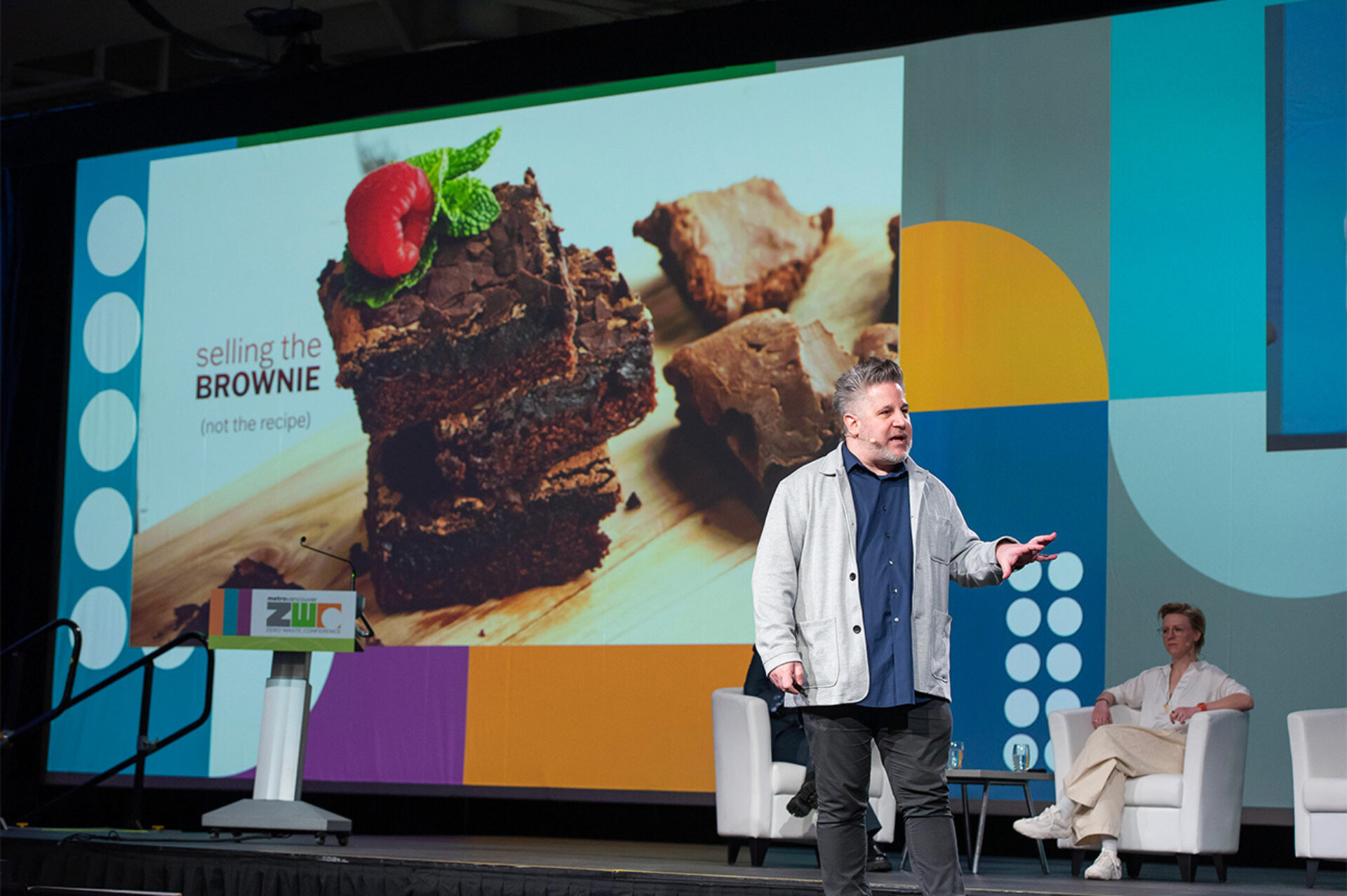
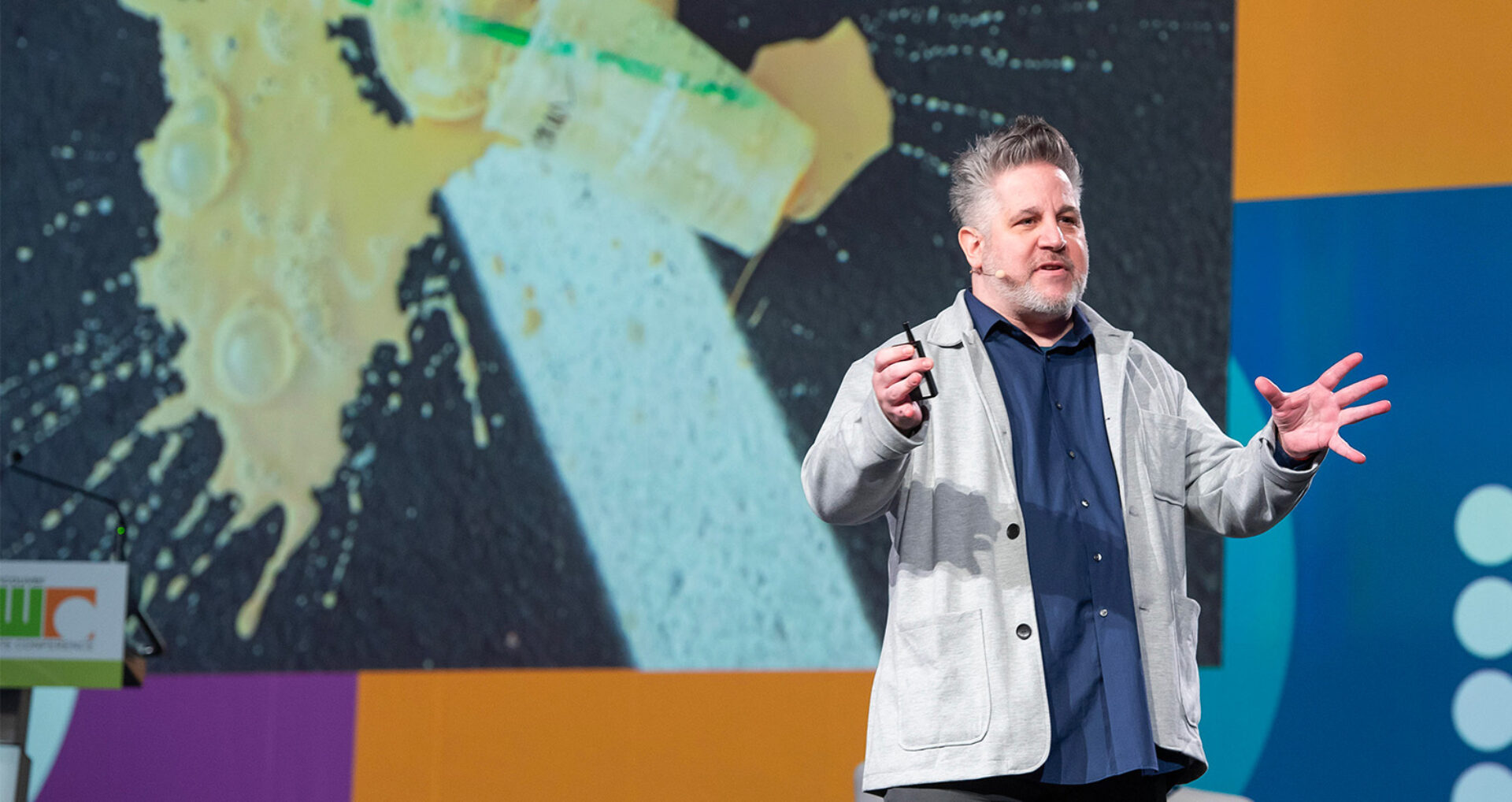
Eric Corey Freed explaining the "sustainability brownie" at the Zero Waste Summit. Image courtesy of Freed.
Legacy
When asked what he’s most proud of in his career, Freed decisively says, “The real achievement is that I’ve gotten to mentor thousands of young design professionals. That, to me, is it.” He adds, “I take it very seriously.”
“I was very lucky to have many — many and great — mentors starting when I was 10,” he says. After he became enthralled with Frank Lloyd Wright, like many a precocious kid, he wrote a letter that began a long correspondence with Wright’s former apprentices (Wright himself had passed away at this point — Freed isn’t quite that old). These were seminal relationships for him that would continue through design school, when he would send off his blue lines (you may know them as blueprints) and projects to his mentors for critique.
Now, after many years of being a mentor himself, being asked for a conversation, advice, or insights, he’s come up with an “email funnel system” of sorts. He gives young designers questions to ask themselves, goal-setting exercises, and videos for inspiration before he meets with him, tools that help mentees shape the conversation, and develop as designers. “It’s really special to have people come up to me [saying that] a conversation changed their course,” he says, adding, “The right bit of motivation, the right little push at the right time, can really have a profound impact. And now I've gotten to see that a thousandfold over the years.”
You don’t need to do it alone. There’s a whole community here waiting for you, and we need you. We welcome you.
Eric Corey Freed
Optimism
When asked how he stays optimistic while being inundated with all of the data and information illustrating how we’ve caused harm to ourselves and the planet, Freed says, “I'm more optimistic now than ever before in my career or my life. To be a designer means that you have to be hopeful.”
“It’s weird because we’ve known the answer for a long time. We know how to build truly healthy, regenerative, remarkable buildings. But for the last 10 years, we’ve just been arguing and pushing [ourselves and clients] to do it.” He points out, though, that “In these last 10 years — the hottest years on record by the way — everybody has experienced a loss from the climate crisis, either directly to them or somebody that they know.”
“They’ve seen the wildfires in Altadena rip through Los Angeles, they’ve breathed in the wildfire smoke coming from Canada, or they’ve been trapped in a heat wave and had power outages because of our frail infrastructure. Or, you know, God forbid they’ve had a friend or family member who’s gotten sick from some environmental exposure.” He describes it all as a wake-up call to designers, or a call to action.
Freed, who also teaches at Boston Architectural College, says his students give him hope. And those students, he points out, “are the generation that will have to inherit this whole mess. But they’re ready to transform the world once we get out of their way.”
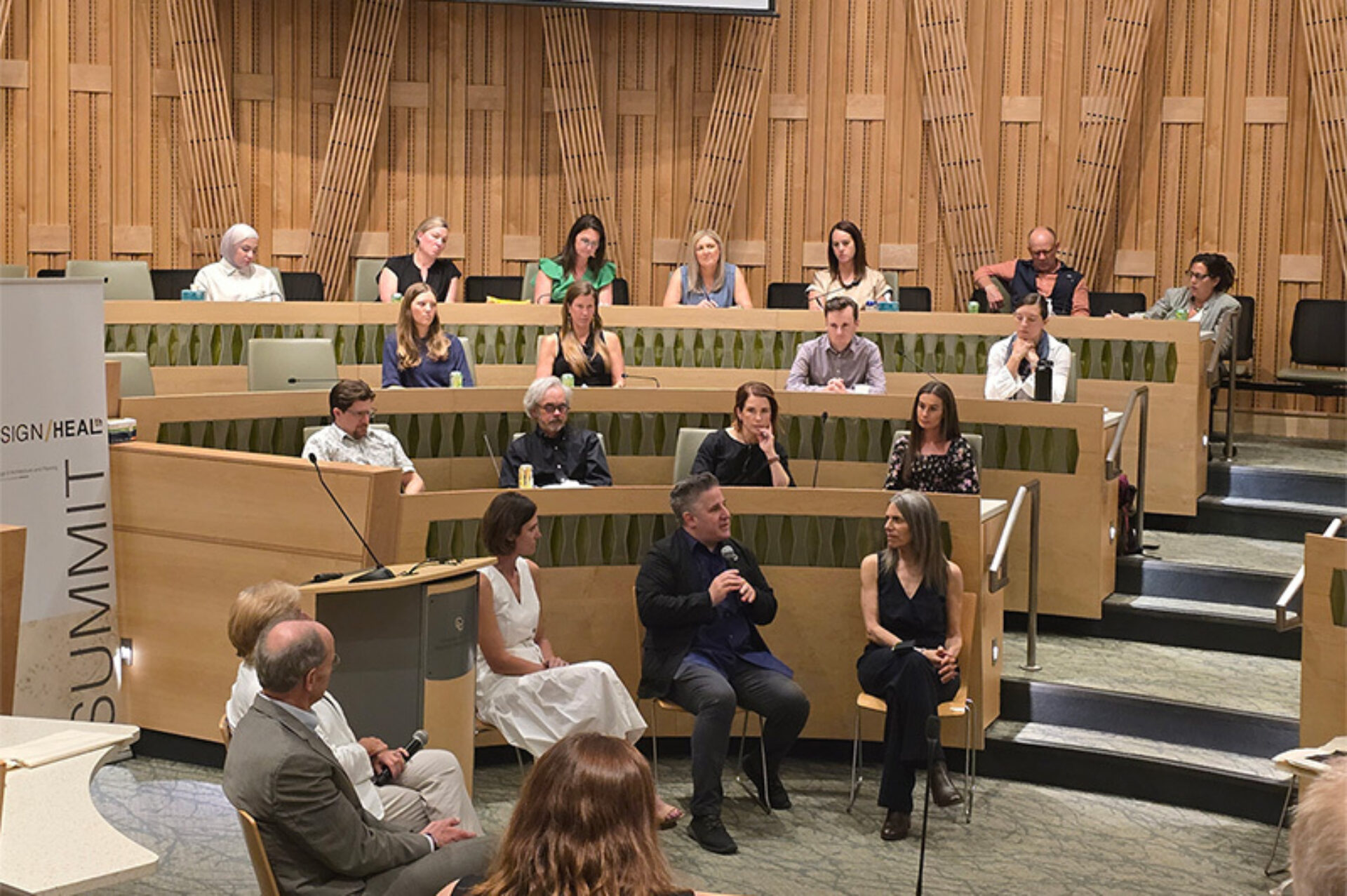
Eric Corey Freed speaking at Design Health Summit. Image courtesy of Freed.
How Can You Get Started?
Maybe you’re curious about how to integrate more healthy and sustainable choices into your work, but don’t know where to start. Freed points out that sustainable design is “a huge discipline,” and that once you “start really looking at the data, it’s very depressing, and can be overwhelming.”
Not only that, but it’s intimidating. Luckily, Freed’s got five tips on how to begin:
1. You don’t have to master everything overnight. Start with one thing that drives you nuts, and really just dive into figuring that out. What are the current solutions, and are they good enough? Become an expert in one thing – it’s less overwhelming.
2. Find the joy (this doesn’t have to be depressing). Keep in mind the reason that you fell in love with design is also the reason why people designers — for help creating and sustaining beauty, and sustainability enables you to do that. Clients want to fall in love with the beauty, not the logic, but you can empower yourself to give them both.
3. Remember that you’re the good guy. As a sustainably minded designer, you’re not there to wreck the schedule or blow the budget, you’re there to make the project better. To make it perform better. To improve how the people that occupy these buildings experience them. Sustainability is a means to do that. You’re one of the good guys, so don’t feel guilty about pushing sustainable ideas for the client. Once you let go of that guilt, fear, or shame, suddenly you can just say, hey, this could be a great opportunity.
4. Really embrace the power of biophilic design. Think about what it can do for you as a designer. By deploying biophilia and biophilic design into your projects, you could potentially lower blood pressure. You could reduce cortisol levels. You could improve test scores. You could increase retail sales. All of these outcomes, just through the power of biophilic design. It is probably one of the most powerful tools in your toolkit as designers.
5. Don’t do this all alone. Taking on new ideas, taking on bold new directions in your design process can feel overwhelming. And it can also feel very lonely and alienating. But you don’t need to go solo. There is a wonderful community of sustainability professionals, all across the world. “Once you break into that community, and find this network of like-minded folks, it’ll change everything. Because now, suddenly, you can share ideas and resources and materials and projects. Some of my closest friends are in this community, and I can’t imagine doing this without that community,” Freed says. “You don’t need to do it alone. There’s a whole community here waiting for you, and we need you. We welcome you.”
Related Articles
-
Rapid Fire with Yinka Ilori
First instinct, no overthinking: Yinka Ilori takes us inside his Dunelm collection -
Rising Stars: IIDA Members Going Beyond
Get to know designers moving the needle in advocacy, sustainability, mentorship and more -
Perspective: Design Superstars
These design superstars have set themselves apart with their dedication to doing what it takes to make the world wonderful -
We Need More Third Spaces
Three designers talk about their favorite third spaces and share design tips to foster connection -
Nature, By Design
How one landscape designer is bringing the outdoors back to the people — one urban riverbank at a time -
Shaping Spaces for Connection
Two designers with a passion for holistic design discuss how to create spaces that go beyond function and foster human connection