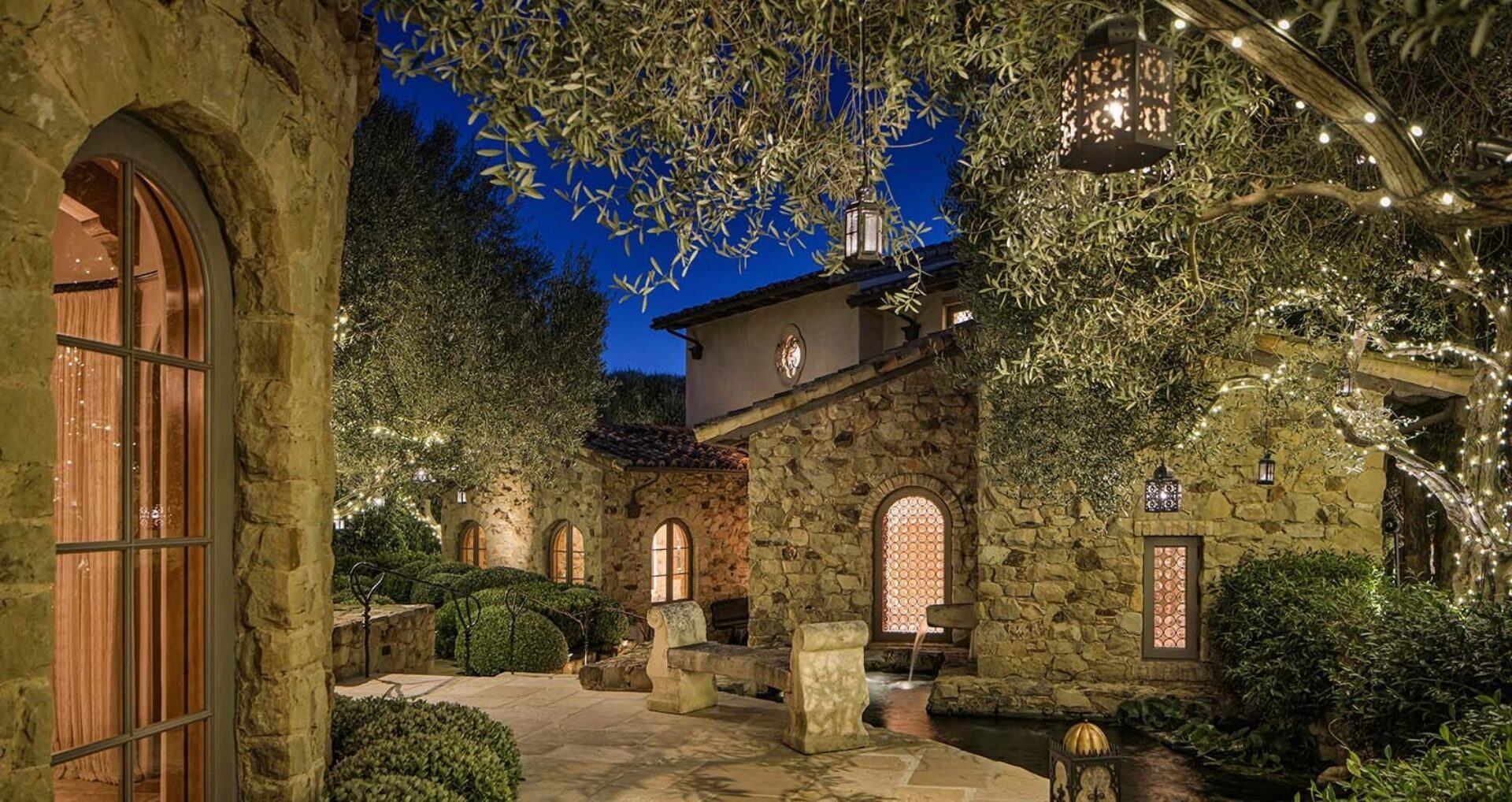

(Above Image: Outdoor courtyard designed by Lisa Welch and Welch Design Studio. Image courtesy of Lisa Welch)
We are in the middle of a loneliness crisis.
According to a 2025 poll from the American Psychological Association, more than 6 in 10 U.S. adults report feeling lonely, stressed, isolated, and disconnected. While these feelings and experiences are caused by societal pressures, they can also be influenced, and potentially alleviated, by something more tangible: space.
Space connects us. It impacts how and when we gather and engage with others. It acts as a conduit, creating moments of community in a chaotic world. That’s why third spaces are increasingly important, although they’re unfortunately dwindling. Coined by sociologist Ray Oldenburg in the 1980s, the term “third place” refers to an informal gathering space where people can freely interact, rest, or simply exist together.
We talked with three different designers about their favorite third spaces. They shared what makes these spaces special, and offered tips that designers can use to create environments that offer comfort and foster connection.
Responses have been lightly edited for length and clarity

Jaimie Karsan
Experience Strategy Lead
Gensler (Sydney, Australia)

Felice Silverman, FIIDA
Co-Founder and Principal
STA Design (Boston, Massachusetts)

Lisa Welch
President and Founder
Welch Design Studio (El Segundo, California)
What’s your favorite third space, and why?
Jaimie Karsan (JK): I’m a seasoned solo traveler; I went on my first trip alone when I was 19, and haven’t stopped since. In every city I visit, the one space I always find myself drawn to is a seat at the bar. The bar itself may vary, but the experience is reliably the same — in a place where you don’t know anyone, a seat at the bar gives you an immediate headstart on striking up conversation with a stranger; it’s a shortcut to connection in an increasingly anonymous world.
Humans are social animals, but the connection we crave can be hard to find. While I’m a big fan of a table for one, eating alone can feel isolating — a book is great company, but it’s easily drowned out by the laughter coming from the group at the next table. Sitting at the bar has some key advantages. As someone who used to work in the drinks industry, there’s always something interesting to look at: watching the mixing techniques used by staff, or scanning the back bar for obscure ingredients can keep me entertained for hours, without feeling awkward. Beyond that, there’s a receptivity to conversation that comes with the spot — both with your server, and often with the people around you. I moved to Sydney at the start of the year, and found that asking for recommendations opened the door to participation from my fellow bar-props, as well as the staff. I may not have come away from those interactions with lifelong best friends, but in the lonely days of establishing life in a new place, those moments of shared laughter buoyed my spirits immeasurably (and those recs guided me towards some exceptional dinners since!). As with anything, there’s a “however,” which, in this case, is an acknowledgment of the cost barrier. Not everyone can afford to enjoy a seat at the bar. As more focus shifts towards the importance of designing for connection, I think it’s critical that we challenge ourselves to design spaces that encapsulate the experience, without the accompanying price tag.
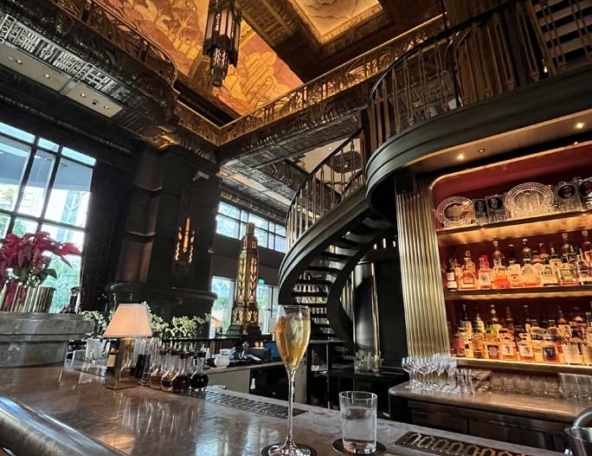
Karsan enjoys a drink at a bar in Singapore.
Image courtesy of Jaimie Karsan
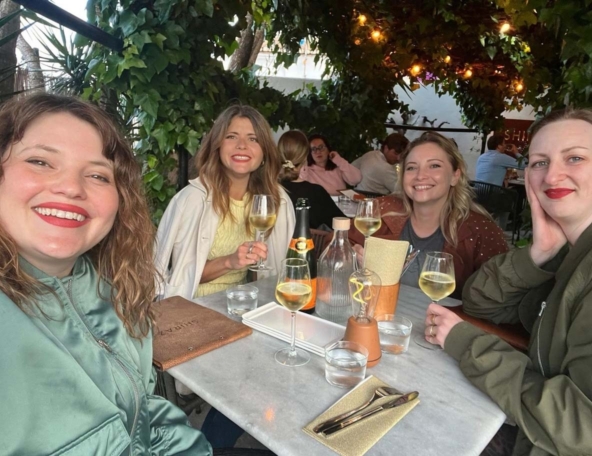
Karsan enjoys a holiday with her friends.
Image courtesy of Jaimie Karsan
Lisa Welch (LW): My favorite third spaces are outdoor courtyards. I have always loved the way they sit between the built environment and nature. I love that they are still considered spaces, yet they are not fully inside and not fully outside. They are not home and they are not work, but they create a beautiful pause in between the two. A great courtyard gives people a place to gather, sit, talk, read, have coffee, or simply be surrounded by light, air, nature, and architecture. I love that balance between structure and softness. There is something human about a courtyard. It can feel social without being overwhelming, intimate without being closed off, and beautiful without feeling too formal.
Outdoor courtyards foster connection because they invite people to slow down, to stay a while. The best ones have a natural center, whether it is a fountain, tree, fireplace, garden, or a grouping of seating arrangements. They create a reason for people to congregate without trying too hard. It happens almost naturally. A successful courtyard has layers: shaded areas, sunny areas, places to sit alone, places to sit in groups. That flexibility allows for different kinds of connections.
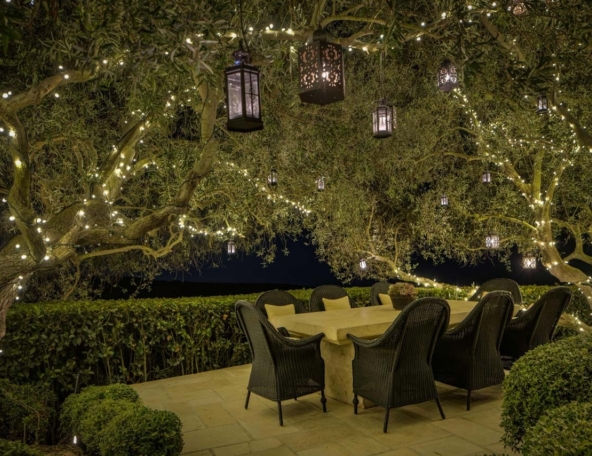
Outdoor seating designed by Welch and her team.
Image courtesy of Lisa Welch
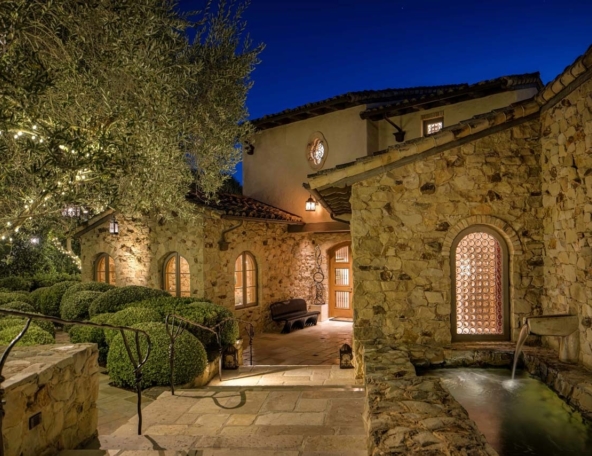
Outdoor courtyard designed by Welch and her team.
Image courtesy of Lisa Welch
Felice Silverman (FS): My favorite third spaces are anyplace where I see live music, specifically small venues. I love that everyone is on equal ground, with one common interest, and the shared experience fosters bonding and community. While most of my daytime community is in the design world, through music I’ve met people from all over the world, and from diverse backgrounds (in fact, in my experience, the more hardcore the music, the sweeter the people!). In these spaces, you almost can’t avoid interacting with people. Bonds are created, and friendships are born.
The spaces that I feel most comfortable in are more casual, and not “over-designed” to the point where I feel I’m not dressed up enough. The most successful offer visitors a choice of experience. Someone might like to be in the “pit,” or safely on the edge of the pit in the front row (like me), or sitting at a well-placed bar that provides a bit of distance while still offering great sitelines.
My firm designed a community space for musicians, The Record Co. in Boston. While not specifically a music performance space, there’s certainly a lot of music made there. The design process involving musicians, managers, sound engineers — everyone who is a part of making music of all genres. The result was a bit eclectic, like nothing I could have imagined, because it was created by everyone for everyone. We hear time and time again that people love the space and feel like they belong. We learned that not prescribing or imposing a specific style, but rather letting the space evolve organically and grow with the community of users, made it feel welcoming for all. To me, hearing that someone feels like they belong in a space is better than any award!
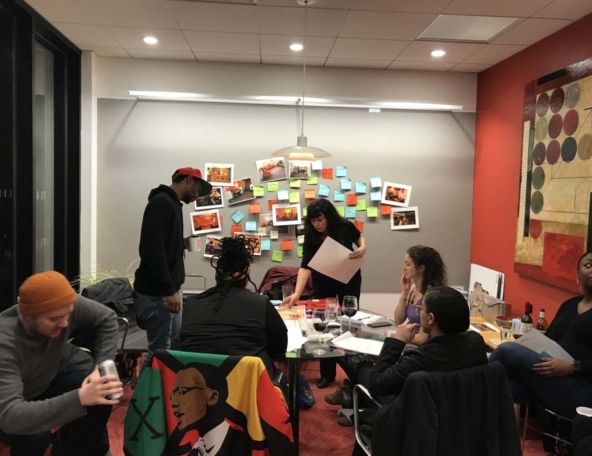
Silverman facilities a vision session at STA Design studio with The Record Co team.
Image courtesy of Felice Silverman
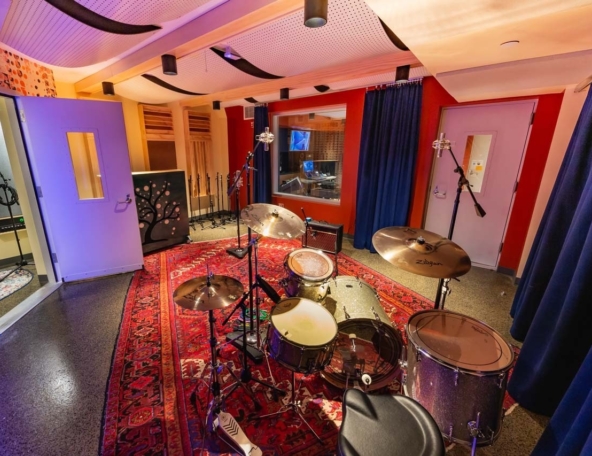
The Record Co Studios designed by STA Design.
Photo by Jenny Bergman
What are your go-to tips for designing spaces that support connection and well-being?
JK: My favorite movie of all time is “What We Do in the Shadows,” a mockumentary about a group of vampires living in a shared apartment in New Zealand. One of the conceits of the film is built on the trope that a vampire can’t enter a space unless they’re invited — cue hilarity while the gang try repeatedly, and unsuccessfully, to be explicitly invited into a nightclub by a parade of stony-faced bouncers (I’m going somewhere with this, I promise).
That idea — invitation — is one that I think is critical in design. It’s what makes the difference between a space that looks nice, versus one you feel allowed to spend time in, and to my mind, service and activation are the factors that influence that perception the most. One of the first projects I contributed to at Gensler was the service strategy for Wayfair; it was incredible to see the level of care and planning that went into curating every moment for customers. There’s a level of intentionality required to respond meaningfully to different user needs.
An example that illustrates this perfectly is “chat checkout” lanes, popularized by Jumbo in the Netherlands. The premise is simple: a purposefully slow lane at the supermarket, where a chat with the cashier is part of the transaction. If you’re in a rush, or don’t feel like talking to anyone, all the regular checkout options are still available, but for the many people whose only interaction that day might be with the person helping them bag their groceries, chat checkouts can provide a moment of connection where customers are given permission to linger.
Whether in the queue for the supermarket, a high stool at a restaurant counter, or indeed, trying to get into the latest nightclub with your undead flat mates, a considered approach to service can be the thing that makes the difference between an experience that’s anonymous, and one that provides a meaningful moment of connection.
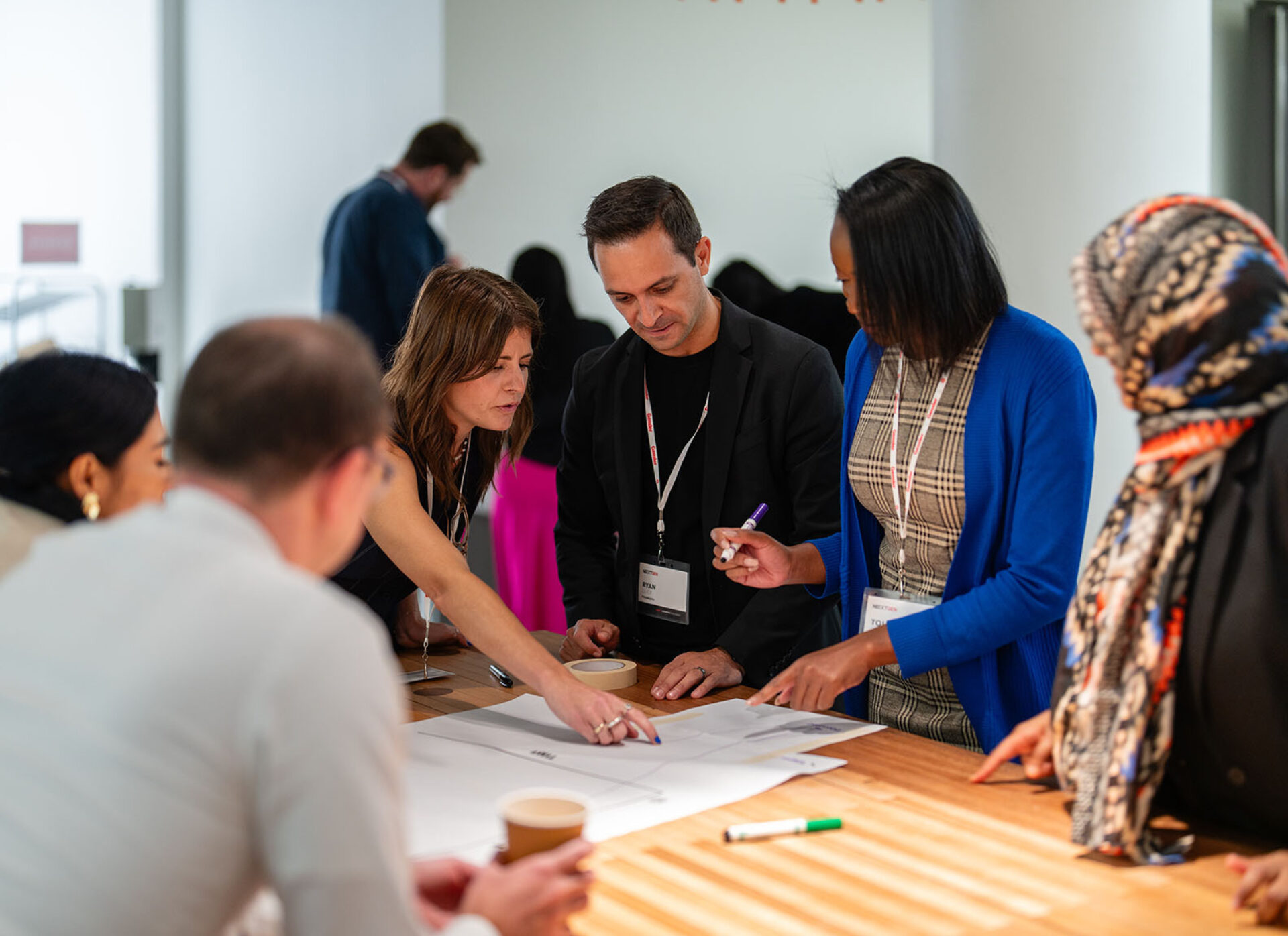
To Karsan design has to have a level of care and planning that curates moments for the end user.
Image courtesy of Jaimie Karsan
LW: Well-being begins with how a space makes you feel. Natural light is very important, and so is a thoughtful connection to the outdoors. Spaces that support well-being usually have a sense of balance. They allow for movement and rest, privacy and gathering, openness and intimacy. Natural materials, soft textures, good acoustics, comfortable seating, fresh air, beautiful plantings, and thoughtful lighting all add another layer. When these elements are designed cohesively, they can help people feel calmer and more grounded. To me, wellness in design is not just about adding a gym or spa, or whatever people typically think of as a “wellness space.” It is about creating environments that quietly support the nervous system and make daily life feel better.
FS: At a time when people have become more and more disconnected, through technology and social media, the aftermath of the pandemic, and remote working, we need to design spaces that encourage interaction and joy. As designers, we can create the spaces where people want to be, where they can be themselves, and where they feel comfortable engaging with others. For me, these are spaces without pretense or expectations; spaces with a mix of scale that provide opportunities for chance encounters.
What’s your advice for designing third spaces specifically?
JK: I believe that connection is a product of comfort; you can’t give something your full attention if you’re distracted by the environment. Obviously what comfort looks like changes from place to place — bright overhead lighting works really well in retail, it’s a lot less effective in a club. My tip when designing any space is to really think about the people that will use it, and to be pragmatic about how they’ll use it. Will they be sitting down or standing up? Talking to other people or on their own? Will they have stuff with them or not, and if so, how much? It sounds so basic, but such simple questions can help ensure that our designs are not just beautiful to look at, but comfortable to spend time in. If we can get that right, we provide the stage for connection to follow.
LW: Connection often happens in the in-between moments. A bench under a tree. A table in a courtyard. A fountain. A shaded seating area just outside a building. A garden path that makes you slow down for a second. When you design these small moments, people tend to linger a little longer, and conversation happens more naturally. I also think people sometimes want to feel transported. We want to feel like we have stepped out of our daily lives and into a place that feels calm, relaxed, almost like a vacation. Lighting is a big part of that. Adding a layer of lighting allows the space to change throughout the day and feel completely different in the evening.
FS: The measure of great design is when people are happy and engaged in your space. Let your ego go — allow the community to be part of the process.
Related Articles
-
Perspective: Design Superstars
These design superstars have set themselves apart with their dedication to doing what it takes to make the world wonderful -
Nature, By Design
How one landscape designer is bringing the outdoors back to the people — one urban riverbank at a time -
Shaping Spaces for Connection
Two designers with a passion for holistic design discuss how to create spaces that go beyond function and foster human connection -
Day in the Life: Lori Mukoyama
The principal and global hospitality leader at Gensler tells us how she gets it all done -
The Future of Healthcare Design
From technological advances to designing for experience, these takeaways from a recent event about healthcare design offer insights that empower patients and enhance comfort -
5 Can’t-Miss Stories
The best of Perspective 2025, featuring breakthrough ideas, fascinating figures, radical innovations, and glimpses into the future of design