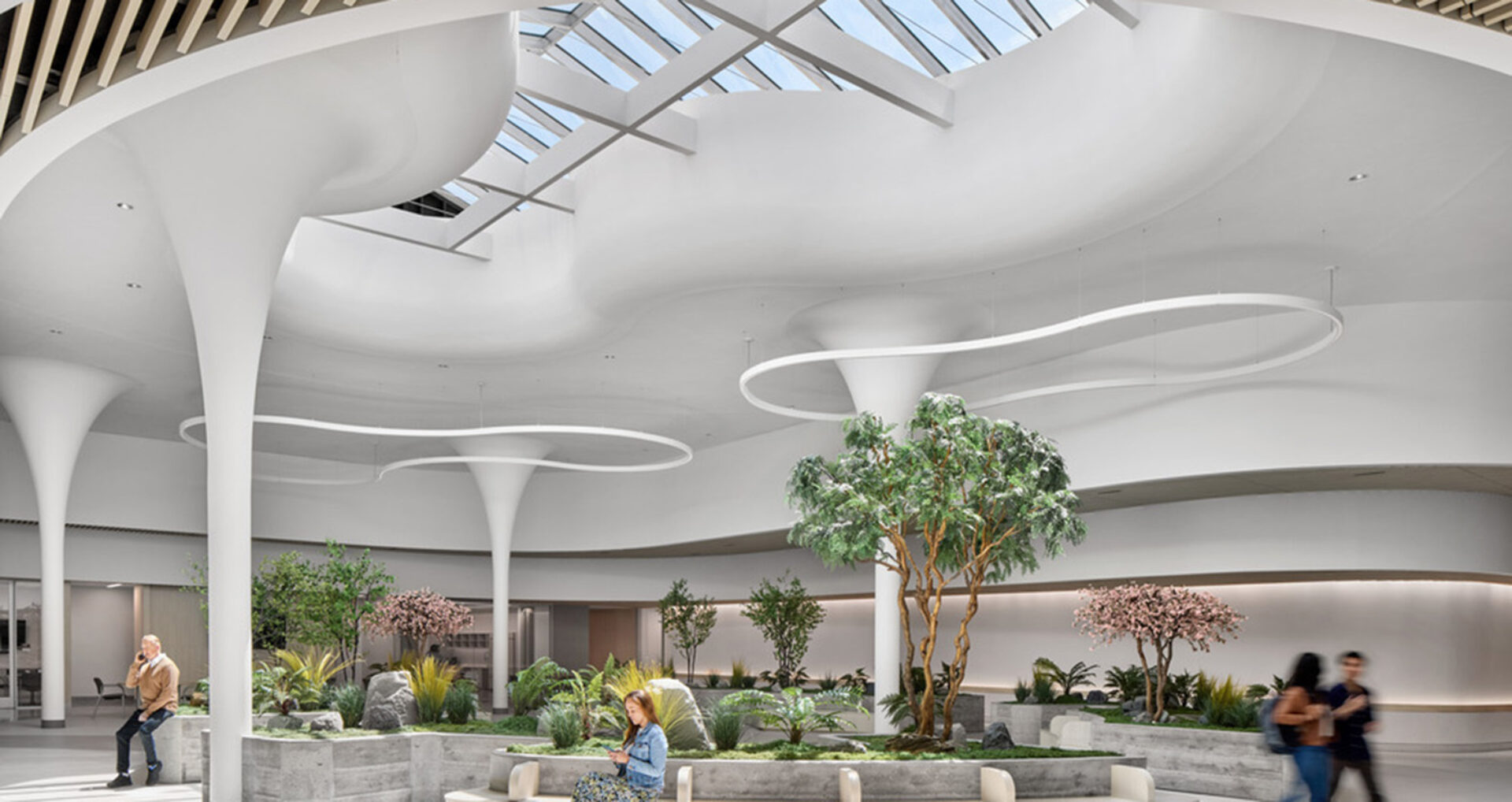

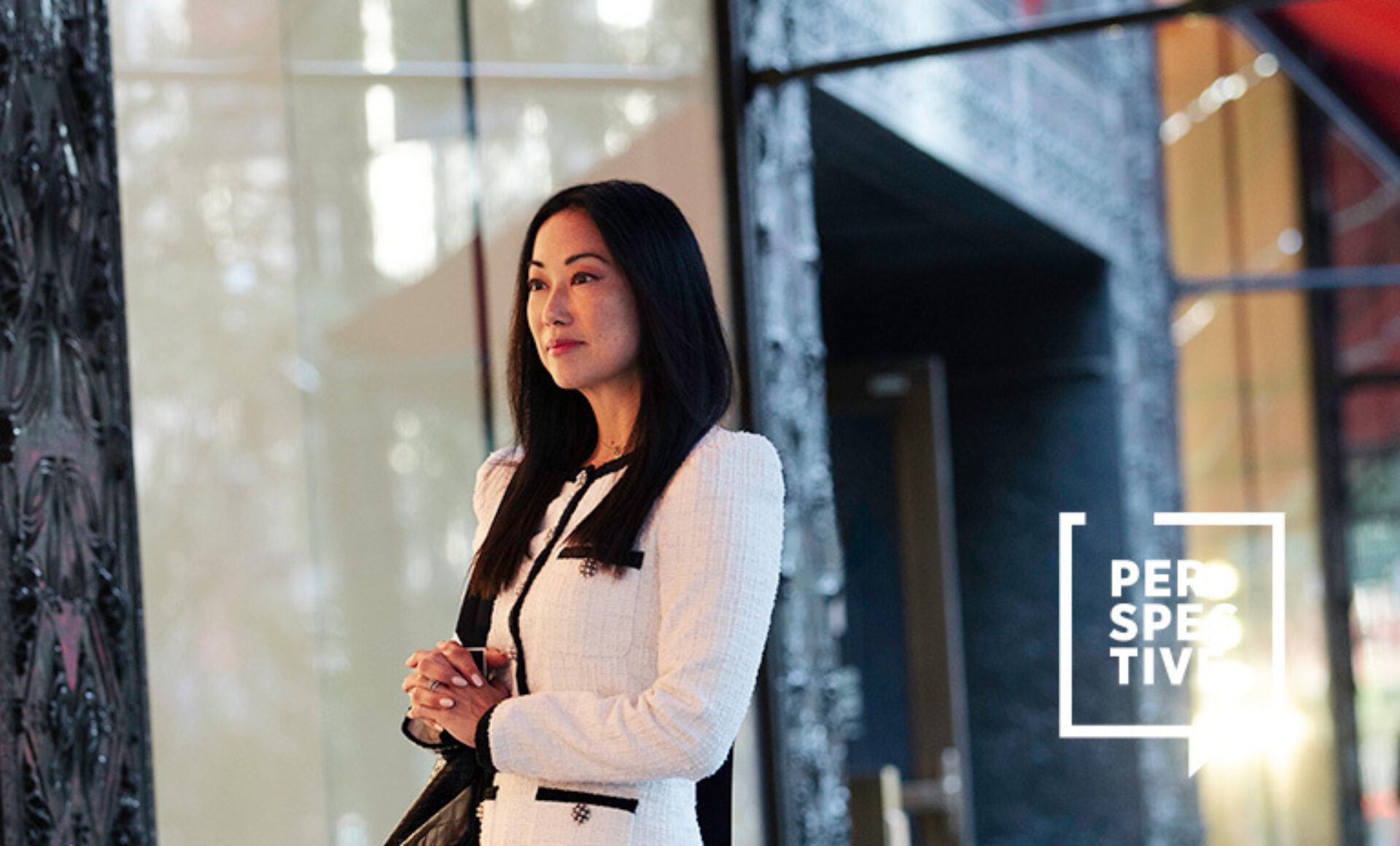
(Above image: IIDA 2025 Healthcare Design Awards, Transformation and Innovation Award Winner, North East Medical Services (NEMS) - PACE San Jose Center by IA Interior Architects. Photos by Garrett Rowland)
How can we transform healthcare design with a hospitality mindset? The answer lies in blending the technology, medical expertise, and focus on safety found in healthcare with the convenience, emphasis on personalization, and sense of welcome common in hospitality. Infusing hospitality into the framework of healthcare design can enhance comfort, improve healing, and foster human connection.
In collaboration with the American Institute of Architects (AIA), IIDA convened design experts for an event at IIDA HQ in February to explore the intersection of healthcare and hospitality design in our current moment, and offer an inspiring look at the future the combined disciplines are moving us toward. Below are six takeaways designers can implement as we work toward the future of healthcare design.
1. Designing for experience means designing with empathy
In healthcare spaces, patients and their families are looking for support, medical interventions, and answers. They may be distressed, confused, anxious, or overwhelmed. Most of us know what it feels like to navigate healthcare when you or someone you love isn’t well. It isn’t easy. By designing with empathy, designers can ease the patient journey. Engaging in journey mapping at the start of a project and thinking about how to meet the needs of the whole person (physically, mentally, spiritually, emotionally), can help designers create an environment that eases stress and provides meaningful support. “Experience needs to be at the core of what we design,” said Lisa Adams, interiors principal, sustainable design leader, and director of Citizen at HKS. “Designing with empathy fosters comfort, connection, and community across healthcare spaces.”
2. Community and user voices directly shape design solutions
In the best healthcare designs, opportunities for human connection are intentionally embedded during the design process, not added later. Thoughtfully designed spiritual, communal, or cultural spaces can help healthcare facilities function as civic neighborhood assets, rather than purely clinical institutions. Deep engagement with patients, visitors, and staff allows designers to ensure that those spaces actually meet community needs. Speaking with a patient and family advisory council at the beginning of a hospital project can help designers drill down on specific wants and needs, and bring a diversity of experiences to the table. Designers need to understand “the continuum of needs of individuals,” said Michael Schur, a wellness leader and senior associate at Gensler, to find pain points that need solving and opportunities to add moments of joy. “A small move might make a big difference in an individual’s experience.”
3. Treat patients as consumers while prioritizing healing
Healthcare and hospitality design have distinct differences; effectively blending the two starts with a clear focus on consumer comforts and patient dignity. “Hospitality is really focused on more of a frictionless environment, one that removes all environmental stressors. Think about intuitive wayfinding to help ease your way from point A to point B, or acoustic control for a sense of privacy. The design promotes the overall journey. It’s a sequence of dignifying events,” said Eric Koffler, IIDA, healthcare interior architect and medical planner at Gensler. Pulling that idea through to healthcare means thinking about how to have a cohesive, dignified journey for patients. From the design of the waiting room to the treatment areas, all of these spaces should ideally foster a sense of ease, and agency, rather than anxiety. By doing extensive research, designers can create a sense of place for patients, a more personalized healthcare experience.
Koffler stressed the importance of grounding projects in the look and feel of local communities: “I was recently working on developing design standards, finish standards, and furniture standards for a big system in the southeast. Part of that goal was making sure that neighborhood and community hospitals had an opportunity for placemaking,” he said. His firm really dug into regionality and locality. The standards provided a “roadmap” for designers, so they could explore research about the community and add a distinct local touch to each project, so that it felt like it belonged in a given community.
4. Thread hospitality throughout the patient journey
Good hospitality design isn’t just about aesthetics, it’s about creating a space that feels soothing and welcoming. The end goal should be to create a cohesive and calm experience from arrival to departure. As healthcare design evolves, Lauren Andrysiak, IIDA, principal and senior design leader at CannonDesign, sees a need for creating more meaningful, patient-centered experiences. “Hospitality puts consumers first. They think about that consumer experience, and what drives it. Healthcare experience is the same. We hear it all the time: patient first, patient experience first. So how do we hyper personalize that experience in such a way that makes them feel like they're number one? Our work has to go beyond just beautiful interior design. We need to harness technology and operational efficiency within the built environment to bring transformational experiences that are memorable, unique, and special — and that support healing and wellness.”
5. Advanced technology is reshaping the patient experience
In a series of case studies, AIA panelists pointed out the design behind recent healthcare facilities, including technological advancements that enhance the patient and staff experience. The University of Chicago Cancer Center, for example, showcases many enhancements such as bedside tablets that allow patients to control lighting and temperature in the room, AI monitoring that supports virtual nursing visits, and automated delivery robots to transport medications and more.
AIA panelists also discussed the Rush University Medical Center Joan & Paul Rubschlager Building, where advanced tech includes temperature sensors near the entrance that help screen for Covid. When used wisely, technology can also create more time for human connection. Remote monitoring and more efficient charting can allow nurses and providers to “spend less time sitting at computers and more time face to face,” Andrysiak said, allowing them to have “super meaningful, relationship-building conversations not just with patients, but with each other.” The result: enhanced patient experiences and more mentorship among hospital staff.
6. Design inclusive environments that support the needs of all users
Design isn’t just about function, it’s about creating environments that foster trust. Inclusive design ensures that all people, from aging patients to neurodiverse individuals, feel respected and welcomed. “We had a client a couple of years ago and we surveyed some of the users; they didn’t want to go to certain health systems because they felt that it was too luxurious, it was too fancy, the care might not be attainable to them,” explained Geneva Frank, IIDA, interior designer at HDR. To get a better understanding, she and her colleagues “researched that demographic, went down to the site and their communities, and went to their museums and researched their art to figure out how we can incorporate that into their new hospital.” The goal was to ensure everyone felt a sense of access and belonging.
Even seemingly small design choices like how stable the furniture is, the placement of wheelchairs (are they visible or hidden?), and whether the signage is clear can reinforce trust or undermine it. Hospitality thrives on convenience, customization, and effortlessness; healthcare can do the same by giving patients more control over their environments, more comfort, and more connection.
Related Articles
-
Perspective: Design Superstars
These design superstars have set themselves apart with their dedication to doing what it takes to make the world wonderful -

We Need More Third Spaces
Three designers talk about their favorite third spaces and share design tips to foster connection -
Nature, By Design
How one landscape designer is bringing the outdoors back to the people — one urban riverbank at a time -
2026 Student Design Competition Showcase
Presenting the winning student design competition projects for a primary care clinic in rural northwest Montana -

Shaping Spaces for Connection
Two designers with a passion for holistic design discuss how to create spaces that go beyond function and foster human connection -
Day in the Life: Lori Mukoyama
The principal and global hospitality leader at Gensler tells us how she gets it all done