There’s a scene in “Mad Men” about a Mark Rothko painting. While several characters debate what those fields of color are supposed to mean, Ken Cosgrove offers another way of looking: “Maybe you’re just supposed to experience it. Because when you look at it, you feel something, right?”
For Danielle Nelson, IIDA’s Senior Art Director and the designer behind “Beyond,” IIDA’s campaign for Chicago Design Week, that idea was a way in: Beyond isn’t a message to decode, but an atmosphere to enter.
Built from handmade aura graphics, layered color gels, and the imperfect glow of an old light box, Beyond translates IIDA’s optimism into something luminous, human, and distinct. It is also a reflection of Nelson’s larger creative approach. As IIDA Creative Director Sumara Fireside puts it, “Danielle has a rare ability to design across platforms and for diverse audiences while never losing sight of the human experience. She understands how people absorb, navigate, and connect with information, creating work that feels both strategically clear and emotionally resonant.”
Here, Nelson takes us behind the design process — through color theory, analog experimentation, unexpected constraints, and the moment the campaign clicked.
IIDA’s Beyond campaign is about what becomes possible when design moves past the expected. How did you begin translating that idea into a visual language?
This campaign really centered around feeling — the feeling that colors can trigger and the feeling that IIDA wants to portray. I started thinking about yellow as warmth and joy, blue as calm, green as health and wellness, and how those colors could help visualize the energy and vibe of IIDA.
One of the prompts we were working with was “beyond the ordinary,” and that’s where the idea of the aura came in: seeing beyond what’s there. I started thinking, if IIDA had an aura, what would it look like? IIDA’s aura is bold, joyful, and undeniably positive. It’s optimistic.
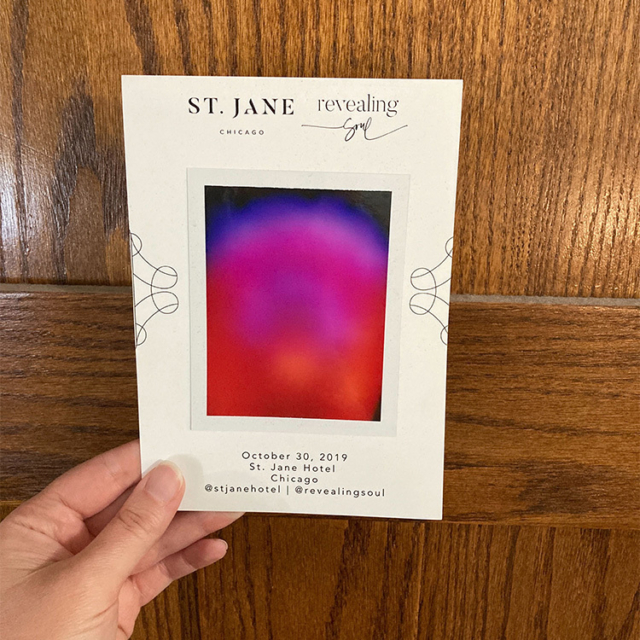
The aura graphics were created by hand using analog techniques, which gave the campaign a visual identity that felt distinctly our own. They invite viewers to “see beyond,” but they also represent the bright, optimistic future that IIDA is actively creating. I wanted people to see the Beyond installation at The Mart and feel enveloped by these colors — to feel something positive, maybe even a sense of awe.

The word “beyond” becomes a throughline across the campaign, visually, verbally, and in writing. How did tone, color, and typography work together to shape its personality?
Color was central to the feeling of the campaign — it needed to feel bright, positive, and energetic, but I also wanted it to feel a little different from what people might expect from IIDA.
IIDA is bold, and that’s something we talk about in our mission and our messaging. Sometimes that boldness can translate visually into strong geometric graphics or solid, in-your-face colors, which we’ve done before. This still feels bold to me, but in a more atmospheric way. It has movement and depth. It feels strong, but it also feels softer and more human.
It also ended up being a happy accident that the colors worked so well with the IIDA palette. We didn’t have to introduce a totally new set of colors through the typography. The aura graphics and the brand language just started to link together naturally.
What visual references, creative influences, or unexpected sources inspired the campaign?
Josef Albers and Mark Rothko were two references I kept coming back to. With Albers, I was thinking about color theory, harmony, and the way colors interact with each other. With Rothko, it was more about experience — what color makes you feel before you try to explain it. Sometimes people look at Rothko’s paintings and think, I don’t understand this. It’s just swatches of color. But sometimes it’s not about a literal meaning. It’s about what it makes you feel.
There’s a quote from Rothko that really sums up what I was trying to convey: “A painting is not a picture of an experience; it is an experience.” And there’s also a scene in “Mad Men” that kept coming back to me. Sal Romano insists a Rothko painting “must mean something,” and Ken Cosgrove says, “Maybe it doesn’t. Maybe you’re just supposed to experience it. Because when you look at it, you feel something, right? It’s like looking into something very deep. You could fall in.” That idea stayed with me. I wanted the campaign to be something people could experience — not just look at and understand immediately, but feel.
Another unexpected influence was the decision not to rely on stock imagery. With so much AI-generated imagery out there now, [IIDA Creative Director] Sumara challenged us to see what we could create without using those resources. It wasn’t about being afraid of AI, but about not relying on it completely. It was about keeping the person in the final product.

Was there a moment in the process when the campaign really clicked for you? What shifted between the early concepts and the final direction?
The light box was the aha moment.
At first, I was trying different things — paints, watercolors, reflective materials — and taking photos to create a wash of color or a palette. But I kept getting frustrated because everything felt flat and boring. It wasn’t clicking, and I didn’t think it would resonate with anyone.
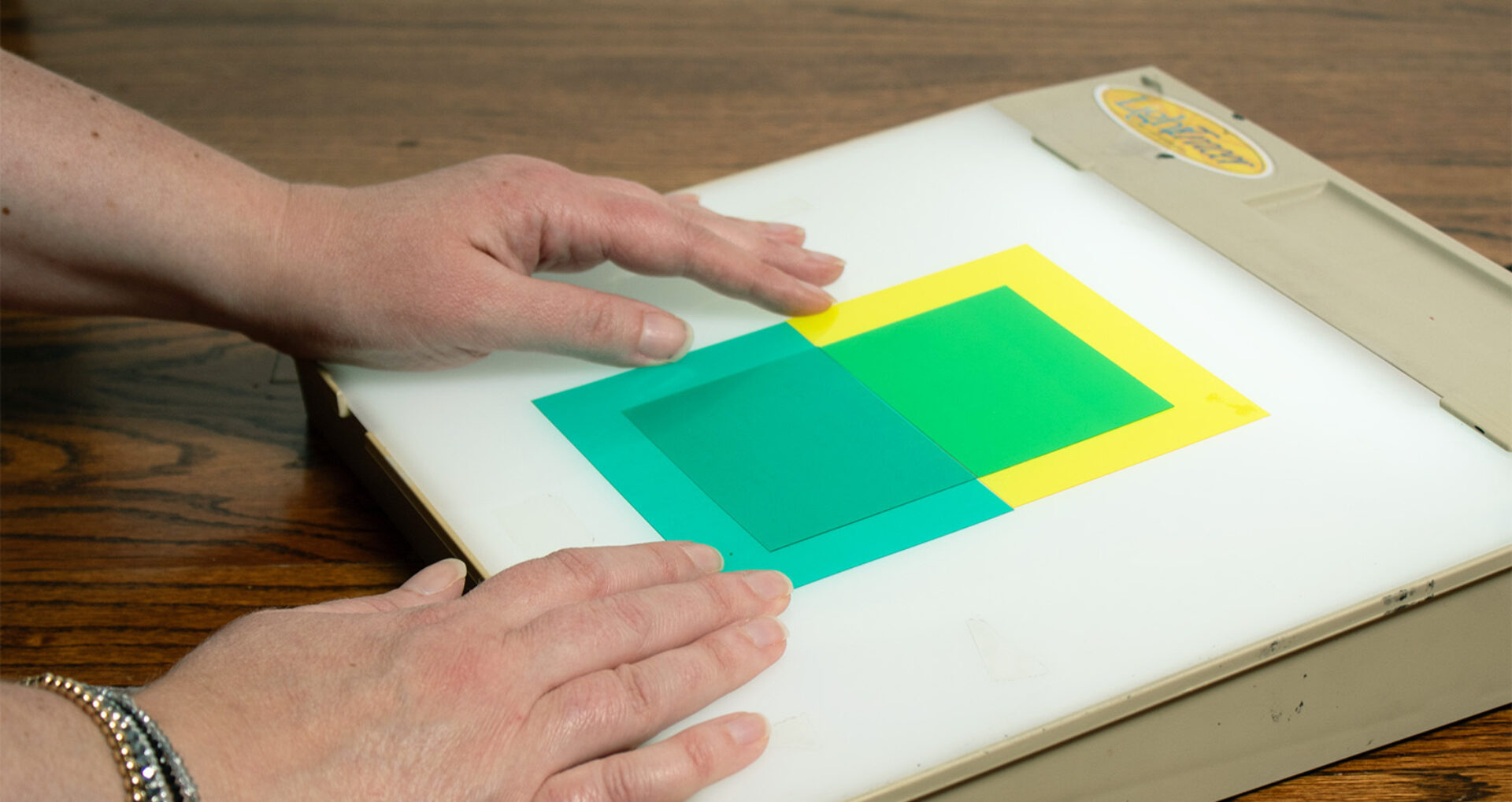
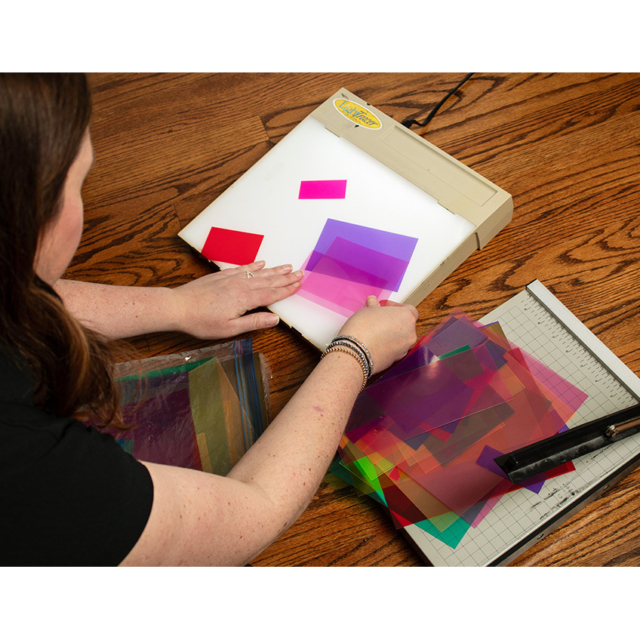
Then I started wondering what would happen if I used colored gels on a light box. The light would illuminate the color and maybe create the positive energy I was looking for. Once I started placing the shapes down, I thought, Oh my god, I think this is going to get what I want. And it became fun.
What helped, too, was that the technology wasn’t perfect. I have a really old iPhone, so the camera isn’t great, and the light box is old, so the light isn’t even. But that actually created more dimension. Some areas were brighter, some weren’t. It didn’t feel pristine. It had a little imperfection, a little life, and that gave the images more depth.
I did bring the images into the computer afterward and blur them to create a more atmospheric feel, but the foundation was analog. It came from cutting shapes, layering gels, working with light, and seeing how colors changed when they overlapped. I didn’t have orange, for example, so I had to layer pink and yellow. If I wanted a blue to be darker, I had to layer multiple blues. Those limitations pushed the work creatively.
Once the light-box images clicked, the team reacted immediately. From there, we kept honing the compositions. Some of the earlier versions had circles, triangles, and more collage-like shapes, but the simpler rectangular fields of color gave us the feeling we wanted. They became more abstract, so you weren’t paying attention to the shapes as much as the feeling of the color.

What do you want people to feel when they encounter IIDA’s presence at Chicago Design Week?
I wanted people to feel surrounded by something bright, positive, and optimistic. For this campaign, we were focusing less on Chicago itself visually and more on what IIDA wants to say at Chicago Design Week: that the future is bright, that there is optimism and hope, and design can help create that feeling.
It was also important to bring the human back into the work. We spend so much time on the computer, and it was really fun to make something by hand — to cut out shapes, play with color theory, and work through the process physically.
I think sometimes people look at design and only see the aesthetics. But there is always thought and reasoning behind the choices we make. For this campaign, the choices were about creating a feeling — and hopefully giving people a different way to experience IIDA.
Stop by the WorkLife Meetings on the 2nd floor at The Mart to experience the installation, and find us at Chicago Design Week for swag, joy and more!
Related Articles
-
Why Care Is the New Design Standard
3 key takeaways from IIDA's First-Ever Spaces for Possibility Symposium -
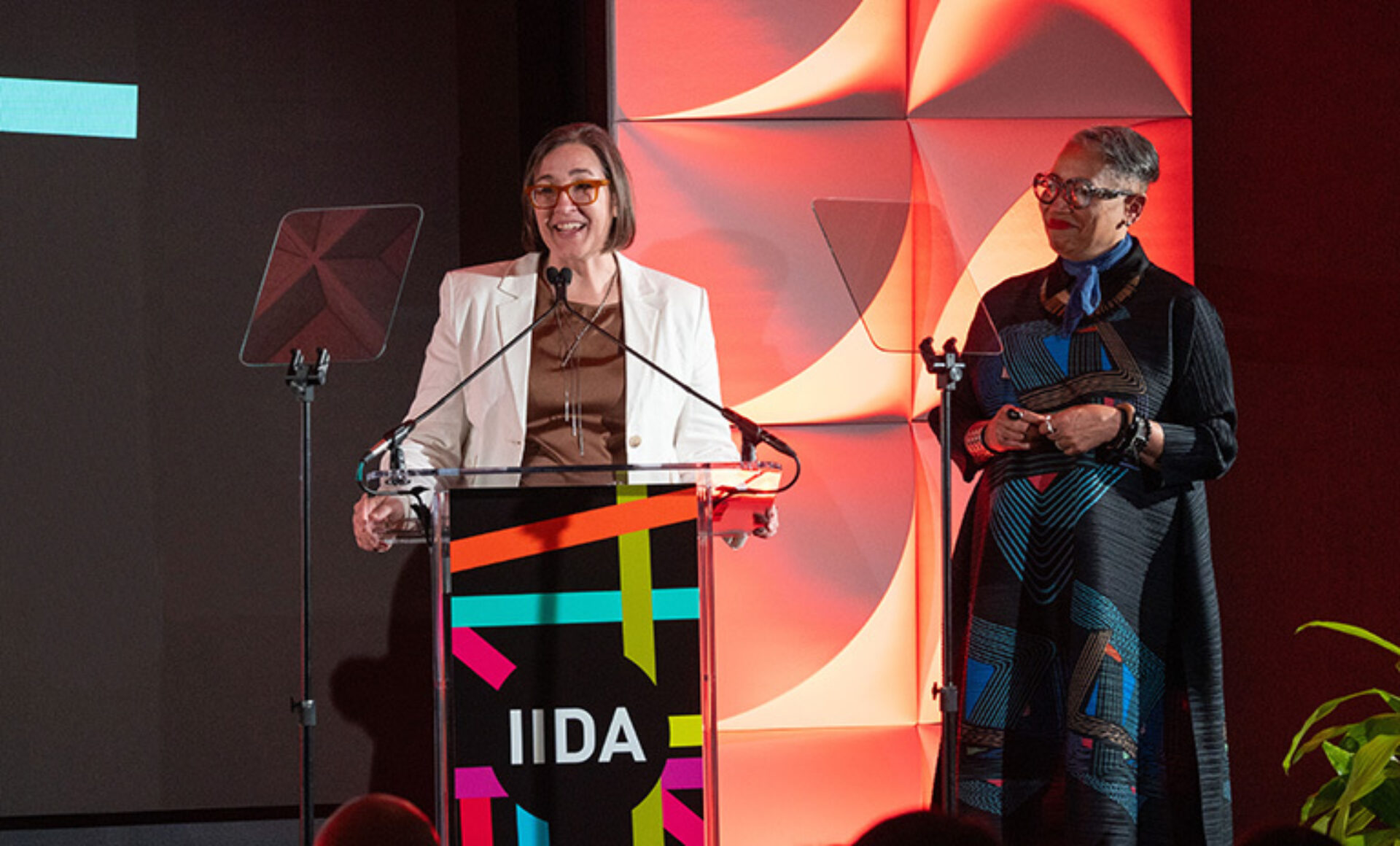
Radical Adaptation with Stacey Crumbaker
‘Together, we don’t just design spaces, we design futures,’ Crumbaker says -

Announcing Chicago Design Week
A proclamation from local lawmakers recognizes Chicago as a design epicenter and formally establishes a citywide design week -

Top 10 Most-Read Articles of 2024
Dive into IIDA's most read articles of 2024—celebrating the integral parts of the IIDA community and design industry at large -
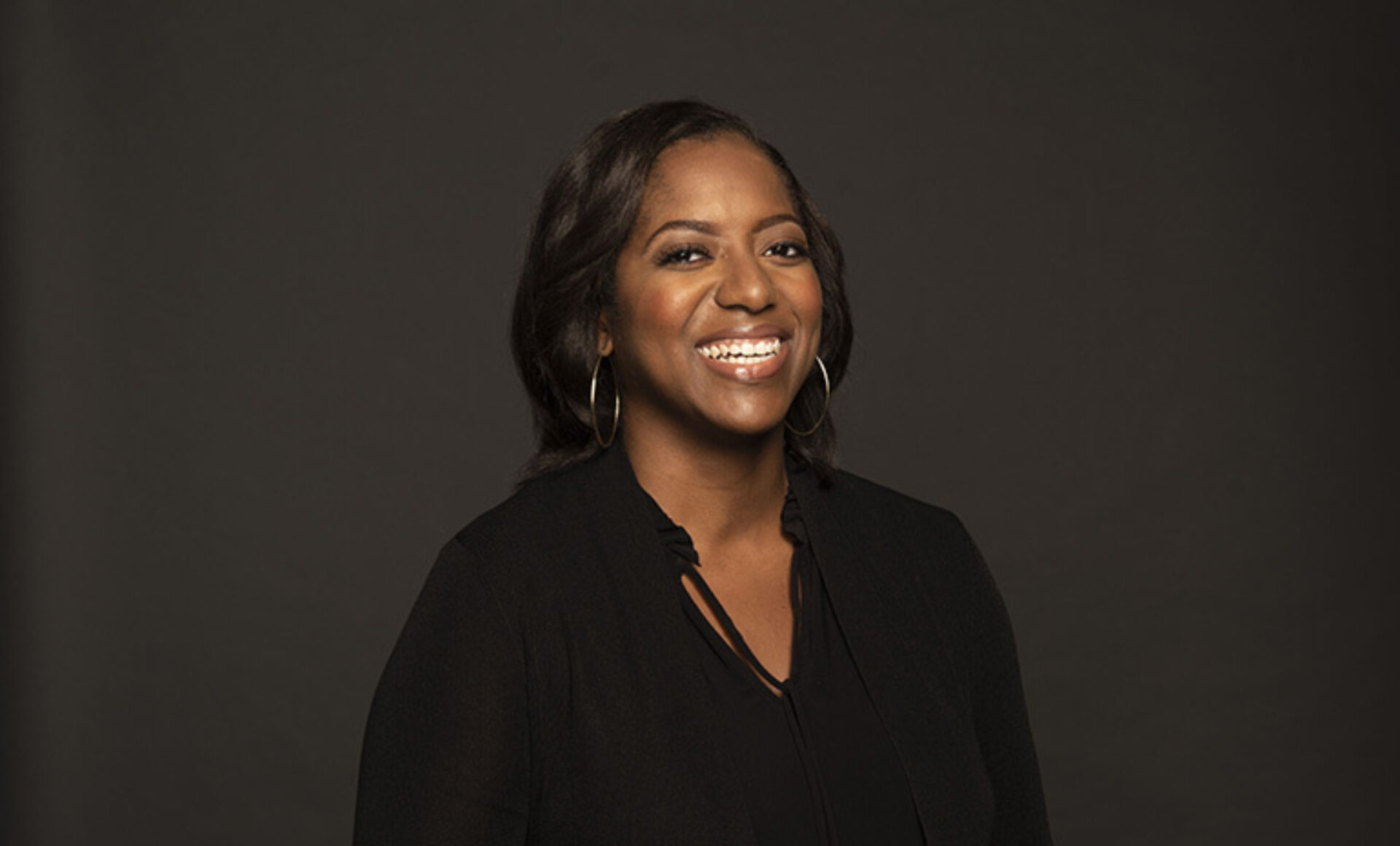
Meet Nneka McGuire IIDA's Director of Content
From newsrooms to television writers’ rooms, IIDA HQ's newest addition is excited to build a more inclusive, equitable design industry and world -

Meet IIDA Senior Industry Sales Manager Adrienne Smith
Blending passion and purpose at IIDA