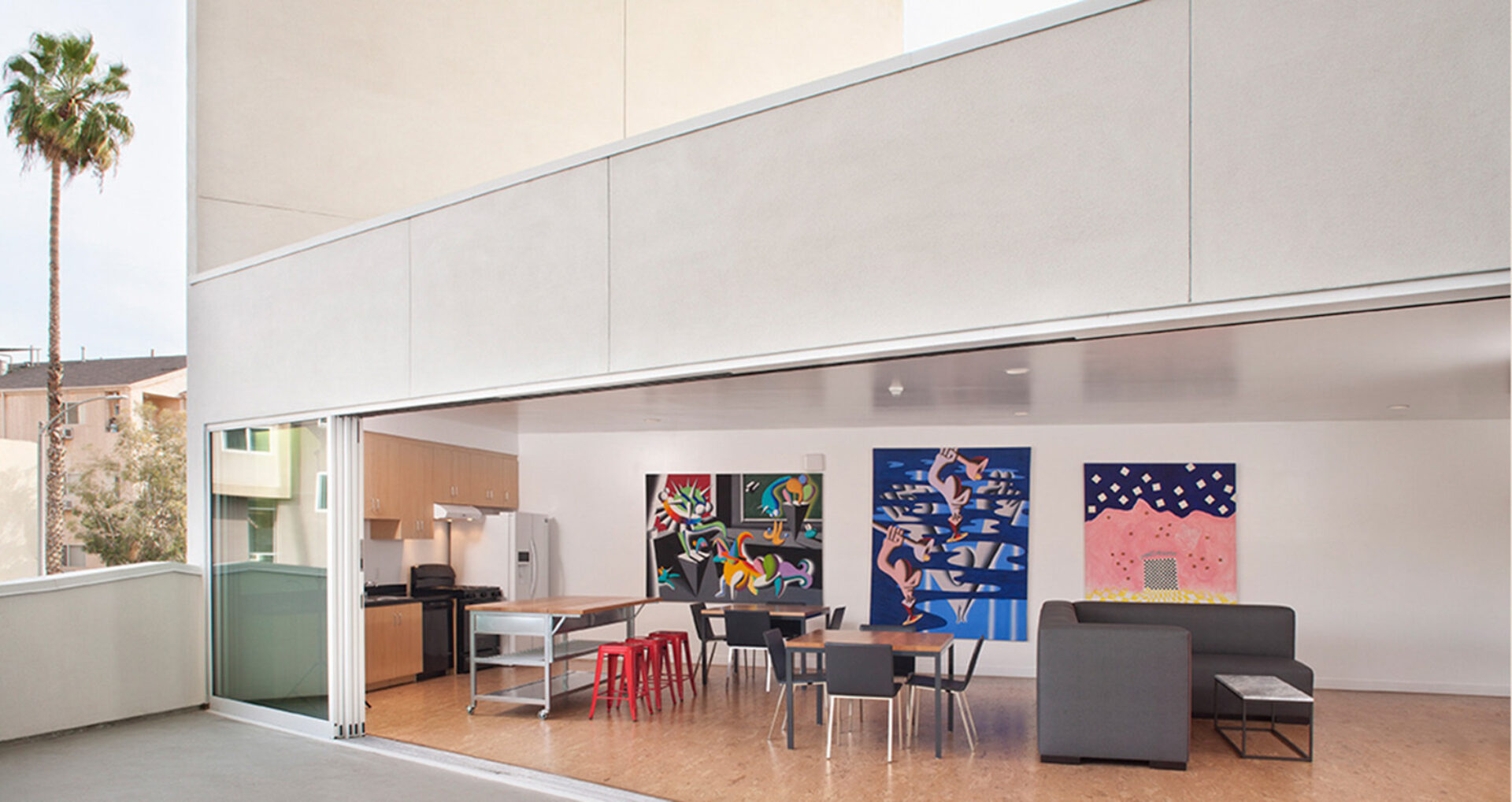

(Above: The SIX, designed by Brooks + Scarpa. Photo by TaraWucjik)
Good design makes a lasting impact — and there are many ways to make a difference through design. Whether that’s leaning into community input or experimenting with neuroaesthetics, there are immeasurable benefits to rethinking how we build shared spaces, craft products, and support the planet. These five designs embody what it means to design for the greater good.
Sustainability Meets Animal Welfare
MycoWorks
For some time, designers have been exploring the possibilities of mycelium as a green material, from compostable packaging to acoustic material and leather alternatives. MycoWorks is one such brand, and their commitment to quality and performance allowed them to bring to market a material that achieves luxury quality while being available at scale — something that is typically a roadblock for biomaterials without sacrificing a bit of sustainability. Working with leather often creates a tough decision for designers — choose the carbon footprint and animal cruelty that comes with real leather production, or the carbon footprint and health implications of faux leathers, which are almost all plastic-based. Collaborating with designers, MycoWorks’ Mycelium Muse collection made a huge splash at Design Miami, proving that mushrooms can be sexy, and showing a range of design possibilities for this supple and flexible material. In 2025, they made the decision to focus their efforts on processing and tanning mycelium rather than growing it, allowing them to offer their performance material at a more affordable price point.
Support and Stable Housing for Veterans
The SIX — Brooks + Scarpa
This 52-unit affordable housing complex in Los Angeles is composed of private studios and one-bedroom apartments for disabled veterans, many of whom were formerly or chronically unhoused. The SIX, which comes from a military saying meaning “I’ve got your back,” quite literally has these veterans’ backs by offering stable housing and on-site support services. The Skid Row Housing Trust provides residents of the SIX comprehensive case management, individualized treatment plans, crisis intervention, and referral services. Not only that, the layout of the building emphasizes community through shared spaces like a living room, rooftop garden, and courtyard. Nonprofit employment program Chrysalis provides residents with transportation, benefits advocacy, food aid, and employment assistance. The result? Residents receive more than housing — they experience a sense of stability, community, and multi-modal support all in one place. This LEED Platinum rated project also uses passive design strategies to ensure an energy-efficient building with care towards airflow, light, and stormwater management with a green roof and garden.
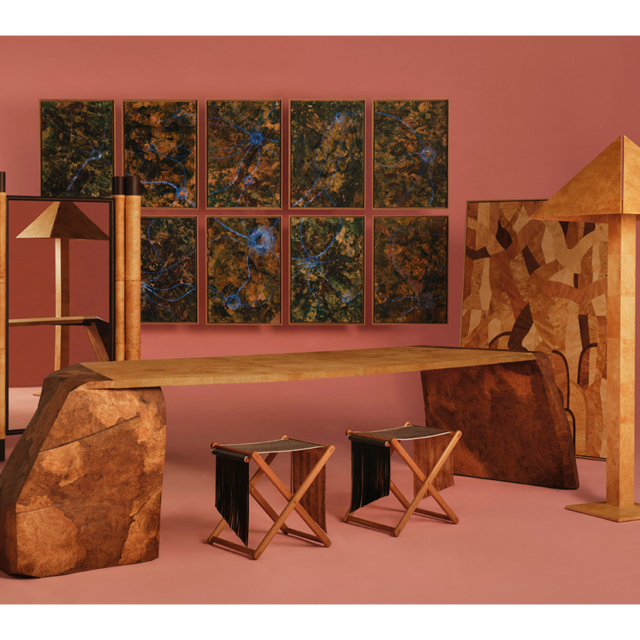
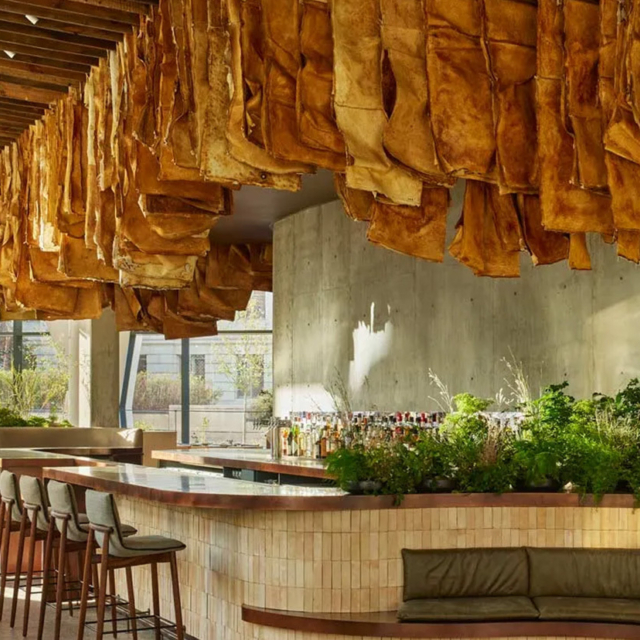
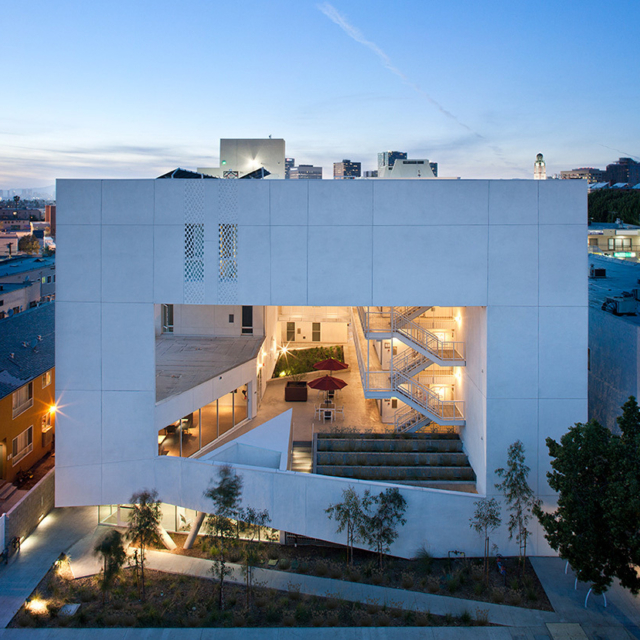
Photo by TaraWucjik, courtesy of Brooks + Scarpa
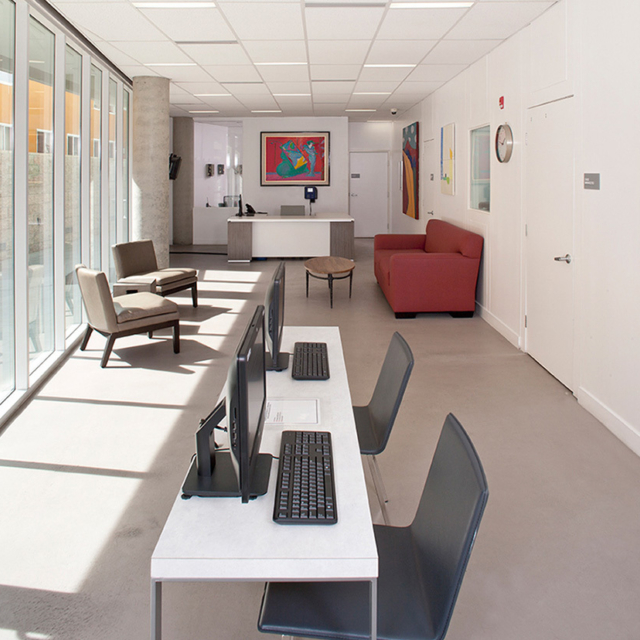
Photo by TaraWucjik, courtesy of Brooks + Scarpa
Community Ownership and Liberation
Starling by Duo/
Duo/, the innovation studio/lab behind the project, describes Starling as “a space for liberation — a building to gather, replenish, learn, and create.” The bright blue community hub and neighborhood amenity aims to redefine “ownership” as a public utility, channeling a portion of the profits from space rentals back into the community, and operating as a vessel to support prosperity in an historically under-resourced neighborhood in Chicago. Starling is the first commercial building to open in more than 70 years on 16th Street in Chicago’s North Lawndale neighborhood, and offers low-cost hourly rentals and access to meeting, event, and incubator spaces including the Moon Room, a public library curated by local nonprofit Open Books; the Sun Room, an open space with a skylight; the Sound Studio, a plug-and-play recording studio; and an outdoor space featuring terraces and a garden. Anchored by full-time tenant Monday Coffee, which runs a café and coffee roastery out of the building, it has become a “fourth space” for the community to gather and thrive through gallery shows, yoga classes, workshops, or anything else that the neighborhood can dream up.
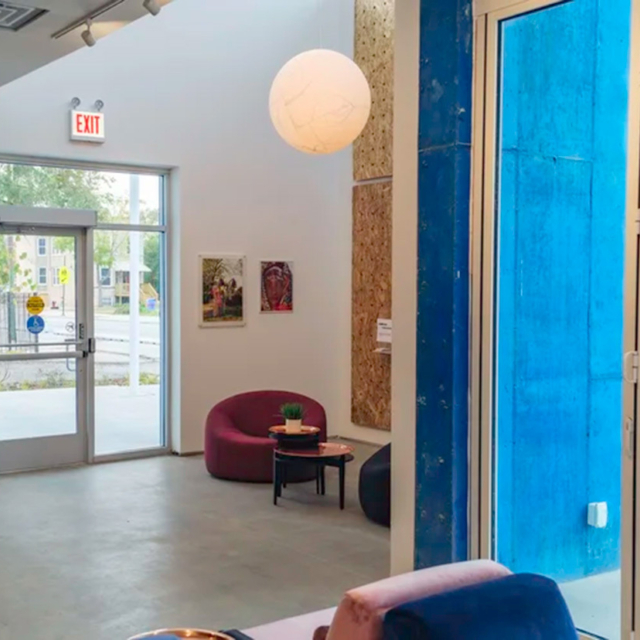
Image Courtesy Of Duo/
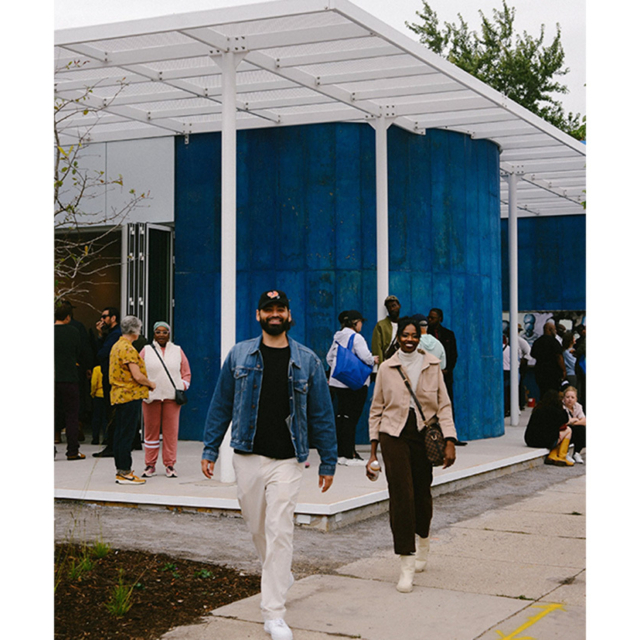
Image Courtesy Of Duo/
Neuroaesthetics to Support Sensory Disorders
UMA Tableware by HAK Studio
Devised to support individuals with taste disorders, HAK Studio has designed UMA Tableware, two porcelain dishes that use color, texture, and form to amplify the perception of flavor. Leaning into research by professor and psychologist Charles Spence on the multisensory perception of taste — in particular that visual and tactile cues can change one’s experience of food or drink — HAK Studio came to recognize that altering the look and feel of meals, something that humans have been doing for thousands of years, could make a modern-day impact. This neuroscience-informed approach aims to enhance taste through tableware. The collection includes a high-gloss pink and white swirled dessert plate that evokes the color and appearance of a strawberry cream candy, or a sticky, sweet fluid confection. The round shape, pastel color, and smooth glossy material of the dish reinforces the visual and tactile cues associated with sweetness. Same goes for the salty bowl, a porcelain vessel that offers a rough unglazed exterior and quartz-like glazed interior that you would associate with crystallized salt in both look and feel. Not only does the dishware influence the perceived taste, ideally these cues would simultaneously satisfy a sweet or salty craving, even if the snack wasn’t really that sweet or salty at all.
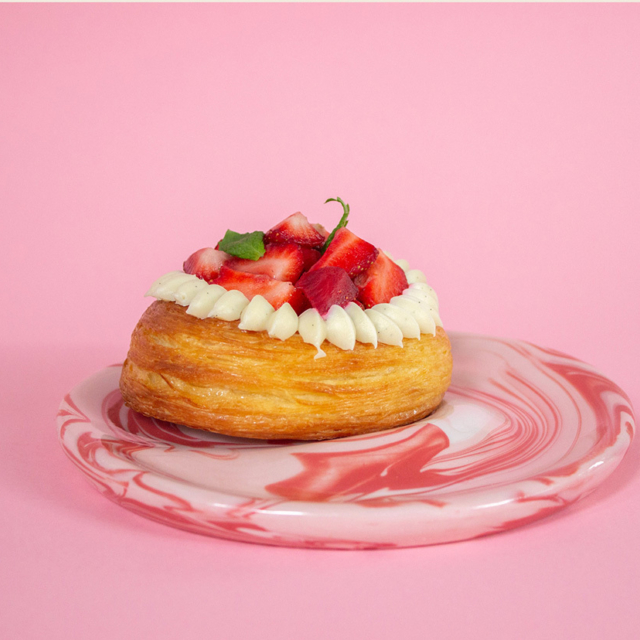
Image courtesy of HAK Studio
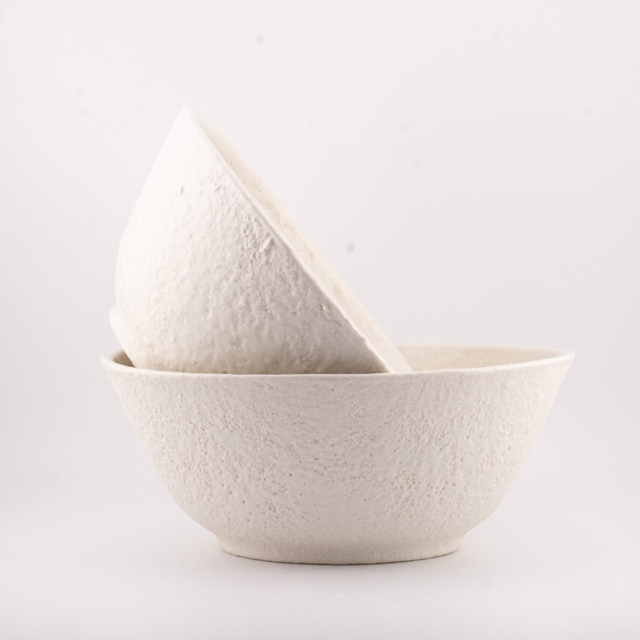
Image courtesy of HAK Studio
Preserving History and Securing the Future
Africatown Plaza by ACLT and Community Roots Housing — David Baker Architects, GGLO, and Dream Collaborative
When the design team embarked on the seven-story mixed-use Africatown Plaza, multi-generational community input was a major part of the decision making process. Africatown Community Land Trust (ACLT), whose offices are based in the building, provided partnership in research and community input to ensure that the experience of the Black community that has historically lived in this this location was reflected in the design. Through design charrettes and listening sessions, the community became an active stakeholder, contributing to the design concept, layout, identity, and the way the building would be used. With 126 affordable housing units, retail and office space, community gardens and terraces, Africa Plaza encourages holistic growth, community cohesiveness, and connection. Not only that, it’s a symbol for Black rootedness in the neighborhood through a visual anchor — the organically curving wall calls upon African architecture while evoking a tree canopy that shelters and protects, like a beacon of stability for the community.
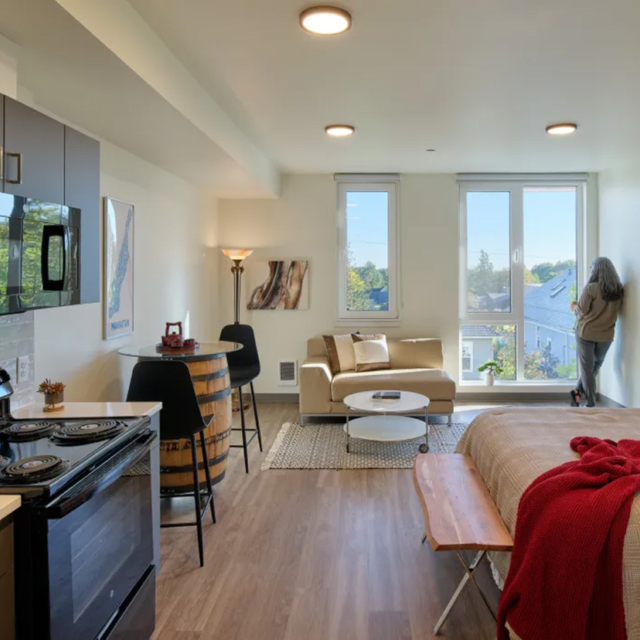
Photo by Bruce DaMonte
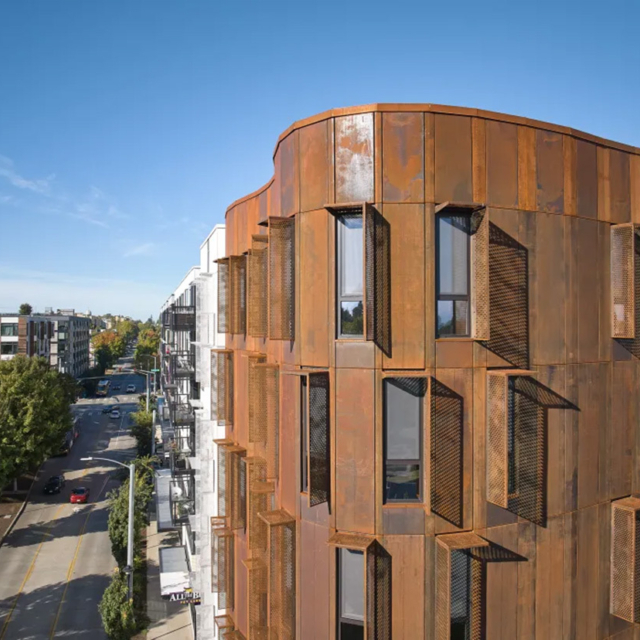
Photo by Bruce DaMonte
Related Articles
-
Rapid Fire with Yinka Ilori
First instinct, no overthinking: Yinka Ilori takes us inside his Dunelm collection -
Rising Stars: IIDA Members Going Beyond
Get to know designers moving the needle in advocacy, sustainability, mentorship and more -
Perspective: Design Superstars
These design superstars have set themselves apart with their dedication to doing what it takes to make the world wonderful -
Yinka Ilori on How We Make Memories
For Ilori, color has never been merely decorative. It is an invitation — to gather, to remember, to belong -
A Chapel With a Problem Worth Solving
What do you do to harmonize and bring together old and new? -
We Need More Third Spaces
Three designers talk about their favorite third spaces and share design tips to foster connection