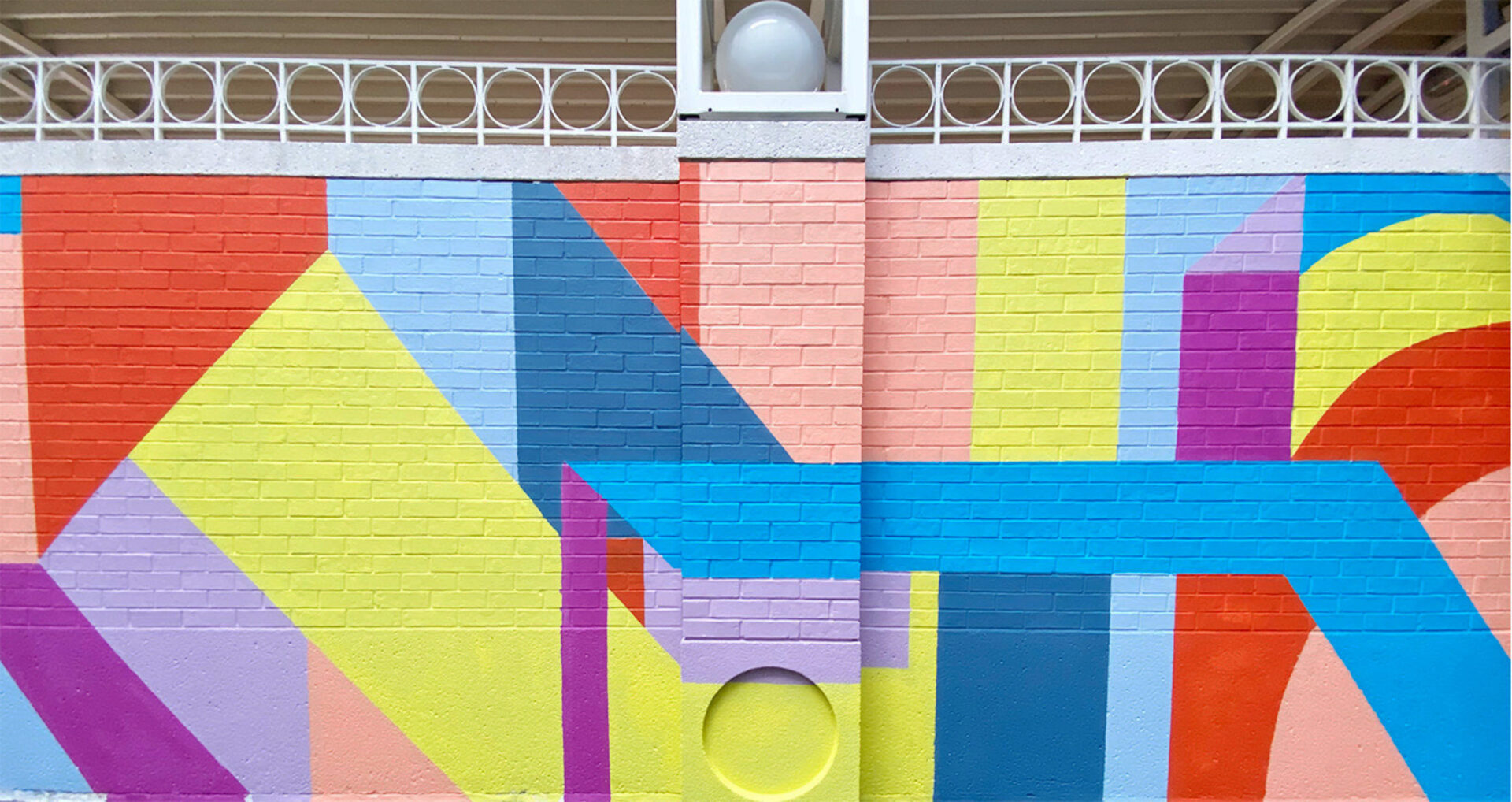

(Above: Project Color Corp mural at the Children's Assessment Center. Image courtesy of Project Color Corp)
Color isn’t just what Laura Guido-Clark sees — it’s how she feels, listens, and connects. She has spent her design career uncovering how color shapes the human experience, from the way we move through spaces to how we see ourselves within them. From her work with Herman Miller, Google, Samsung, and Toyota to her nonprofit Project Color Corps, which transforms schools and community spaces through color, Guido-Clark understands that color is more than surface deep — it’s a language of emotion, a tool to cultivate joy and belonging. It’s also scientific: Guido created Love Good Color, a patented methodology that fuses neuroscience, physiology, and findings from her 25-plus years of working on everything from interiors to furniture, healthcare to fashion.
Here, she reflects on the moment her lifelong fascination with color began (hint: it involves “The Wizard of Oz”), the “color conversations” that guide her process, and why she believes color remains one of the most powerful — and underutilized — mediums for social good.
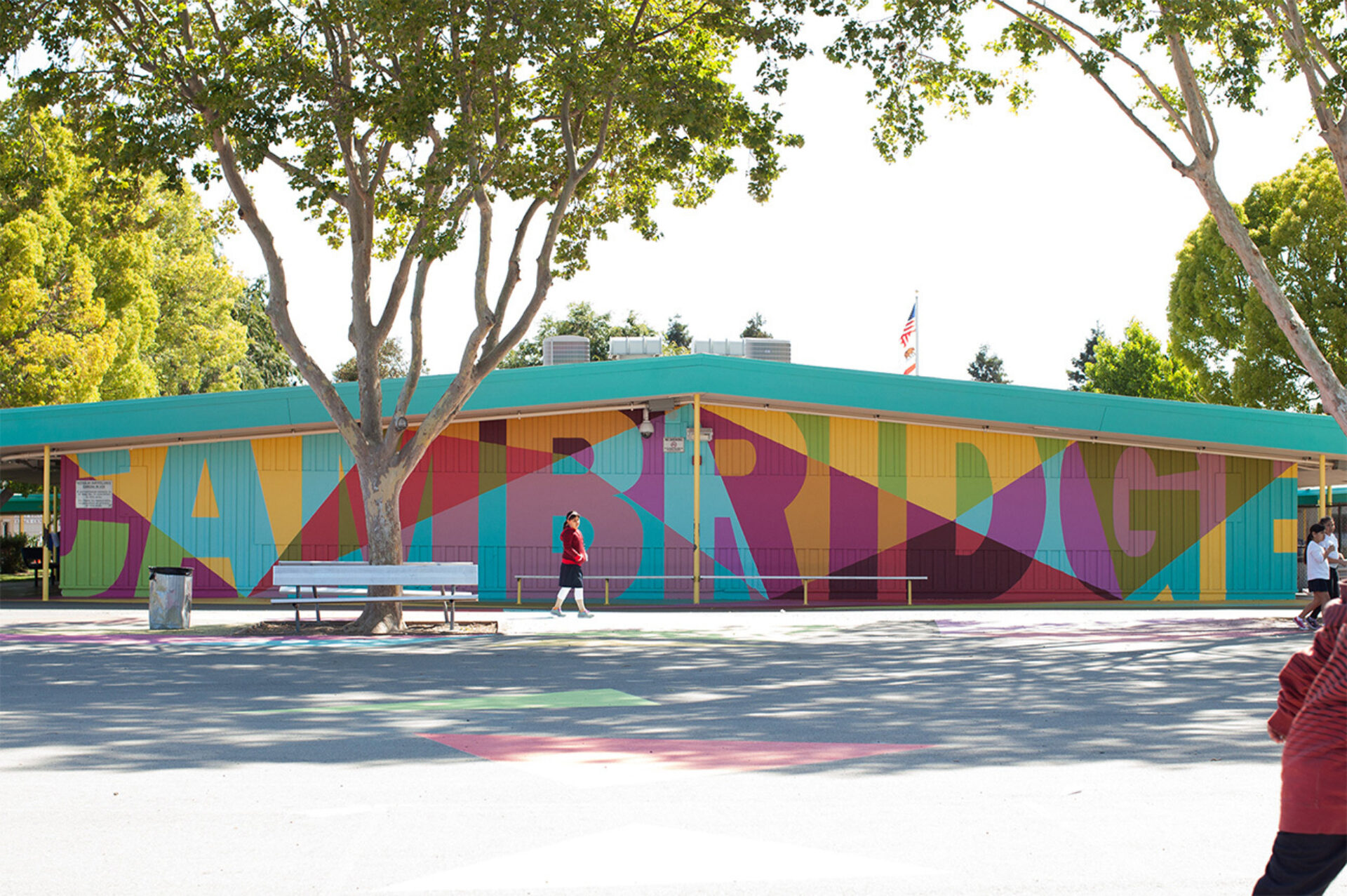
Image courtesy of Project Color Corps
You’ve said your “color awakening” happened watching “The Wizard of Oz” at age 10. What did that moment teach you about color’s emotional power that still guides your work today?
That moment — from the roaring, dissonant, chaotic tornado and the powerful visual shift from sepia tone to Technicolor — taught me that color is the quickest path to the subconscious. It’s not just decorative or on the surface; it’s a profound, emotional, and transformational force. It ignites us to dream bigger and feel deeper than I had ever imagined. When color is used intentionally, as it was in “The Wizard of Oz,” it is a powerful storytelling tool that precedes and transcends words.
Your work — from global brands to Project Color Corps and Love Good Color — centers on the transformative power of color. How do you use it to connect people and create social impact, and what happens in those early “color conversations” that help shape the story before any paint goes up?
I feel like I am a color humanist. My work, through brands, Project Color Corps, and Love Good Color, is always looking for ways that color can help us connect — to one another, to the world, and to our environments. My process starts with those “color conversations,” where I am constantly reading faces and listening for the desired feeling. People often don’t know what color they want, but they know exactly how they want to feel. We are essentially collecting those emotional thought bubbles, which become the authentic, visual language of that community. This process allows us to translate their inner desires into an exterior, visible narrative, giving them a profound sense of ownership and belonging.
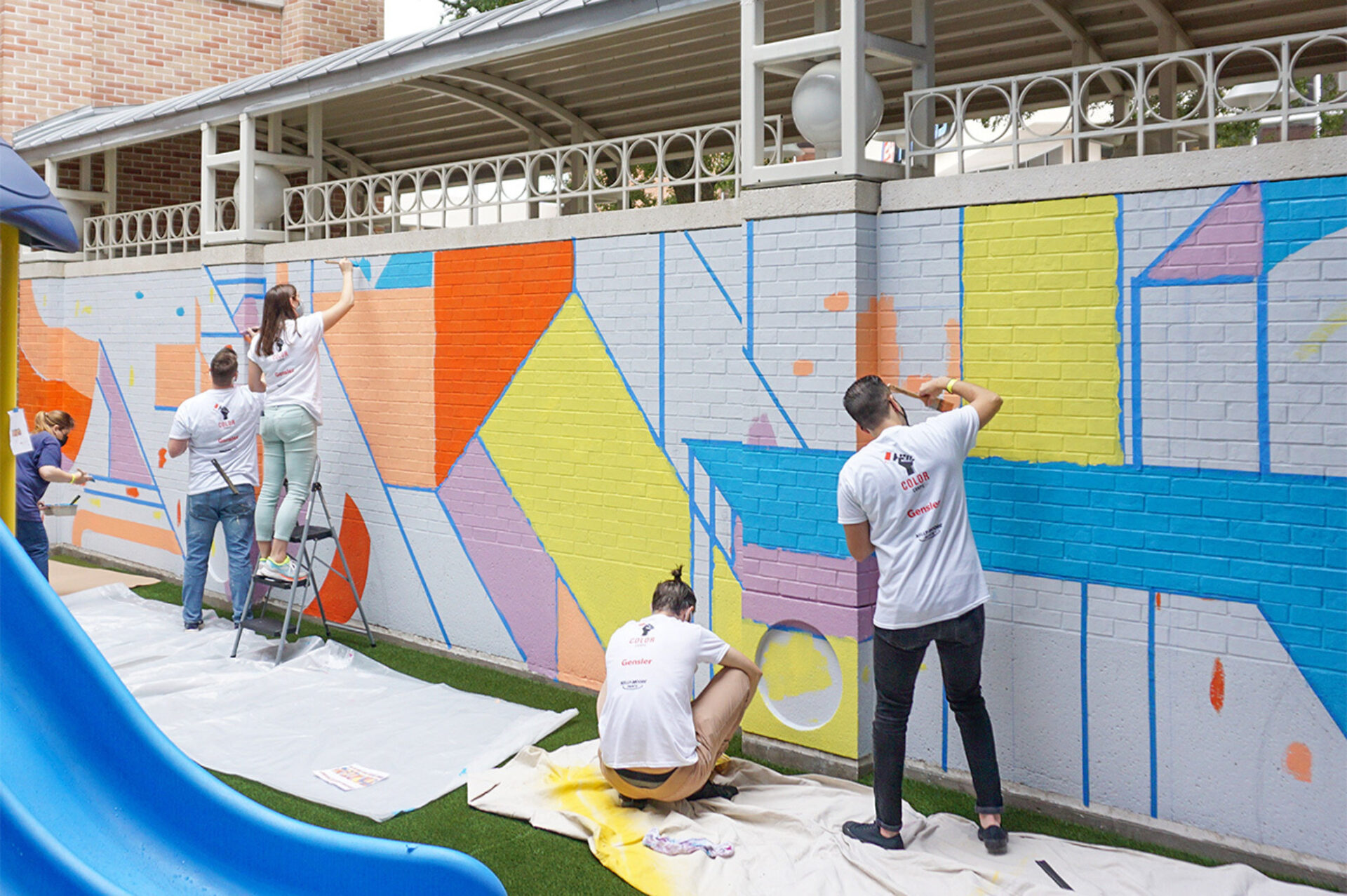
Image courtesy of Project Color Corps
What’s your rubric for “good color”? Is there a rule you intentionally break — and why does that exception work?
My rubric for “good color” is simple: it’s achieved when people feel an authentic, emotional connection with whatever you are applying color to. It makes a space or graphic or product memorable, impactful, and truly felt. The only rule I intentionally break is the rule of assumption — to act as if something is rote or that I should apply what is expected. My goal is never to simply treat color as surface but to reimagine what could be and to leverage color as a disruptive, forceful catalyst for change.
If there’s one project you’re most proud of for its impact — what is it, and why?
I don’t know that I can answer that with a single project because each one is profoundly meaningful to me. What I am most proud of is the transformation in the community’s self-perception. We have done projects where the transformation of the exterior is staggering, but the true impact is internal. I am proudest of the moment when a child looks at a completed wall and says: “My school is beautiful, and I did it.” [When working on a school, Project Color Corps sits with students and community members to talk about color; from those conversations, they create a color and pattern scheme that reflects the people and place.] That is the essence of Project Color Corps: to use color to empower them and enable them to see the space — and themselves — as a reflection of their inherent strength and beauty.
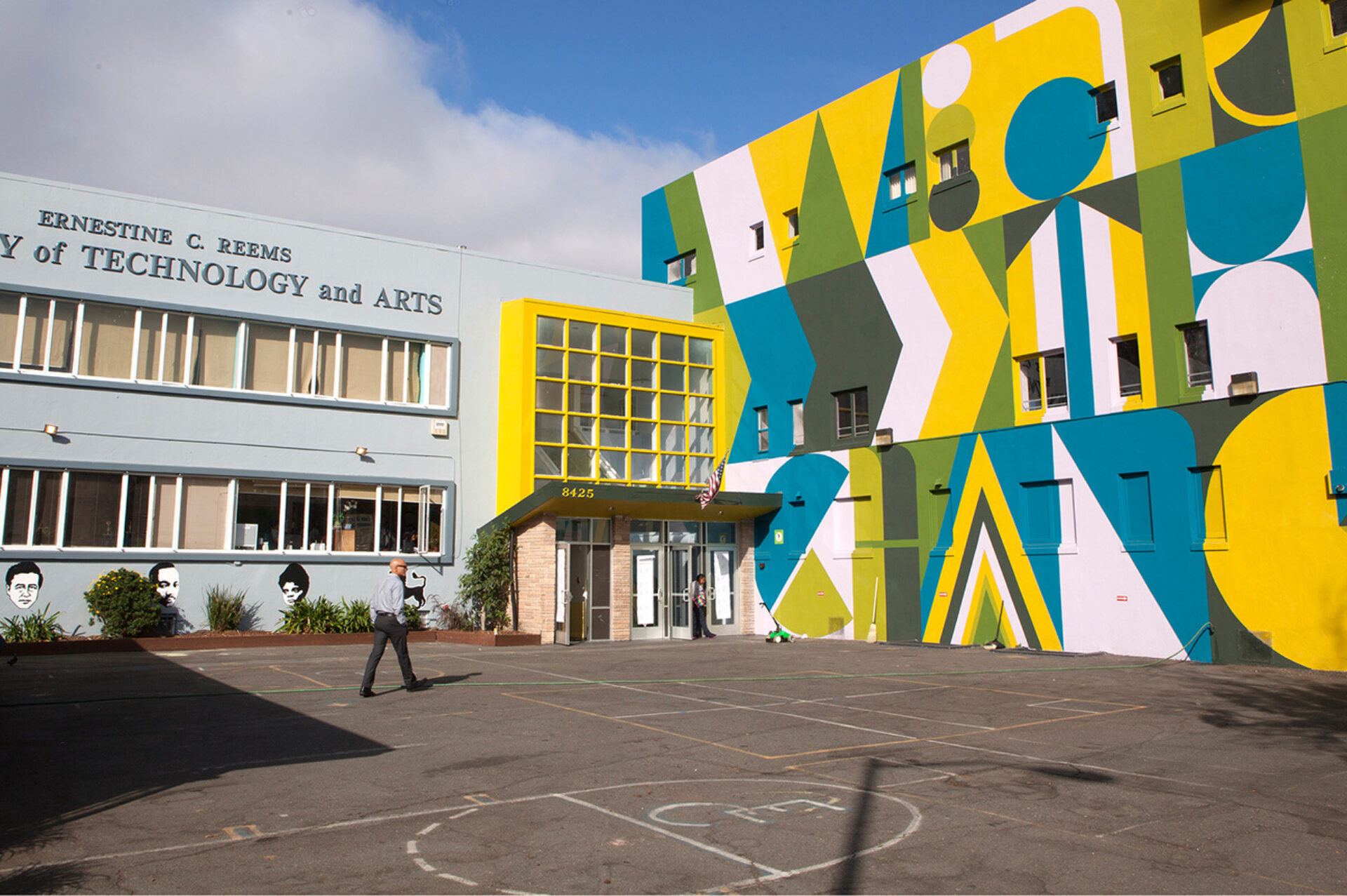
Image Courtesy of Project Color Corps
For designers working on civic or education projects: What’s one repeatable tactic from your playbook (and one you wish more teams would try) to turn everyday spaces into places people want to be?
I am deeply respectful of designers and their process. The one repeatable tactic I have found that works for me is emotional inquiry. It's not enough to ask, “What color do you like?” The tactic is to slow down and design the process to be inclusive, spending time to listen to the emotional needs of the community and involve them in the entire decision-making process, as well as the implementation process. We need to address the abundance of civic projects that default to institutional beige or grey, creating visual deserts. I wish we would use color more intentionally as a powerful tool to create pride, joy, equity. and belonging.
What’s a color you’ll defend to the death?
I don’t have a specific color I would defend to the death. I would say I would defend color itself to the death because I still believe it is one of the most powerful, immediate, and fundamentally underutilized mediums in our society. It’s one of the most democratic forms of art – it has the power to shift a mood, communicate a story, and transform an entire environment in a single instant.
Related Articles
-
Rapid Fire with Yinka Ilori
First instinct, no overthinking: Yinka Ilori takes us inside his Dunelm collection -
Rising Stars: IIDA Members Going Beyond
Get to know designers moving the needle in advocacy, sustainability, mentorship and more -
Perspective: Design Superstars
These design superstars have set themselves apart with their dedication to doing what it takes to make the world wonderful -
Inside the Lives of IIDA Chapter Leaders
Guilty pleasures, small rituals, things they can’t live without — chapter leaders take us inside their days -
We Need More Third Spaces
Three designers talk about their favorite third spaces and share design tips to foster connection -
Nature, By Design
How one landscape designer is bringing the outdoors back to the people — one urban riverbank at a time