
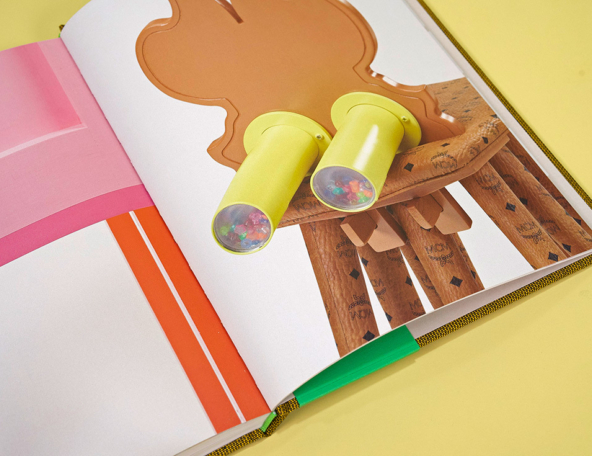
Detail of "Big Shoes to Fill 'Bata Nla Lati Kun' !!" chair, which symbolizes the weight of family expectations, from Ilori's book Chairman. Image courtesy of Yinka Ilori.
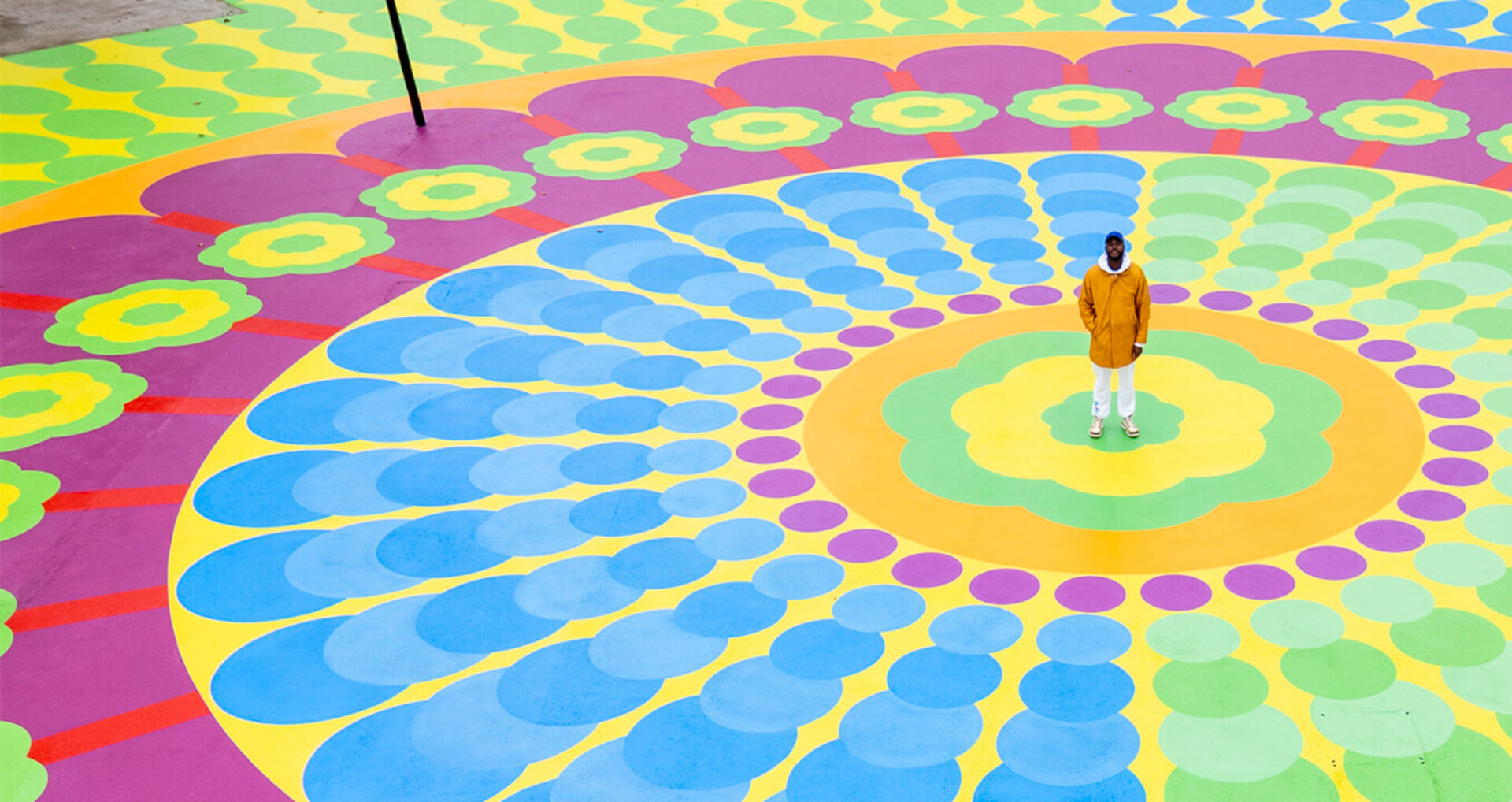
(Above: Yinka Ilori's "Walk With Your Dreams" installation at Station Square for Milton Keynes City Council. Image courtesy of Yinka Ilori.)
Ask Yinka Ilori what he is most curious about right now and, perhaps surprisingly, he doesn’t say color. He doesn’t say furniture or public space. He says memory: how we make it, how we share it, and how we hold on to one another as more of daily life becomes automated, mediated, and increasingly easy to navigate alone.
It is a question that casts his work in a different light. Color, in Ilori’s hands, becomes less an aesthetic signature than a social tool — one capable of warming up a room, opening a dialogue or, as he puts it, filling a dance floor.
What follows is a conversation about color, yes, but even more, about what we carry with us, what we risk losing, and the role design might play in keeping us connected.
This conversation has been edited and condensed for clarity.
Vasia Rigou: Your work has always been rooted in storytelling and optimism. Looking back, how has your thinking about design changed over the course of your career?
Yinka Ilori: I think, more or less, it hasn’t changed. If anything, my career has cemented the belief I’ve always had that good design is for everyone.
The importance of storytelling in design and art has always been at the forefront of my projects and creativity. I think that comes from my upbringing and childhood, which were very much centered around storytelling, folklore, and affirmation, and that has crept into my work. Good design, art — anything creative — should be accessible for all communities.
I think, especially during the pandemic, I didn’t always believe artists and designers had a place, or were always a beacon for change. But during COVID, I really saw the importance of public art in public space, and how it could serve as an anchor for people to see hope in times of despair and confusion. So more than ever, I really, truly believe artists have a huge role to play in society. They are the ones who I believe can change the world and make it a better place.
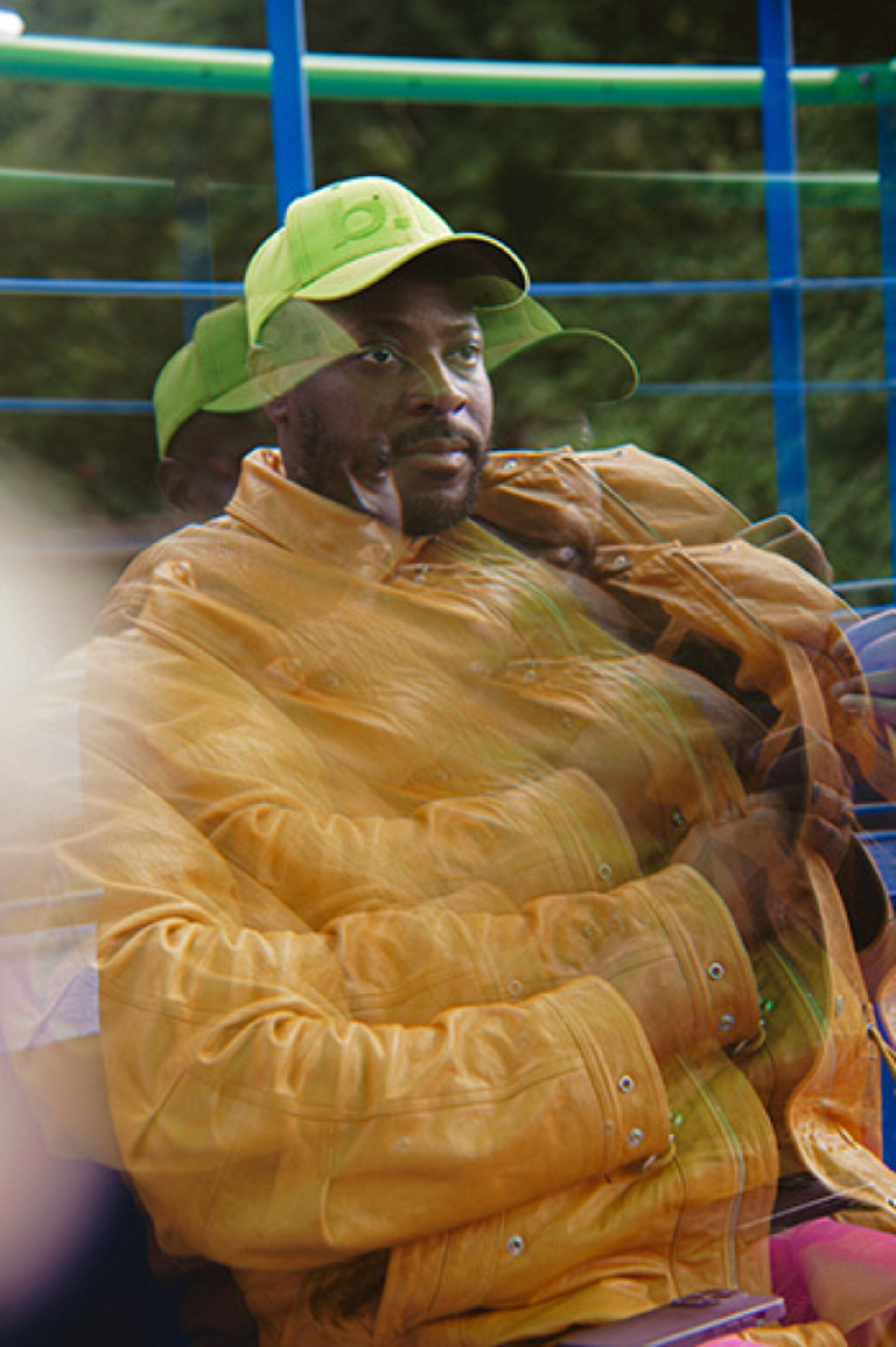
The British-Nigerian multi-disciplinary artist and designer Yinka Ilori. Photo by Nick Martin.
VR: Was there a specific moment when color became inevitable for you — when you realized it had become more than one element of your work?
YI: Early in my practice, the use of color sometimes got confused with something that just looked pretty. People misunderstood the importance of color and how it can uplift communities.
For me, it’s a way of touching people through memory, creating a sense of belonging, and starting conversations when it might otherwise be difficult to have an open dialogue. I always feel like color is this tool that softens conversations and allows people to feel more open and safe.
I really saw the shift when I was designing chairs, when I was known as “the chairman,” maybe eight or nine years ago. I was spending my time around London collecting chairs and looking at folklore and words of affirmation to embed into them. That’s when I saw a shift in the way people saw color — and the way I used it.
Color was a way for me to open up conversation. It’s like when a DJ opens the floor: they play one song and suddenly everyone floods the dance floor. It’s the same with a color palette. You have a series of colors that make people feel safe and engaged, and you invite them into the conversation.
But it also goes back to my upbringing. I saw it in my mum and dad, their friends, my aunties and uncles — the way they used color in textiles and in what they wore. I saw the armor it provided them, but also the joy they were able to take from it and share with people in their community. Those were the two places where I really saw the impact of color firsthand.
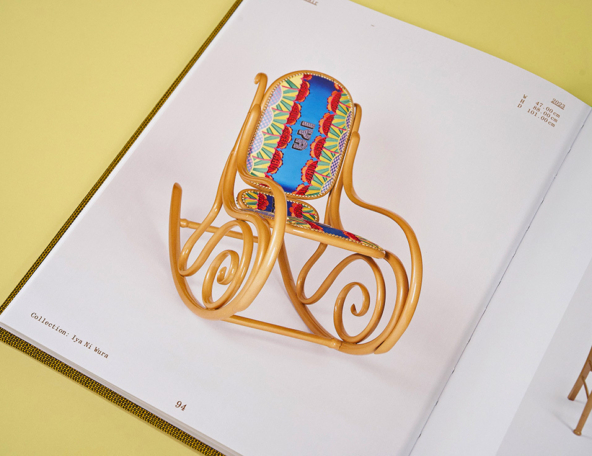
The 2023 “Iya Ni Wura” rocking chair celebrates Ilori’s mother. Image courtesy of Yinka Ilori.
VR: You talk about chairs almost as though they have lives of their own. Did that way of thinking about objects shape how you began approaching larger spaces, too?
YI: When I was creating chairs early on, it was less about function and more about combining folklore with objects and allowing objects to have their own sense of life and purpose.
I was looking at the deeper social context of chairs in communities, in public space, and within the home — how a chair can provide status or hierarchy, or give you comfort, or console you. The chairs became very sculptural, and in my eyes, I sort of saw these objects as people.
As my work moved into public space — whether it’s a pavilion, a playground, or a pop-up shop — the main goal became creating a place for community. I think about allowing the audience or the user to have a conversation with the pavilion, and the pavilion to have a conversation with the people. How do they integrate into the space? How do they move through the space? How do they have an experience that is enduring, but can also be passed from one person to another?
The common thread with everything I’ve created is that I want people to find some sense of purpose, belonging, or connection.
That idea of experience and memory is something I’ve been immersed in from a young age. Color, textiles, storytelling, objects, community, affirmation — those are the threads I’ve been sewing with for a long time, trying to make something beautiful.
VR: And those memories can cross cultures, too. Your memories aren’t necessarily my memories, and your culture isn’t necessarily my culture, but we can connect through an object or a piece of furniture or design. Is that part of what you hope stays with people after they experience your work?
I’m thinking about NeoCon a couple years ago and those amazing little bags you designed in collaboration with Momentum Textiles and Wallcovering. You’d see someone carrying one and immediately think, Where did you get that?
Ilori: NeoCon! Yeah. That’s crazy — you’ve just reminded me of that.
I think that’s the proof. We created these bags that were essentially freebies for guests, but people want to feel part of something. They want to feel part of an experience, part of a moment, part of the journey.
For me, that’s the power of design: it leaves you wanting to feel part of it.
That was one of those magic moments where there was this simple object, but people felt such a strong connection to it. I still see people wearing or using those bags now, and it takes you back to that moment.
That’s why design and art are so powerful. They can transport you to a year, a time, or a place just by looking at the art, the patterns, and the colors.
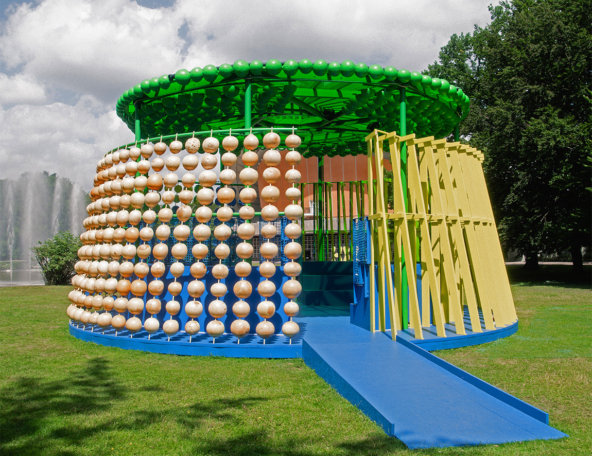
Ilori's "Reflection in Numbers" pavillion for Haus der Kulturen der Welt is a multisensory experience inviting visitors to explore themes of belonging and exlusion. Photo by Nick Martin
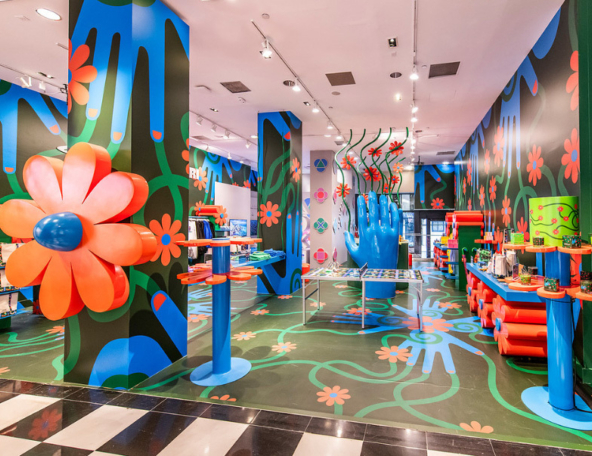
Ilori reimagined the flagship Bloomingdale’s store for their Just Imagine campaign. Photo by Matthew Carasella.
VR: What are you most curious about right now?
YI: I’m curious about the new ways people are going to make memories.
And I’m curious about how people are going to connect with themselves and with each other, and how we create better tools for well-being.
It’s funny — there was a meme on Instagram about how we live in a time where everyone asks AI for everything. You could ask, How many times should I brush my teeth? You probably know the answer, but you still go to AI and ask. And I’ve found myself doing the same thing.
Everything is just so easy now. Every question you have, you can ask AI. So I’m curious: What does that future actually look like? How are people going to connect with each other? And what role do design and art play in that conversation?
A lot of my thoughts now are around hospitality and experiences — hotel experiences, for example. What does that look like? How do we protect our well-being, together or as individuals? How do we make memories in this new age of AI and technology?
You see driverless cars. You go to stores and there are automated tills where you don’t need to speak to anyone. I’m slowly sort of seeing us come to a point where actually nobody wants to interact with each other anymore. And I think: What does that say about community in the next 10 or 20 years?
It takes me back to where I grew up in London. When I was a kid, it was all about community.
I took my project manager there, and I remember pointing out that when I was growing up, nobody had a wall in their garden. Everyone could engage with their neighbor. But when I went back a couple of weeks ago, everyone had a wall up, so you couldn’t engage with your neighbor.
I saw an old neighbor, and she said to me, “The community isn’t really here anymore. It’s gone. It’s going.”
That made me sad, because I thrived off my community. I grew because of my community. I felt strong with my community. But now it feels as though society is pushing everyone in the other direction.
So there’s definitely curiosity there for me. What does community look like in the future?
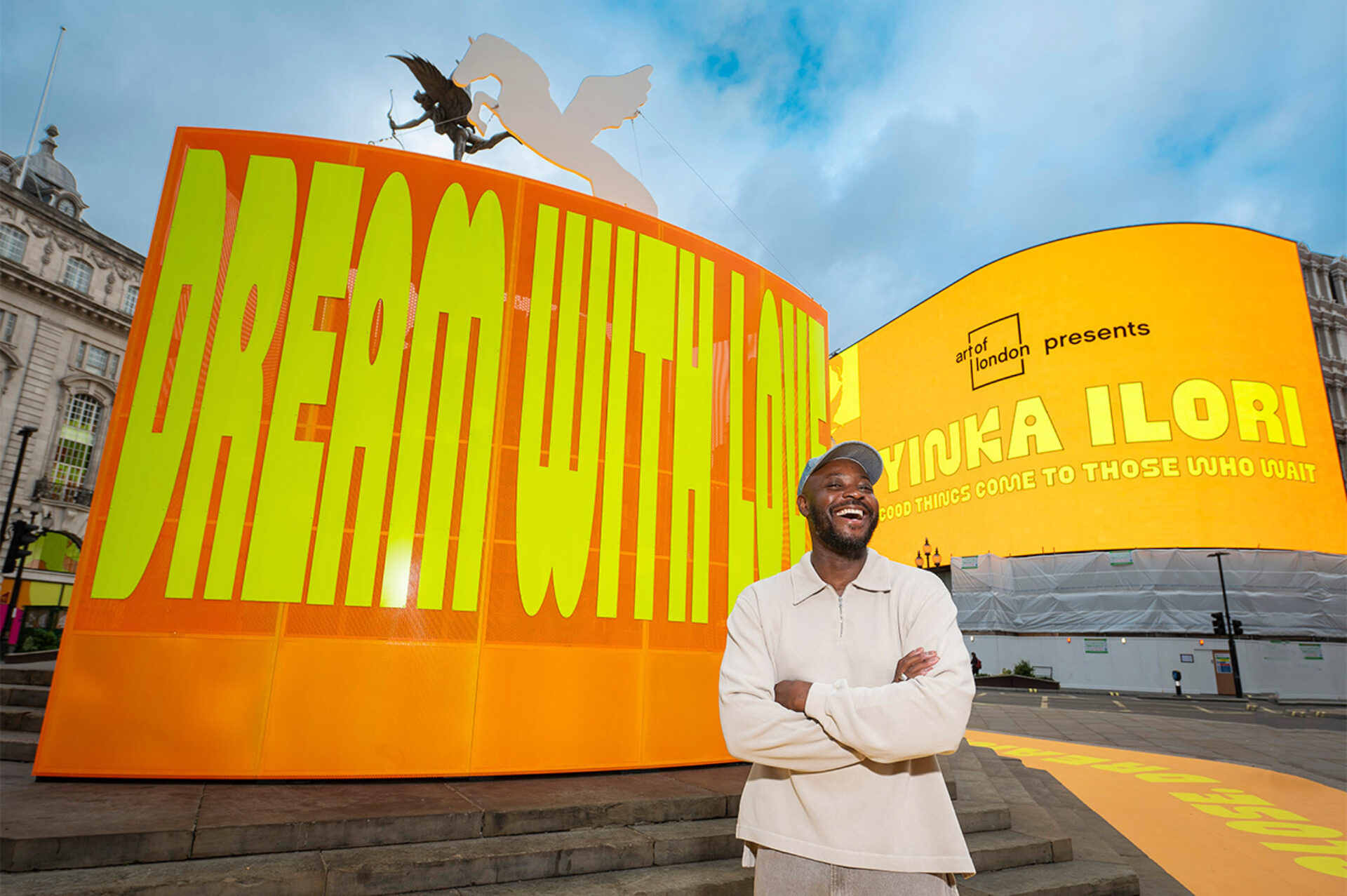
Ilori transformed Piccadilly Circus in London with an uplifting installation for Arts of London in 2024. Image courtesy of Yinka Ilori.
VR: And it feels like so much of community has moved online now, which can become its own kind of chaos.
YI: Exactly. And that’s why I think play is really important right now.
Young kids in this generation are flooded with Netflix and Disney and apps. Everything is right there in their hands, and there isn’t always room to just play.
That’s why I think playgrounds, outdoor play, and being outside are so important. If there’s something we can do for the next generation, I think it’s encouraging outdoor play and building communities outdoors.
VR: I have a little one, and that’s exactly what we’re trying to communicate. Go outside. Play. Go talk to that kid. Borrow that toy.
YI: Yeah. It’s so important. Important stuff.
VR: One last question. Is there an object or piece of furniture in your home that tells your story better than anything else?
YI: Oh my God. One object? Oh my gosh.
There’s this little incense holder I have. It’s gold and very small, with beautiful engravings and carvings on it. There’s some sort of rabbit on it — I don’t even know what it means.
I don’t know why it’s so sentimental to me, but I think it reminds me of the early days of my practice, when I was obsessed with designing chairs. It reminds me of my beginnings, traveling around London and dreaming of being an artist.
Every now and then it pops up in my house. It appears, disappears — the cleaner comes around and moves it somewhere less visible — and then it appears again. And every time I see it, it’s this nice little reminder to keep chasing your dreams.
There’s something spiritual about incense, too. The smell reminds me of my youth. It reminds me of going to church and being with my community.
Related Articles
-
A Chapel With a Problem Worth Solving
What do you do to harmonize and bring together old and new? -
5 Spaces That Defined Milan 2026
These installations revealed that the most compelling interiors didn’t just display objects — they shaped how visitors moved, looked, and felt -
11 Award-Winning Products That Captivate
Award-winning designs from IIDA competitions, from armchairs to wall sconces to washroom accessories -
Best of the 2025 WestEdge Design Fair
Our biggest takeaways from the show: best of product and booth design, and the importance of networks -
5 Designs with a Big Impact
Creative solutions furthering accessibility, sustainability, community development, and equity -

THE Gift Guide for Designers
Design-forward gifts for everyday rituals (and every kind of design lover)