This article was originally published in the July 27 issue of officeinsight.
More than half of U.S. employees now use AI at work. Gallup’s latest workforce data puts the number at 52%, up from just 27% two years ago. That’s the first time it’s crossed the halfway mark. That shift happened fast, so fast that most workplaces haven’t caught up yet.
But that 52% figure isn’t the only attention-grabbing stat. Among employees who’ve folded AI into just one or two tasks, 45% report a real productivity boost. Among those using it for seven tasks or more, that productivity number climbs to 90%. Writing and research, AI’s most common entry points, post notable productivity gains. But the highest gains are among employees who use AI for coding, automation and slide deck creation.
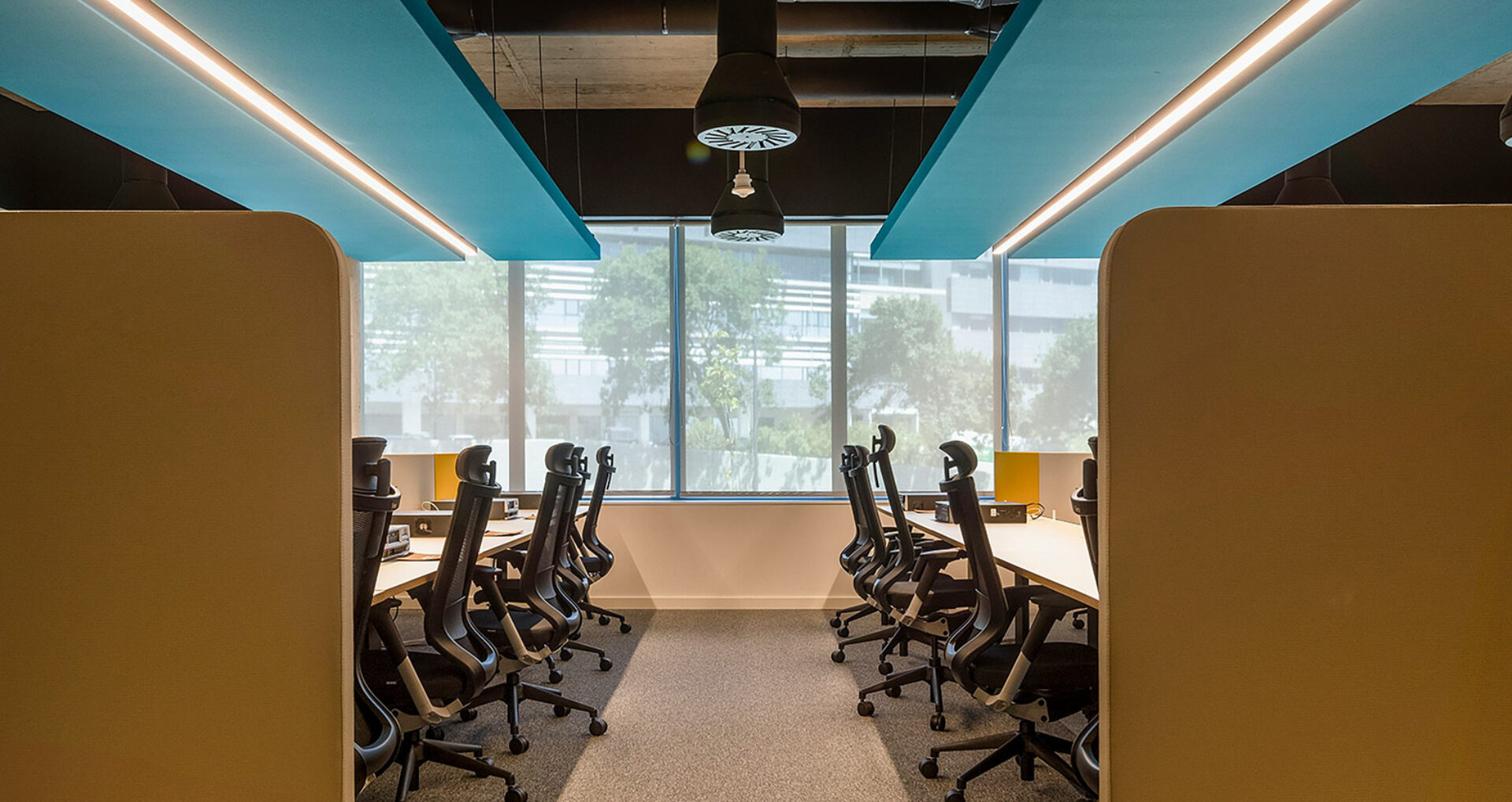
What we’re seeing isn’t a usage gap. It’s a velocity gap. The gulf between those who regularly use AI and those who don’t is widening fast. And for the people who design, furnish, and build out workplaces, that gap is about to become a design brief, impacting how we shape the built environment. Can the spaces you’re designing now hold two very different workflows running at once, often between people with the same title and the same team?
Organizations are catching up to AI adoption, but unevenly. Forty-seven percent of employees say their company has integrated AI tools, up from 41% last quarter. That means more than half of U.S. workplaces are still asking employees to figure out their own pace with advanced tech, without much structure, or space, built to help them.
The workplace has always accommodated some variation in pace. What’s new is the scale of the divergence. On the one hand, there are employees running fast, fluent and confident in AI output, generating and iterating at a clip their workspace was never built for. On the other, there are employees who approach AI skeptically, or not at all.
Research from McKinsey adds another wrinkle. The employees moving fastest, the heavy AI users, report the highest engagement and the highest flight risk. They are up to 10 points more likely to quit in the next few months than non-users. They know exactly what they’re worth. Meanwhile, the workers who haven’t built fluency are increasingly working in a different information environment than their teammates.
More than half of U.S. workplaces are still asking employees to figure out their own pace with advanced tech, without much structure, or space, built to help them.
Mark Bryan
Before anyone designs exclusively for the fast lane, the research offers caution. McKinsey’s most recent work on AI and cognitive load warns that heavy, unstructured AI use can produce something researchers call “brain fry,” a measurable dip in focus and decision quality when people offload too much thinking to AI tools, with early evidence of longer-term costs to memory and reasoning.
In other words, fast and intense AI use isn’t automatically better. There are documented downsides. But tech fluency can be valuable when the surrounding environment is built to sustain it, with room for employees to recover, verify and think without the machine. That’s the same operational depth that separates visually impressive spaces from ones that actually perform under pressure.
For designers, dealers and manufacturers, all this fresh data means the design brief is evolving. Instead of solely considering how to equip workplaces for advanced tech integration and the realities of hybrid work, we also need to build offices for a workforce moving through AI at different speeds in the same space.
High-frequency users need deep-focus environments that include quiet, voice-prompt-ready booths where they can generate and iterate without friction, paired with collaborative review rooms where that growing volume of machine-assisted output gets validated, edited and checked before it goes anywhere. The slower-adopting cohort needs its own layer of support, such as micro-training desks and guided help points. If we get this balance wrong, we end up designing workplaces that serve the employees already ahead. Get it right, and we create infrastructure that closes the gap instead of widening it.
Data, like life itself, keeps moving. The stat about 52% of employees using AI will probably look conservative within a year, maybe within a quarter. What won’t change quite so fast? The physical and cultural infrastructure organizations have in place to support different workflows running side by side.
The real question is about readiness, not technology. Most organizations can probably tell you how many employees have logged into an AI tool. Far fewer can say whether their space, their training and their review processes are prepared to accommodate usage gaps.
IIDA’s new Futures Readiness Index was designed to help professionals across the built environment consider gaps like this, and to evaluate their ability to perform under present and future conditions (and help their clients do the same). The Index includes hundreds of data points, operating conditions and future pressures, culminating in a readiness assessment organized around a central question: What are we ready for, and what are we not?
The two-speed workplace is one of the first tests of that question. It won’t be the last.
Related Articles
-
3 Shifts Shaping the Future of Education Design
How the next generation of learning spaces can be more responsive, restorative, and flexible -

Visionary Futures with Kimball International
Adaptive and resilient design are the centerpiece of this annual award -

It’s Here: The Futures Readiness Index
We explain what the Index is, how it works, and how you can harness it to meet your specific needs and goals -

A Futurist’s Origin Story
How Mark Bryan, IIDA’s chief research and strategy officer, found his way to the future -
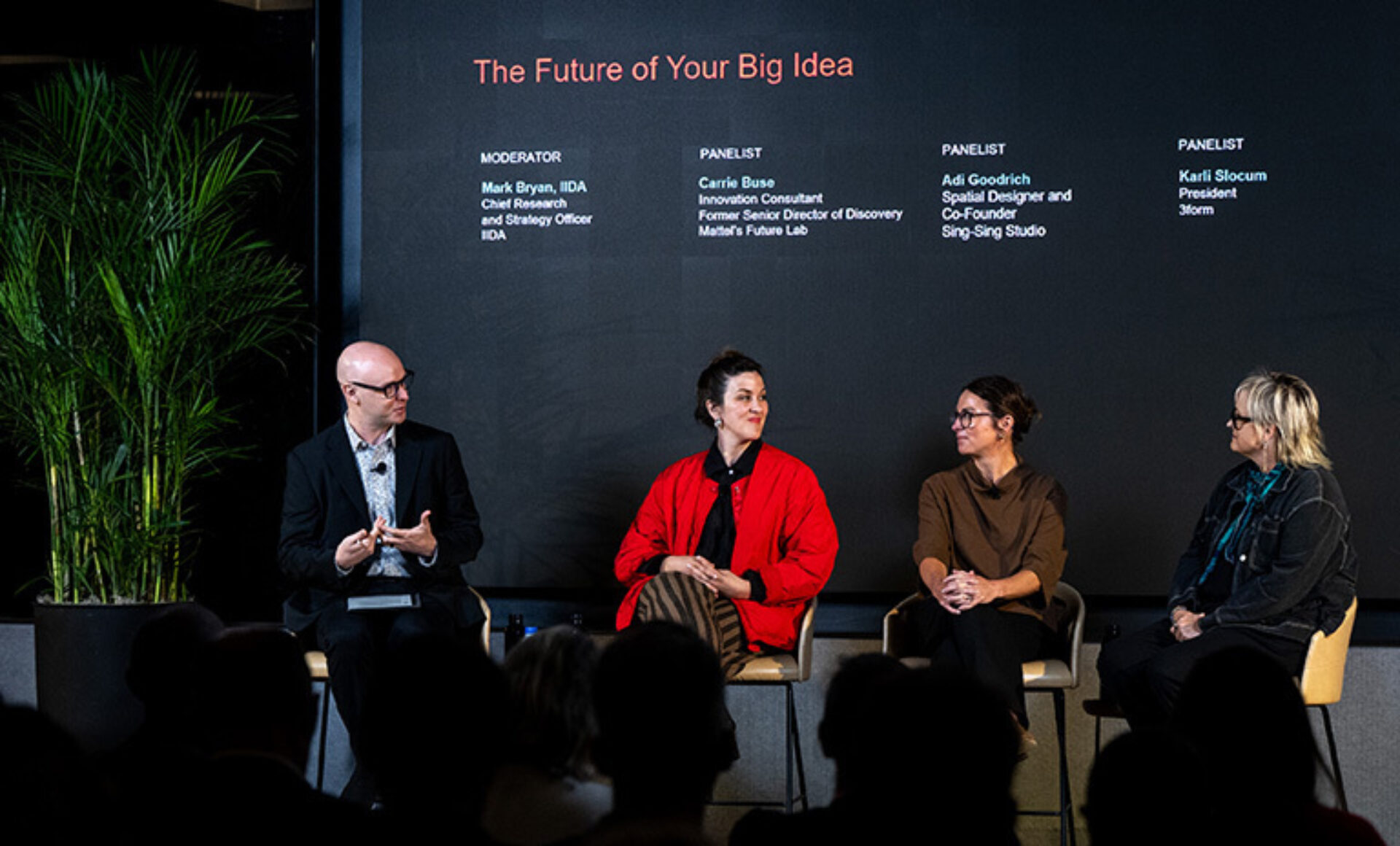
The Future of Your Big Idea
Inside IIDA’s Collective Design LIVE during Chicago Design Week -
Designing Workplaces That Actually Work
Step inside 3 award-winning corporate spaces across the globe that were recognized in IIDA design competitions