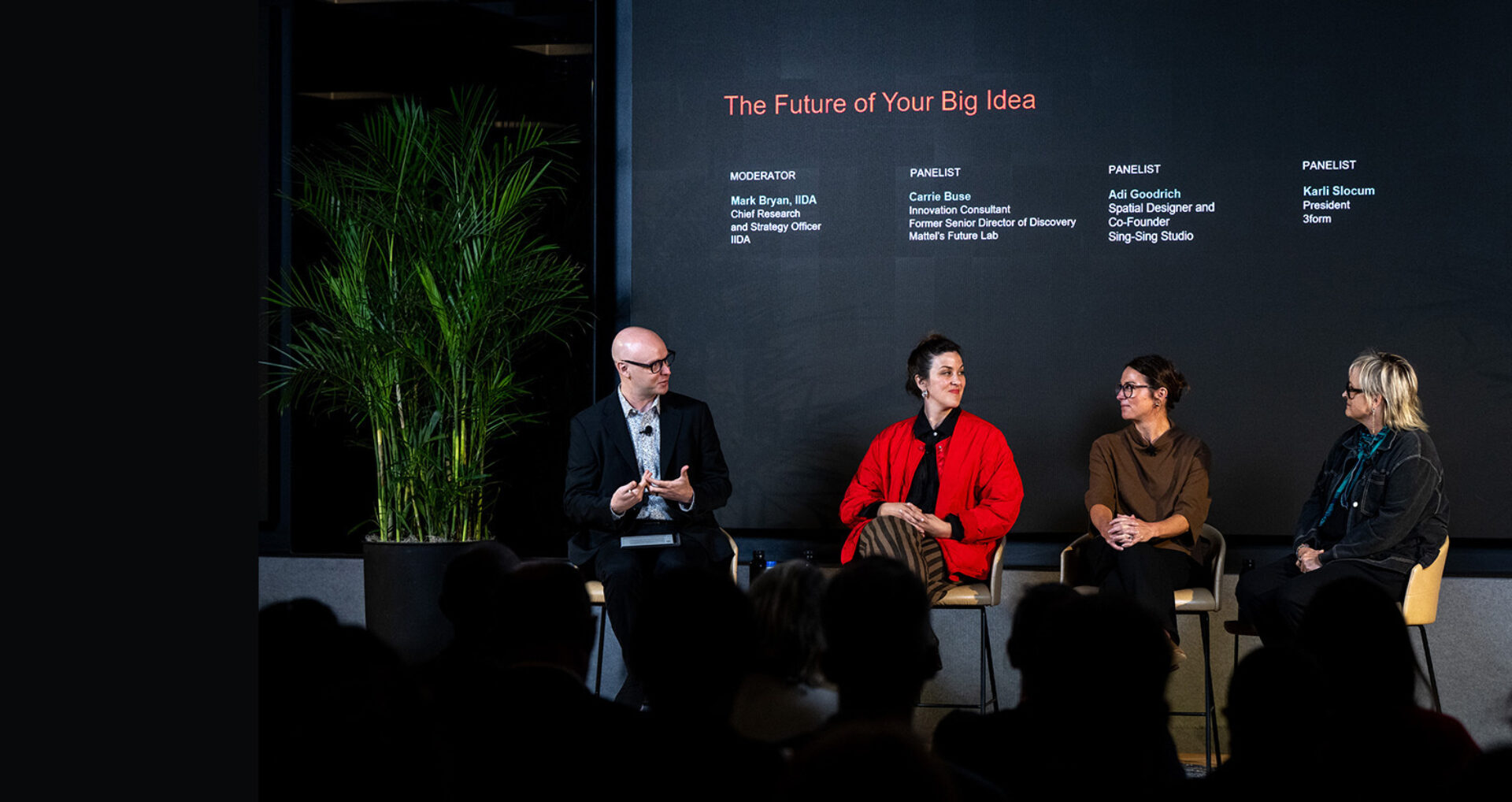
IIDA’s live episode of Collective Design at this year’s NeoCon began with a question every designer, entrepreneur, and creative leader eventually has to face: How do you know when an idea is worth pursuing — and how do you move it from spark to something real?
Moderated by Mark Bryan, IIDA, IIDA’s chief research and strategy officer, the conversation brought together Adi Goodrich, spatial designer and co-founder of Sing-Sing Studio; Karli Slocum, president of 3form; and Carrie Buse, former senior director of discovery at Mattel’s Future Lab, for a practical, energizing discussion. They dived into innovation, risk, research, AI, and the creative courage it takes to begin. Across disciplines, one message came through clearly: Big ideas are not born fully formed. They are observed, tested, challenged, refined, and brought to life through action.
For Goodrich, whose work spans interiors, furniture, large-scale events, and film sets, the starting point is not a trend report (she dubs them “pretty lame”), but genuine curiosity. “Are you really, really stoked about this?” she asked, urging designers to pay close attention to what consistently draws them in. “You’ve got to love it,” she said — the research, the material, the problem, the world you are trying to build. That kind of obsession is what gives an idea depth. To get her creative juices flowing, she described taking long walks through Los Angeles, where she lives, noticing strange material juxtapositions, storefronts, colors, and textures that would never appear on a Pinterest board. For Goodrich, looking closely at the world is how designers begin to build a language of their own.
Buse, whose work has helped shape the future of physical and digital play, pointed to observation as one of the most valuable tools in any innovation process. At Mattel, she explained, new ideas often emerged not from what children said they wanted, but from what they were already doing. Video Girl Barbie, for example, had a camera lens in her necklace and grew out of watching kids film the way they played with dolls. The concept emerged from leaning into existing behavior to find the hidden opportunity.
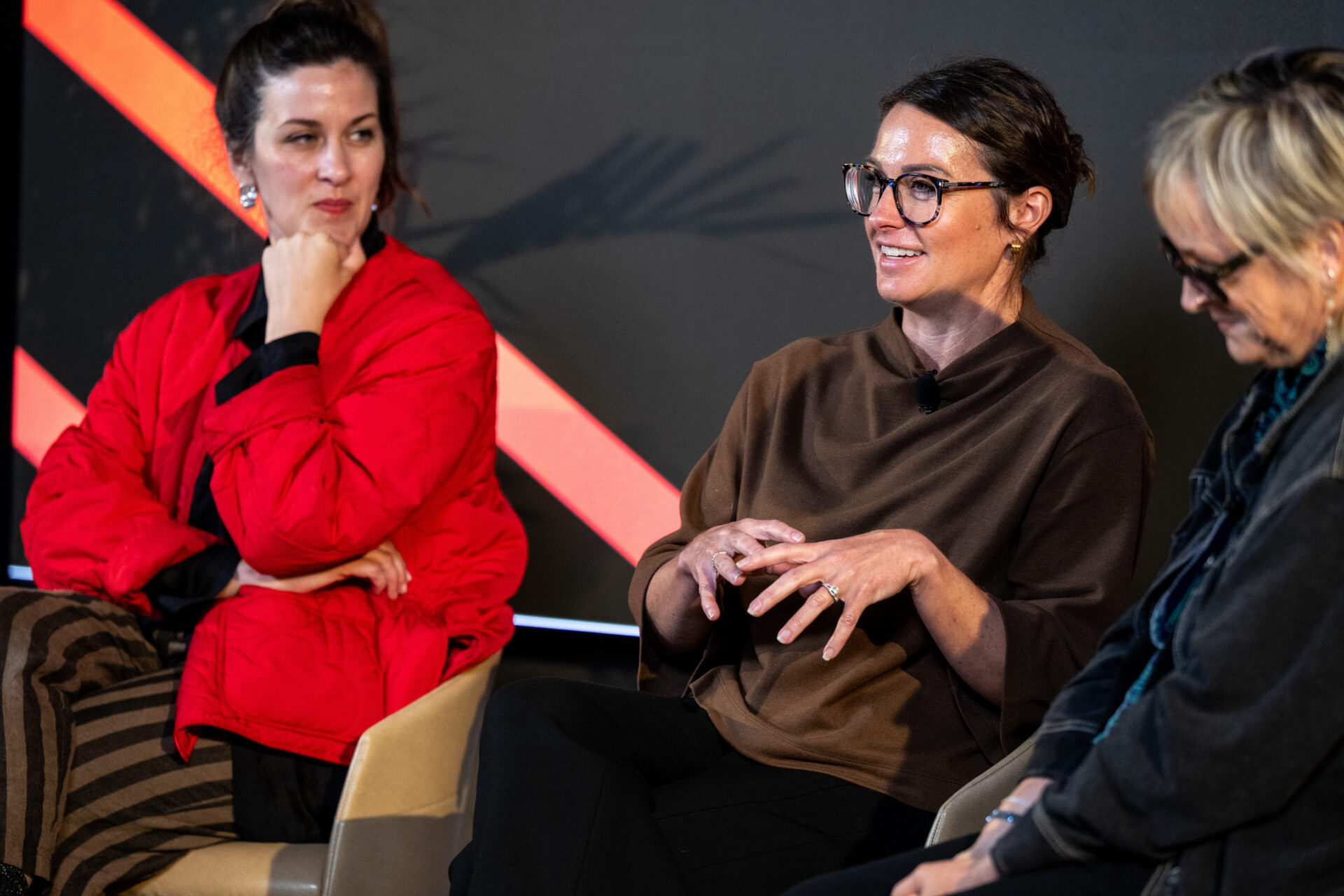
Later, when asked about aha moments, Buse offered a more personal image: “I’ve got the rug from my mother’s house that I used to play with Barbies on,” she said. “I have that in my home office, and I sit down on that floor… so I can see the world from that perspective.” It was a reminder that innovation is not only about looking forward. Sometimes, it is about returning to the point of view that first made imagination feel possible.
For Slocum, big ideas also depend on the people around them — and on the ability to see what others may not be able to articulate. She emphasized the importance of listening to customers, employees, and experts with different perspectives, while also building a team that will challenge both you and your ideas. “It’s very rare that people are going to tell you exactly what the problem is,” she said. Instead, designers and innovators have to listen, observe, and notice the workarounds people create in real time. “When you surround yourself with people that just want to tell you what they think you want to hear, you’re going to go wrong,” she added.
The panel also made a compelling case for failure as part of the creative process. Slocum described 3form’s virtual showroom as a commercial failure that later became an essential learning tool for the company’s visualization software. “I’m really glad we did it,” she said, because it revealed the real problem designers needed solved. Goodrich, too, pushed back against the fear of putting imperfect work into the world. “What are you doing if you’re just sitting back” because you’re afraid to fail? she asked. As Buse noted, sometimes “the thing that you think is the big idea actually turns out not to be the big idea.” Failure, in that sense, is often how designers discover what the idea was really meant to become.
The conversation also turned to timelessness — how can designers create work that can hold up beyond the immediate moment? For Goodrich, the answer begins by looking backward and asking questions. She revisits and pulls apart past designs, wondering, for instance, “Why does this image from the Eames studio still look so fresh? Wow. Well there’s natural materials, there are hard corners and soft corners, the lighting is this certain way.” Classic materials, old images, and printed ephemera are all part of a larger design vocabulary, helping designers build spaces and objects with depth, memory, and staying power.
AI entered the conversation as a useful tool — not a replacement for judgment, creativity, or human responsibility. Buse described using it as a creative sparring partner, something that can identify gaps in logic or help translate an idea visually so collaborators do not have to “read my mind.” Used intentionally and ethically, she suggested, AI can help designers stretch what they are able to imagine. “I like this idea of AI actually amplifying” human creativity, she said.
So what should designers do with a big idea? Pay attention. Ask better questions. Prototype with what is already available. Share the idea before it feels perfect. Let feedback shape the next version. Most importantly — just start somewhere. “Don’t let perfection get in the way of greatness,” Slocum said. Goodrich put it even more simply: “Just do it. Just start. Because that’s how you learn, develop, and grow.”
Related Articles
-

3 Shifts Shaping the Future of Education Design
How the next generation of learning spaces can be more responsive, restorative, and flexible -

Visionary Futures with Kimball International
Adaptive and resilient design are the centerpiece of this annual award -
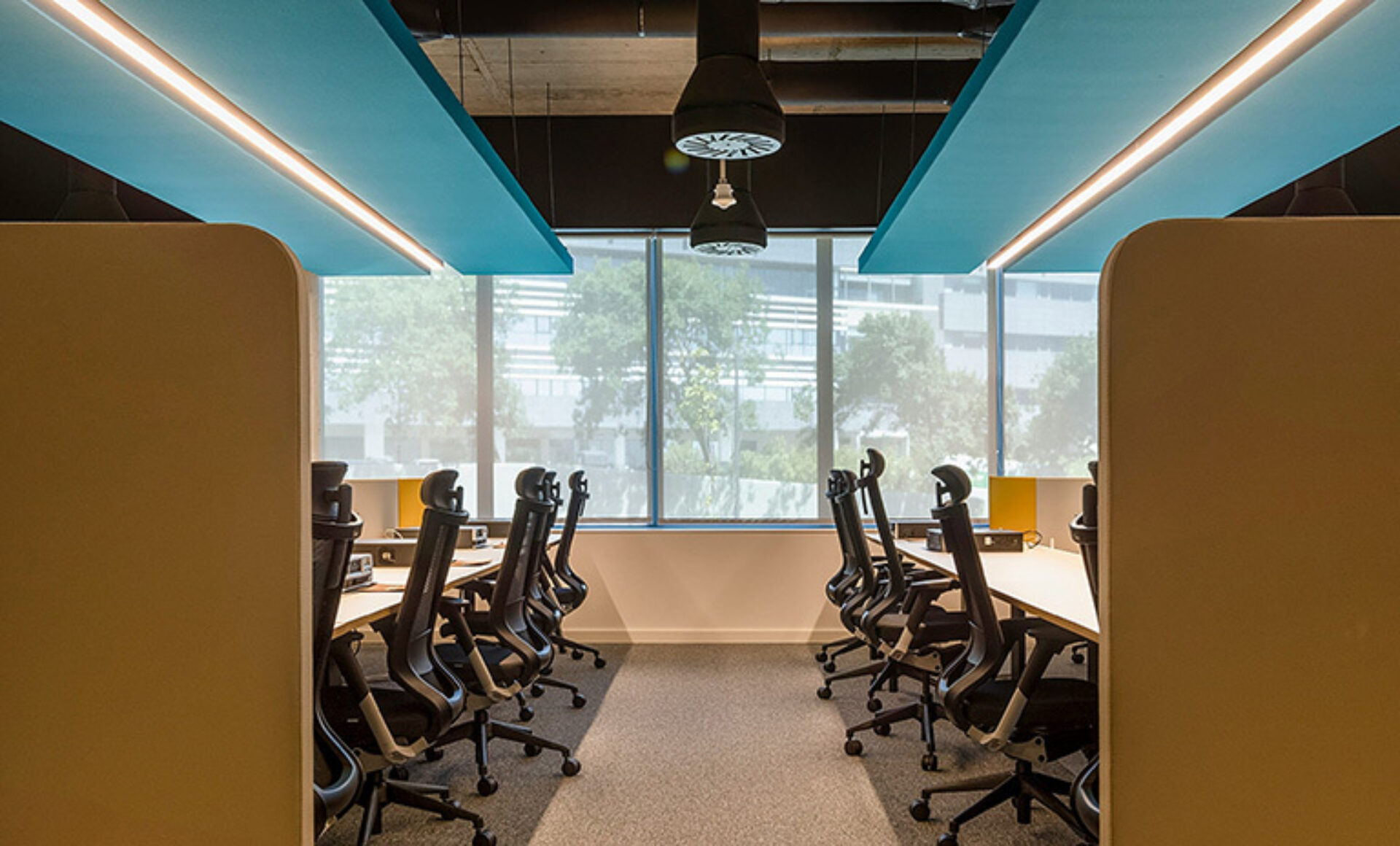
The Two-Speed Workplace Is Here
The gulf between those who regularly use AI and those who don’t is widening fast. For designers, that gap is about to become a design brief. -

It’s Here: The Futures Readiness Index
We explain what the Index is, how it works, and how you can harness it to meet your specific needs and goals -
A Futurist’s Origin Story
How Mark Bryan, IIDA’s chief research and strategy officer, found his way to the future -
Jessica O. Matthews Says Take it Personally
At her 2026 NeoCon keynote, she explained why the best ideas often begin with what we refuse to “get used to”