
You wouldn’t drink from a fire hose, but modern life sure can feel that way. Every day, we are inundated with information, from 24-hour news to infinite TikToks, continual Slack messages to countless emails. Meetings. Group chats. Messages from your mother. Ping. Ping. Ping. Ping. This is the soundtrack of our lives.
It can be alluring — and increasingly advisable — to step away, quiet the noise, or fully check out. But not for Mark Bryan, IIDA.
Mark Bryan is always paying attention. As IIDA’s chief research and strategy officer, and a professional futurist, it’s his job to stay attuned to all the changes in the world, from shifts in technology and climate to developments in economics, education, demographics, and culture. He keeps tabs on all of it, with a mission to assess how our lives will evolve in the next 5, 10, or 20 years — and pass that information along to designers and other professionals working in the built environment.
Through IIDA Futures, IIDA’s new foresight practice, Bryan shapes programs and tools that help professionals and firms stay ready for whatever comes next, to ensure resilience in the face of disruption. There’s the Certified Design Futurist course, built on the methods of notable quantitative futurist Amy Webb, which launched last year, and the Futures Readiness Index, a brand-new diagnostic tool published this week.
So, how does Bryan undertake all this future scanning, analyzing, and planning? By practicing strategic foresight, a rigorous, evidence-based method for identifying plausible futures. (Plus: he wakes up very, very early.) He reads everything from patent filings to trade publications and academic journals, in search of useful, trusted data.
That’s the how behind his work. The why is a longer story. One that begins in a hospital in Delaware about three decades ago.
Bryan grew up in Seaford, Delaware, a small town along the Nanticoke River that was once the nylon capital of the world. His dad was a hospital administrator, and as a kid, he toured a new medical tower at the facility where his father worked.
“There was this whole new place, this new experience, and I could imagine people walking in and out,” Bryan says. “I could imagine the care that they were going to be given.”
And just like that, his interest in commercial interiors was seeded. After college at Virginia Tech, he relocated to Ohio and went on to practice interior design for 20 years, working across various sectors, from corporate spaces to senior living. (To this day, a whiff of drywall can inspire nostalgia: “I still miss that smell every now and then,” he says, “that fresh construction smell.”)
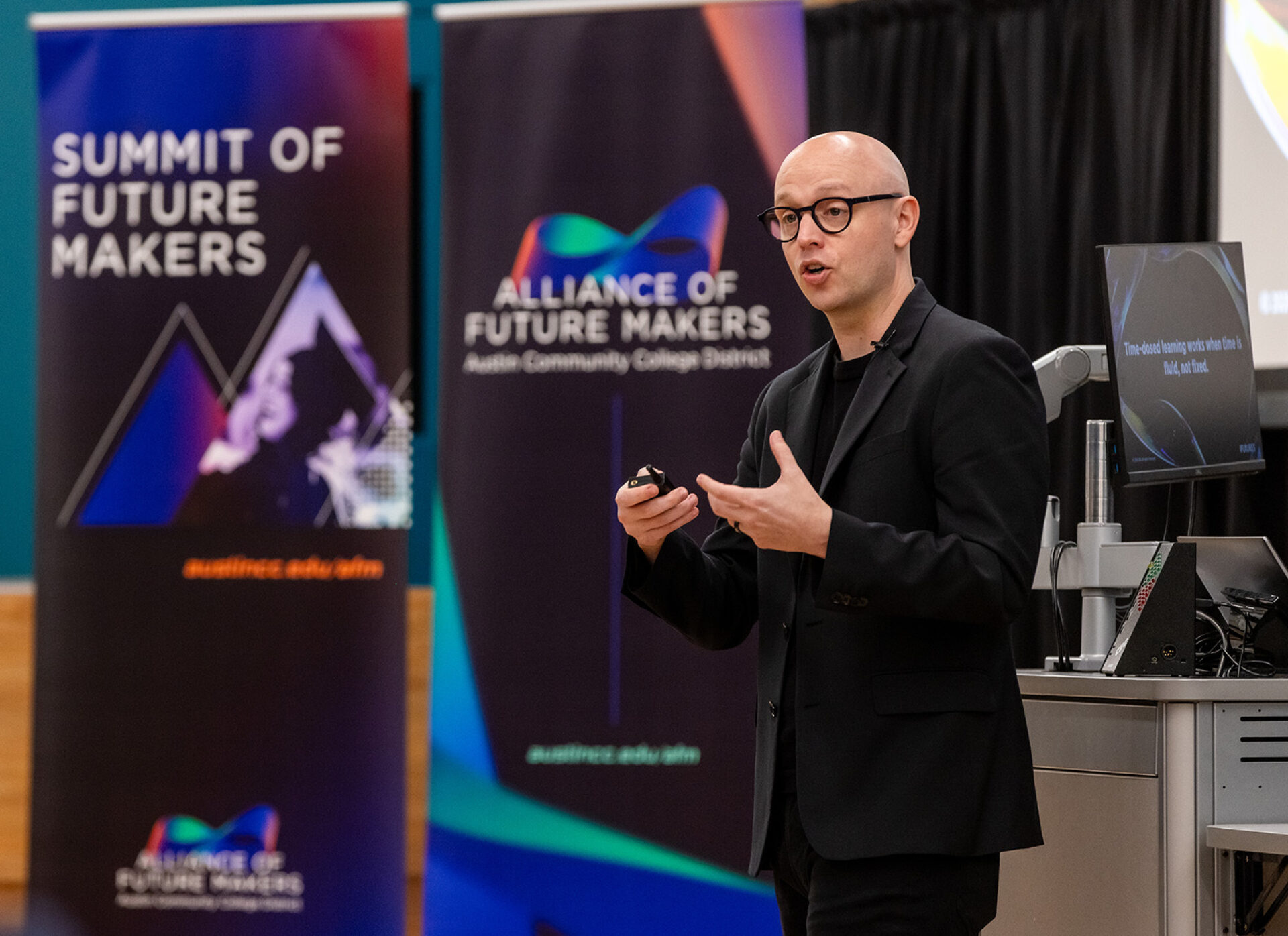
Mark Bryan at the inaugural Summit of Future Makers conference in April 2026, hosted by the Austin Community College District.
But after several years as a designer, he faced headwinds. His clients were getting stuck. They struggled to envision the future in our fast-changing world, to make the best decisions for what might lay ahead. Bryan sought out trends, wrote white papers, generated insights. But those didn’t paint a full picture. Then came the aha moment. At a conference in California, about seven or eight years ago, he came across two futurists. They way they spoke — weaving together data, trends, and storytelling to create dimensional, clearly articulated future scenarios — unlocked something.
“I remember sitting in the audience, and it was one of those moments that just smacks you in the forehead,” he says. Strategic foresight was the missing tool designers needed to help their clients see and feel the future, to identify potential challenges and pursue novel solutions. There was already, after all, a profound alignment between futurism and design.
“Designers are natural futurists,” he says, “because we build things that don’t exist today, and we understand the human behaviors that are going to change. This just gives you new tools, frameworks, and abilities to create what’s next.”
He became a student of strategic foresight, then pivoted from designer to strategist, working at the Future Today Strategy Group for three years. There, he consulted with design and business leaders across the built environment, from hospitality and retail to supply chains and restaurants, helping them refine and implement strategic plans and initiatives. In late 2025, he joined IIDA’s executive team.
His latest undertaking is the Futures Readiness Index, which, hand to heart, is not just another trend report. It’s something entirely new, a health assessment that helps the design industry answer an urgent question: What are we ready for, and where do we fall short?
Crafted from more than 950 data points, the Index touches on topics like how the rise in misinformation and erosion of trust affect the built environment; why America’s loneliness epidemic requires new infrastructure; and how materials are becoming more active, precise, and even programmable.
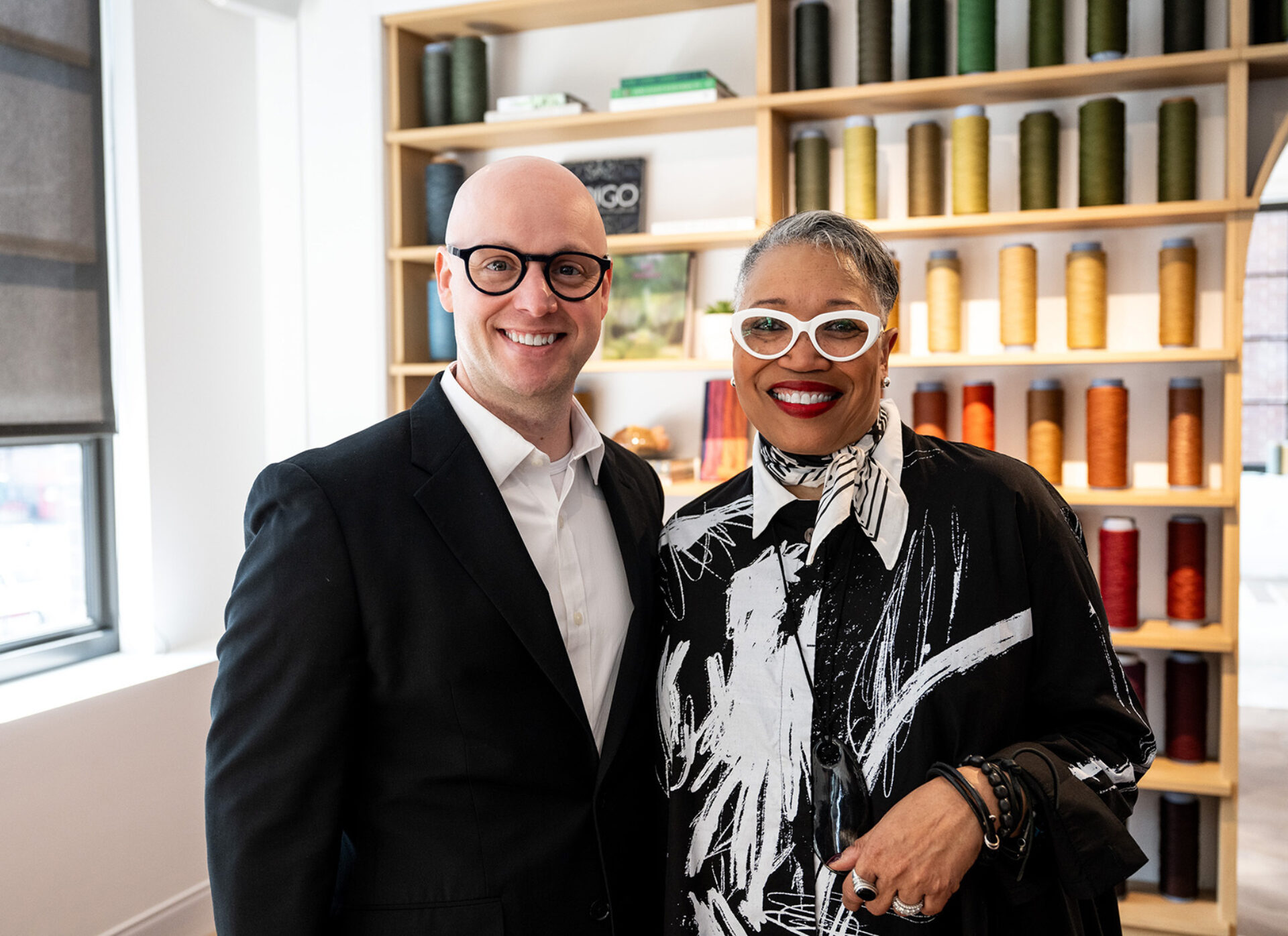
Mark Bryan and IIDA’s EVP and CEO, Cheryl Durst, at Chicago Design Week in 2025.
Photo by Chris Dilts
Along with an overview of industry shifts already underway, the Index features seven plausible future scenarios that may unfurl in the next 10 years. “We often think of the future as a fixed point, but what’s actually true is that nobody can predict the future. I can’t, and I’m a futurist. What we can do is take data, figure out what’s happening today, and then model out what could be possible.”
This is not just for designers. The Index was created to help professionals across the built environment — from furniture dealers to manufacturers and facilities managers — evaluate themselves and their companies against emerging future demands to identify gaps and clarify when and how to act.
Action, ultimately, is what the Index and IIDA Futures are all about.
“Given how the futures could evolve, which parts of those do we want to enable, and which parts of those do we want to prevent?” The answers to those questions, he says, can be used to “make better decisions.”
Data, demands, decisions. Lest you think he spends all his waking hours mulling the Big Questions of our industry, and our era, think again. There’s Mark Bryan the futurist, and his other self: Mark Bryan the author of speculative fiction. He’s written two young adult fantasy novels about an ordinary teenager who suddenly inherits the powers of a goddess from Norse mythology.
“Book writing has always been a place where I can get away. It’s about diving deep into that world and putting myself in the position of a character to see and feel how they would react,” he says. “When I started, I was a practicing designer. It was my way to create something that nobody could value engineer, other than myself and my editor … a thing I could do on the side that allowed me to think creatively about an entirely new world that only I got to control.”
He’s plotting a third book, which means one more world to keep track of, on top of this one. In our reality, no one can predict what comes next. But in fiction? He’s free to write his own ending. Perhaps, for a futurist, that’s the ultimate comfort.
Related Articles
-
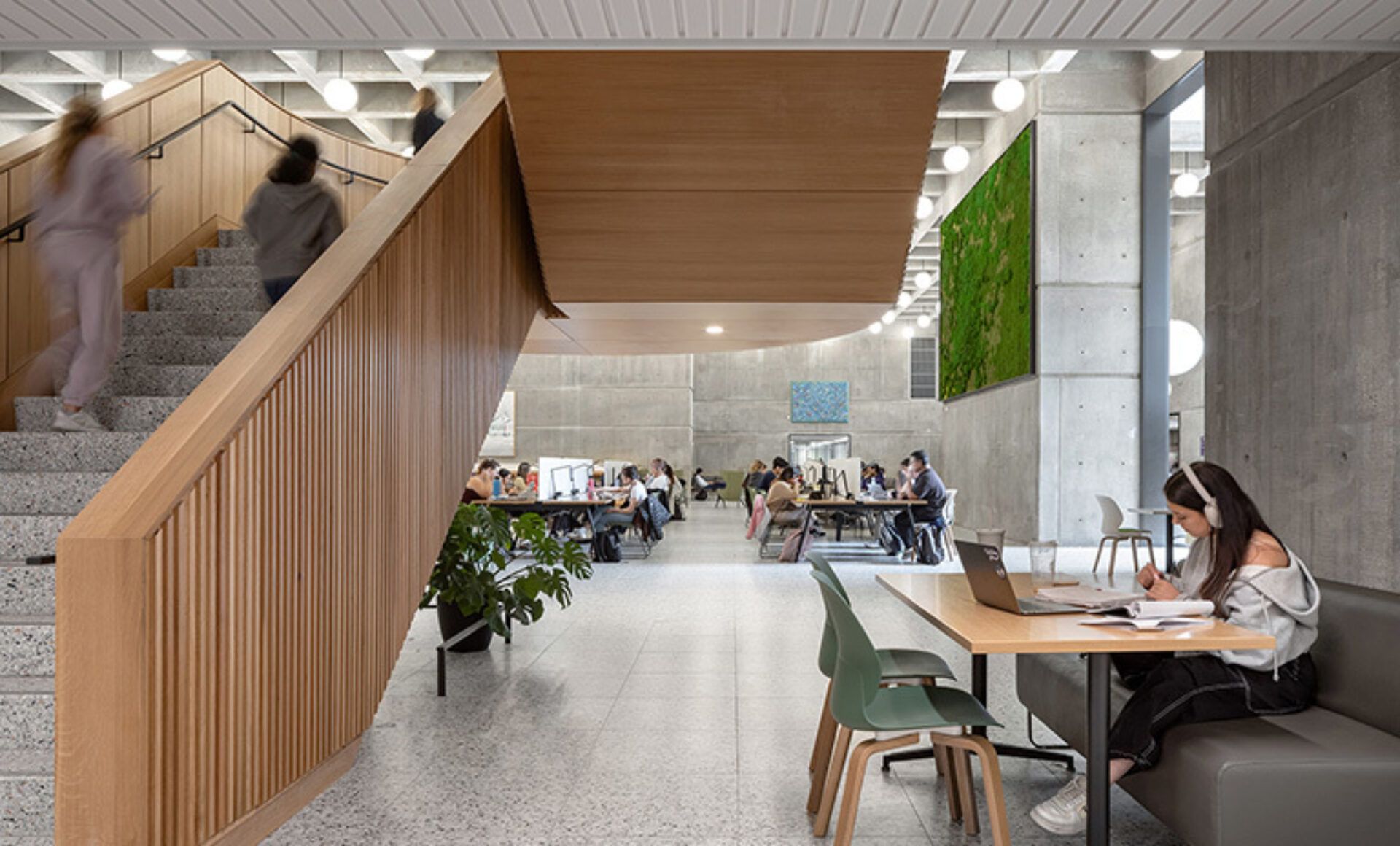
3 Shifts Shaping the Future of Education Design
How the next generation of learning spaces can be more responsive, restorative, and flexible -

Visionary Futures with Kimball International
Adaptive and resilient design are the centerpiece of this annual award -
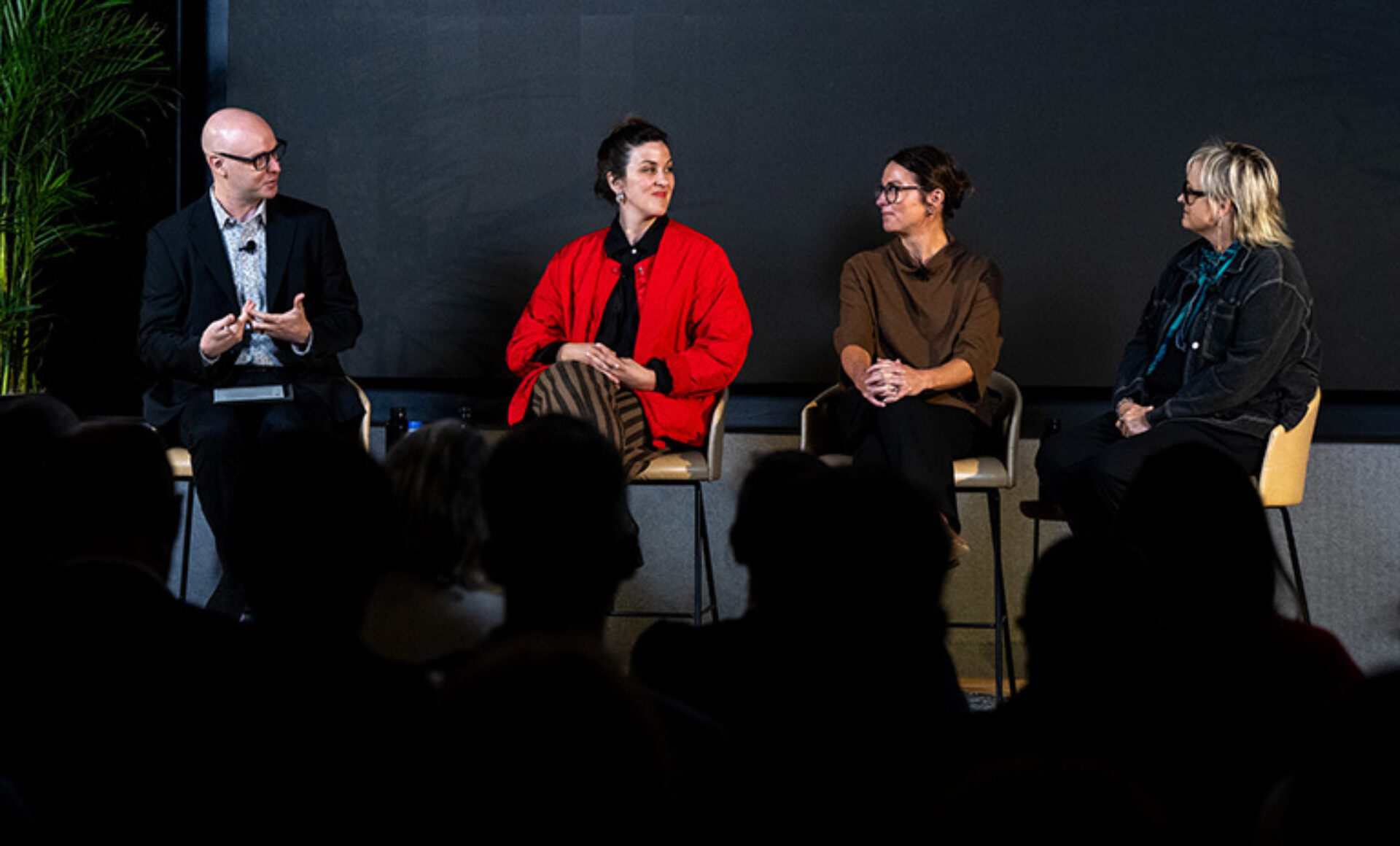
On Luck, Failure, and Listening Well
Three pieces of advice from design leaders and experts -
The Two-Speed Workplace Is Here
The gulf between those who regularly use AI and those who don’t is widening fast. For designers, that gap is about to become a design brief. -

It’s Here: The Futures Readiness Index
We explain what the Index is, how it works, and how you can harness it to meet your specific needs and goals -
The Future of Your Big Idea
Inside IIDA’s Collective Design LIVE during Chicago Design Week