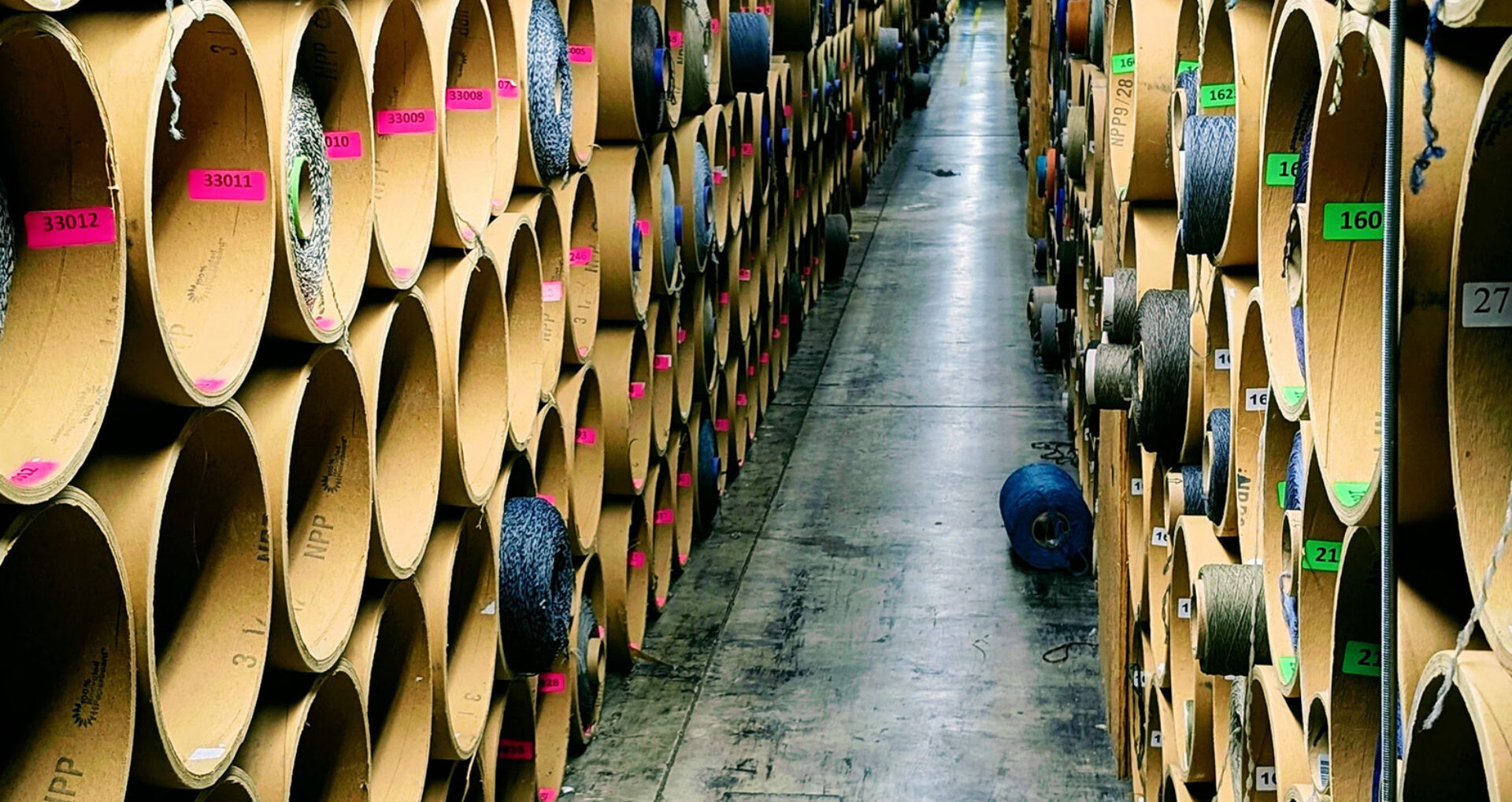
This article originally appeared in the October 27 issue of officeinsight. (Above: Photo by Kristin Conroy)
When fall rolls arounds, some people look forward to changing leaves, spooky season, and pumpkin spice lattes. At IIDA, we gear up for serious talk about sustainability.
Every October, Interface and IIDA convene early-career designers and sustainability experts for the Converge Action Summit, an event focused on sharing knowledge, building connections, exploring sustainable innovations, and arming designers with tools to advocate for healthier materials and practices in their own projects and communities.
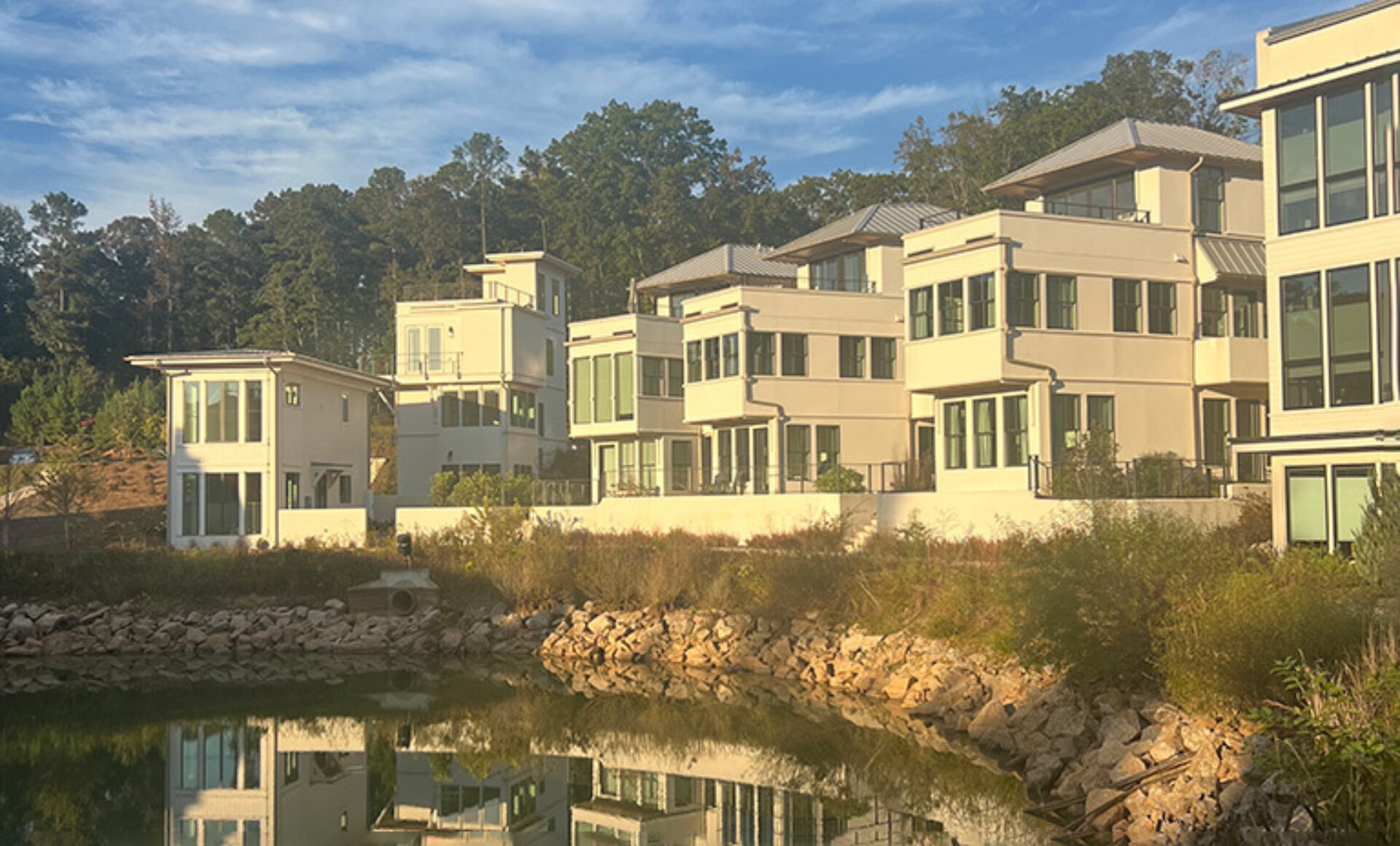
From thought-provoking programs to tours of Interface’s manufacturing facilities, Converge 2025 was chock-full of fascinating insights and honest conversations. (Plus verdant landscapes; while typically held in Atlanta, where Interface is headquartered, this year Converge was hosted at Serenbe, a wellness-focused, nature-laden community in Chattahoochee Hills, Georgia.)
Throughout the summit, there was one recurring theme: the need to keep asking questions. Harder questions, bigger questions, and the right questions to push sustainable efforts further, faster. One of our guest speakers, Jonsara Ruth, Co-Founder and Design Director of the Healthy Materials Lab at Parsons School of Design, said that sustainability isn’t a checklist, “it’s a mindset.” It’s a method of ongoing and dedicated inquiry to protect the health of people and the planet.
In that spirit, here are three questions that the design industry — from practitioners to manufacturers — should ask of itself, based on takeaways from Converge.
What exactly do we mean by sustainability?
Sustainable language is so ubiquitous, sometimes it’s easy to lose sight of exactly who or what we’re sustaining. “We’re talking about sustaining human beings on this planet,” said Ruth, who also teaches interior design at Parsons. “The planet doesn’t need us. We need the planet. So it’s not about sustaining the planet. The planet will do just fine; it will go through its cycles as it has for millennia. But if we want to remain on the planet, we need to figure out how we sustain a relationship between nature, the planet, and us.”
With that in mind, Ruth and her team at the Healthy Materials Lab think about sustainability through the lens of fine-tuned questions, such as, “how does anything, throughout its life cycle, affect human health?” How does it affect carbon emissions or our climate? How does its manufacture affect social equity? When assessing materials, her team also asks, “does it require forced labor?” and “is it providing waste, or are we making something more circular or regenerative? Generally, how does it impact water, soil, ecosystems, and biodiversity?”
Can your way of working last long term?
Joey Shea, Manager of North American Sustainability at Interface, talked about playing the long game. He asked: “Can you do this thing, the way that you’re doing it right now, forever?” This question, he said, applies to natural resources, to labor, and to morals. If the answer is “no,” then it’s time to seriously reconsider your company’s strategy and processes.
Put another way, Shea invited us to consider the language of sustainability in a romantic context. “Imagine somebody asks your partner how their relationship was with you, and they said ‘sustainable.’ This is an old joke, I didn’t come up with it, but nobody wants to hear that,” he said. “Because ‘sustainable’ should not be seen as an aspiration. If we are only shooting for neutrality, then we’re going to be selling short our capacity to create value, joy, and impact.”
He urges the design industry to channel its efforts toward circularity and regenerative materials, and to really think through what constitutes progress. “I want us to dream extremely big,” he said, starting with a baseline of sustainability and building to “the most inspiring thing we can imagine.”

How can designers transform spaces by doing less?
Trite but true: Less is more. Stacey Crumbaker, IIDA, Assoc. AIA, Associate Principal at Mahlum Architects and President of IIDA’s International Board of Directors, recently served as a juror for an awards competition held by IIDA’s Oregon Chapter. She was struck by a project that embodied the question above.
The designers shared a “beautiful diagram,” Crumbaker said, filled with tiny red lines, which represented “all the points of impact that they made because they chose not to gut the building. They chose not to take out finishes that were already existing.” The team minimized waste and concentrated their creative energy on the kitchen gathering area, she said, adding in design elements like striking cabinetry that lent visual impact.
The thinking behind that project resonated with Crumbaker, a longtime advocate for sustainability — “how little can we do if we want to make the best choices for the planet?” she asked. “It’s a do-less philosophy.”

Related Articles
-
7 Essential Strategies for Sustainable Design
Real-world methods to embrace and advance sustainable design at any point in your career -
The Future Is Reclaimed and Reused
The systems thinker, materials storyteller, and architect who sees reuse not as nostalgia, but as a path to equity and climate resilience -
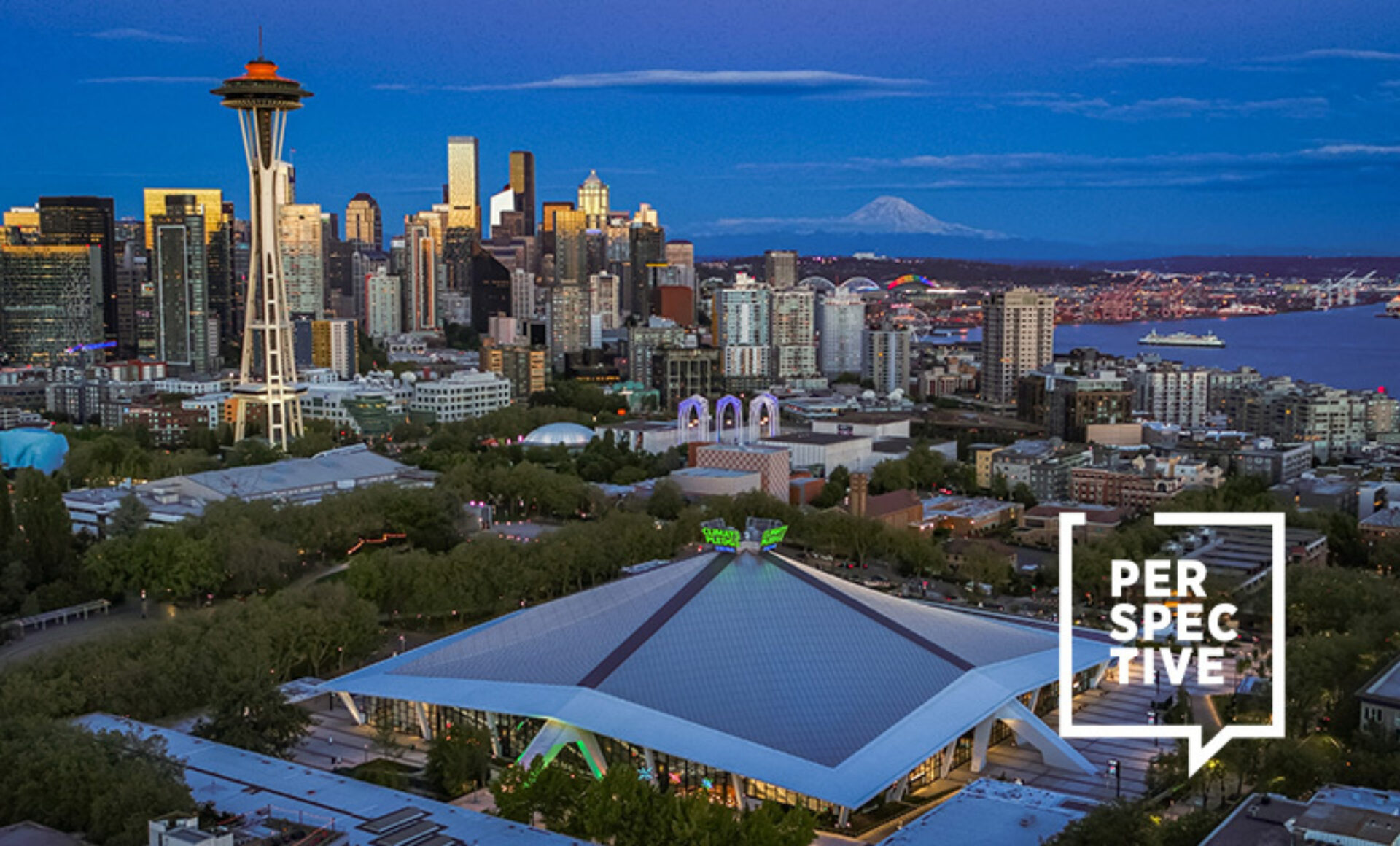
Behind Seattle’s Groundbreaking Climate Pledge Arena
Blending preservation with state-of-the-art innovation helped to achieve the world’s first net-zero-carbon arena -

Seeding a More Sustainable Future
The Keilhauer Sustainable Design Education Fund reimburses IIDA members who commit to green design -

5 Strategies for a More Sustainable Future
Our top 5 takeaways from the Converge Summit, Interface and IIDA’s annual gathering of designers and sustainability leaders -
Funding a Greener Future
The Keilhauer Sustainable Design Education Fund reimburses IIDA members for their commitment to sustainable design