

(Above: Photo by Jr Korpa)
Design shapes our mental, physical, and social well-being in ways we often overlook. At its core, design is about human connection. When done right, it can foster social interaction and cultivate a sense of belonging — it's compassion, empathy and understanding all wrapped in one. But what does it truly mean to design for human connection? And how are designers using it as a tool for place making?
Andrea Benatar, experiential graphic designer at CannonDesign and Erin Peavey, AIA, health and well-being design leader and principal at HKS have both explored centering empathy and compassion in their work to better enhance human connection. In their work, they have seen the importance of designing not just for function, but for the deeply human need to feel seen, supported, and connected.
Benatar and Peavey offer valuable insights on their design process and how empathy and compassion are some of the most important tools you can use as a designer.
Responses have been lightly edited for length and clarity.


Tell me about designing for human connection and social interaction. What does this look like for you and why is it important?
Andrea Benatar (AB): Human connection and social interaction are really what transforms a space into a place. It can take form in so many ways, but in my own process, it’s a matter of identifying and intentionally weaving moments of connection into an experience. As designers, our responsibility is to create a place where interactions can occur seamlessly and spontaneously. This social layer is incredibly important to fold into the design process because it provides people with a sense of belonging and shared purpose, it’s ultimately what creates the soul and spirit of a place.
Erin Peavey (EP): We are wired for connection — loneliness literally hurts. And yet so much of what we've lost isn't in the big, deep relationships, rather it’s the space between destinations where life actually happens. The neighbor you nod to on the sidewalk, or the coffee shop where you're a familiar face. For me, designing for human connection became deeply personal after I lost my mother and became a new mom within the same few months. Home alone with a newborn, I did what my mother always told me to do — stay connected. Every day I'd strap my daughter to my chest and walk to coffee shops, linger at the grocery store, search out third places that could offer even a small sense of shared humanity. I didn't need deep conversations — I just needed to not feel alone. The built environment was genuinely an antidote — and that experience cemented for me that this work isn't abstract. Designing for connection means treating social health as seriously as physical health — asking, at every scale, whether a space invites people in or turns its back on them. It can be life and death for some people.
How do you design through a lens of empathy? How does it influence your design process, and why is it especially important when designing for health and wellness?
AB: Designing empathetically means continuously striving to understand the people we’re designing for, and using that understanding to create experiences that fit their needs and motivations. In my own process, this means actively engaging and collaborating to uncover those needs and motivations with the end users when possible, or leveraging research when that direct contact isn't feasible. I’ve also found that taking time throughout the design process to step out of my own experience and re-center the experience of the people I am designing for allows me to take a step back and ensure that every design decision I make is intentional In the context of health and wellness, the delicate, often vulnerable nature of those spaces is not only important, but imperative. Hospitals, for instance, are often characterized by pain, stress, and urgency, but when designed empathetically, they can also be spaces of hope, healing, support, and agency.
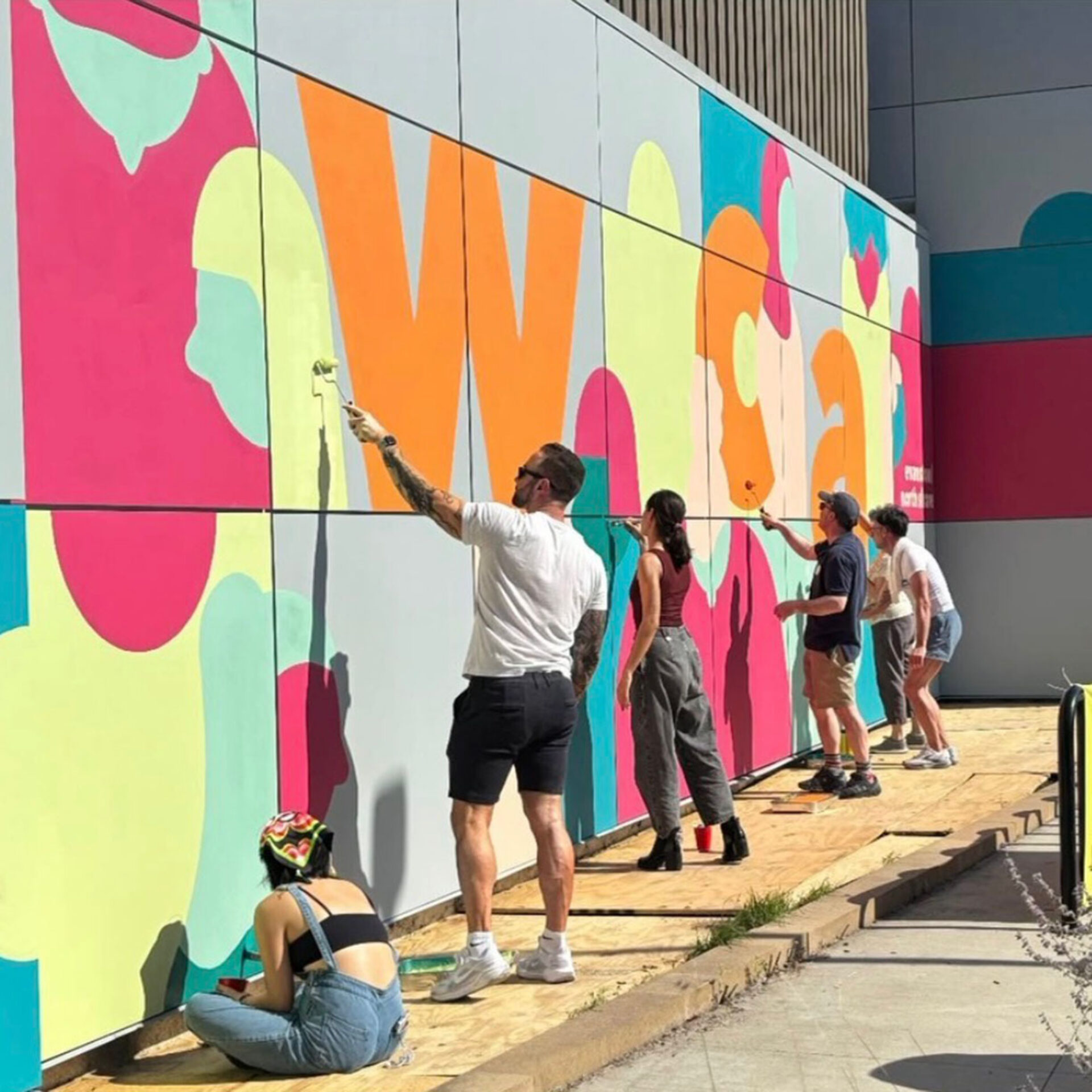
Image courtesy of Andrea Benatar
EP: The most important thing I can do as a designer is show up as a listener first — the person in the room most committed to understanding. That means sitting with community members at health fairs, doing mock-ups with clinical staff, and asking questions that don't have easy answers. Pushing this a step further, I think we should be designing with compassion rather than empathy. They sound similar but they're meaningfully different. Empathy asks you to step into someone else’s shoes — while that's well-intentioned, people often project their own experience onto others, and lead us to believe we understand far more than we actually do, which is a design risk. Compassion is different. It says: I see you, I'm moved by what you're carrying, and I'm committed to showing up for you. It keeps the designer in a posture of curiosity and service rather than false certainty. It’s the orientation I think our whole industry needs — and one I think we should be teaching in design schools as a fundamental, not a finishing touch.
Does designing for connection look different when designing different types of spaces??
AB: Absolutely. Human connection is going to look completely different in an office space versus a public library versus a hospital. Even within a singular space type, the moments for connection and interaction might vary greatly. I always try to keep in mind 1. What level of connection are people craving in this space, and 2. What is the value of connection in this space?. For instance, in healthcare spaces, there are moments where human connection is incredibly valuable and necessary, but there are also moments where introspection and quiet might take precedence. It is our job as designers to try and carve out those spaces appropriately, so that those moments of connection are intentional and meaningful.
EP: Humans everywhere need the same things — we want to feel safe, welcomed, and like we belong. What changes are the stakes and the vulnerability of the people walking through the door. In a healthcare setting for instance, someone may be receiving a life-altering diagnosis, navigating a system that feels foreign and frightening, or simply trying to hold it together in a waiting room full of strangers. The margin for error is smaller and the cost of getting it wrong is paid in real human suffering. A workplace that makes people feel invisible negatively affects their mental health and productivity. A neighborhood without third places quietly accelerates loneliness. A school that wasn't designed with belonging in mind shapes how a child sees themselves for years. And these aren’t small things — loneliness and social isolation affect us at a cellular level. Feeling disconnected, unseen, or lonely — are actively shaped by every environment we inhabit, every single day. That's what makes this work feel so urgent — the context can shift the vocabulary, but the commitment is the same — to ask who will occupy the space, what do they need, and how can this place show up for them.
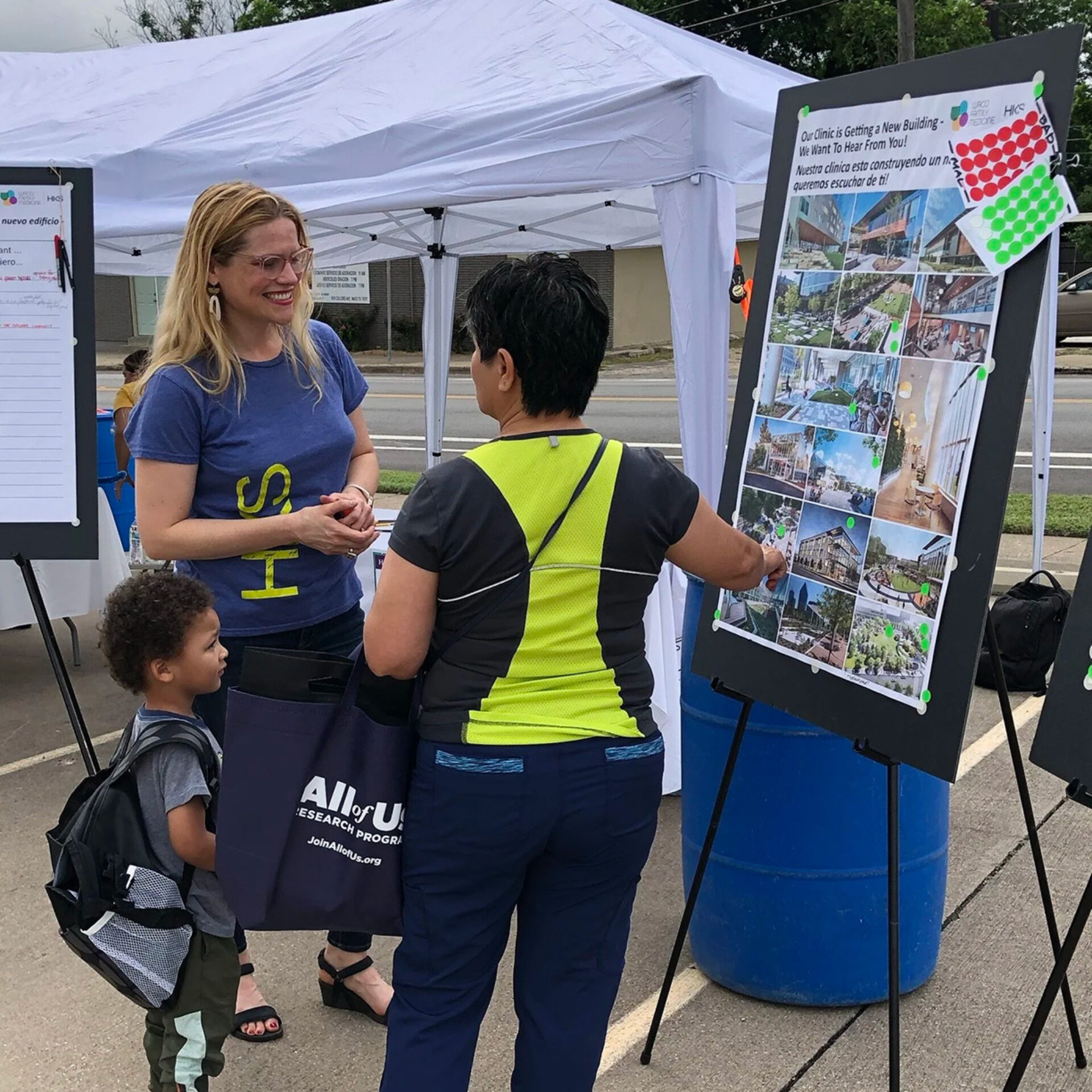
Image courtesy of Erin Peavey
How do you design spaces for connecting people from diverse demographics?
AB: I am always striving to strike a balance between universal spaces that are welcoming to all and spaces with details that allow people to see themselves reflected in the space. I believe the best way to accomplish this is through careful research and including as many perspectives as possible. It’s important to consider the contextual layers that might affect how someone experiences a space, whether it be culture, language, physical ability or neurodiverse perspectives.
EP: The first step is making sure diverse voices are actually in the room as a foundation of the process. I've facilitated bilingual design sessions at community health fairs, done full-scale mock-ups with clinical staff, and sat with neighbors in Southern Dallas listening to what they actually need and want — things I couldn’t learn without listening. A real sense of belonging is woven into the bones of a design. Intergenerational connection is one area I find particularly powerful — when we design spaces where children and elders share everyday life, something remarkable happens for both — loneliness drops and purpose increases.
What tools or strategies would you recommend for designers looking to incorporate empathy and wellness in their design process?
AB: I frequently come back to the four phase framework for empathetic design developed in 2009 by researchers Kouprie and Visser. The four phases outlined in their study are: 1. Discovery, building an understanding of someone else’s world; 2. Immersion, becoming enmeshed in that world; 3. Connection, resonating and finding meaning in that experience and; 4. Detachment, stepping back into the ‘designer’ role. This framework can be applied widely at any phase, and with any tools available to you. You’ll discover different perspectives through primary research, like interviews and surveys but you can also do so through extensive reading. Another strategy I’ve found helpful is to identify key emotions that will occur at various points in an experience. Because emotion is universal, I think it can be a simple and effective gateway for understanding someone else’s experience. When I am thinking about how someone moves through a space, I like to imagine an emotional journey map of sorts. At every key design decision, I ask myself, “how might a person be feeling at this point in their journey, and ‘how can the design either support this feeling or transform it?”’ It seems obvious, but it allows us as designers a point of reference and a small window into someone else’s experience.
EP: Start by listening before you design — not a perfunctory check-the-box community meeting, but genuine, sustained curiosity about the people who will inhabit the space. Their lives, their fears, and their hopes for what a place could be. The designer's job in that moment is to be the best listener in the room, not the smartest person in it. That's compassion in practice — not assuming you know, but staying curious enough to keep asking. From there, lean on the evidence. There is a growing body of research on what actually supports human well-being in the built environment. I'd point designers to frameworks like WELL, Trauma-Informed Design, and our PANACHe framework, which distills evidence-based strategies for fostering social connection into six qualities: placeness, accessibility, nature, activation, choice, and human scale. These aren't aesthetic preferences — they are design decisions that align with our evolutionary needs for safety, belonging, and connection. And finally — use yourself. Spend time in the spaces you're designing for. Notice what your body is telling you before your brain catches up. Compassion is a practice, and the more we develop it in ourselves, the more naturally it shows up in our work.
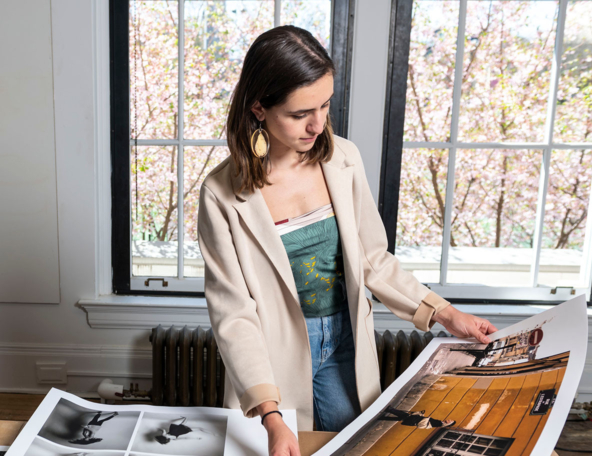
Image courtesy of Andrea Benatar
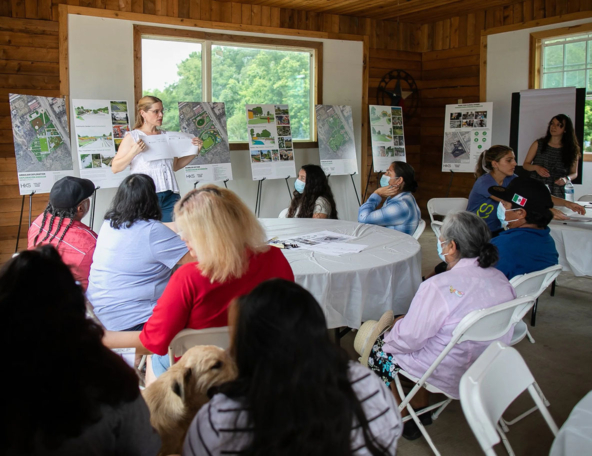
Image courtesy of Erin Peavey
What's the best thing you’ve learned designing for human connection and well-being?
AB: I still have a lot left to learn, but one of lessons I always try to carry with me is that no moment is too small to be designed. A point of connection as simple as a graphic reflecting a tidbit of local history can be what starts a conversation and ultimately creates that shared sense of belonging. Human connection goes hand in hand with storytelling, and the more compelling we can make the narrative in a space, the more memorable the experience will be.
EP: That it doesn't take as much as we think — and yet it remains oddly countercultural. The texture, the layers, the thoughtful material choice that tells someone this place was made for you — these shouldn’t get treated as afterthoughts or line items to cut when budgets get tight. These aren’t finishing touches, they're fundamental. They're what the nervous system responds to before the brain even registers walking through a door. I've learned that great interiors aren't aesthetic indulgence — they are health infrastructure — and when treated as such, something remarkable becomes possible.
Related Articles
-
Rapid Fire with Yinka Ilori
First instinct, no overthinking: Yinka Ilori takes us inside his Dunelm collection -
Rising Stars: IIDA Members Going Beyond
Get to know designers moving the needle in advocacy, sustainability, mentorship and more -
Perspective: Design Superstars
These design superstars have set themselves apart with their dedication to doing what it takes to make the world wonderful -

We Need More Third Spaces
Three designers talk about their favorite third spaces and share design tips to foster connection -
Nature, By Design
How one landscape designer is bringing the outdoors back to the people — one urban riverbank at a time -
Day in the Life: Lori Mukoyama
The principal and global hospitality leader at Gensler tells us how she gets it all done